

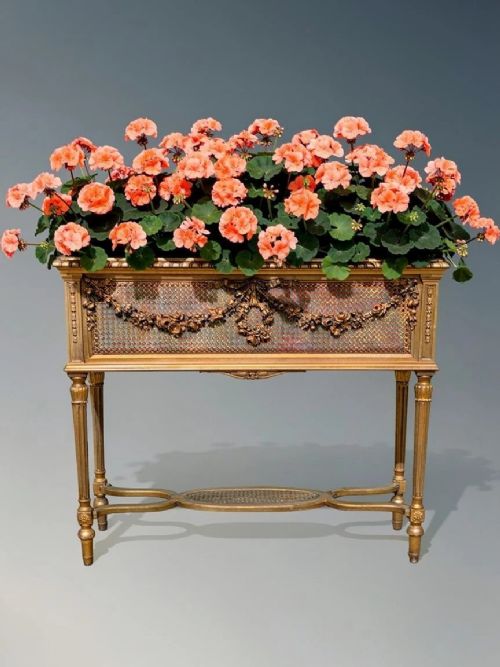

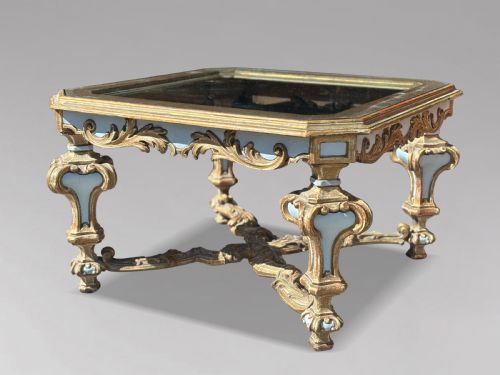
Ornate Wood Table
An ornate wood table brings heavy carving, marble tops and gilt finishes directly from Victorian, Baroque and Rococo drawing rooms into a modern room.
Ornate Wood Table
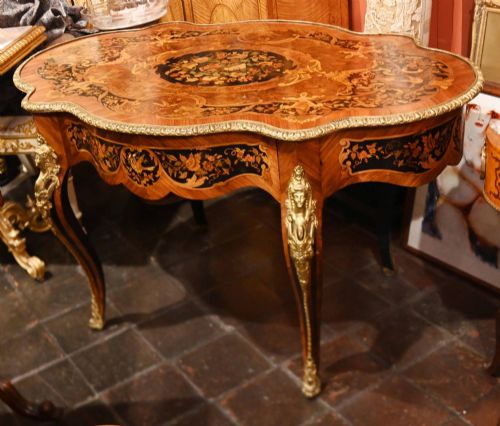
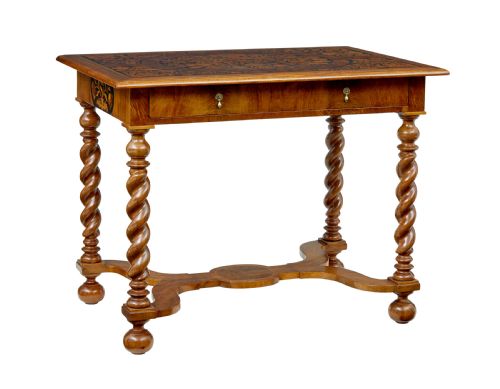
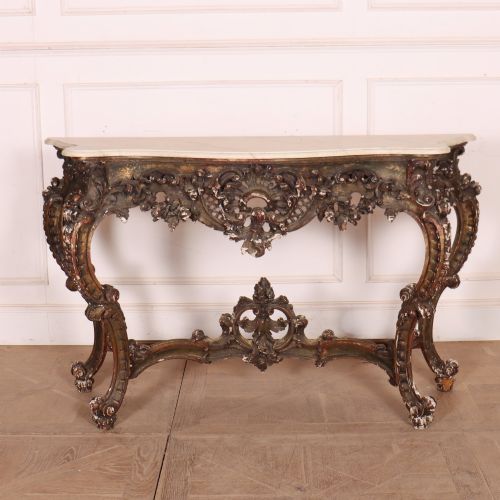
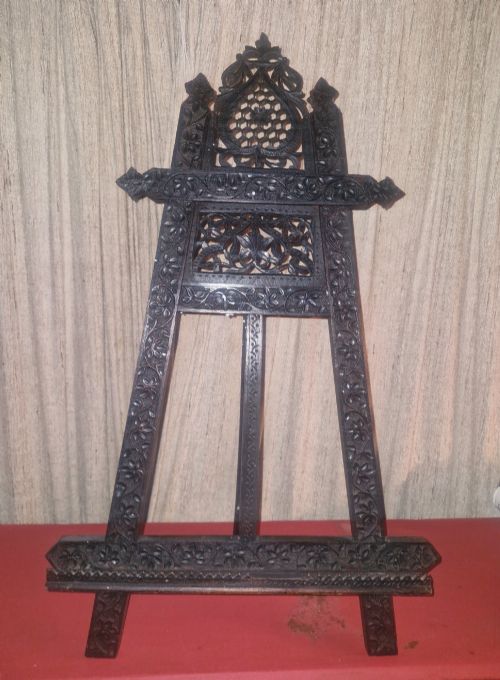
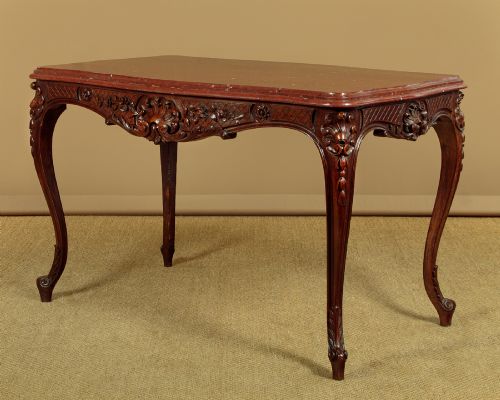
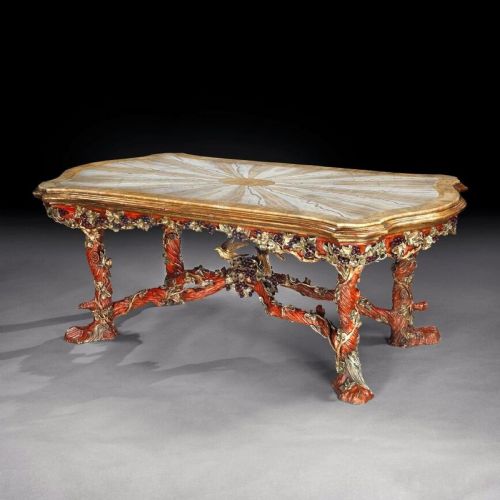
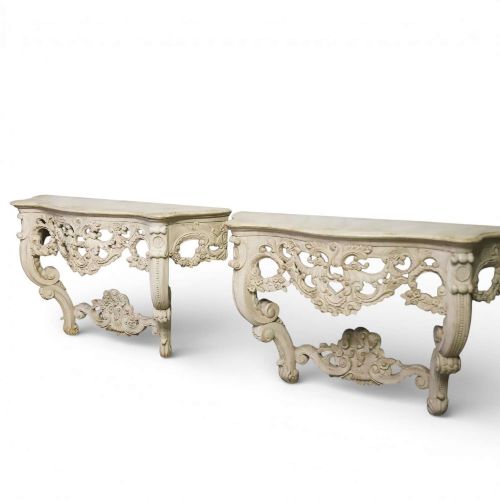
When you search for an ornate wood table, you encounter console tables, centre tables, side tables and occasional tables spanning the eighteenth century through to the 1930s. The most common forms on this page are French and Italian console and centre tables, often bearing heavy carving, serpentine fronts or gilt surfaces.
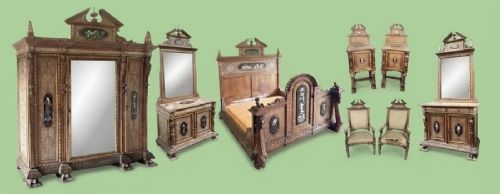
The inventory includes pieces from Victorian England, Anglo-Indian workshops, and continental European traditions styled in French Rococo, Italian Baroque and Venetian tastes. These furnishings served as focal points in grand interiors, designed to display decorative objects, support heavy marble slabs or anchor a formal room scheme.
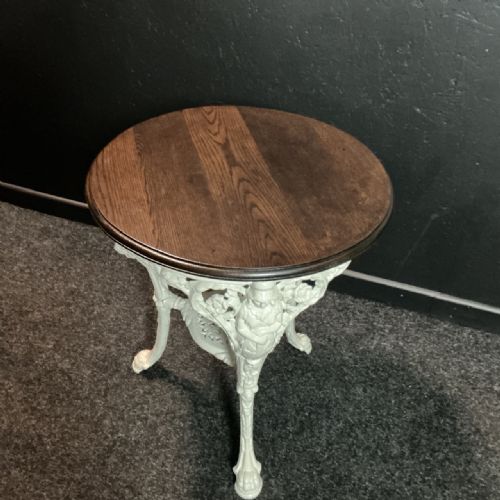
Construction dates on this page range from the eighteenth century to the 1930s, showing how cabinetmakers repeatedly returned to historic revival styles. You will find walnut, oak and mahogany foundations augmented by applied decoration, marquetry and stone tops rather than plain, utilitarian timber.
Materials and construction methods
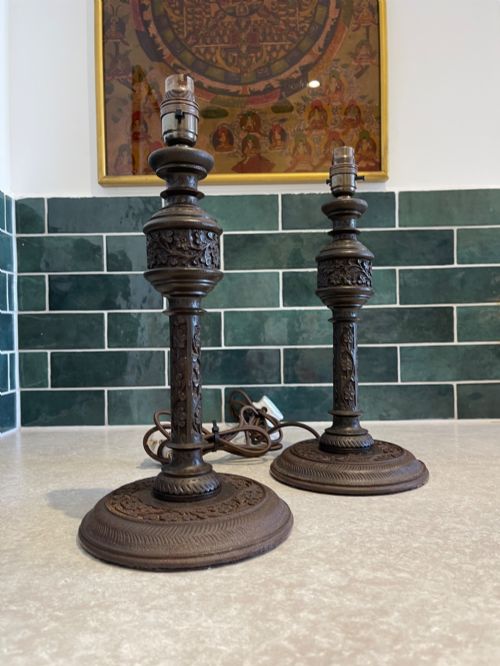
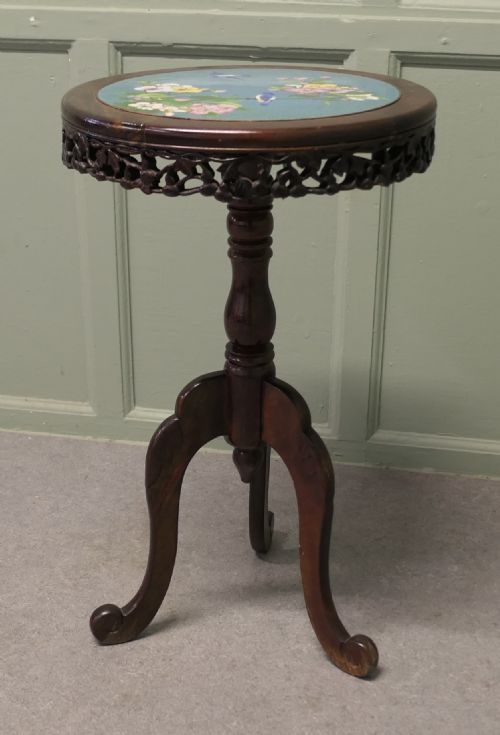
The makers of these pieces relied primarily on dense hardwoods such as walnut, mahogany, rosewood, padauk and oak as the structural base for heavy carving. These woods provided the necessary strength for intricate undercut foliage, scrolling supports and deep moulded edges.
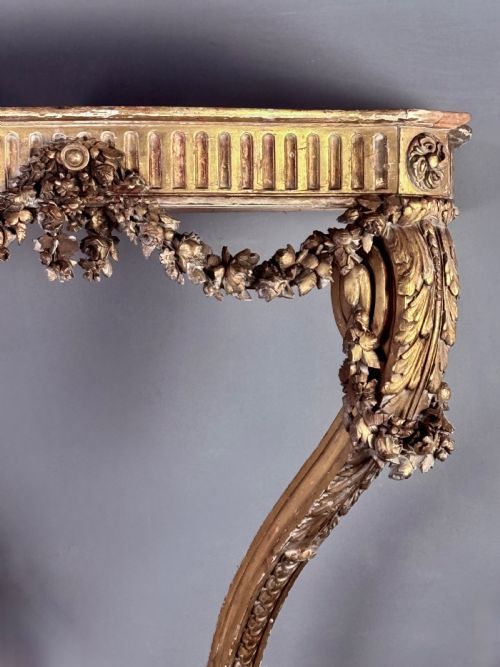
Surfaces were frequently finished with gesso, gold leaf, giltwood, paint or polychrome decoration to achieve the high-contrast sheen demanded by Baroque and Rococo interiors. Inlaid details utilised marquetry and pietra dura stonework, while many of the heavier console and centre tables were completed with inset marble or onyx tops.
Distinctions in execution and material
Quality in these pieces rests upon the crispness of the hand carving and the integrity of the structural joinery supporting heavy stone tops. Tables with deeply undercut, hand-carved wooden ornament demonstrate significantly greater labour than those relying on cast composition mouldings applied to plain timber.
The choice and thickness of the surface materials also separate standard production from exceptional work. Solid marble or onyx inserts, genuine gold leaf rather than base metal gilt, and complex multi-timber marquetry or pietra dura inlay indicate higher workshop standards.
Felix-Alfred Ternisien·Amleto Bertoni·Waring & Gillows·Harrods
The Ornate Wood Table Glossary
- Console table
- A table designed to stand against a wall, frequently secured to it or supported by two front legs and decorative brackets. These tables usually feature elaborate front aprons and stone tops.
- Centre table
- A freestanding table intended to occupy the middle of a room rather than sit against a perimeter wall. They display finished decoration on all four sides.
- Giltwood
- Wood that has been covered with a thin layer of gold leaf or powder over a prepared gesso ground. It provides a brilliant, reflective surface characteristic of Baroque and Rococo furniture.
- Marquetry
- The art of applying decorative veneer pieces of different woods, and occasionally other materials, to a structural surface to create pictorial or geometric designs.
- Pietra dura
- An inlay technique using cut and fitted polished coloured stones to create formal or pictorial designs. It appears on high-status table tops from Italian workshops.
Ornate Wood Table: Frequently Asked Questions
Where should I place a console table?
Console tables function best against flat walls in hallways, living rooms or dining spaces where their decorative front aprons and slim profiles can be appreciated without blocking traffic flow.
Because many historical examples were designed to be viewed primarily from the front or anchored to a wall, they suit entryways beneath a mirror or as a sideboard alternative in a dining room.
How do I care for a marble top?
Marble and onyx surfaces require gentle cleaning with a damp cloth and mild, pH-neutral soap to avoid dulling the polished finish. Acidic liquids like wine or citrus juice will etch the stone if left unattended.
Using coasters and mats protects the stone from scratching and staining, preserving the original surface texture found on Victorian and continental tables.
Are centre tables meant to be freestanding?
Centre tables are built to be viewed from all angles, making them ideal for the middle of a large room rather than pushed against a wall. Their ornamentation wraps around the entire base and underframe.
In period settings, they held lamps, books or floral arrangements, serving as an interactive centrepiece for the room layout.