






Ornate Wood Lamps
These ornate wood lamps bring carved texture and gilded weight into a room, offering the height of regional craftsmanship from the eighteenth century onward.
Ornate Wood Lamps
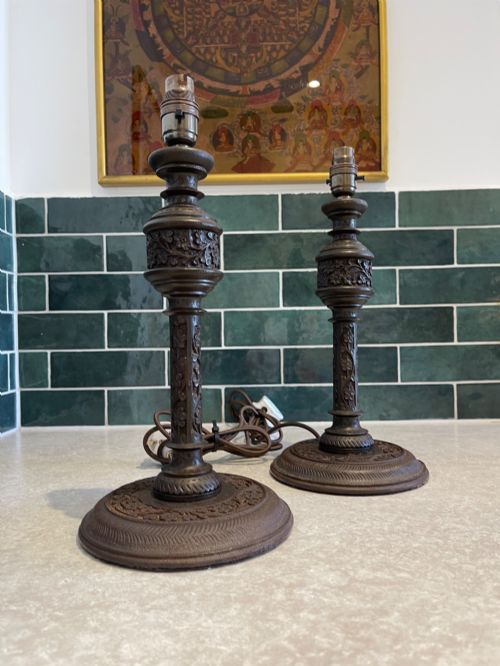
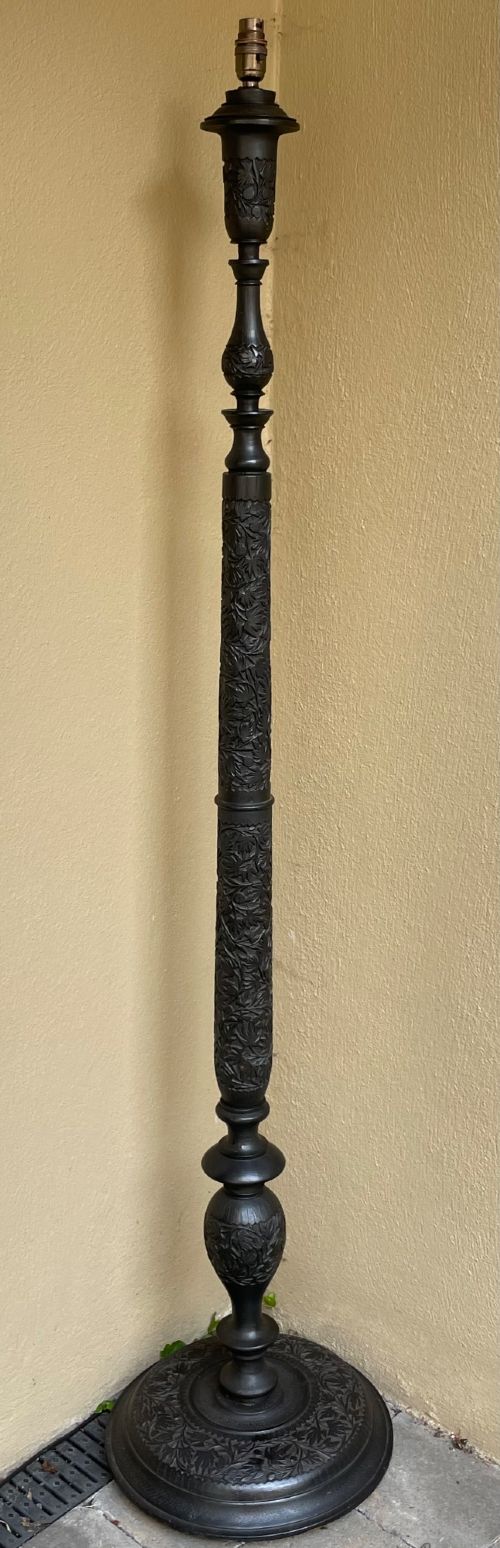
Ornate wood lamps encompass floor lamps, standard lamps, and table lamps carved from solid timber and embellished with intricate surface ornament. Buyers examine pieces that span several decades and centuries, ranging from nineteenth-century standard lamps to early twentieth-century floor lighting.
The selection on this page shows a strong presence of Italian and Indian origins, alongside French and Spanish examples. Standard lamps and torcheres form the majority of the tall lighting, while smaller table versions and candle-lamps appear frequently.
Regional styles dictate the overall silhouette, moving from Florentine Baroque and Italian Neoclassical to Anglo-Indian and Kashmiri traditions. These pieces often arrive paired or as single statement items designed to anchor a corner or a side table.
Materials and construction
Carved wood provides the structural base for these items, utilising timbers such as walnut, mahogany, and padouk beneath layers of decoration. Artisans shaped these woods by hand before applying further surface treatments.
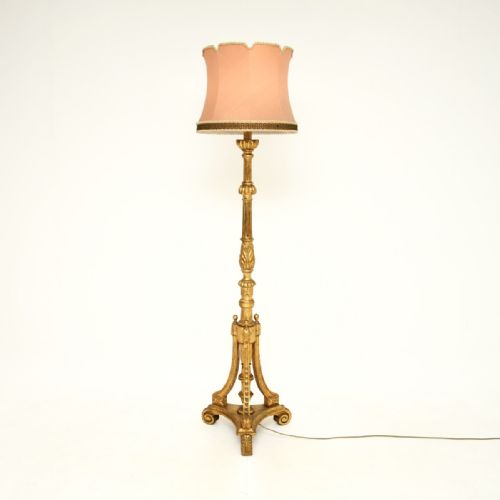
Giltwood, gesso, and gold or silver leaf build up the rich metallic finishes seen across the Italian and French styles. Craftsmen applied thin sheets of metal leaf over prepared gesso grounds to achieve a reflective, luminous sheen.
Secondary elements such as brass fixtures, marble tops, and fabric components integrate into the design of specific lamp tables and standards. These mixed materials add weight, stability, and contrast to the carved wooden bodies.
Ornate Wood Lamps Retail Price Guide 2026
Typical asking prices for ornate wood lamps among the pieces listed under this phrase on Sellingantiques today, from the lower quarter to the upper quarter. They describe what is for sale here now, not the wider market.
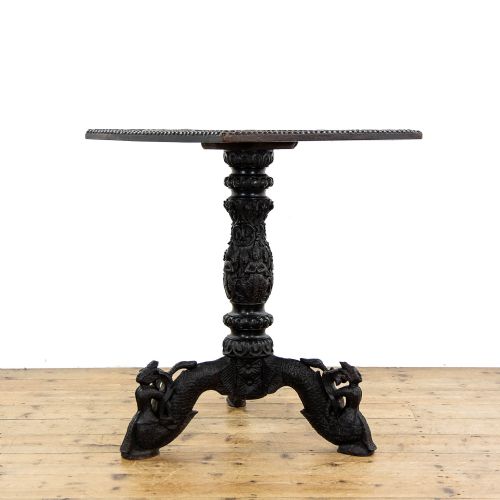
The object forms range from occasional tables and pier lamp bases to tall floor standards and hanging lanterns.
Distinctions in quality
Depth and precision of the hand carving separate standard commercial work from master craftsmanship, particularly in the rendering of foliage, figures, and architectural motifs. Crisp undercut details demonstrate superior skill compared to shallow, mechanical shaping.
The integrity of the gilded surface and the preparation of the underlying gesso dictate the visual richness of the piece. High-tier examples retain harmonious patination where the gold leaf has aged gracefully over the carved substrate.
The Ornate Wood Lamps Glossary
- Standard lamp
- A tall floor-standing lamp base designed to provide ambient room illumination. These pieces often feature heavily turned or carved wooden shafts.
- Giltwood
- Timber that has been coated with gold leaf or gold paint over a prepared gesso base. This technique creates a durable, bright metallic finish characteristic of Baroque and neoclassical furniture.
- Torchere
- An ornate stand or pedestal originally designed to hold a torch or candle, later adapted for electrical lighting. They typically feature slender, highly decorated vertical shafts.
- Gesso
- A plaster-like mixture applied to wood surfaces as a smooth base for gilding and painting. It allows artisans to carve fine details directly into the coating prior to applying metal leaf.
- Anglo-Indian
- A style describing furniture and decorative objects made in India by local craftsmen for British colonial residents, often combining British forms with traditional Indian carving techniques.
Ornate Wood Lamps: Frequently Asked Questions
How do I wire an antique wood lamp?
Rewiring requires running modern flexible cord through the central channel of the wooden shaft or down an exterior brass conduit, depending on the internal construction of the piece. A qualified electrician should handle the rewiring to ensure safety while preserving the historic timber.
Most antique standards accommodate modern lamp holders and shades without altering the external wood or gilding. Retaining the original switch placement or utilising inline switches helps maintain the visual integrity of the lamp.
What is the difference between a torchere and a standard lamp?
A torchere originates as a tall decorative stand for a single light source, historically a candle or oil lamp, characterised by a slender, sculptural profile. Standard lamps generally emerged later as dedicated electric floor lighting fixtures with heavier weighted bases.
Both forms use turned and carved wood, but torcheres tend to emphasise classical proportions and decorative motifs over utilitarian stability. Collectors often use either term interchangeably for tall nineteenth-century lighting.
Are these lamps stable enough for daily use?
Solid wood construction provides substantial weight, particularly in pieces featuring heavy turned bases or integrated marble surfaces. Placing them on level flooring ensures they stand securely in living spaces.
Tall floor lamps and torcheres benefit from careful placement away from heavy foot traffic or playful pets to prevent accidental tipping. Their sturdy timber cores were originally engineered to support heavy oil reservoirs or multi-branch fittings.