
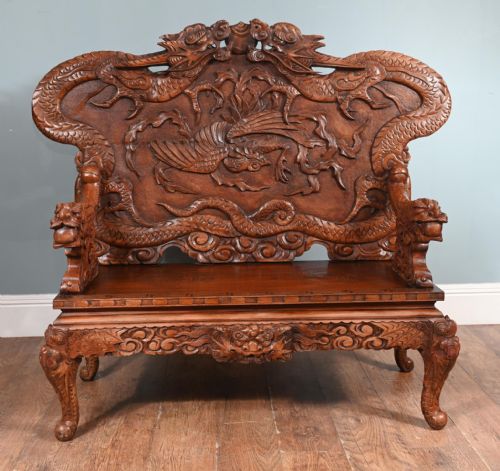


Ornate Wood Chairs
These ornate wood chairs bring heavy carving and dense timber from the eighteenth, nineteenth, and early twentieth centuries into a room.
Ornate Wood Chairs
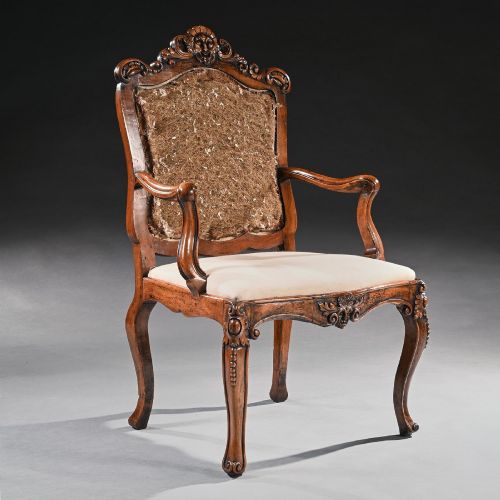
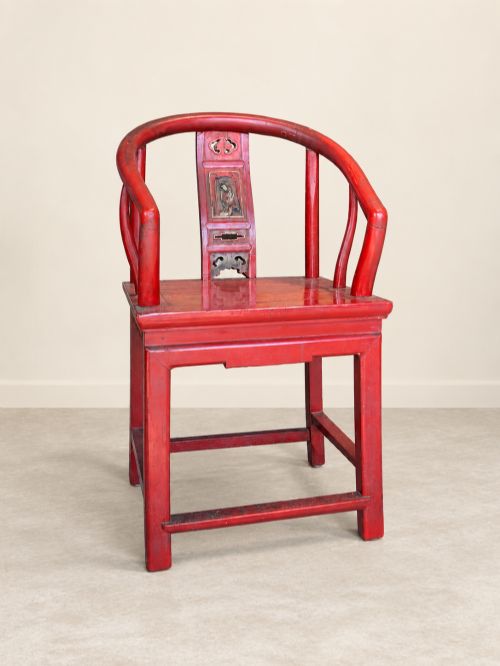
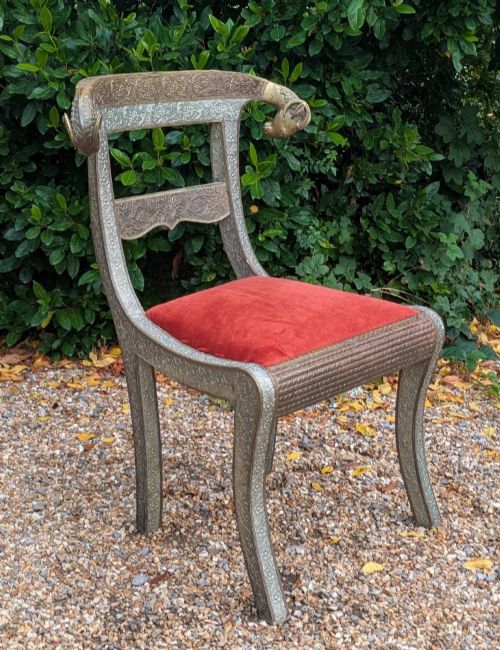
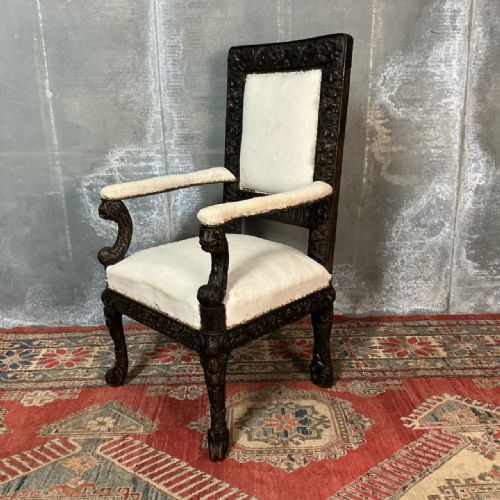
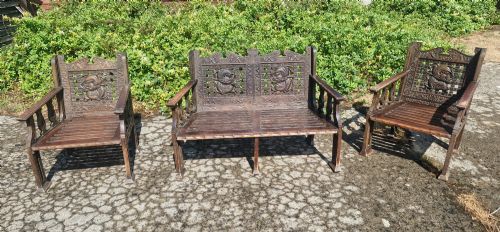
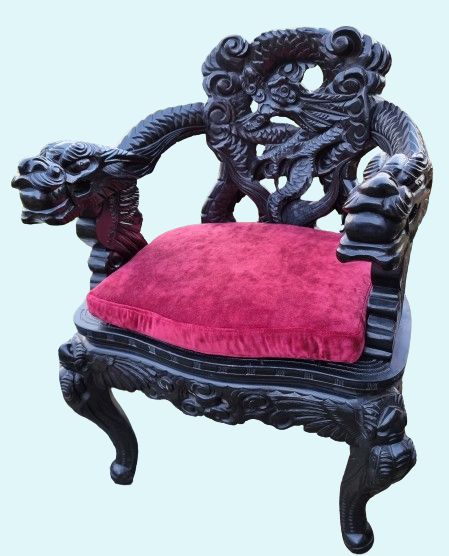
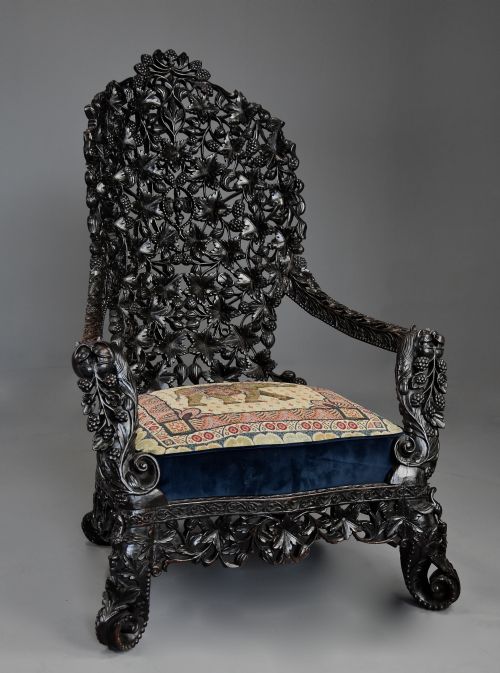
When you search for ornate wood chairs, you encounter heavily decorated seating spanning the eighteenth, nineteenth, and early twentieth centuries. The examples on this page encompass diverse regional forms, from British and Continental dining seats to Anglo-Indian, Burmese, and Chinese carved armchairs.
Most items you meet here are single armchairs, hall chairs, or matched pairs originating from Victorian, baroque revival, or colonial contexts. You also find larger dining sets, occasional chairs, and multi-piece conservatory suites constructed for formal reception spaces.
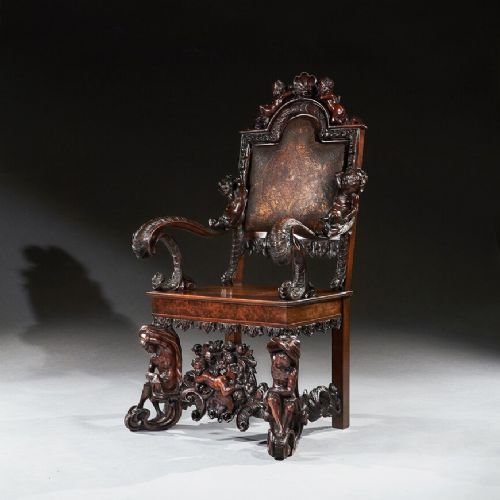
The typology ranges from high-backed side chairs and sgabello forms to deep lounge armchairs and tête-à-tête sofas. Each piece relies on elaborate surface decoration, sculptural woodwork, and traditional upholstery to command attention in a room.
How they were made
Cabinetmakers utilised dense timbers including oak, walnut, mahogany, teak, padauk, and blackwood to support deep, intricate relief carving. These sturdy woods allowed artisans to shape elaborate pierced back rails, animal figures, and scrolling foliage without compromising the structural integrity of the frame.
Surface finish involved contrasting techniques, combining polished timber with gilding, cinnabar lacquer, painted highlights, or marquetry inlay. Upholstered elements relied on traditional textiles, leather, velvet, and cane to complement the sculptural timber structures.
What varies in quality
The standard of carving defines the distinction between standard production and exhibition grade work, with superior pieces showing crisp undercutting and deliberate depth rather than shallow, mechanical shaping. Hand-chiseled details on walnut, oak, and exotic hardwoods reveal the individual artisan's hand.
Construction integrity and timber selection separate finer examples from lesser pieces. Solid frame construction using dense primary woods maintains stability despite heavy decorative carving, whereas secondary timbers or compromised joints alter the longevity of the seating.
The Ornate Wood Chairs Glossary
- Sgabello
- A light wooden chair with a high back and a wide, box-like base used in Renaissance Italy.
- Giltwood
- Timber treated with gold leaf or gold paint to create a reflective, decorative surface finish.
- Marquetry
- Inlaid wood veneers arranged in geometric or pictorial patterns across flat furniture surfaces.
- Savonarola chair
- A folding armchair constructed from interlocking curved wooden slats forming an X-shape.
Ornate Wood Chairs: Frequently Asked Questions
How do I clean carved wood chairs?
Dust intricate carvings regularly using a soft-bristled brush to prevent buildup in deep recesses.
Avoid liquid polishes that accumulate in the grain, opting instead for a dry microfiber cloth to maintain the timber.
Can I use these chairs for daily dining?
Solid hardwood frames from the nineteenth century offer the structural strength required for regular seating at a table.
Ensure joints remain firm and upholstery supports comfortable use before placing antique chairs into daily service.
What rooms suit ornate wood chairs?
These sculptural seats anchor hallways, libraries, and studies where their carved details can be appreciated from multiple angles.
Pairing a single ornate armchair with simpler modern furnishings allows the antique woodwork to stand out.
How do I identify a revival style?
Revival pieces borrow motifs from baroque, rococo, or Renaissance eras while utilising nineteenth-century manufacturing methods.
Look at the interior timber and joinery to distinguish period construction from later interpretations.