



Ornate Wood Bench
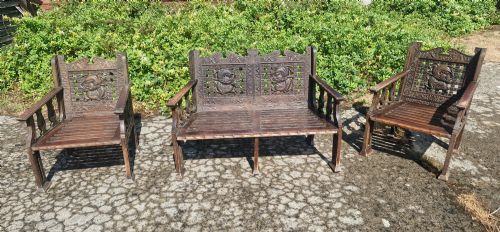
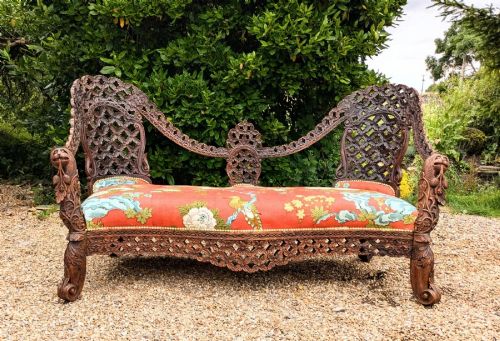
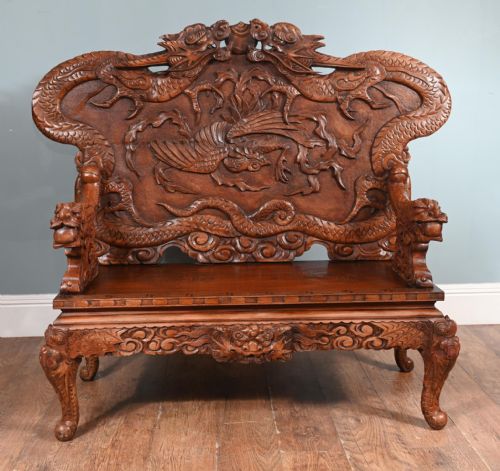
An ornate wood bench brings heavy carving and rich timber into a hall or conservatory.
Ornate Wood Bench
An ornate wood bench is a substantial seating piece defined by elaborate carving and solid timber construction. When you search for an ornate wood bench, you encounter forms ranging from high-back settles to veranda seating and multi-piece conservatory suites.
The pieces listed here span the nineteenth century and the Georgian period, drawing on distinct regional traditions such as Anglo-Indian, Chinese Qing Dynasty, and Italian Renaissance Revival. Walnut and oak dominate the European examples, while teak and lacquer define pieces from further afield.
Benches and settles appear alongside related seating like sofas and hall stands, sharing the same heavy decorative vocabulary. You are most likely to meet Victorian and nineteenth-century examples carved from walnut, oak, or teak.
How they were made
Craftsmen built these benches using hardwoods such as oak, walnut, and teak, selected for their strength and suitability for deep relief carving. Artisans shaped the timber by hand, cutting mortise and tenon joints to support the weight of heavy frames and solid seats.
Carving represents the defining technique across the inventory, with motifs executed in high relief on crest rails, back panels, and aprons. Specialised finishes include cinnabar lacquer on Chinese pieces and giltwood applications on Italian frames, complemented occasionally by upholstered fabric sections.
Ornate Wood Bench Retail Price Guide 2026
Typical asking prices for ornate wood bench among the pieces listed under this phrase on Sellingantiques today, from the lower quarter to the upper quarter. They describe what is for sale here now, not the wider market.
Chinese dragons peer from cinnabar lacquer seats while Victorian wood benches watch polite tea parties in conservatories.
What varies in quality
Quality in an ornate wood bench rests on the depth and crispness of the carving rather than the mere presence of decoration. Superior examples display undercut work where figures and foliage stand clear of the background, showing precise control of chisel and gouge.
The choice of timber and structural integrity also separate the standard from the exceptional. Dense, well-figured walnut, oak, or teak paired with tight joinery ensures the piece maintains its stability under heavy use.
The Ornate Wood Bench Glossary
- Settle
- A wooden bench with a high back, solid arms, and often a storage box beneath the seat. This form protected sitters from draughts in hallways and large rooms.
- Cinnabar lacquer
- A decorative coating made from the sap of the lacquer tree mixed with mercuric sulphide, applied in multiple layers and carved while semi-soft. This technique creates a rich red surface decorated with intricate low-relief scenes.
- Giltwood
- Timber coated with a thin layer of gold leaf over a prepared gesso base. This finish catches the light and emphasises the curves of Italian Baroque and Rococo frames.
- Renaissance Revival
- A nineteenth-century style that drew inspiration from sixteenth-century architectural and decorative motifs. Pieces in this style use heavy walnut, strapwork, and classical figural carving.
Ornate Wood Bench: Frequently Asked Questions
Where should I put an ornate wood bench?
These pieces suit large entrance halls, conservatories, or principal reception rooms where their substantial size and heavy carving can anchor the space. They work best against a plain wall that allows the silhouette and detail of the timber to stand out.
Because many examples feature high backs or integrated arms, measure your doorways and pathways carefully before deciding on a final position in your home.
How do I care for carved wood furniture?
Dust the deep recesses of the carving regularly with a soft, dry brush to prevent dirt from settling in the grain. Keep the timber away from direct heat sources and strong sunlight to avoid drying and splitting the wood.
Apply a microcrystalline wax sparingly once or twice a year if the finish appears dry, buffing it gently with a clean cloth to maintain a soft sheen.
How can I tell a Victorian piece from an earlier one?
Victorian pieces often display a eclectic mix of historical revivals, such as Gothic or Renaissance motifs, combined with mechanical sawing techniques visible in hidden areas. Earlier eighteenth-century examples rely entirely on hand-cut joinery and show subtle tool marks appropriate to the period.
Examining the underside, joints, and wood patination helps clarify the age when stylistic clues overlap.