





Ornate Wood Armchair
An ornate wood armchair brings heavy carving and rich timber into a room, offering both a seat and a sculptural focal point.
Ornate Wood Armchair
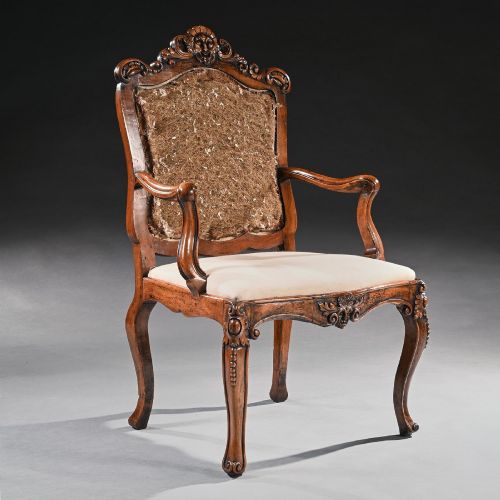
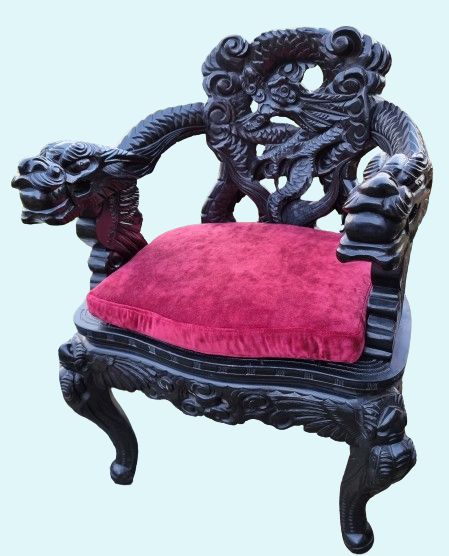
When you search for an ornate wood armchair, you encounter seating built with significant hand carving and decorative timber frames. These pieces span from the mid-eighteenth century through the nineteenth century and into the early twentieth century, showing global stylistic influences.
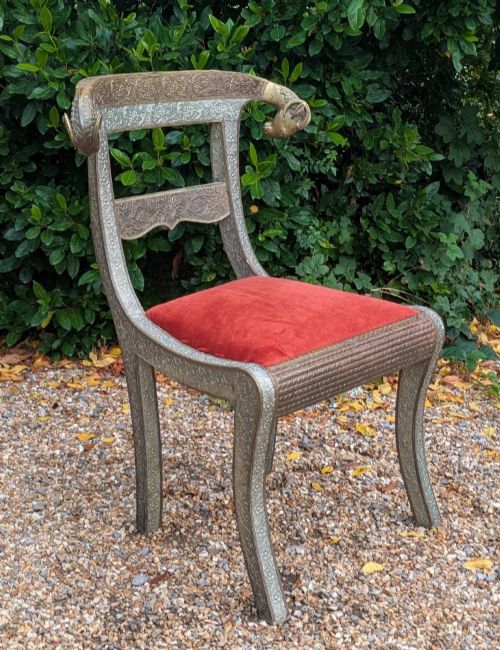
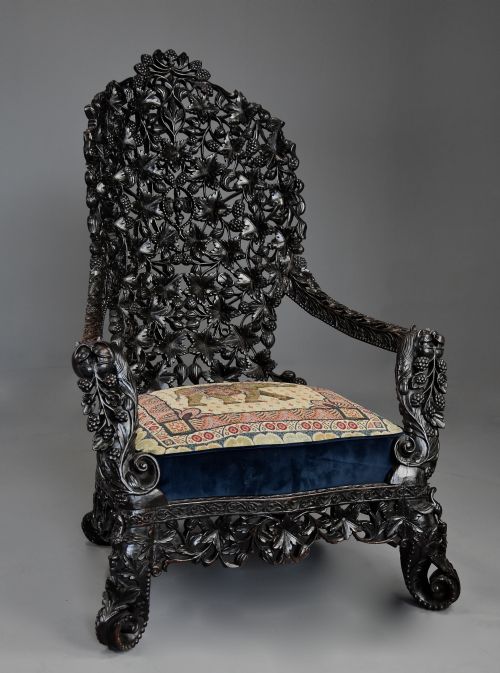
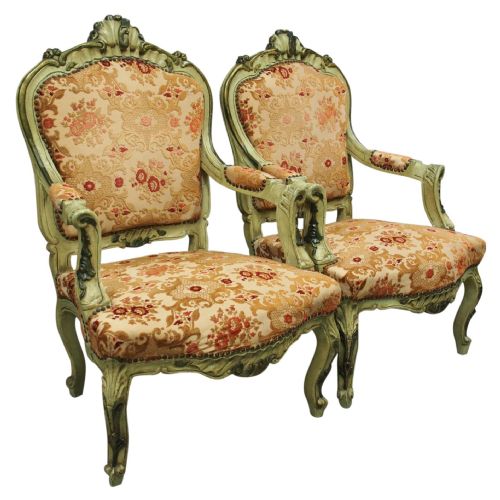
The selections available here range from Italian Rococo walnut frames and Baroque revival seating to Anglo-Indian blackwood chairs, Burmese country house suites, and Art Nouveau designs. Regional craftsmanship from India, China, Europe, and America shapes the heavy ornamentation seen across these examples.
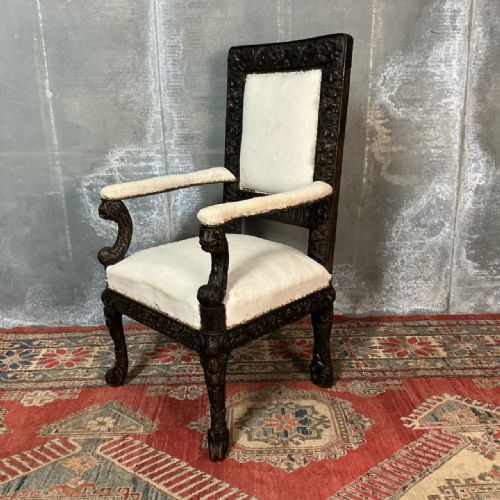
You are most likely to meet nineteenth-century walnut, oak, and hardwood models featuring elaborate pierced carving, gilded surfaces, or painted details. These seating forms include single elbow chairs, pairs of hall chairs, and larger conservatory or salon suites.
How they were made
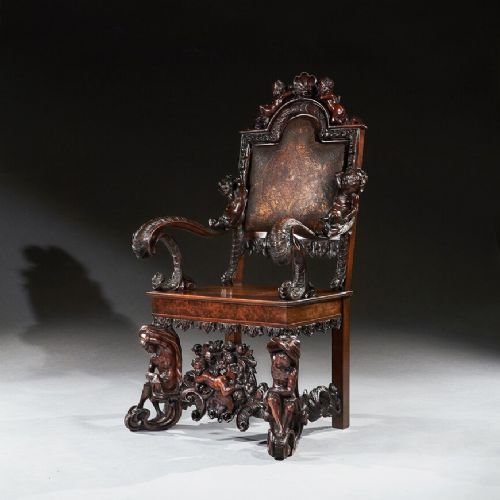
Makers utilised solid timbers such as walnut, oak, teak, padauk, and blackwood to construct these substantial frames. Skilled artisans shaped the dense wood through deep hand carving, creating intricate relief work, animal heads, and flowing scroll motifs.
Surface treatments involved careful application of gilding, paint, or bleach directly onto the carved wooden structure. Upholstery methods incorporated traditional textiles, velvet, leather, and tapestry, secured to support the heavy frames.
Ornate Wood Armchair Retail Price Guide 2026
Typical asking prices for ornate wood armchair among the pieces listed under this phrase on Sellingantiques today, from the lower quarter to the upper quarter. They describe what is for sale here now, not the wider market.
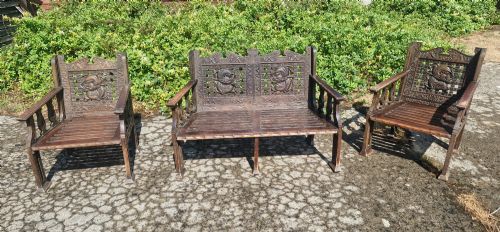
Seating forms on this page include single elbow chairs, pairs of hall chairs, and three-piece conservatory suites.
What varies in quality
Depth and precision of the hand carving separate standard production from exceptional artistry. Crisp undercut details in the wood demonstrate superior technical skill compared to shallow, mechanical shaping.
The selection of timber grain and the integrity of the original joints dictate structural longevity. Complete suites and matching pairs hold distinct advantages over single survivors through uniform patination and consistent design.
Andrea Brustolon
The Ornate Wood Armchair Glossary
- Rococo
- A theatrical style characterised by asymmetrical C-scrolls, shell motifs, and naturalistic curves. It dominates mid-eighteenth-century Italian seating designs.
- Baroque
- A heavy, ornate aesthetic defined by classical symmetry, deep relief carving, and grand proportions. This style frequently appears in nineteenth-century hall and arm chairs.
- Gilding
- The application of gold leaf or powder onto a wooden surface to create a brilliant finish. It highlights the intricate details of carved frames.
- Savonarola chair
- A folding chair constructed from intersecting wooden slats forming an X-shape frame. Examples originate from Italian traditions and find expression in global colonial forms.
- Blackwood
- A dense, dark tropical timber valued for intricate carving and heavy construction. It appears frequently in nineteenth-century Indian furniture.
Ornate Wood Armchair: Frequently Asked Questions
How do I date an ornate wood armchair?
Dating relies on examining the timber species, joinery methods, and the specific characteristics of the decorative style. Eighteenth-century models often show distinct regional hand tools and native hardwoods, while nineteenth-century revival pieces display heavier machine assistance combined with deep hand carving.
Matching the carved motifs to known stylistic periods, such as Rococo or Art Nouveau, helps narrow the decade of production. Reviewing the original upholstery foundations and nail types also provides clues to age.
Where should I place an ornate wood armchair?
These sculptural seats demand space to be appreciated from multiple angles, making them ideal as focal points in a drawing room or study. Their heavy carving works well against plain walls where the silhouette and timber grain stand out.
Avoid placing them in direct sunlight or near heat sources, as extreme temperatures dry out historic hardwoods and fragile gilding. A corner with moderate ambient light allows the chair to serve as both a seat and an art piece.
How do I care for antique carved wood?
Maintain the timber by dusting regularly with a soft, dry cloth and avoiding modern liquid polishes that build up over time. Natural beeswax applied sparingly helps nourish older wood surfaces without softening the original finish.
Protect upholstered elements by keeping them away from direct moisture and handling the carved arms gently when moving the chair. Professional conservation ensures delicate gilding and intricate joinery remain stable.
What defines Anglo-Indian furniture?
Anglo-Indian furniture combines traditional British seating forms with intricate native carving techniques executed by Indian artisans. These pieces frequently utilise dense tropical hardwoods like padauk and blackwood.
The ornamentation often incorporates local motifs, figures, and deep relief work that distinguish them from standard European production of the same era.