





Ornate Walnut Chair
An ornate walnut chair brings deep timber grain and bold carved detail into a room, offering both historical presence and sturdy seating.
Ornate Walnut Chair
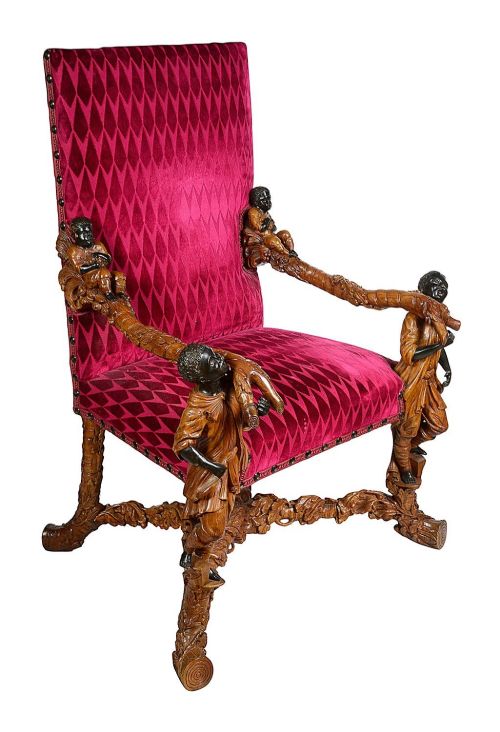
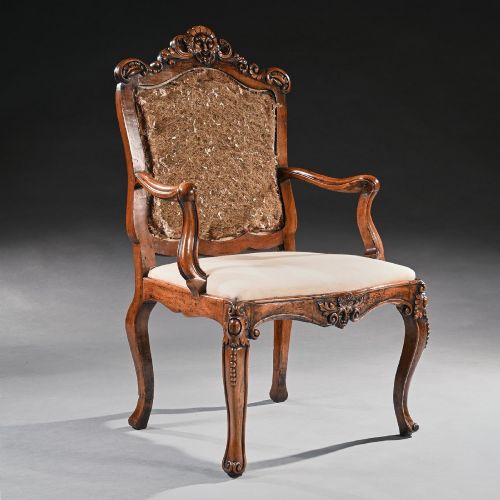
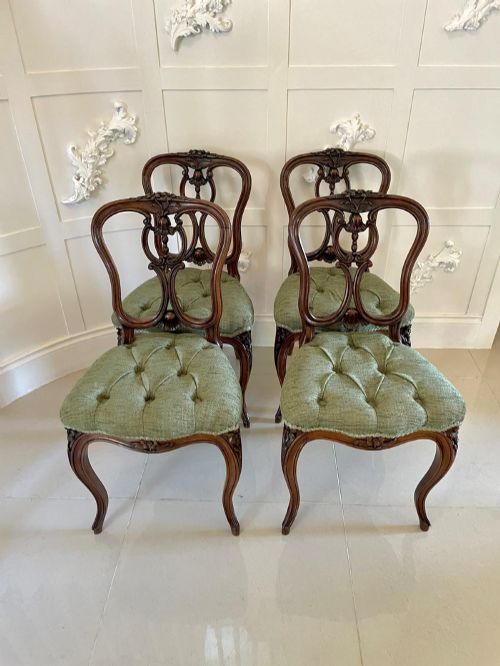
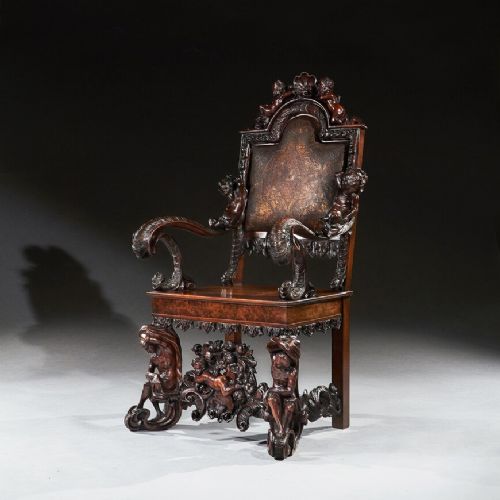
An ornate walnut chair spans several distinct centuries and continental revivals, focusing heavily on 19th-century interpretations of earlier eras. Buyers seeking this phrase will encounter armchairs, side chairs, hall chairs, and occasional accent pieces built for display and daily use.
The selections on this page lean towards revival styles, including Rococo Revival, Renaissance Revival, and Baroque. These seating options range from heavily carved high-backed chairs to inlaid musical seats and solid hall benches.
Origins vary across continental Europe, with Italian and Flemish influences appearing frequently alongside Swiss decorative pieces. Walnut serves as the primary structural timber across these diverse regional workshops.
How they were made
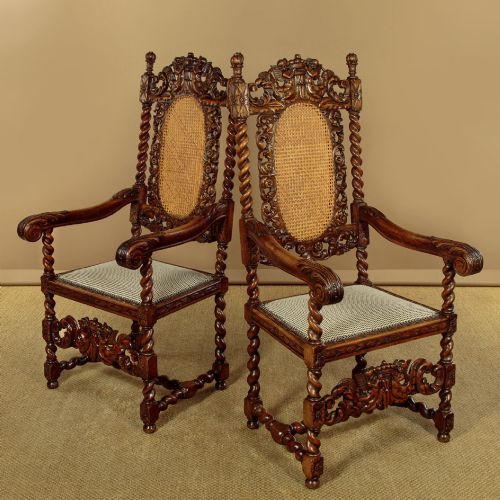
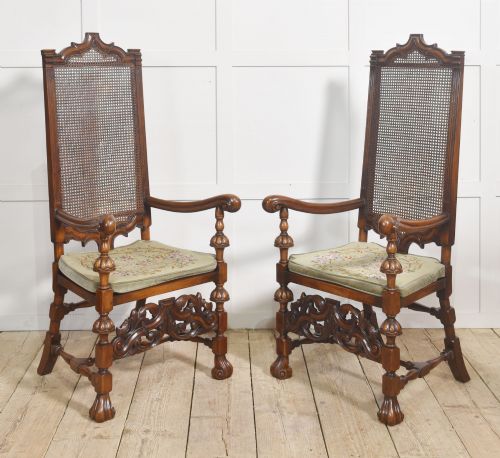
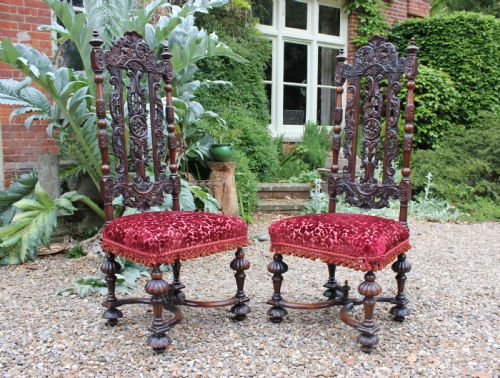
Cabinetmakers utilised solid walnut for its dense grain and receptive surface, allowing deep relief carving on head rails, arms, and legs. Some examples incorporate contrasting marquetry inlay or delicate bone work set directly into the wood.
Upholstery forms a vital component on many of these seats, employing textiles such as velvet, leather, tapestry, and woven fabric. Caning also appears on specific regional forms to provide a lighter panel within the heavy timber frame.
Ornate Walnut Chair Retail Price Guide 2026
Typical asking prices for ornate walnut chair among the pieces listed under this phrase on Sellingantiques today, from the lower quarter to the upper quarter. They describe what is for sale here now, not the wider market.
One exceptional nineteenth-century chair hides a musical box mechanism inside its heavily inlaid walnut frame.
What varies in quality
The depth and crispness of the hand carving dictate the visual standard of each piece, distinguishing ambitious exhibition work from standard production. Master carvers executed intricate foliage and sculptural elements with sharp undercutting that catches the light.
Structural integrity depends on the joinery within the walnut frame and the preservation of original timber surfaces. Pieces retaining patinated wood and high-grade upholstery materials command greater appreciation from collectors.
Andrea Brustolon
The Ornate Walnut Chair Glossary
- Walnut
- A hard, dark timber prized for furniture making due to its rich grain and strength under carving tools. It takes a fine polish and darkens naturally with age.
- Marquetry
- The art of applying small pieces of veneer to a structure to form decorative patterns. Craftsmen use varied wood tones and natural materials to create pictorial scenes.
- Sgabello
- A light wooden chair originating from the Italian Renaissance, featuring a supportive back and trestle supports instead of standard legs. They sat near hallways for brief seating.
- Baroque
- An ornate artistic style from the seventeenth and early eighteenth centuries characterised by dramatic curves, monumental scale, and rich surface ornamentation. Revival versions emulate this energy.
- Rococo Revival
- A nineteenth-century design movement mimicking the asymmetrical C-scrolls, shell motifs, and naturalistic flora of the eighteenth-century French court style.
Ornate Walnut Chair: Frequently Asked Questions
How do I identify a Renaissance revival chair?
Renaissance revival pieces typically feature architectural elements, straight high backs, solid walnut frames, and heavy carved relief motifs drawn from sixteenth-century models.
They often appear as hall chairs or benches with dark timber surfaces and formal upholstery.
Where were ornate walnut chairs placed historically?
These chairs served ceremonial or display functions in reception rooms, grand hallways, and parlours rather than casual daily lounging.
Armchairs stood near fireplaces or at heads of tables, while side and hall chairs lined grand corridors.
How do I care for antique walnut furniture?
Maintain antique walnut by keeping it away from direct sunlight and sudden temperature changes that dry out the timber.
Apply specialist wax sparingly to nourish the grain without building up heavy residues on the carved surfaces.