

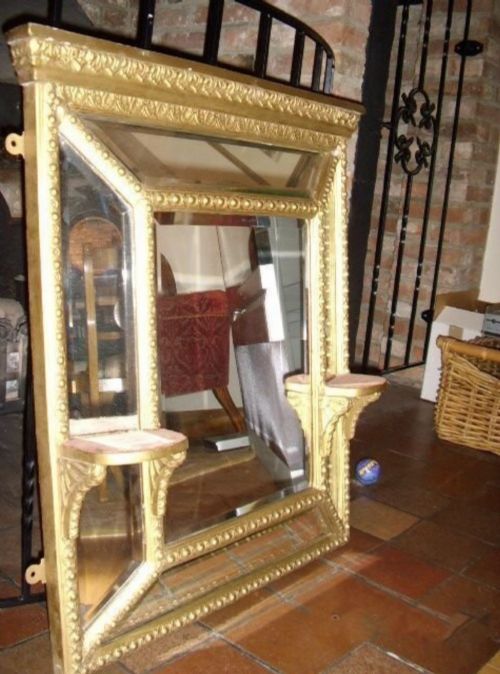


Ornate Wall Shelves
These ornate wall shelves bring decorative display to vertical spaces through intricate carving and gilding.
Ornate Wall Shelves
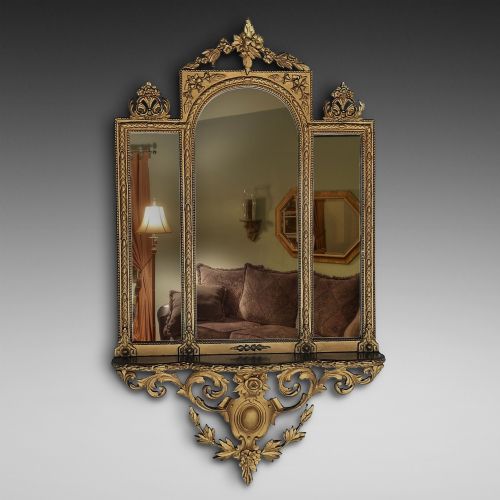
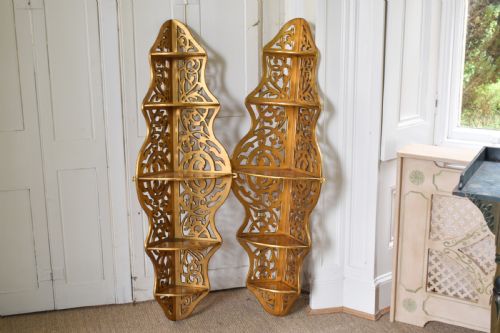
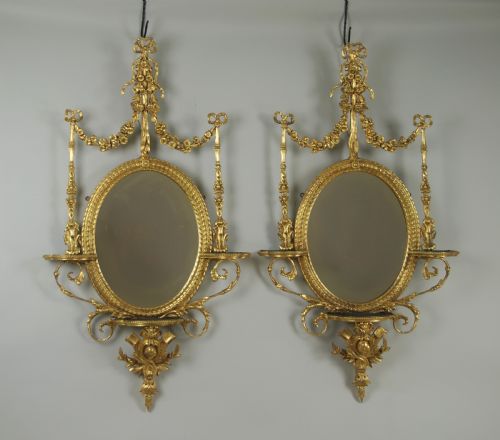
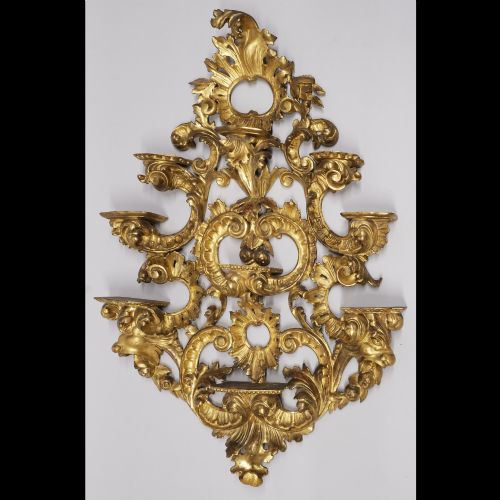
These ornate wall shelves combine functional display surfaces with highly decorative frames, brackets, and mirrors. The selection spans the eighteenth, nineteenth, and early twentieth centuries, drawing heavily on Victorian and Rococo Revival tastes.
Buyers will encounter various formats on this page, including single wall brackets, paired corner shelves, mirrored display ledges, and console tables with attached mirrors. Materials range from carved giltwood and gesso to walnut and wrought iron.
Origins include English, Italian, and Anglo-Indian workshops, demonstrating diverse regional interpretations of ornamental design. Many pieces integrate mirror glass to reflect light and enhance the sense of space in a room.
Materials and construction
Makers utilised softwoods and hardwoods such as walnut and mahogany as foundational structures for carving. Applied gesso provided a smooth surface for subsequent layers of gold leaf or gilding.
Carpenters and carvers employed traditional joinery alongside hand-carved ornamentation, shaping scrolls, cherubs, and foliage directly into the timber or composition material. Wrought iron appears in specific regional pieces like Italian wall shelves.
Ornate Wall Shelves Retail Price Guide 2026
Typical asking prices for ornate wall shelves among the pieces listed under this phrase on Sellingantiques today, from the lower quarter to the upper quarter. They describe what is for sale here now, not the wider market.
Listings feature items from the eighteenth, nineteenth, and early twentieth centuries, encompassing Victorian, Rococo Revival, and Italian design influences.
Assessing quality and craftsmanship
The distinction between tiers of work rests on the depth and crispness of the hand-carving rather than surface finish alone. Superior examples display sharply defined foliage, scrolls, and figures that retain their sculptural integrity.
The application of gold leaf and the preservation of original gesso layers significantly influence the visual depth of a piece. Finer items integrate mirror glass cleanly within the carved framework, maintaining structural harmony between support and decoration.
The Ornate Wall Shelves Glossary
- Giltwood
- Timber coated with gold leaf or a gold-coloured metallic finish. This technique creates a luminous surface that catches candlelight or natural daylight.
- Gesso
- A plaster-like mixture applied to wood surfaces as a base for gilding or painting. It allows craftsmen to model intricate low-relief decorations before applying gold leaf.
- Corbel
- A projecting bracket carved from stone or wood to support a weight above it. In wall shelving, it provides the structural anchor against the vertical surface.
- Girondole
- A branched wall-mounted light fixture incorporating a mirror. The reflective glass multiplies the illumination within the interior space.
- Pier Glass
- A tall mirror designed to hang on the wall between windows. These mirrors frequently incorporate small display shelves or brackets beneath the glass.
Ornate Wall Shelves: Frequently Asked Questions
How do I hang a heavy carved wall bracket?
Heavy carved wall brackets require secure fastening directly into wall studs or appropriate masonry anchors to support their weight and any displayed objects. Professional installation is recommended for large giltwood and mirrored pieces.
Ensure the mounting hardware matches the specific weight capacity of the bracket and the wall construction type to prevent displacement over time.
What rooms suit Victorian display shelves?
Victorian display shelves suit living rooms, hallways, and dining spaces where small decorative items require elevated placement. Their reflective glass and gilt surfaces naturally brighten darker corners or smaller rooms.
Grouping pairs together creates visual symmetry above console tables or mantelpieces.
How should I clean gilded wood?
Gilded wood requires gentle dusting with a soft, dry ostrich feather duster or microfiber cloth to remove surface particles. Avoid liquid cleaners, damp cloths, and chemical sprays, which can lift the delicate gold leaf and gesso.
Professional restoration is necessary if the gilt surface suffers structural damage or flaking.
What is Rococo Revival style?
Rococo Revival is a nineteenth-century design movement that reinterprets the asymmetric scrolls, curves, and naturalistic motifs of the eighteenth-century French Rococo period. Furniture and wall fixtures from this movement emphasise elaborate ornamentation and flowing lines.
This aesthetic appears frequently in the giltwood mirrors and brackets produced during the Victorian era.