


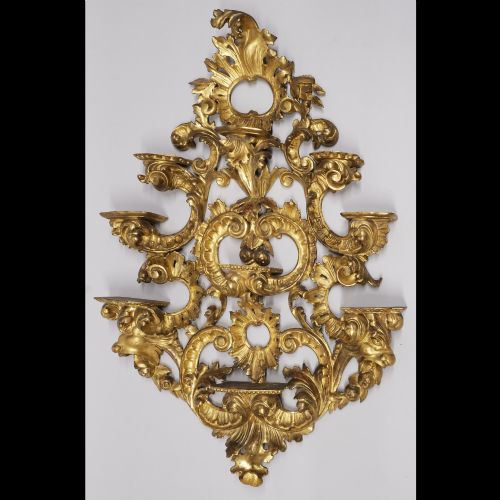


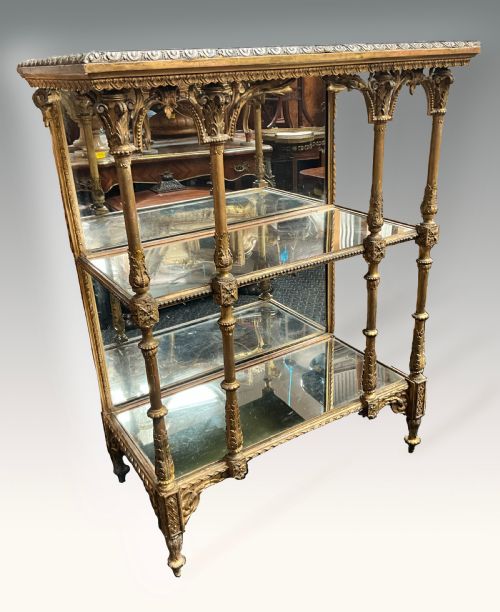


Ornate Wall Shelf
An ornate wall shelf brings architectural presence to a room, combining display space with decorative carving.
Ornate Wall Shelf
An ornate wall shelf serves to elevate small objects while adding sculptural detail to vertical spaces. When you search for an ornate wall shelf, you encounter pieces designed for projection from the wall, often incorporating brackets, ledges, or mirrored panels. These items emerge from the nineteenth and eighteenth centuries, reflecting historical revivals and regional craftsmanship.
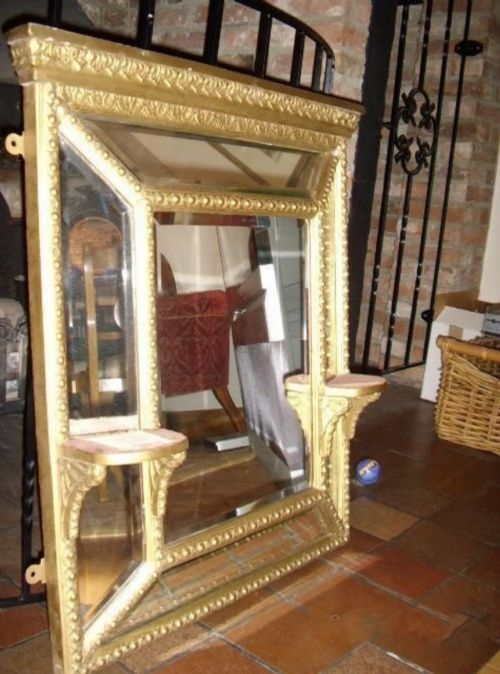
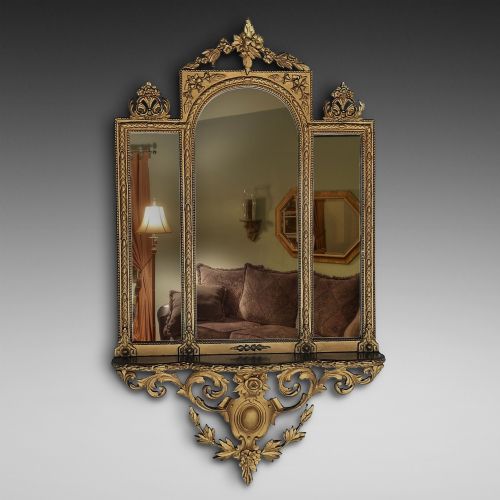
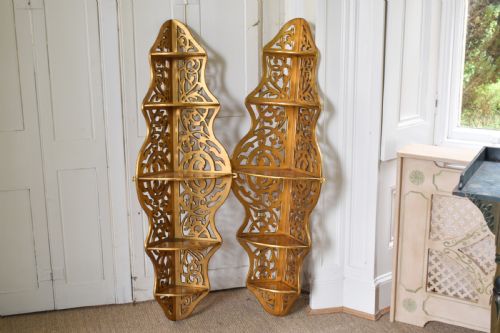
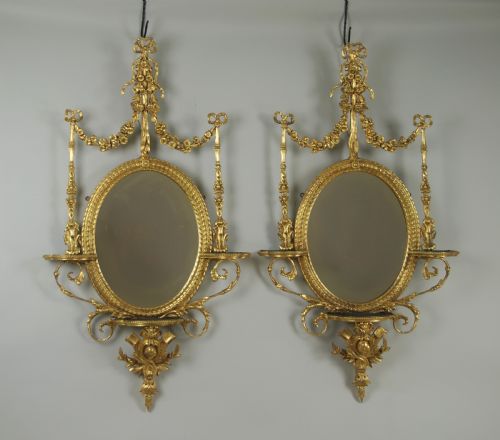
The selections available here lean heavily towards Victorian and Rococo Revival aesthetics, alongside French and Italian influences. You find carved giltwood, walnut, and wrought iron forms functioning as corner shelves, wall brackets, and display ledges. Many pieces combine shelves with mirrors or glass elements, expanding their visual weight in a room.
Materials and construction
Carved wood provides the primary structural foundation for these pieces, utilising timbers such as walnut, mahogany, and softwoods beneath decorative finishes. Gesso is frequently applied over wood to build up intricate relief details before gilding takes place. Gold leaf and simpler gilding methods give many surfaces their reflective, metallic sheen.
Mirror glass and bevel-cut glass integrate into designs featuring backplates or shelves, while wrought iron appears in specific regional pieces like Italian brackets. Joinery relies on traditional carpentry methods suited to weight-bearing wall fixtures, ensuring stability for objects placed upon the ledges.
Ornate Wall Shelf Retail Price Guide 2026
Typical asking prices for ornate wall shelf among the pieces listed under this phrase on Sellingantiques today, from the lower quarter to the upper quarter. They describe what is for sale here now, not the wider market.
Materials recorded across the inventory include giltwood, gesso, walnut, mahogany, wrought iron, and mirror glass.
Judgements of quality
Quality rests in the crispness and depth of the carving, distinguishing hand-worked relief from softer, moulded ornamentation. Superior pieces demonstrate meticulous application of gesso and gold leaf, where the underlying preparation preserves sharp edges and intricate motifs rather than filling them in.
The choice of timber and the integrity of structural joins dictate longevity, particularly for brackets supporting weight. Finer examples exhibit harmonious proportions between the shelf projection and the decorative backplate, reflecting thoughtful design in historical workshops.
The Ornate Wall Shelf Glossary
- Giltwood
- Wood that has been coated with gold leaf or a metallic finish. This technique creates a luminous surface common on decorative brackets and mirrors from the eighteenth and nineteenth centuries.
- Gesso
- A plaster-like mixture applied to wood surfaces to create a smooth base for carving or gilding. It allows artisans to shape intricate relief details before applying gold leaf.
- Corbel
- A structural bracket projecting from a wall to support a weight above it. In decorative shelves, it often takes an ornate, scroll-like carved form.
- Girondole
- A branched wall-mounted fixture that combines a mirror with candle holders or display shelves. These pieces reflect candlelight to illuminate surrounding spaces.
- Pier glass
- A tall mirror designed to hang on the wall between windows, frequently paired with a console table or shelf beneath it.
Ornate Wall Shelf: Frequently Asked Questions
How were ornate wall shelves used?
These shelves held small decorative objects, porcelain, or clocks, elevating prized possessions to eye level. They functioned both as utility surfaces and as decorative focal points within formal rooms.
In domestic interiors, they made use of empty wall space, often positioned above console tables or between windows to increase light and perceived room depth.
How do I secure a wall shelf?
Wall brackets and shelves require appropriate fixings matched to the weight of the timber and the type of wall construction. Ensuring the fixing engages securely with wall studs or masonry prevents detachment.
Professional installation is often advisable for heavier carved wooden pieces, particularly those incorporating glass or mirrored components.
How do I clean giltwood?
Giltwood surfaces require gentle dusting with a soft, dry brush to avoid disturbing fragile gold leaf or gesso. Moisture and commercial chemical cleaners damage the delicate metallic finish.
Maintenance involves preserving the dry environment of the room to prevent timber movement that could crack the gesso layer.