




Ornate Velvet Chairs
Ornate velvet chairs bring tactile luxury and historical character into a room through carved timber and plush fabric.
Ornate Velvet Chairs
Ornate velvet chairs encompass seating built across several centuries, featuring dense carving and rich upholstery. These pieces serve as focal points in a drawing room or hallway, combining decorative presence with functional seating.
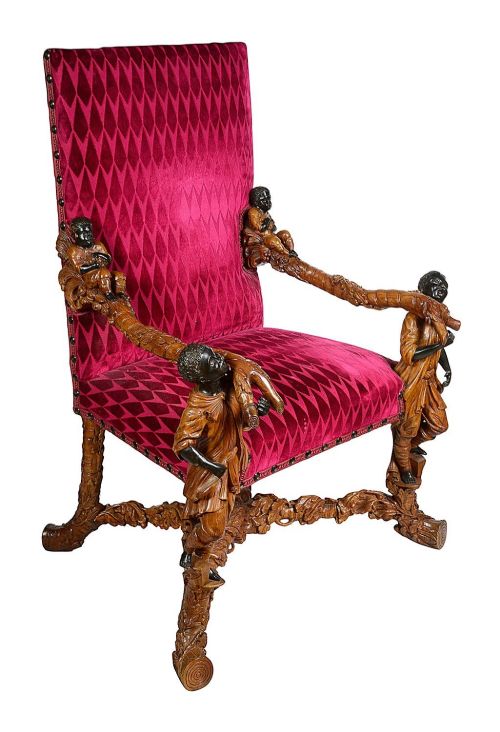
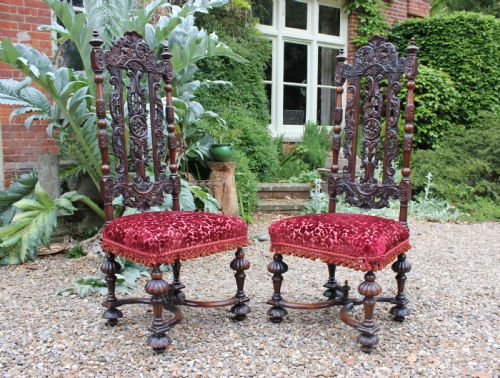
The selection on this page ranges from 18th century baroque walnut side chairs to 19th century Napoleon III gilded armchairs and Anglo-Indian carved gilt wood designs. Buyers frequently encounter Victorian oak throne chairs alongside later 20th century beech wood sofas.
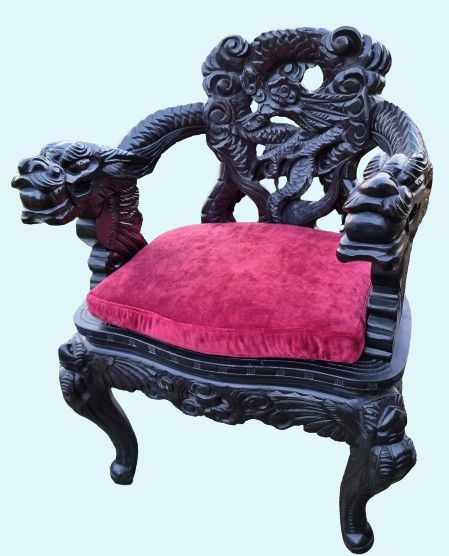
Forms span armchairs, hall chairs, side chairs, occasional chairs, and sofas. Styles draw from Renaissance Revival, Gothic Revival, Chinese Export, and maximalist traditions, often incorporating hardwood, walnut, teak, and giltwood.
Materials and construction methods
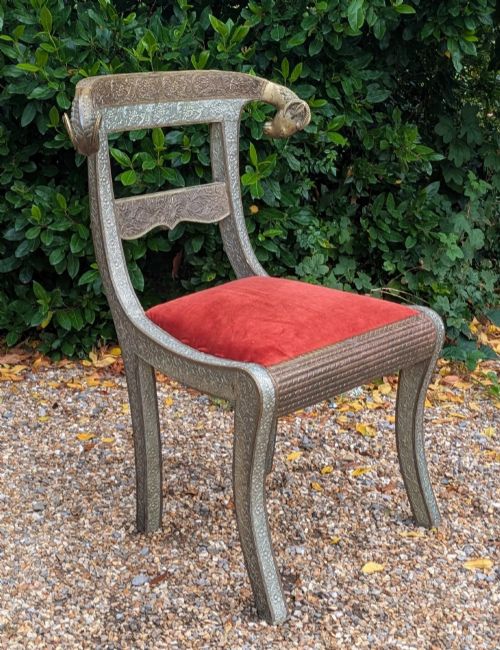
Makers shaped these frames from solid timbers including walnut, oak, beech, and assorted hardwoods, frequently applying giltwood or silver metal sheet for decorative brilliance. Structural joinery supports elaborate hand-carved details such as rams' heads and floral motifs.
Upholstery relies on traditional velvet, providing a soft pile that complements the carved woodwork beneath. Brass hardware and structural elements appear across various pieces to secure joints and decorative attachments.
Ornate Velvet Chairs Retail Price Guide 2026
Typical asking prices for ornate velvet chairs among the pieces listed under this phrase on Sellingantiques today, from the lower quarter to the upper quarter. They describe what is for sale here now, not the wider market.
One unexpected Indian wedding chair even incorporates carved rams' heads alongside silver metal sheet.
Measures of quality
Quality rests upon the depth and crispness of the carving across the timber frame, distinguishing master craftsmanship from simpler production. The integration between the structural woodwork and the applied gilding or metal sheeting dictates visual cohesion.
The preservation of the original or period velvet upholstery relative to the rigidity of the underlying frame defines the piece's integrity. Regional stylistic purity, such as authentic Anglo-Indian or baroque proportions, elevates historical value.
The Ornate Velvet Chairs Glossary
- Giltwood
- Timber treated with gold leaf or gilt preparation to create a metallic golden surface. This finish accentuates carved details on frames from periods such as the Napoleon III era.
- Baroque
- An elaborate artistic style characterised by dynamic movement and dramatic ornamentation. Pieces from this tradition utilise rich walnut and sweeping scrollwork.
- Anglo-Indian
- Furniture made in India by local artisans using traditional techniques adapted for British tastes. These items often feature dense botanical and animal carvings in hardwood.
- Hall chair
- A rigid timber seat historically placed in entrance halls rather than domestic living spaces. They frequently display prominent carved backs and lack plush padding.
Ornate Velvet Chairs: Frequently Asked Questions
Where should I place an ornate velvet chair?
These chairs function well as statement pieces in entrance hallways, master bedrooms, or formal reception rooms.
Their decorative carvings and tactile upholstery demand space to be fully appreciated rather than crowded against other furniture.
How do I care for antique velvet?
Velvet requires gentle brushing with the pile to maintain its lustre and prevent permanent crushing of the fibres.
Keep these chairs away from direct sunlight to preserve the richness of the fabric colour over time.
Are these chairs comfortable for daily seating?
Comfort varies significantly depending on the original purpose of the specific chair type.
Whilst armchairs and sofas offer relaxed lounging, hall chairs and side chairs were built with upright postures in mind.
How can I tell a Victorian chair apart from an 18th century piece?
Eighteenth century pieces like baroque walnut chairs typically display restrained structural proportions and deeper patination.
Victorian items often lean towards heavier proportions with bolder revival styling such as Gothic or Renaissance motifs.