





Ornate Silver Set
These ornate silver set pieces bring intricate Victorian and Edwardian craftsmanship directly to the table.
Ornate Silver Set
An ornate silver set gathers domestic serving vessels, tea services, and dining implements created during the Victorian and Edwardian eras. Buyers looking for an ornate silver set will encounter diverse forms including tea and coffee services, candelabra, cruet sets, and decanter stands.
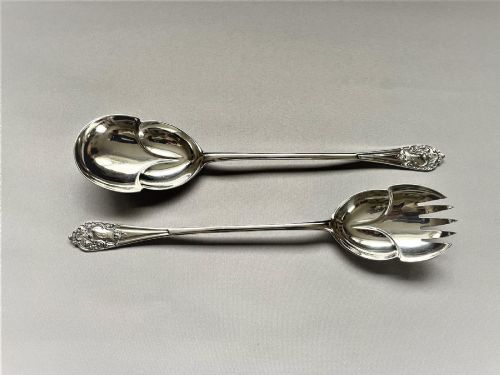
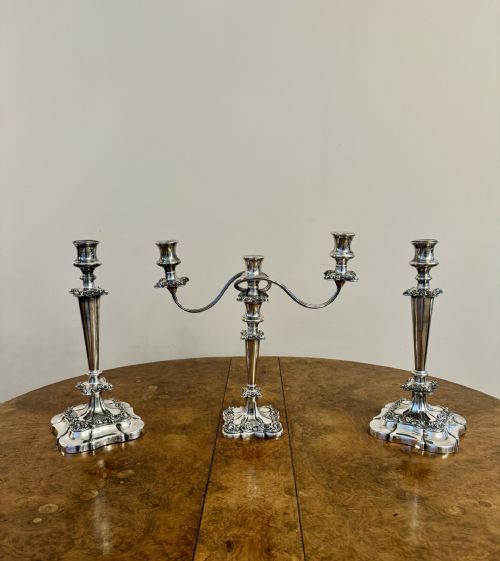
The objects span solid sterling silver and silver plate, alongside functional groupings paired with cut glass, bone, or horn mounts. Pieces range from multi-piece tea gatherings to matched pairs of serving implements and candlesticks.
Victorian and Edwardian workshops produced these groupings in styles covering Victorian Rococo Revival, Gothic, and Art Deco. Each set serves both a decorative function on the sideboard and a practical role in formal dining.
Materials and construction
Makers utilised sterling silver and silver plate over base metals, often combining glass, bone, or brass elements within a single grouping. Techniques such as piercing, casting, and detailed chasing created the high-relief grapevine and floral patterns seen across the pieces.
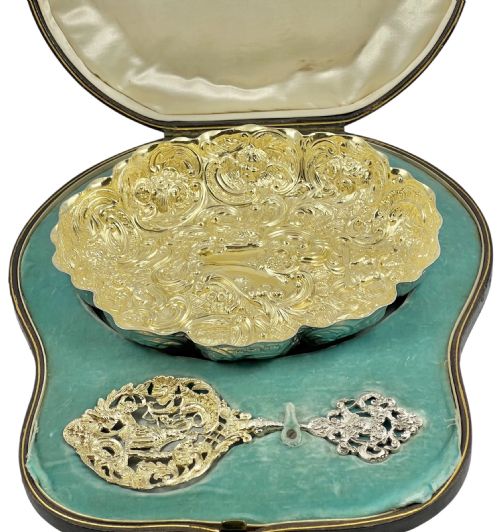
Gilding was applied to the interior surfaces of items like sugar bowls to protect the metal from corrosion while adding visual contrast. Frames and stands incorporated sturdy metal bases designed to securely house removable glass decanters or bowls.
Ornate Silver Set Retail Price Guide 2026
Typical asking prices for ornate silver set among the pieces listed under this phrase on Sellingantiques today, from the lower quarter to the upper quarter. They describe what is for sale here now, not the wider market.
Assessing quality in silver sets
The depth and crispness of the chased or cast ornamentation distinguish finer examples from simpler production. Superior sets maintain uniform detailing across every component, whether dealing with a multi-piece tea service or matched candlesticks.
The integrity of applied mounts and the quality of the base materials, from sterling silver to heavy silver plate, dictate longevity and presence. Preservation of original gilding and matched components within a service elevates the standing of the pieces.
Smith & Sissons & Co·Elkington·International Silver Co
The Ornate Silver Set Glossary
- Silver Plate
- A layer of silver fused or electroplated to a base metal core such as nickel silver or brass. This technique allowed manufacturers to produce substantial decorative items at a lower cost than solid sterling silver.
- Sterling Silver
- An alloy consisting of 92.5 percent silver and 7.5 percent other metals, typically copper, to increase durability. Items made to this standard often bear hallmarks indicating the assay office and year of creation.
- Silver Gilt
- Silver that has been coated with a thin layer of gold on its surface. This finish provides a warm, golden sheen and protects the underlying silver from tarnishing.
- Queens Pattern
- A decorative silverware design featuring an ornate shell and scroll motif along the borders of the handle. It gained widespread popularity during the Victorian period for formal flatware.
- Filigree
- Delicate openwork ornamentation formed from fine intertwined threads of metal soldered together. It appears frequently in settings for jewellery and decorative stands.
Ornate Silver Set: Frequently Asked Questions
How do I care for silver plated items?
Silver plated items require gentle cleaning with specialised silver polish and a soft cloth to preserve the thin metal layer. Avoid abrasive cleaners or harsh scrubbing that can wear through the plating down to the base metal.
Store the pieces in dry environments away from direct sunlight to minimise tarnishing between uses.
What is the difference between silver and silver plate?
Solid silver is composed of sterling standard metal throughout the entire piece, marked by official hallmarking stamps. Silver plate consists of a base metal, such as brass or nickel silver, coated with a thin outer layer of pure silver.
Plated items offer the visual appeal of solid silver while remaining accessible for larger domestic serving pieces.
How can I date an antique silver set?
Dating relies on maker marks, design styles such as Rococo Revival or Art Deco, and official hallmarks found on sterling silver items. Stylistic clues like grapevine detailing or Gothic influences help narrow down the period of manufacture.
Accompanying documentation or fitted wooden cases can also provide clues to the exact era of production.