
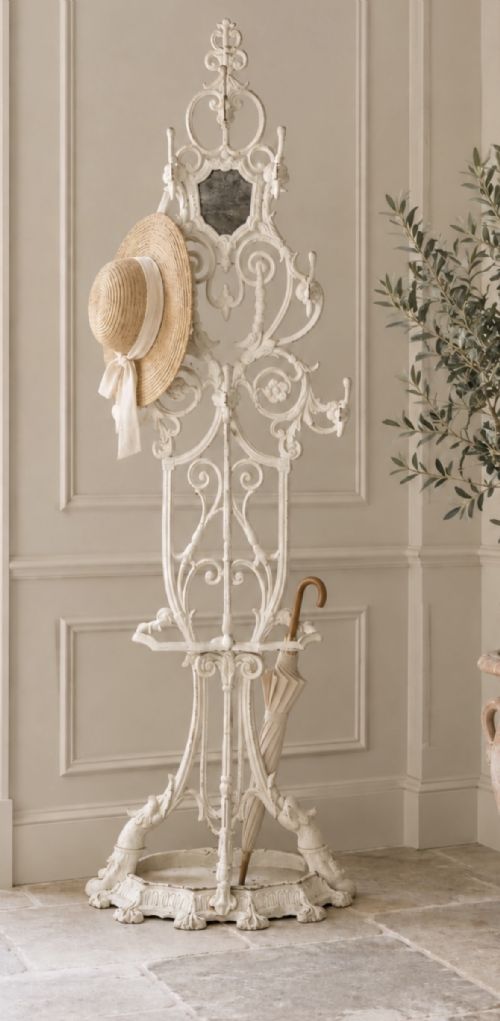
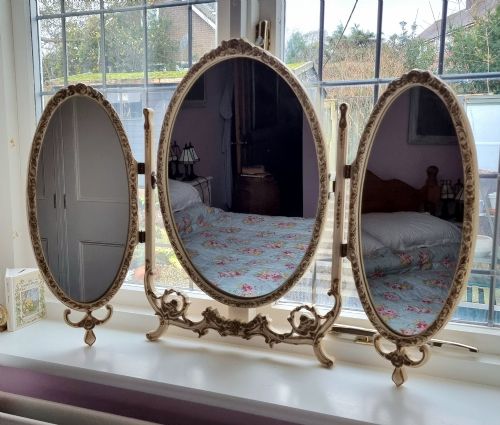
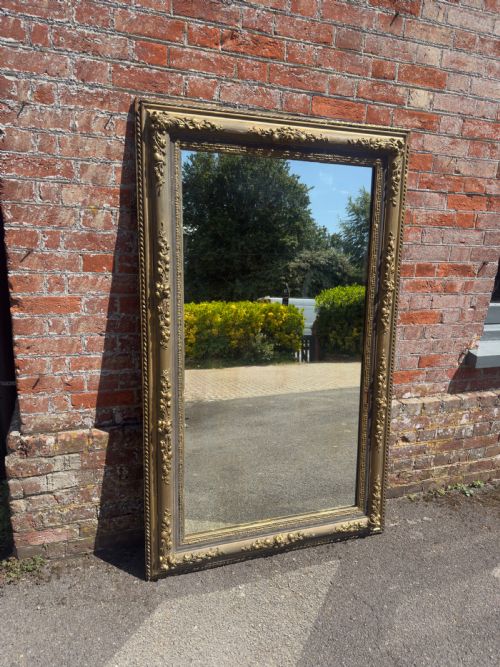
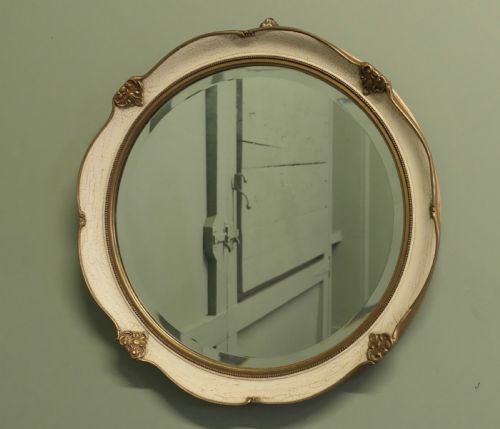



Ornate Painted Mirror
An ornate painted mirror brings historical character and decorative presence to a room through carved detail and layered colour.
Ornate Painted Mirror
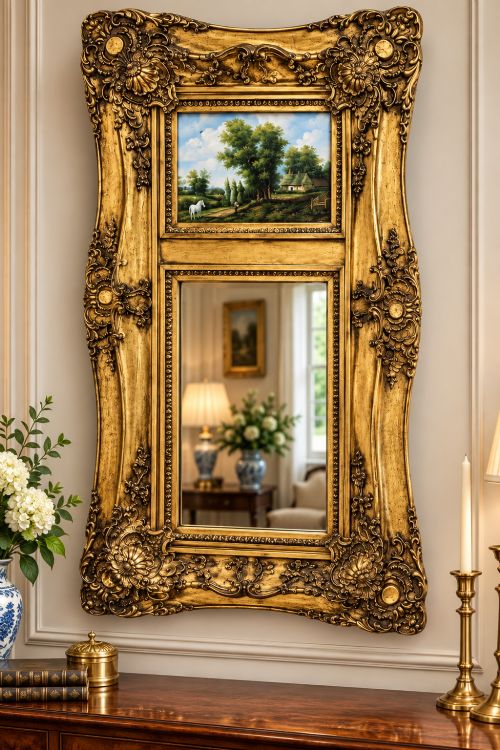
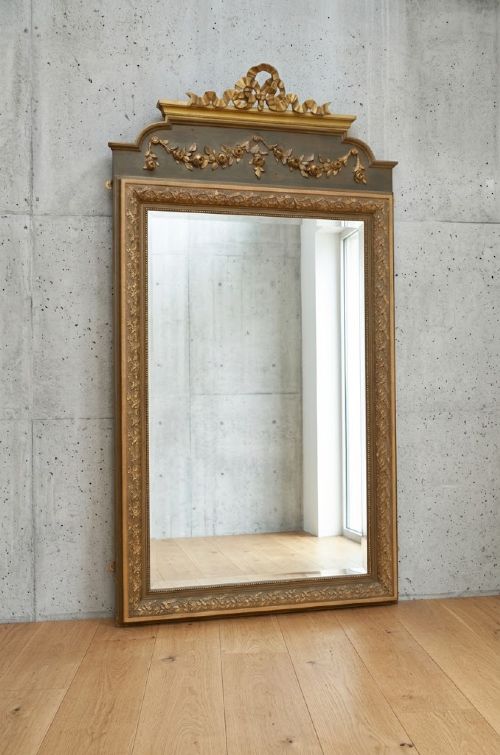
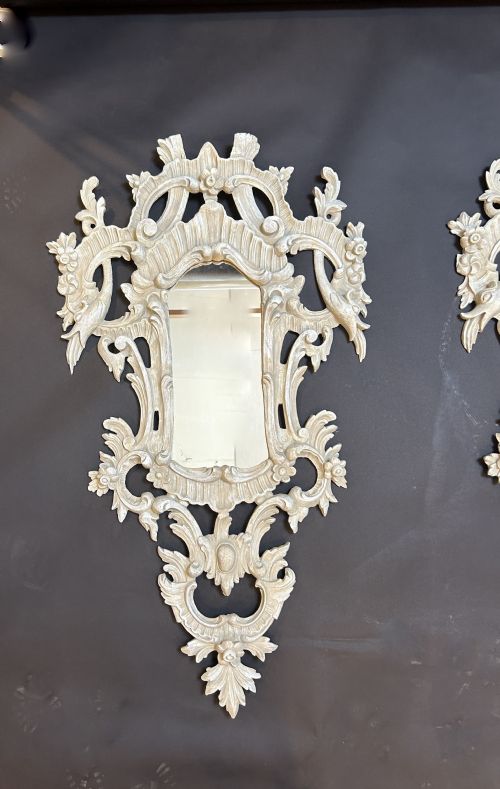
An ornate painted mirror combines carved wooden frames with applied paint, often enhanced with giltwood, gold leaf, or contrasting tones like French grey, cream, and olive green.
The pieces seen here span centuries of design, with a strong representation of 19th-century French and English overmantel mirrors, wall mirrors, and pier mirrors alongside earlier Italian and Venetian examples.
Makers and artisans utilised styles ranging from Rococo Revival and Belle Époque to Italianate and classical tastes, producing heavily decorated frames featuring floral crests, ribbons, and scrolls.
How they were made
Frames rely on carved wood such as oak or pine as a structural base, frequently built up with layers of gesso to create high-relief scrolls, cartouches, and floral motifs.
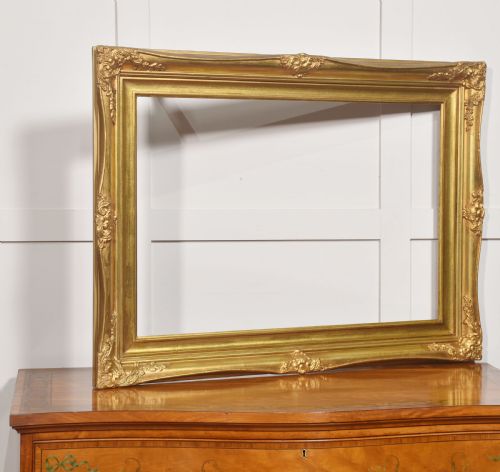
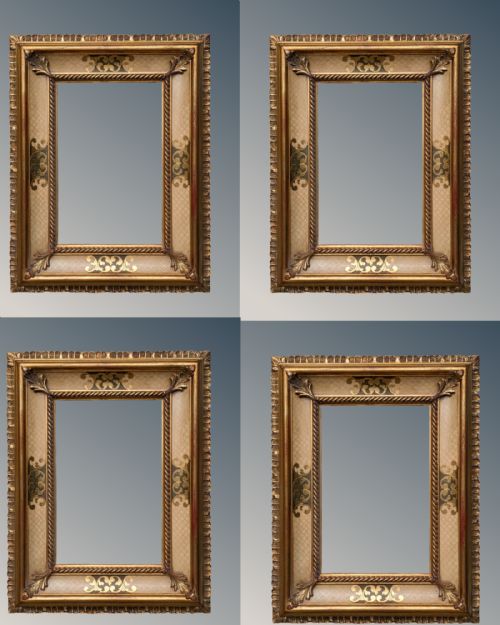
Surfaces are finished with paint applications combined with gold leaf, giltwood, or ebonised details, creating the characteristic aged patina found on period pieces.
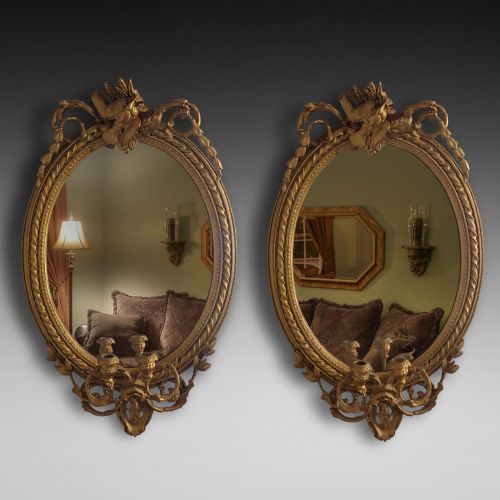
Listings feature 19th-century pieces alongside 18th-century Venetian and Georgian examples, utilising gesso, carved wood, gold leaf, and glass across wall mirrors, overmantels, and girandoles.
What varies in quality
The depth and crispness of the hand-carved woodwork and the application of original gesso ornamentation dictate the sculptural quality of the frame.
The presence of original silvered glass plates and untouched historic paint finishes distinguish exceptional survivals from later decorative reproductions.
The Ornate Painted Mirror Glossary
- Gesso
- A plaster-like mixture applied to wooden frames to build up sculptural details before gilding or painting. This material allows for intricate relief work that defines Rococo and classical styles.
- Overmantel mirror
- A large horizontal mirror designed to sit directly above a fireplace mantel. These pieces frequently feature shaped tops and elaborate crests.
- Giltwood
- Wood that has been coated with a thin layer of gold leaf or gold paint. It appears widely alongside painted surfaces to catch the light.
- Cartouche
- An ornamental frame or tablet resembling a rolled-up piece of paper, often centred on the crest of a mirror. It provides a focal point for the carver's artistry.
- Girandole
- A wall-mounted mirror featuring attached candle sconces. The reflective glass magnifies the light from the candles.
Ornate Painted Mirror: Frequently Asked Questions
How do I hang a heavy overmantel mirror safely?
These substantial frames require professional wall fixings secured directly into masonry or heavy timber studs. The weight of the carved wood and glass demands robust weight-bearing brackets.
Position the mirror at a height that reflects the room's main light sources or focal points. Ensure the hanging wire or integrated D-rings are rated well above the actual weight of the piece.
Are these mirrors French or English?
The selection includes both French and English pieces, alongside Italian examples. French designs often lean towards exuberant Rococo Revival curves and floral crests.
English variants frequently display classical restraint or distinct architectural proportions. Examining the timber beneath the gesso helps clarify the regional origin.
What is an original mirror plate?
An original mirror plate is the historic glass installed when the frame was first made. These plates often show characteristic foxing, minor oxidation, and gentle distortion.
Modern replacement glass provides a crystal-clear reflection, whereas antique glass carries historical depth. Collectors generally value untouched original plates despite natural ageing.
How do I clean an antique painted frame?
Dust the carved details gently with a soft, dry brush to prevent dirt accumulation in the gesso recesses. Avoid commercial cleaning sprays or water, which can damage aged paint and gilt surfaces.
Preserving the dry, historic patina requires minimal intervention. Professional conservation is advised for any structural flaking of the gesso.