




Ornate Metal Dish
An ornate metal dish brings tactile weight and layered historic detail to a room, ranging from small French vide poches to large Japanese chargers.
Ornate Metal Dish
The selections here encounter varied aesthetic movements, drawing heavily on French Rococo Revival, Empire, Art Nouveau, and Aesthetic Movement design. Origins stretch from European workshops to Japanese Meiji period pieces and Indian Raj copperwork.
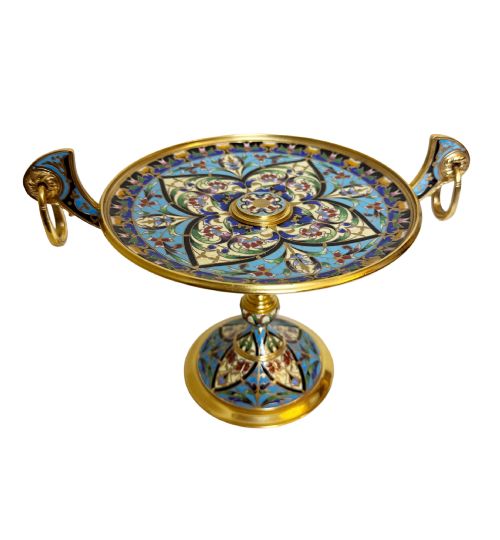
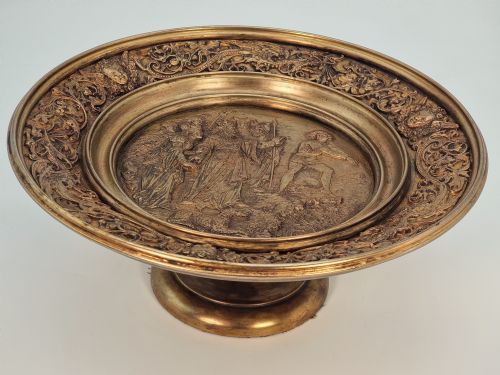
Form and material dictate the character of each piece, uniting cast metals with decorative enamel, marble bases, and cut glass elements. A buyer meets everything from heavy bronze tazzas to delicate cloisonne chargers.
How they were made
Maker techniques rely on heavy casting and metalworking, utilising bronze, brass, copper, and gilt ormolu as structural foundations. Champleve and cloisonne enamelling techniques apply coloured glass pastes into recessed metal cells or onto wire frameworks before firing.
Hand-worked repousse details on copper chargers demonstrate surface hammering from the reverse to raise ornate ornamental motifs in relief. Gilding methods apply thin layers of gold or gilt finish over bronze, while marble supports and cut glass components add contrasting textures.
Ornate Metal Dish Retail Price Guide 2026
Typical asking prices for ornate metal dish among the pieces listed under this phrase on Sellingantiques today, from the lower quarter to the upper quarter. They describe what is for sale here now, not the wider market.
Object forms represented across the inventory include tazzas, decorative urns, chargers, plates, bowls, centrepieces, trays, dishes, candlesticks, and chamber sticks.
What varies in quality
Quality rests upon the crispness of the cast ornamentation and the depth of the chasing work across the metal surface. Superior examples display sharply defined foliage, figures, or dragons without softness in the relief work.
The integrity of applied elements, such as intact enamel plaques, secure marble mounts, and even gilding wear, separates standard production from exceptional nineteenth-century decorative pieces.
The Ornate Metal Dish Glossary
- Tazza
- A shallow bowl or cup mounted on a stem and foot, frequently used as a centrepiece or decorative dish. These pieces sit elevated above the table surface.
- Vide poche
- French for empty pocket, this small dish serves to hold coins, keys, or small personal items. They appear frequently in late nineteenth-century gilt bronze.
- Champleve
- An enamelling technique where troughs or cells are hollowed out of the metal surface and filled with vitreous enamel before firing. The surrounding metal remains visible as lines.
- Cloisonne
- A technique where flat metal wires are soldered onto a metal base to form compartments, which are then filled with enamel paste and fired. Japanese Meiji period chargers utilise this method with great precision.
- Ormolu
- Gilded bronze, where finely ground gold mercury amalgam is applied to a bronze base and heated to drive off the mercury. This leaves a rich golden surface finish common in French decorative arts.
Ornate Metal Dish: Frequently Asked Questions
What is an ornate metal dish used for?
These pieces serve primarily as decorative accents on tables, sideboards, or desks, functioning as centrepieces or display chargers. Smaller forms act as vide poches for holding personal items in hallways or studies.
Their substantial weight and decorative metalwork mean they are chosen to draw the eye and anchor a room's aesthetic rather than for practical utility.
How do I identify a nineteenth-century piece?
Look to the casting quality, patination, and stylistic markers such as Rococo Revival curves or Art Nouveau flowing lines. Materials like heavy gilt bronze, champleve enamel, and integrated marble bases point directly to nineteenth-century production methods.
Makers of this era combined traditional metalworking with revivalist designs, creating distinct stylistic signatures from the Regency period through to 1900.
Are these dishes suitable for daily use?
Most of these decorative objects are better suited to static display due to delicate enamel work, gilding, or inset marble components. Handling them with care preserves the historic surface finish and prevents damage to vulnerable edges.
Placing them on stable surfaces away from heavy traffic ensures they remain secure while on display in the home.
How do I care for antique metal dishes?
Dust gently with a soft, dry cloth to prevent the accumulation of dirt in recessed chased or repousse details. Avoid abrasive metal polishes, which can strip historic gilding from ormolu or damage delicate enamels.
Keeping pieces away from direct moisture and extreme temperature fluctuations protects integrated materials like marble bases and glass inserts.