

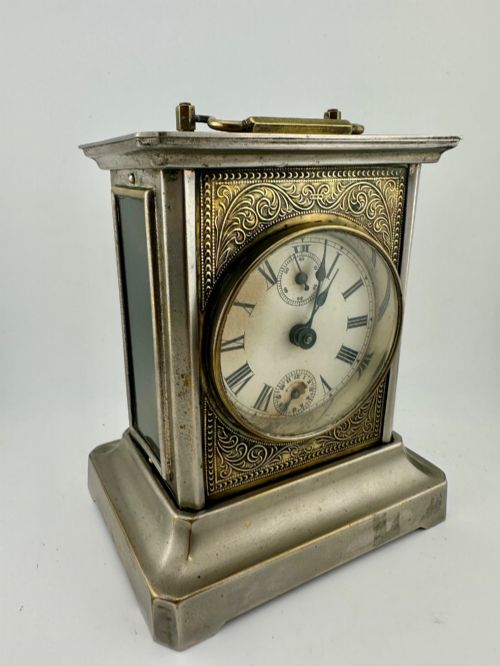


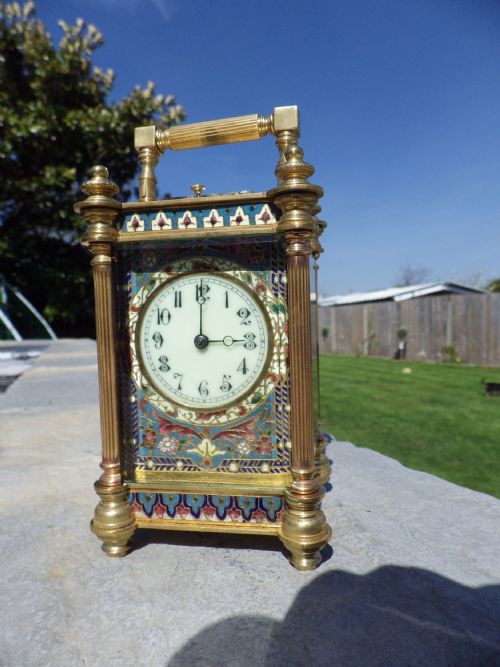
Ornate Mechanical Clock
An ornate mechanical clock brings ticking life and heavy metalwork into a room, uniting precise gear trains with lavish period design.
Ornate Mechanical Clock
When searching for an ornate mechanical clock, you will encounter various forms ranging from compact travel timepieces to heavy mantelpieces and bracket clocks. The most common varieties met here are carriage clocks and glass-cased regulators dating from the nineteenth century and the Edwardian era.
These pieces display distinct historical influences, predominantly French Rococo Revival and Louis styles, alongside English fusee movements. Cases range from miniature brass housings to large gilt bronze and crystal enclosures with decorative panels.
Origins span across English workshops and French makers, incorporating musical alarms, repeaters, and complicated dials alongside straightforward timekeeping. Each form reflects the domestic taste of the late nineteenth and early twentieth centuries.
Materials and construction methods
Makers utilised cast brass, ormolu, and gilt bronze to form heavy structural cases, frequently incorporating bevelled glass panels to reveal the interior escapement. Metals were often engraved, chased, or silvered to create contrasting surface textures.
Internal mechanics rely on brass gear trains driven by mainsprings or twin fusee chains, with platforms carrying balance wheels or pendulums. Dials commonly feature painted enamel numerals, sometimes complemented by subsidiary dials for alarms or secondary indicators.
Ornate Mechanical Clock Retail Price Guide 2026
Typical asking prices for ornate mechanical clock among the pieces listed under this phrase on Sellingantiques today, from the lower quarter to the upper quarter. They describe what is for sale here now, not the wider market.
Distinctions in craftsmanship
Superior examples are defined by the crispness of the cast metal ornamentation and the presence of signed, high-grade movements by notable makers. Heavier cases with fire-gilt surfaces and intact original travel housings stand apart from simpler production pieces.
Complexity of the mechanism also sets tiers of quality, with repeating strikes, musical functions, and multiple complications elevating a piece above standard time-only carriage clocks.
Brunelot·Samuel Marti·James Moore·Lenzkirch·E.J.Dent·Paul Garnier·Hay London
The Ornate Mechanical Clock Glossary
- Carriage clock
- A portable spring-driven timepiece originally designed for travelling officers during the nineteenth century. They typically feature a rectangular brass case with glass panels and a handle on top.
- Fusee
- A conical pulley used in better mechanical clocks to maintain even tension on the gear train as the mainspring unwinds. This mechanism ensures consistent timekeeping throughout the power reserve.
- Ormolu
- Gilded bronze ornaments applied to clock cases, created using a mercury-gilding technique that produced a deep, durable metallic lustre. The finish is characteristic of fine French mantel pieces.
- Crystal regulator
- A mantel clock housed within a heavy glass and brass case that exposes the pendulum and movement from all sides. These pieces date predominantly to the late nineteenth century.
- Repeater
- A mechanical complication that sounds the hours and quarters on demand when a lever or button on the case is activated. This allowed owners to check the time audibly in the dark.
Ornate Mechanical Clock: Frequently Asked Questions
How do carriage clocks work?
Carriage clocks operate using a spring-driven movement regulated by a balance wheel rather than a hanging pendulum. This compact configuration allows the timepiece to keep accurate time while portable.
Most examples require periodic winding via a key inserted into the rear or dial face. Repeating mechanisms and alarm functions operate on separate internal gear trains activated independently.
What is a crystal regulator clock?
A crystal regulator is a substantial mantel clock enclosed entirely by thick bevelled glass panels held within a brass or gilt frame. The design allows light to pass through the centre of the clock.
These pieces usually feature a mercury or mercurial-style pendulum that swings visibly behind the dial. Their heavy brass movements often include striking trains for hours and halves.
How do I maintain an antique mechanical clock?
Keep the clock on a completely level surface away from direct sunlight, drafts, and sudden temperature shifts. Ensure the mainspring is wound gently using the correct key without over-tensioning.
Professional servicing is recommended every few years to clean old oils from the brass pivots and gear trains. Regular upkeep prevents excessive wear on the delicate teeth of the wheels.
How do I date a nineteenth-century clock?
Dating relies on examining the style of the case, the signature of the maker, and the evolution of the escapement platform. Stylistic cues such as Rococo Revival scrolls or Edwardian proportions offer initial brackets.
Maker marks stamped onto the backplate of the movement provide more precise chronological markers. Surviving original travel cases and signed dials further help anchor the period of production.