



Ornate Jewellery Casket
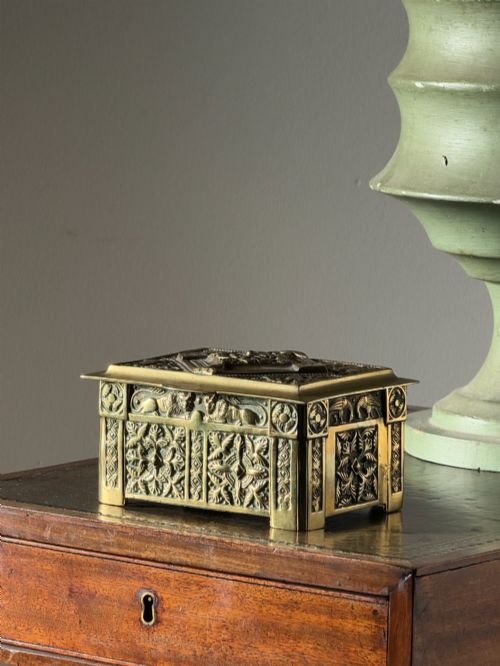
An ornate jewellery casket holds small treasures and brings nineteenth-century craftsmanship directly to a modern dressing table.
Ornate Jewellery Casket
An ornate jewellery casket sits on tables and dressers, designed to securely store precious trinkets while serving as a decorative object in its own right. These pieces span centuries, with nineteenth-century Victorian examples appearing most frequently alongside continental European and British island creations.
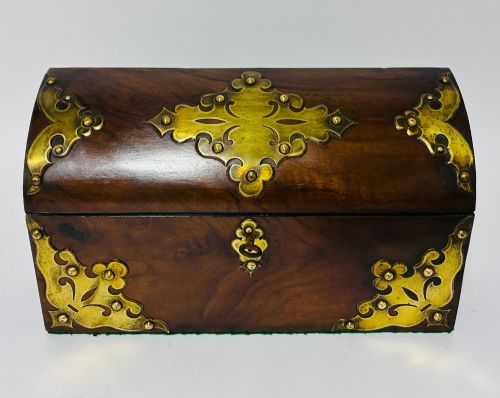
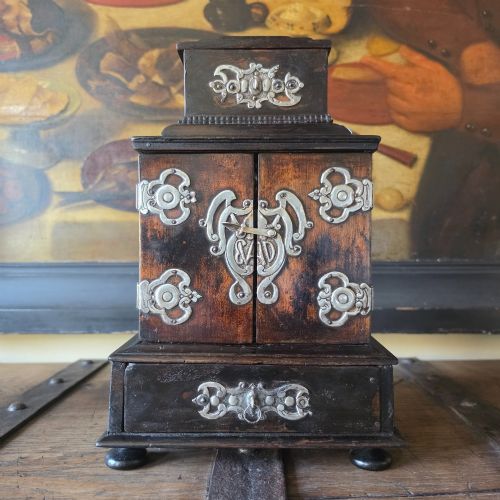
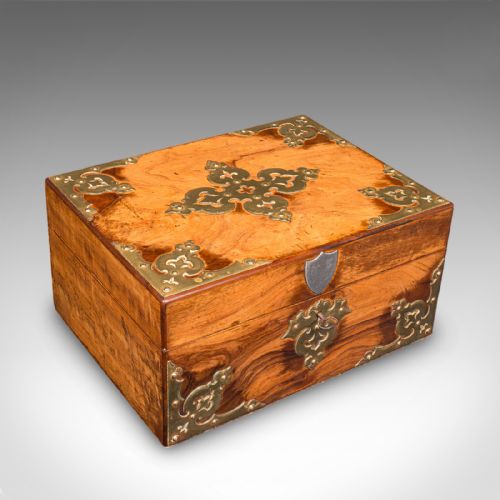
Forms range from small tabletop boxes and rectangular caskets to larger fitted jewellery cabinets and sloping sewing cases. Materials vary widely, encompassing walnut, burr walnut, rosewood, sandalwood, and exotic hardwoods alongside metals like brass, bronze, silvered metal, ormolu, and gilt metal.
Stylistic influences recorded in the inventory include Gothic Revival, French Empire, Napoleon III, Renaissance Revival, and Victorian Rococo Revival. Certain items also reflect regional traditions, such as Anglo-Indian, Dutch Colonial, Burmese, and Qajar Iranian craftsmanship.
Materials and construction methods
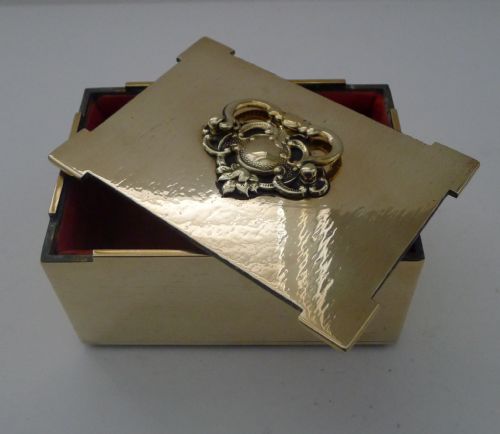
Wood construction relies on dense timbers like walnut and burr walnut, frequently ornamented with brass banding, marquetry inlay, or intricate surface carving. Metal caskets utilise cast brass, bronze, and ormolu, sometimes combined with marble bases or inset cameo, gold, and enamel appliques.
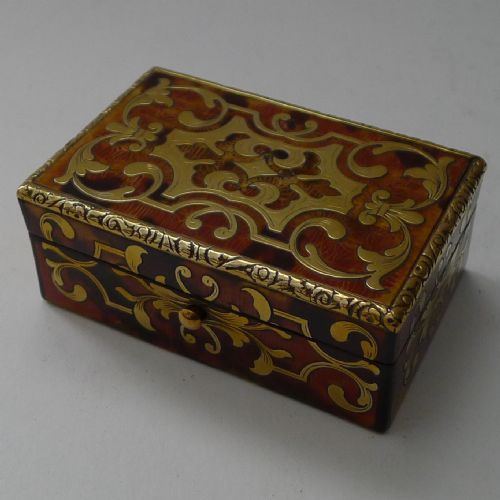
Surface decoration involves specialised techniques appropriate to the period and origin, from French Boullework and silver plating to detailed regional wood carving. Interior compartments often feature fitted trays and linings designed to hold rings, pins, and necklaces securely.
Ornate Jewellery Casket Retail Price Guide 2026
Typical asking prices for ornate jewellery casket among the pieces listed under this phrase on Sellingantiques today, from the lower quarter to the upper quarter. They describe what is for sale here now, not the wider market.
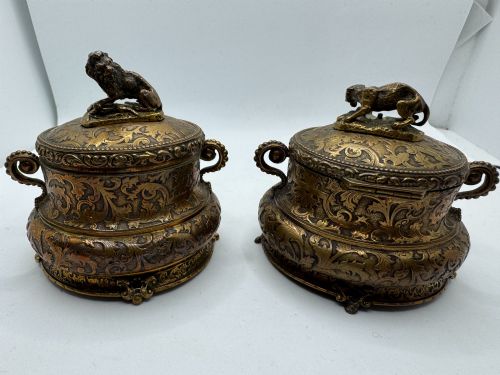
Some nineteenth-century caskets feature small dog finials guarding the lid, ready to watch over your trinkets.
Distinctions in execution and detail
Quality rests upon the crispness of metal casting, the depth and precision of wood carving, and the complexity of marquetry inlay. Superior examples integrate multiple materials seamlessly, such as marble mounted with finely chased ormolu or cast brass.
The sophistication of internal fittings and the retention of original lining fabrics also separate standard utility boxes from exceptionally fine presentation pieces. Structural integrity and the survival of original decorative hardware determine the overall standing of each casket.
Walker and Hall·AB Paris
The Ornate Jewellery Casket Glossary
- Ormolu
- Gilded bronze or brass applied to decorative objects and furniture. This technique was widely utilised by French makers during the nineteenth century to add brilliant metallic highlights.
- Boullework
- A style of marquetry consisting of tortoiseshell and brass inlaid in ornate patterns. It is named after the renowned French cabinetmaker André-Charles Boulle.
- Burr Walnut
- Wood taken from the abnormal growth of a walnut tree, producing swirling grain patterns. Cabinetmakers prize this timber for high-status Victorian boxes.
- Gothic Revival
- An architectural and decorative style drawing inspiration from medieval forms. Pieces featuring this design often incorporate pointed arches and heavy brass mounts.
- Finial
- A decorative ornament fixed to the top of a lid or corner. They frequently take the form of small cast animals or architectural motifs.
Ornate Jewellery Casket: Frequently Asked Questions
What are ornate jewellery caskets?
Ornate jewellery caskets are decorative receptacles manufactured from wood or metal to store small valuables. They combine practical storage with elaborate exterior ornamentation.
Craftsmen across Europe and beyond produced these pieces in various revival styles, utilising materials such as walnut, ormolu, and inlaid brass.
How were jewellery caskets used?
Owners placed them on dressing tables, desks, or parlour surfaces to hold rings, brooches, and sewing implements. They kept daily accessories organised and secure.
Many featured fitted interior trays lined with silk or velvet to protect delicate items from scratching.
How do I identify a Victorian casket?
Victorian caskets often display characteristic revival aesthetics, including Gothic, Renaissance, or Rococo motifs. Common indicators include heavy brass mounts, burr walnut veneers, and fitted compartmentalised interiors.
Maker marks, registration stamps, or silver hallmarks can also help narrow down the exact decade of manufacture.
How should I care for an antique box?
Keep wooden and metal caskets away from direct sunlight and severe humidity changes to protect the timber and internal linings. Regular dusting with a dry cloth preserves the finish.
Avoid liquid cleaning products on vulnerable surfaces like Boullework or delicate ormolu mounts.