



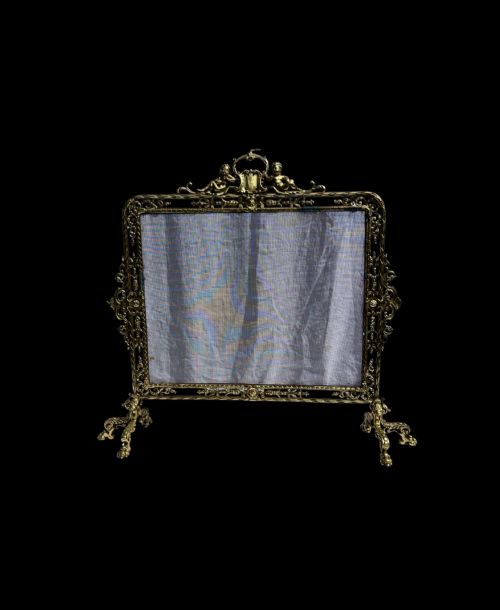
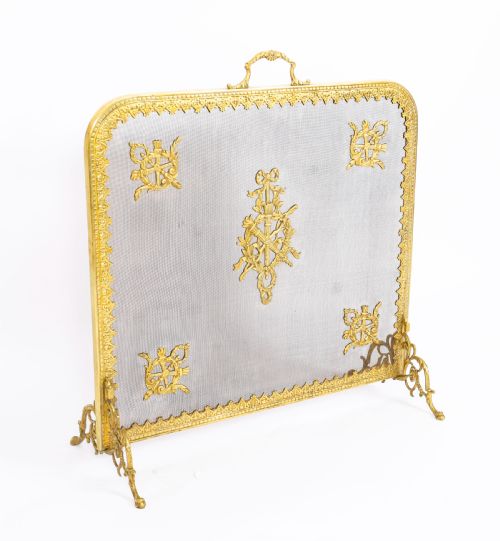
Ornate Hearth Screen
An ornate hearth screen brings architectural metalwork and classical revivals directly to the sitting room fire.
Ornate Hearth Screen
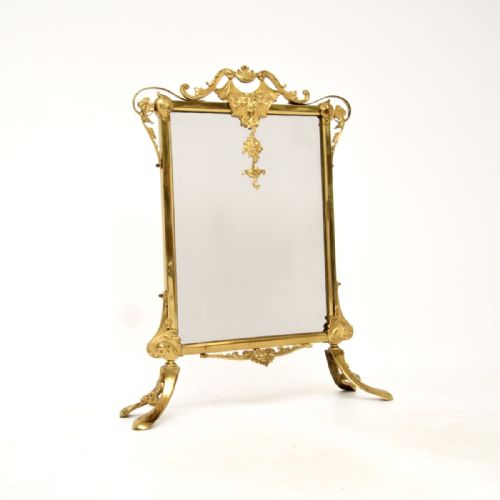
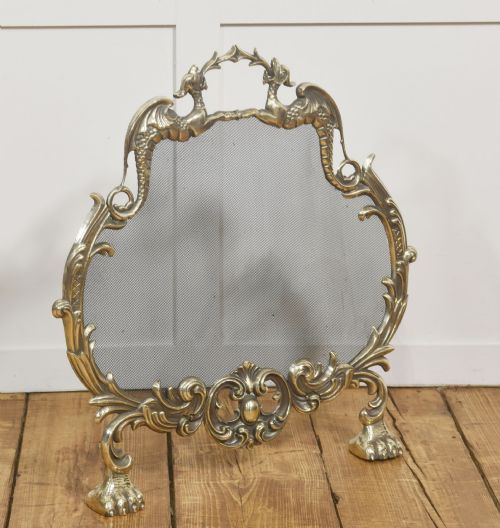
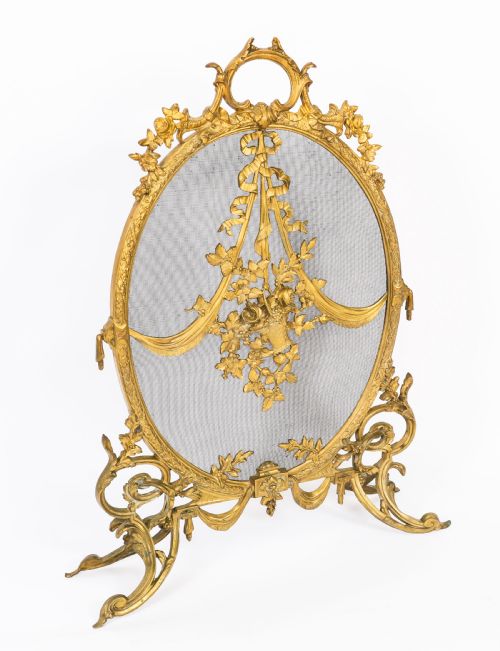
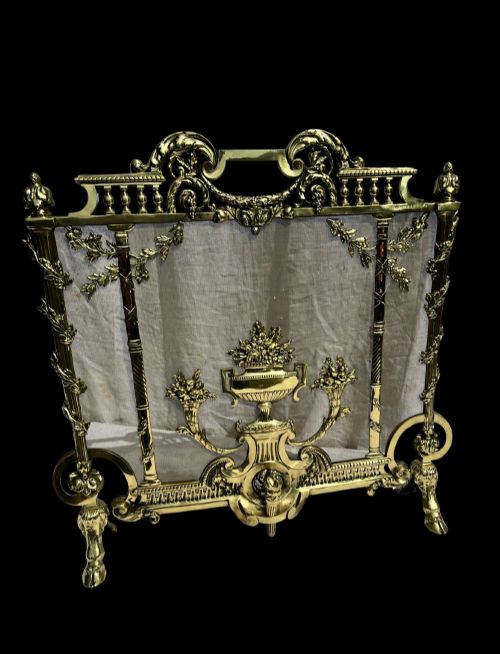
An ornate hearth screen serves as both a decorative room accessory and a functional guard before the fireplace. The pieces gathered here span the nineteenth century into the early twentieth century, encompassing Victorian designs and French revival styles.
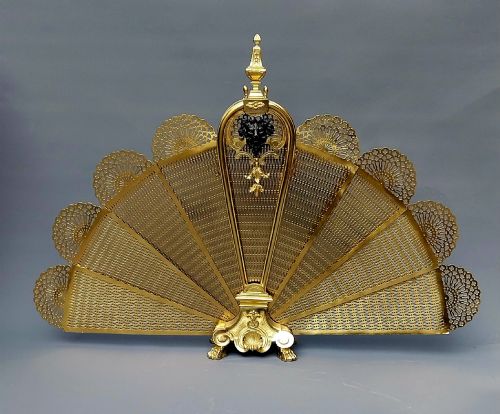
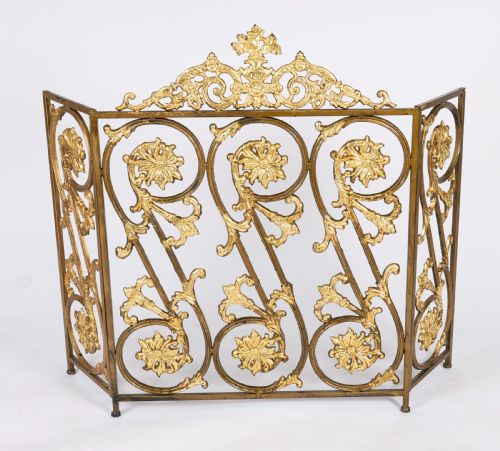
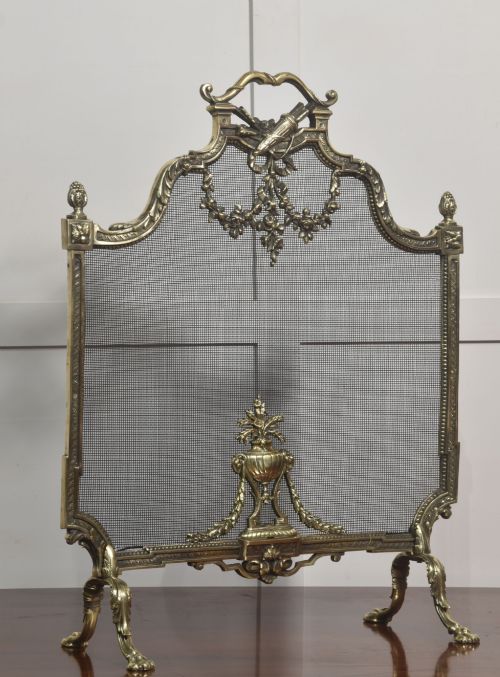
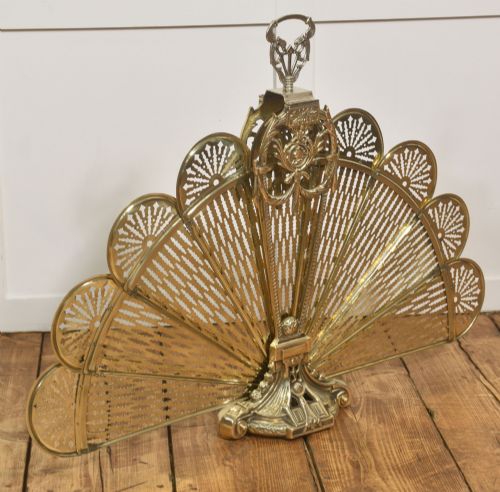
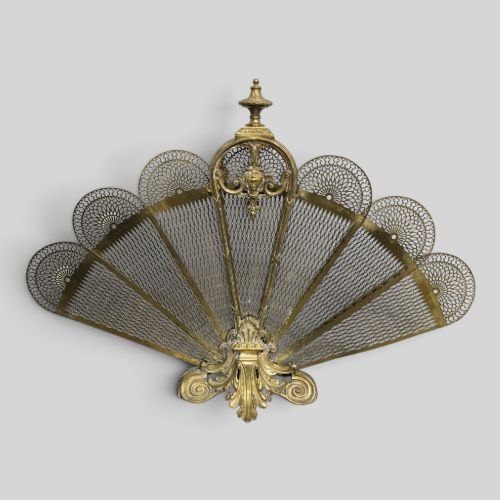
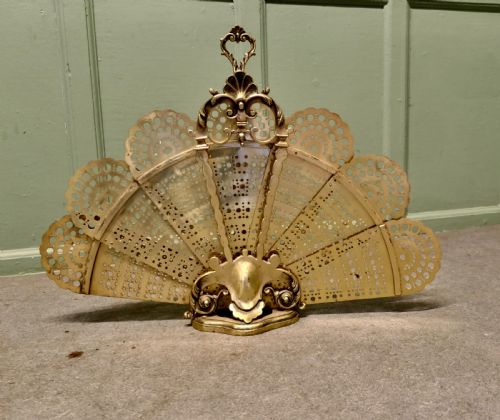
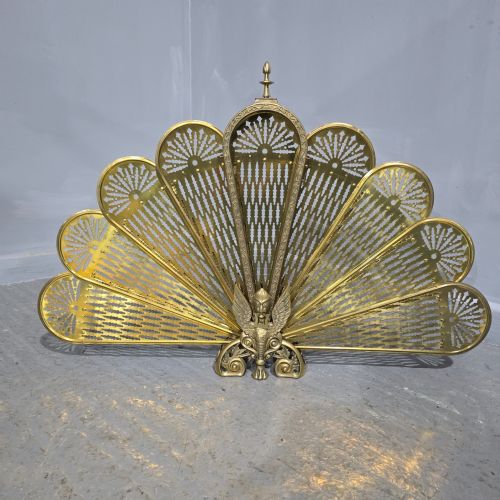
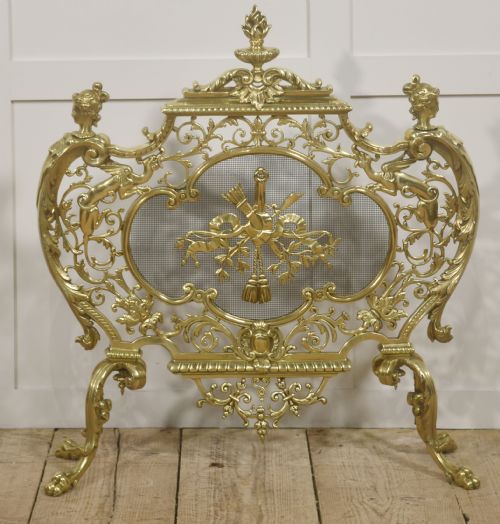
You will most commonly encounter brass and gilt bronze fire screens featuring elaborate openwork, wire mesh panels, and folding peacock tail configurations. Forms range from rigid standing frames to articulated spark guards designed for domestic hearths.
Materials and construction
These pieces rely heavily on cast brass, gilt bronze, and wrought iron, shaped into intricate Rococo, Louis style, and Gothic frameworks. Metal mesh and fine wire work form the central protective panels, often paired with heavy structural supports.
Gilding and detailed piercing define the surface finish of the French revival examples. Black Forest variations introduce carved oak elements, while folding mechanisms utilise hinged brass blades to create expanding fan shapes.
Ornate Hearth Screen Retail Price Guide 2026
Typical asking prices for ornate hearth screen among the pieces listed under this phrase on Sellingantiques today, from the lower quarter to the upper quarter. They describe what is for sale here now, not the wider market.
Judging quality in hearth screens
Quality rests upon the crispness of the casting and the weight of the metal framework. Finer examples display deeply chased gilt bronze or heavily pierced brass work rather than light, stamped sheet metal.
The integrity of the folding mechanism and the tension within the wire mesh or peacock blades separate standard production items from superior workshop pieces. Rigidity in the standing frame ensures the guard functions safely when placed near the fire.
Bouhon Frères
The Ornate Hearth Screen Glossary
- Gilt bronze
- Metal alloy coated with a thin layer of gold, providing a rich, durable surface finish seen on French revival fire screens.
- Peacock fan
- A folding hearth screen composed of pivoting metal blades that spread outward like a tail, popular in the late nineteenth and early twentieth centuries.
- Rococo Revival
- A nineteenth-century design movement favouring asymmetrical scrolls, C-curves, and naturalistic shell motifs derived from eighteenth-century French art.
- Wire mesh
- Interwoven metal strands forming a protective screen barrier that blocks sparks while allowing radiant heat to pass into the room.
Ornate Hearth Screen: Frequently Asked Questions
How do I use a hearth screen?
Place the screen directly in front of the fireplace opening when the fire is unlit or dying down to block drafts and hide the grate.
Folding fan designs allow you to adjust the width of the guard according to the seasonal use of the hearth.
How do I clean a brass fire screen?
Dust the metal surfaces regularly with a soft, dry cloth to prevent soot accumulation.
Avoid harsh chemical polishes that strip historic patinas, particularly on gilt bronze or aged brass finishes.
Are peacock screens stable?
Peacock fan screens rely on a weighted base or sturdy mounting bracket to maintain balance when fully extended.
Carefully check the pivoting rivets at the base to ensure the radiating blades remain securely aligned.
What is the difference between Rococo and Louis XIV styles?
Louis XIV revival pieces present heavier, more symmetrical classical grandeur with formal architectural tropes and trophies.
Rococo revival works lean toward asymmetrical curves, organic leaf motifs, and flamboyant pierced brass scrollwork.