

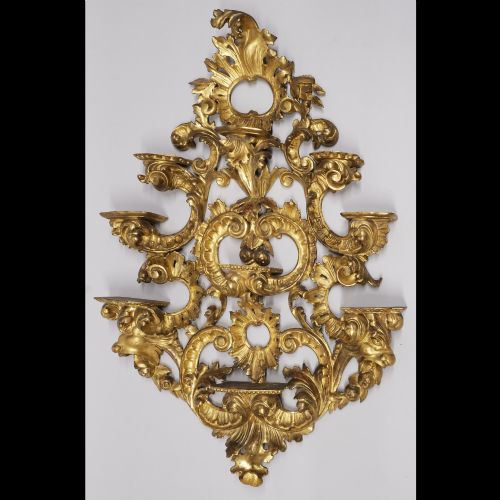


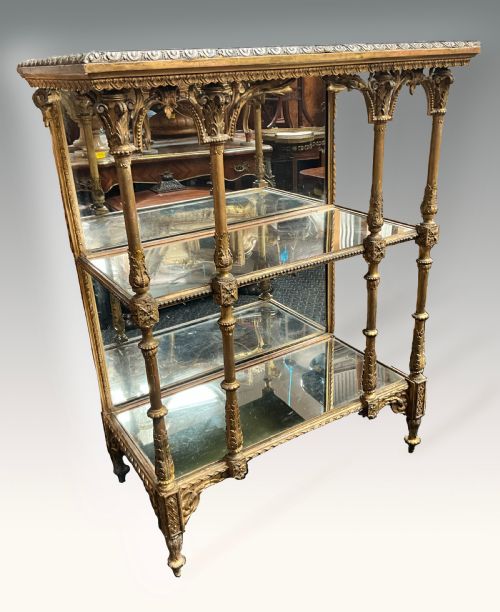
Ornate Gold Wall Shelf
An ornate gold wall shelf brings surface and reflection together on a room's perimeter, offering a stage for small objects finished in rich metal leaf.
Ornate Gold Wall Shelf
When you search for an ornate gold wall shelf, you find decorative ledges, brackets, and mirrored ledges designed to project from a wall and display small treasures. These pieces combine functional surfaces with the decorative flourishes of the eighteenth and nineteenth centuries.
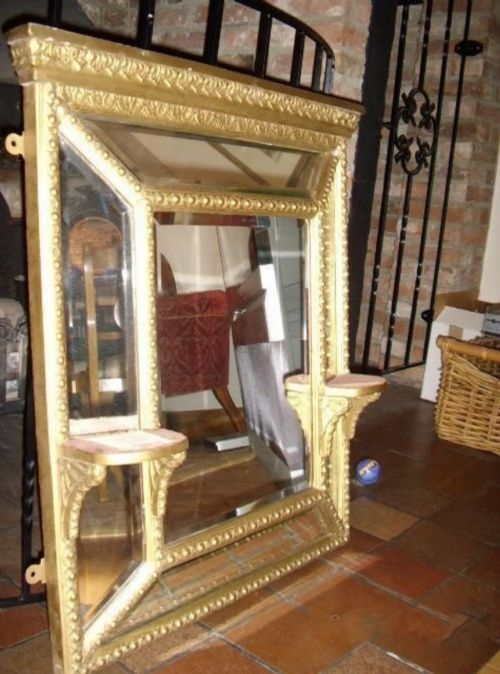
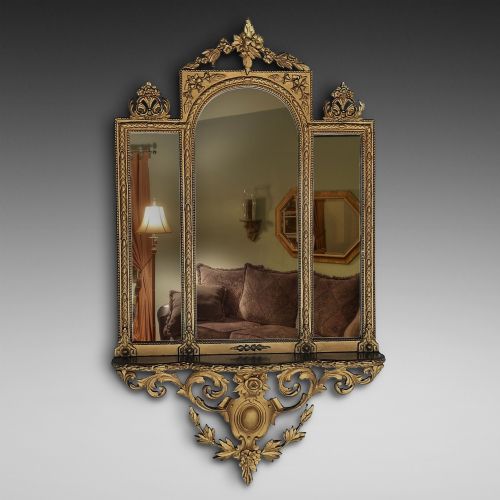
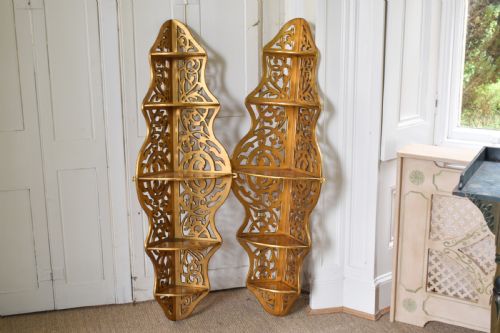
The versions most commonly met here span the Victorian era and earlier European revivals, taking forms such as carved giltwood brackets, mirrored display shelves, and corner shelves. They bring vertical interest to a room without occupying floor space.
Makers and artisans of these periods drew heavily on Rococo Revival and French Chateau styles, creating asymmetrical curves, scrolling foliage, and pierced carvings. Each piece functions as much as sculptural wall art as it does a resting place for porcelain or small figures.
How they were made
The foundation of these pieces typically relies on carved wood, gesso, or composition materials moulded over a timber core. Artisans then applied thin layers of gold leaf to the prepared surfaces, burnishing the metal to achieve a deep and enduring lustre.
Mirrored components, such as bevel-cut glass and pier glass inserts, were integrated into backplates and brackets to reflect candlelight and natural illumination. These reflective surfaces required careful bevelling and secure mounting within heavy wooden frames.
Ornate Gold Wall Shelf Retail Price Guide 2026
Typical asking prices for ornate gold wall shelf among the pieces listed under this phrase on Sellingantiques today, from the lower quarter to the upper quarter. They describe what is for sale here now, not the wider market.
Many nineteenth-century brackets incorporate carved cherubs and scrolling acanthus leaves, silently watching over empty corners for generations.
What varies in quality
The distinction between ordinary and superior pieces rests on the crispness of the hand-carving and the depth of the gesso mouldings. Finer examples display sharp, undercut foliage and confident scrollwork rather than soft, repetitive casts.
Another measure of quality lies in the integrity of the original gilding and the weight of the timber beneath. Pieces that retain their genuine gold leaf without heavy over-painting demonstrate a higher grade of original craftsmanship.
The Ornate Gold Wall Shelf Glossary
- Giltwood
- Timber that has been decorated with a thin layer of gold leaf. It forms the primary structure of many high-status wall brackets and mirrors.
- Gesso
- A plaster-like mixture applied to wood surfaces and carved before gilding. It allows for intricate, raised ornamentation that timber alone cannot easily achieve.
- Pier Glass
- A tall mirror designed to hang on the wall space between two windows. They often feature integrated shelves or console brackets.
- Girandole
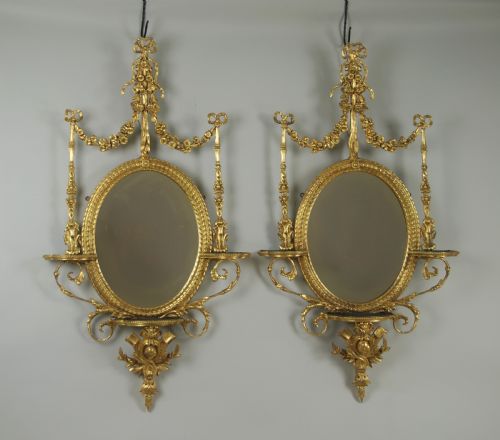
- A decorative wall mirror featuring attached candle sconces or brackets. The reflective glass multiplies the flickering light of the candles.
- Composition
- A moulded mixture of whiting, resin, and oil pressed into ornamental shapes. It was frequently used as a cost-effective alternative to deep hand-carving.
Ornate Gold Wall Shelf: Frequently Asked Questions
How do I hang a heavy wall shelf?
These pieces require secure anchoring into wall studs or solid masonry rather than plaster alone. Due to the dense wood and gesso construction, proper weight distribution is essential for safety.
Consult a professional installer if the bracket lacks integrated mounting hardware or if the wall substrate is uncertain. Over-engineering the support prevents any strain on antique joints.
Can these shelves hold heavy objects?
Most antique wall brackets and display shelves are intended for light decorative items such as small porcelain figurines or pocket watches. Overloading the ledge can stress historical fixings and structural timber.
Keep displayed objects balanced towards the wall rather than the outer edge. Distributing weight evenly preserves the longevity of the mounting bracket.
How do I identify a Victorian piece?
Victorian examples often combine architectural mirror glass with ornate display brackets, reflecting the period's love for eclectic revival styles. Closer inspection of the backing boards and fixings helps confirm the nineteenth-century origin.
Look for machine-sawn timber elements alongside hand-finishing, which characterises the industrial transition of the era. Comparing the style to documented Victorian catalogues offers further confirmation.