






Ornate Gold Carriage Clock
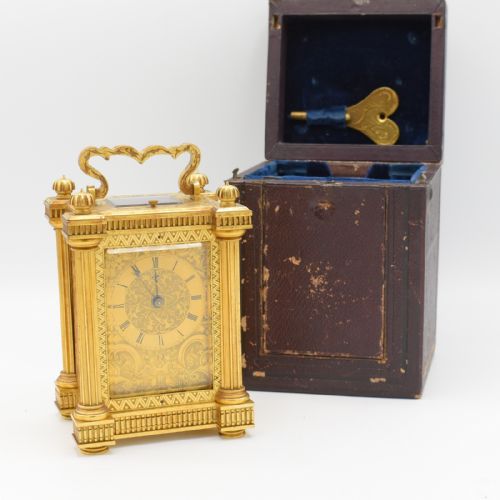
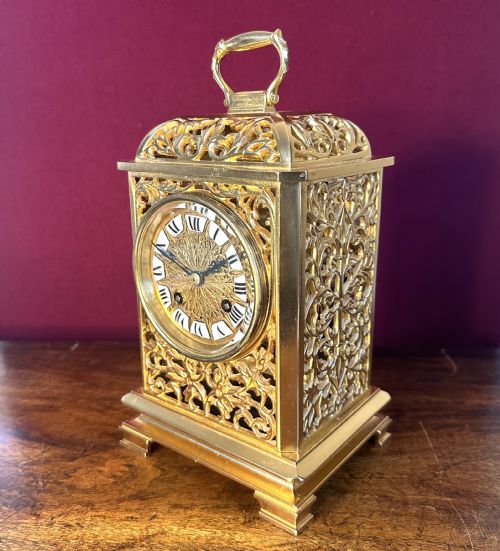
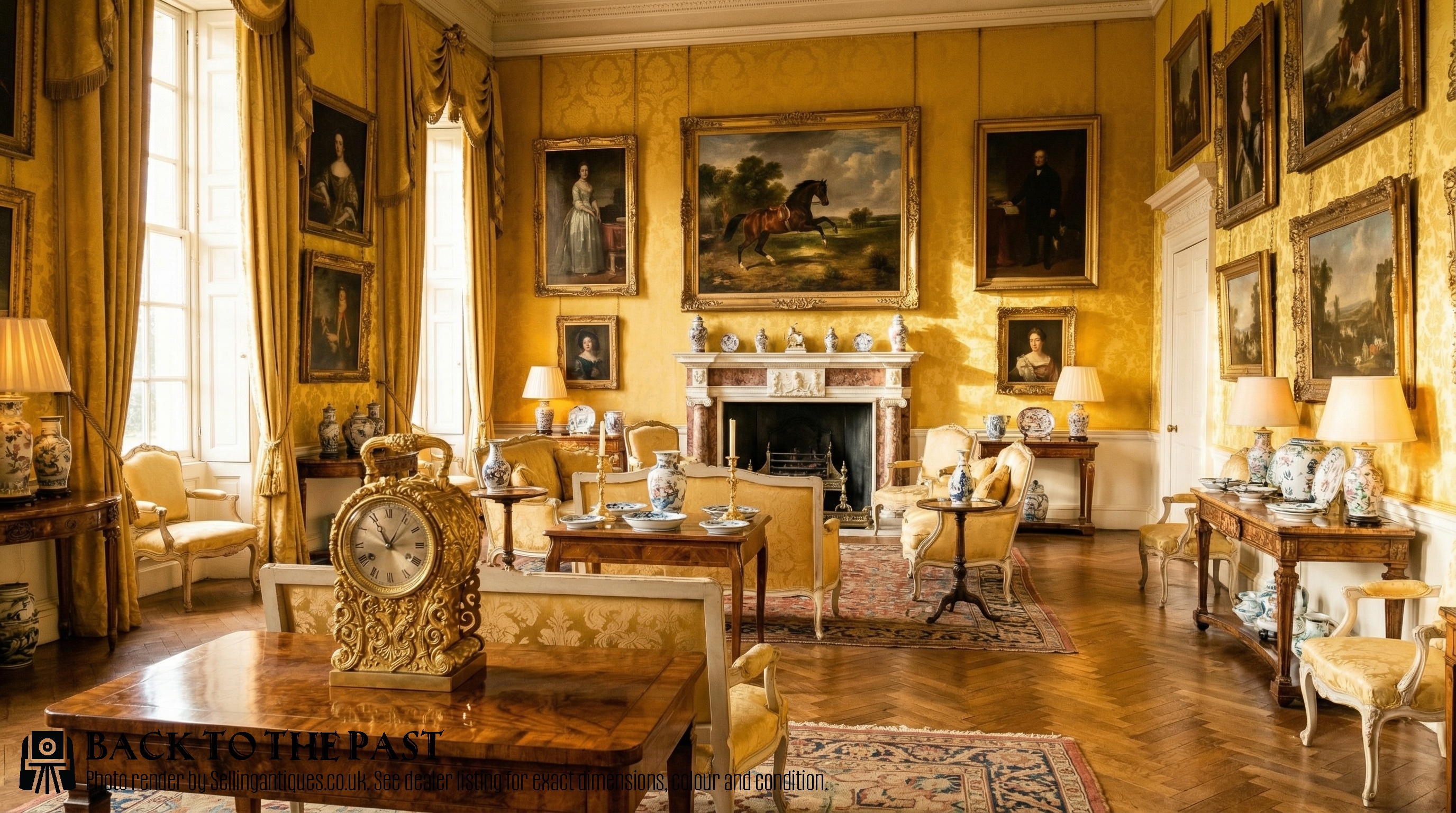
An ornate gold carriage clock brings portable timekeeping from the nineteenth century into modern rooms with polished brass and glass.
Ornate Gold Carriage Clock
When you search for an ornate gold carriage clock, you are looking at domestic timepieces housed in glazed metal cases dating from the Victorian and Edwardian eras. These portable clocks originated to serve travellers in the nineteenth century, developing into decorative domestic objects for mantelpieces and desks.
The versions most common on this page are French carriage clocks and miniature variants from the latter half of the nineteenth century. These pieces typically combine cast brass frameworks with bevelled glass panels, sometimes featuring enamel dials and repeating mechanisms.
Makers and retailers such as Howell & James London, Tiffany, E.J. Dent, and Paul Garnier appear among the offerings. Styles span from French nineteenth-century designs to Rococo Revival and Victorian Gothic Revival forms.
Distinctions in Quality
The refinement of the cast and engraved metalwork dictates the upper tier of these pieces. Clocks featuring profusely engraved surfaces across all sides and detailed filigree masks demonstrate greater artisan effort than plain brass housings.
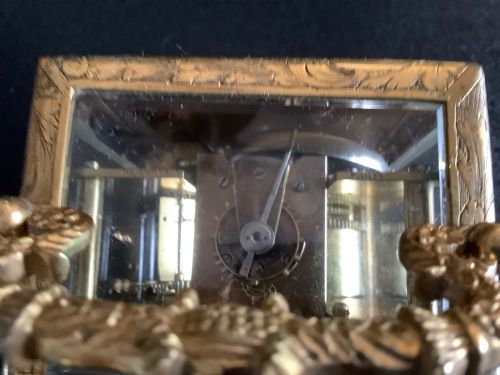
The inclusion of functional complications separates standard timepieces from higher-grade examples. Repeating mechanisms, alarms, and multi-train movements reflect advanced horological ambition and fine mechanical execution.
The integrity of the bevelled glass panes and the clarity of the enamel dials contribute significantly to overall standard. Intact painted masks and uncompromised gilding preserve the visual impact intended by nineteenth-century makers.
Howell & James London·Tiffany·E.J. Dent·Paul Garnier
The Ornate Gold Carriage Clock Glossary
- Carriage clock
- A small, spring-driven clock designed for travel during the eighteenth and nineteenth centuries. These timepieces typically feature a rectangular brass case with glass panels and a swing handle.
- Repeater
- A clock mechanism that chimes the hours and quarters upon demand when a lever or button is pressed. This complication allowed owners to check the time in the dark.
- Ormolu
- Gilded bronze produced by applying a mixture of mercury and gold leaf to a bronze base and heating it. This technique creates a durable golden surface finish seen on nineteenth-century French metalwork.
- Grand sonnerie
- A striking train mechanism that sounds both the hours and the passing quarters automatically. It represents a high level of horological complexity in portable clocks.
- Filigree
- Delicate openwork ornamentation formed from twisted metal threads soldered together. This decorative technique appears on panels and masks of Victorian and Edwardian timepieces.
Ornate Gold Carriage Clock: Frequently Asked Questions
What is a carriage clock?
A carriage clock is a portable mechanical timepiece enclosed in a brass and glass case with a carrying handle on top. They were originally developed in France for officers and travellers on the move.
Over the nineteenth century, they evolved into decorative household objects placed on tables, desks, and mantelpieces rather than travel gear.
How do repeater clocks work?
A repeating mechanism sounds the last hour and the elapsed quarters when the owner presses a button or pulls a cord on the case. This allowed time checks during the night without striking continuously.
These mechanisms require intricate gear trains packed inside small brass chassis alongside the primary timekeeping movement.
How do I wind my carriage clock?
Most carriage clocks use a dedicated square-shaft key inserted into winding holes on the backplate or underneath the movement. Turn the key gently until resistance indicates the mainspring is fully tensioned.
Care should be taken not to overwind the springs, as this can strain the internal mechanism and impair timekeeping accuracy.
Are these clocks French or English?
The majority of nineteenth-century carriage clocks available on the market originate from French workshops, particularly in Paris and Saint-Nicolas-d'Aliermont. Some pieces bear retailer signatures from London establishments that imported them.
English makers also produced carriage clocks, though French production dominated the export market and stylistic development during the Victorian period.