

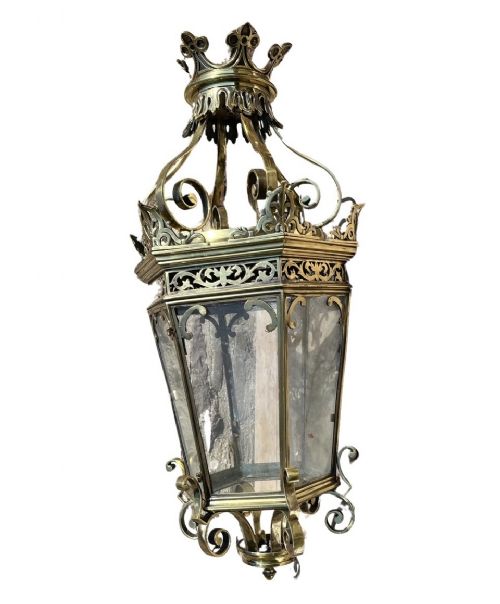
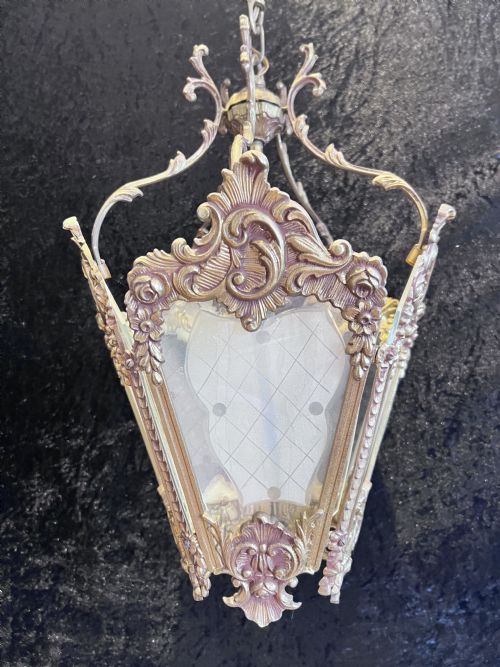
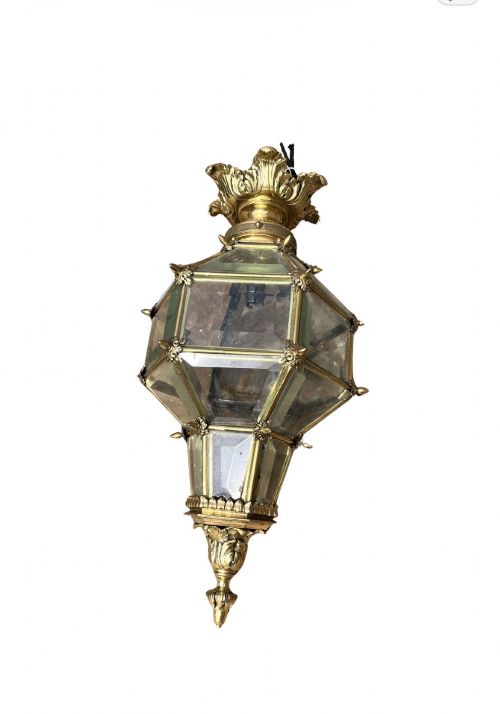
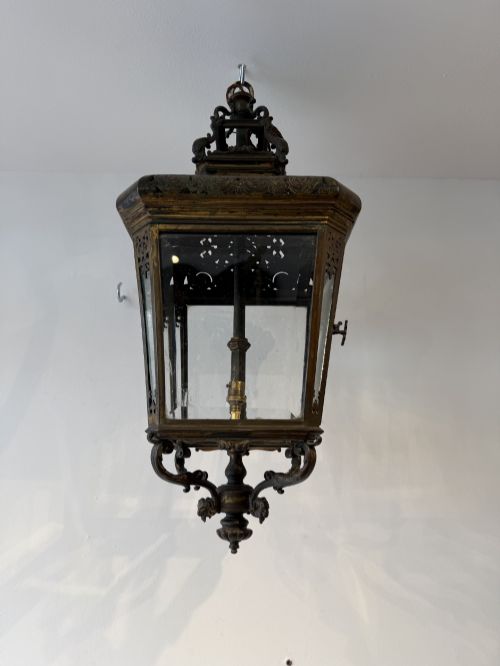
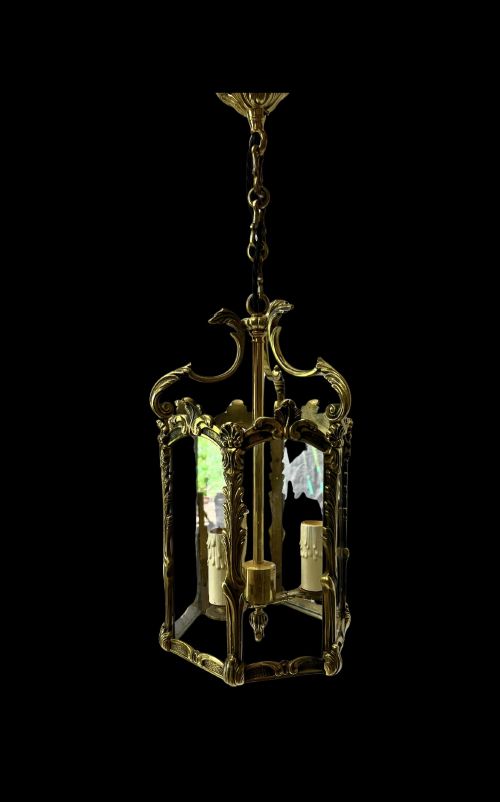


Ornate Glass Lantern
An ornate glass lantern brings dramatic shadow and brilliant sparkle to a hallway, drawing the eye upwards with its elaborate metalwork.
Ornate Glass Lantern
When you search for an ornate glass lantern, you are looking at decorative ceiling lights, hall lanterns, and hanging lanterns designed to illuminate grand entrances and principal rooms. These pieces combine transparent or coloured panes with substantial metal frames to project patterned light across surrounding walls.
The versions you are most likely to meet on this page hail primarily from the nineteenth century, spanning periods from eighteen-sixty through the nineteen-thirties. They arrive in diverse stylistic interpretations, from French Rococo and Louis XVI to Victorian and Gothic Revival designs.
How they were made
Makers constructed these lanterns using robust metal foundations of brass, bronze, gilded bronze, giltwood, and silver plate to support delicate glass components. Metalwork was frequently cast, carved, or plated with precious metals to achieve intricate decorative motifs.
Panes and shades incorporated clear glass as well as coloured crystal and specific red and yellow glass shades to alter the quality of emitted light. Artisans secured these panels within hinged doors and hexagonal frames, combining structural integrity with ornamental flair.
Ornate Glass Lantern Retail Price Guide 2026
Typical asking prices for ornate glass lantern among the pieces listed under this phrase on Sellingantiques today, from the lower quarter to the upper quarter. They describe what is for sale here now, not the wider market.
Listings feature nineteenth-century and early twentieth-century pieces spanning Victorian, Gothic Revival, and French Rococo styles.
What varies in quality
The distinction between ordinary and exceptional pieces lies in the depth of hand-finishing applied to the metal frames, whether through fine casting detail or meticulous carving in giltwood. Heavier metal gauge and intricate ornamentation, such as the elaborate curves found in Rococo revival examples, indicate superior craftsmanship.
Quality also rests in the selection and cutting of the glass itself, where clear crystal or rich coloured panels elevate the visual impact. The integration of functional elements like operable doors and secure suspension mounts further separates standard utilitarian lighting from high decorative art.
The Ornate Glass Lantern Glossary
- Gilt bronze
- Metal cast with detailed ornamentation and coated with a thin layer of gold. It provides a durable and opulent surface finish.
- Toleware
- Painted or enamelled sheet metal items frequently utilised in decorative lighting components. It adds colourful contrast to gilded frames.
- Giltwood
- Timber carved and subsequently covered with gold leaf. This material appears on grand hanging lanterns influenced by Italian and French styles.
- Crystal
- High-quality glass possessing superior clarity and refractive properties. It sparkles brilliantly when illuminated from within.
- Rococo
- A decorative style characterised by asymmetrical curves, scrollwork, and naturalistic plant motifs. It heavily influences nineteenth-century French lantern designs.
Ornate Glass Lantern: Frequently Asked Questions
Where should I hang an ornate glass lantern?
These lanterns suit high-ceilinged entrance halls, stairwells, and principal reception rooms where their decorative metalwork and glass panels can be fully appreciated from below.
Ensure you hang the fixture at a sufficient height to maintain clearance beneath while allowing the projected light to cast patterns across the space.
How do I identify the period of a lantern?
Examine the metal casting techniques, fastening methods, and stylistic cues such as Victorian Gothic elements or French Regence revival details. Nineteenth-century examples often display heavier brass or bronze frames compared to later reproductions.
Look closely at the glass panels and wiring provisions to gather further clues regarding the manufacturing era.
What maintenance do glass and brass lanterns require?
Routine care involves gently dusting the glass panels with a soft cloth to maintain clarity and sparkle. Avoid harsh chemical cleaners on gilt bronze or brass to preserve the natural patina.
Periodically check the suspension mountings and internal bulb fittings to ensure everything remains secure and operational.