



Ornate Gilt Table
An ornate gilt table brings heavy French Revival curves and gleaming metalwork into a room.
Ornate Gilt Table
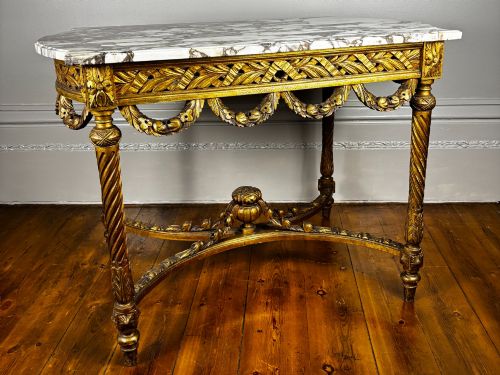
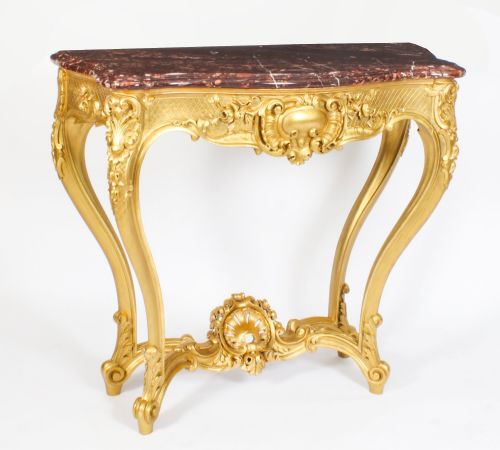
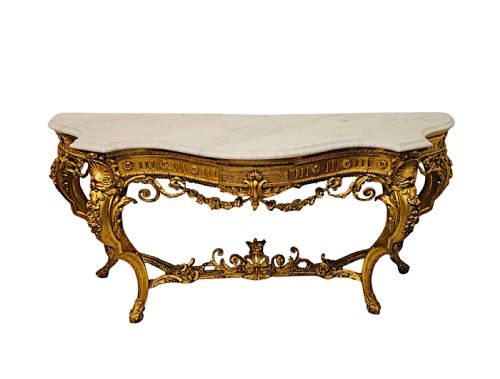
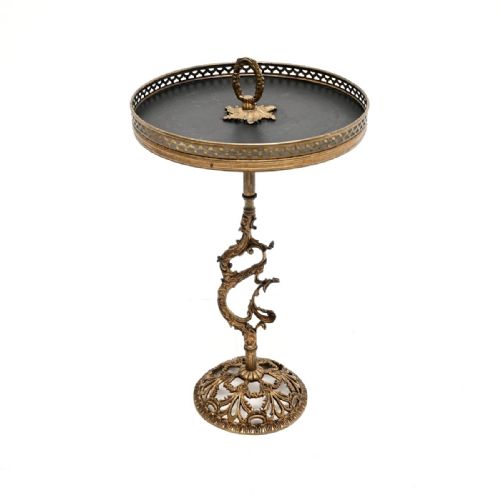
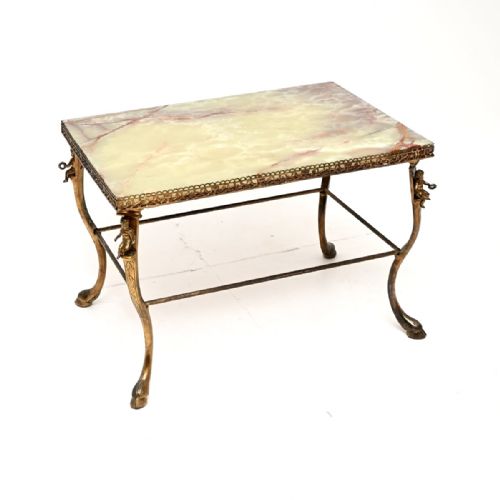
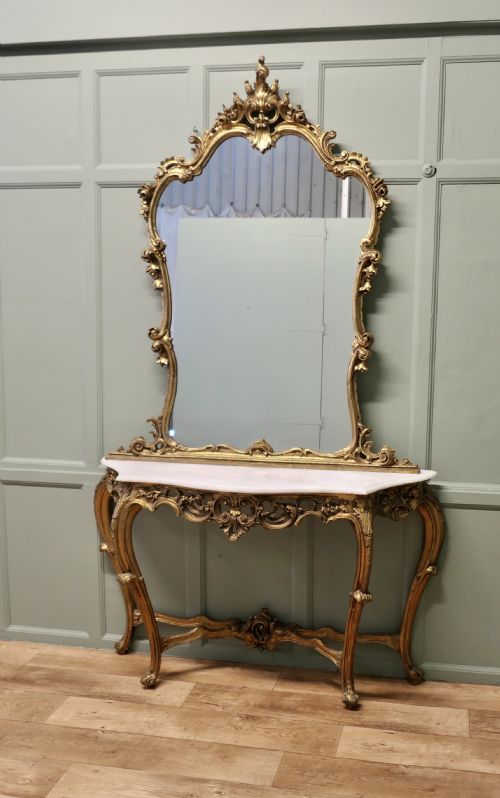
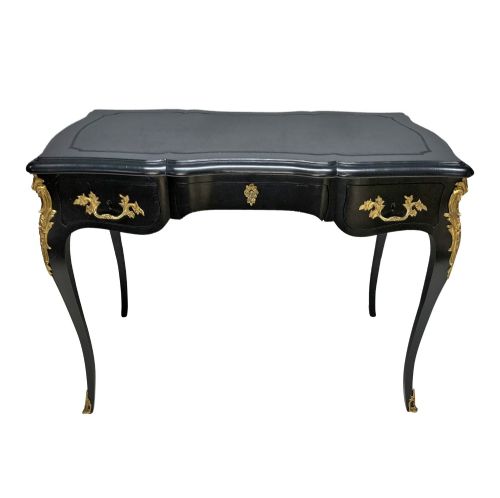
When you search for an ornate gilt table, you meet console tables, coffee tables and lamp tables built during the nineteenth and early twentieth centuries. These surfaces display the heavy influence of French Rococo and Louis Revival styles.
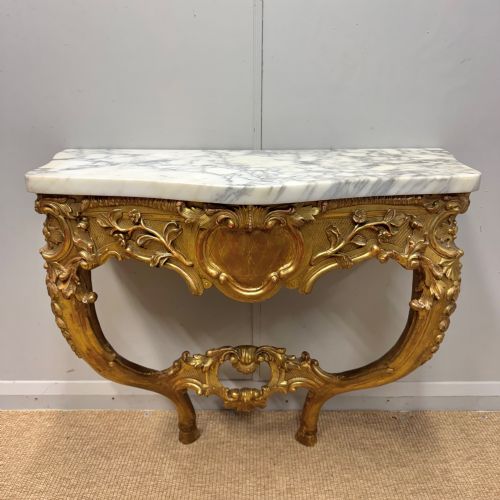
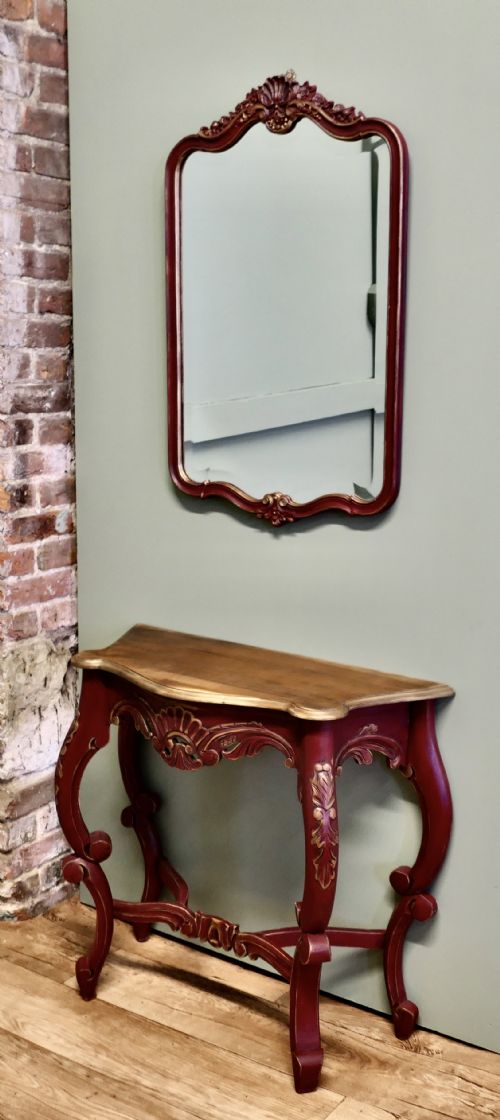
The console table paired with a matching wall mirror appears frequently in this selection, often featuring a carved wooden base beneath a marble top. Such pieces were designed to anchor a formal interior.
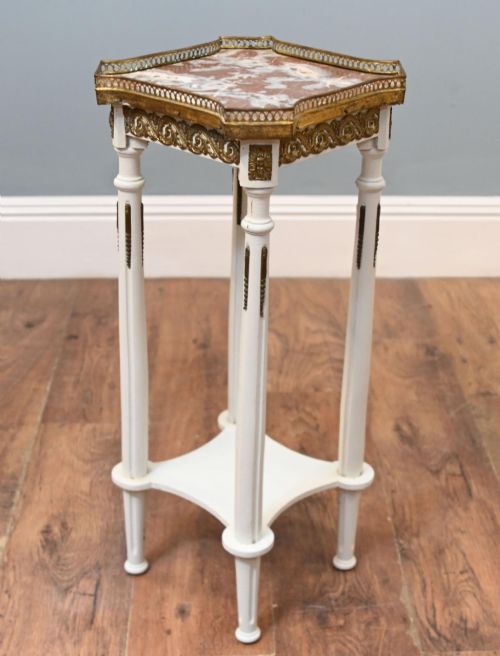
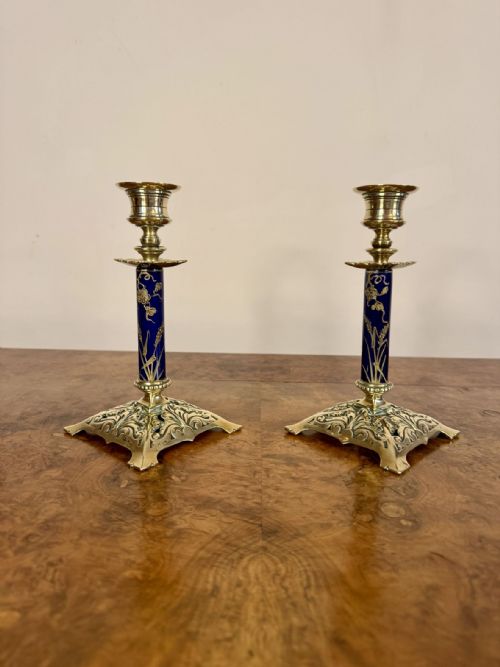
Smaller variants include low coffee tables and occasional lamp tables combining giltwood, brass or ormolu with stone and ceramic inserts.
How they were made
Giltwood tables rely on carved timber bases coated in thin metal leaf to simulate solid gold, while metal pieces utilise cast brass, gilt bronze and ormolu. These metallic finishes create deep reflective sheens across scrollwork and floral motifs.
Heavy stone slabs of white or coloured marble provide durable tops for console and coffee tables, resting directly upon the wooden or gilded frames. Smaller items incorporate inset porcelain panels or glass plates alongside metal mounts.
Ornate Gilt Table Retail Price Guide 2026
Typical asking prices for ornate gilt table among the pieces listed under this phrase on Sellingantiques today, from the lower quarter to the upper quarter. They describe what is for sale here now, not the wider market.
What varies in quality
The crispness of the carving and the depth of the gilding determine the visual weight of the piece, separating finely chased metal mounts from flat, cast-moulded copies. Hand-chiselled detail on ormolu surfaces exhibits sharper definition than mass-produced alternatives.
Structural integrity depends on the selection of underlying timbers like mahogany, walnut or pine beneath the gilt layer, alongside the thickness and natural figuring of the fitted marble tops.
Felix-Alfred Ternisien·Achille Brocot·Samuel Marti
The Ornate Gilt Table Glossary
- Ormolu
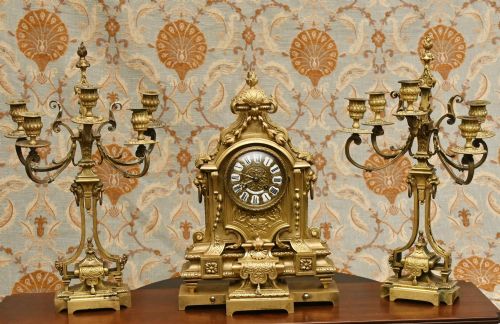
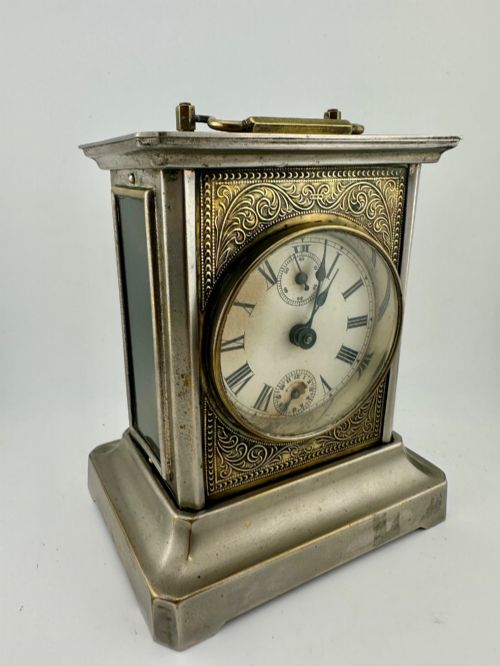
- Gilded bronze, usually mercury-gilded, applied to decorative metalwork and clock cases. It provides a warm, lasting yellow sheen that resists tarnishing.
- Console table
- A table designed to stand against a wall, frequently secured with brackets and topped with marble. It often accompanies a matching wall mirror.
- Giltwood
- Timber coated with gold leaf or powder over a prepared gesso ground. This technique adds bright reflectivity to carved frames and table bases.
- Louis Revival
- A nineteenth-century design movement copying seventeenth and eighteenth-century French royal aesthetics. It embraces asymmetrical curves and floral scrollwork.
- Champlevé
- An enamelling technique where troughs are dug into a metal surface and filled with vitreous paste before firing. It decorates bronze frames and mirror borders.
Ornate Gilt Table: Frequently Asked Questions
Where should a console table go?
A console table fits best against a blank wall in a hallway, drawing room or dining space where it can support decorative objects or lamps. Placing a matching mirror above it completes the traditional arrangement seen in period interiors.
Because these tables are relatively shallow, they occupy minimal floor space while providing a striking visual focal point in a reception room.
How do I clean marble tops?
Marble table tops require gentle cleaning with a damp cloth and neutral soap to avoid scratching the polished stone surface. Acidic liquids like lemon juice or wine will etch the polish and must be wiped away immediately.
Applying a specialist stone wax periodically helps protect the surface from stains while maintaining a soft, natural lustre.
What is the difference between ormolu and brass?
Ormolu consists of cast bronze treated with a gold amalgam finish, creating a deep, rich yellow glow that deepens gracefully with age. Brass is a brighter alloy of copper and zinc that tends to exhibit a lighter, brassier tone when unpolished.
Finer nineteenth-century tables generally use ormolu for decorative mounts, while simpler utilitarian items rely on brass.
How do I identify a Rococo Revival piece?
Rococo Revival pieces feature asymmetric C-scrolls, shell motifs, flowing foliage and naturalistic floral carvings without straight lines. This nineteenth-century style mimics the extravagant curves of eighteenth-century French court furniture.
Heavy gilding and pierced woodwork further distinguish these tables from simpler Victorian designs.