

Ornate Gilt Sconces
These ornate gilt sconces bring dramatic lighting and classical design to a room.

Ornate Gilt Sconces
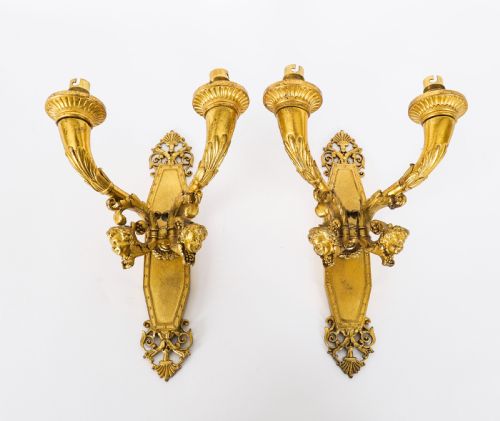
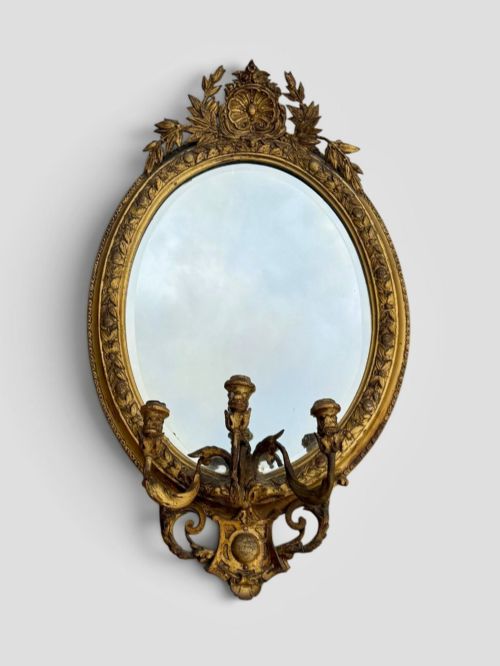
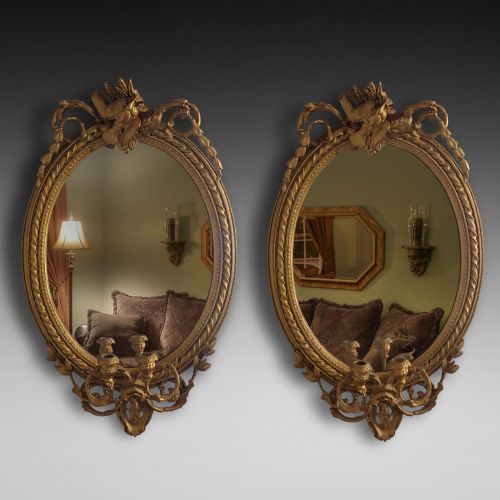
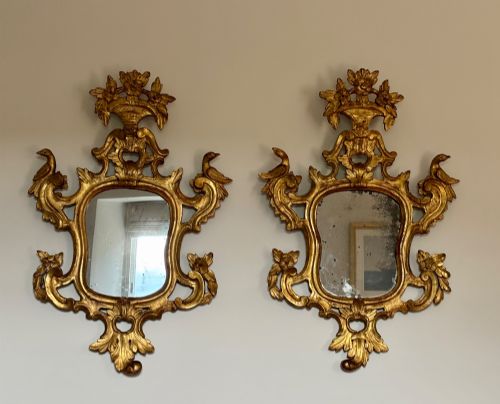
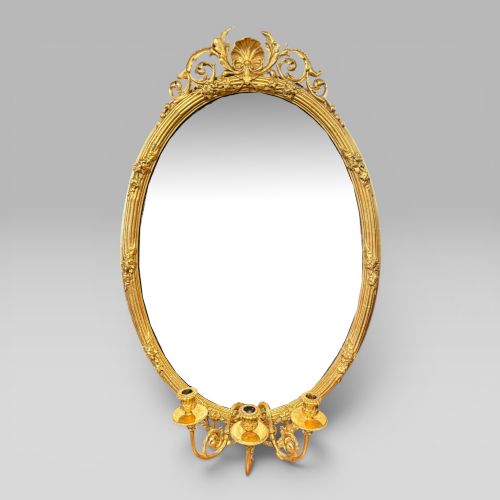
When searching for ornate gilt sconces, buyers encounter wall lights, girandoles and brackets shaped by periods ranging from the eighteenth century to the early twentieth century. These pieces function as decorative wall illumination and reflective glass surrounds.
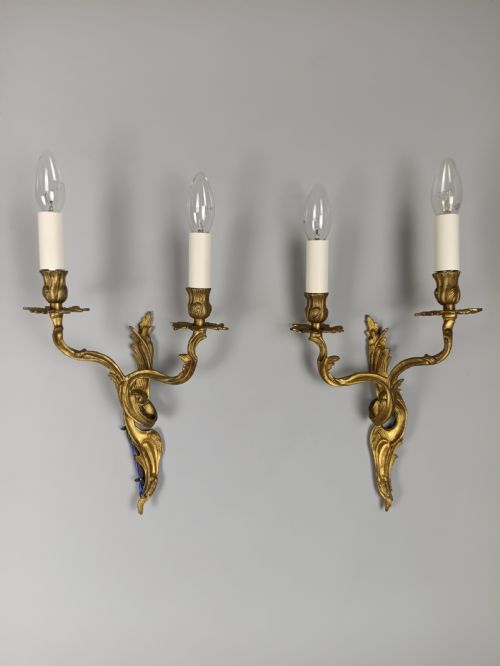
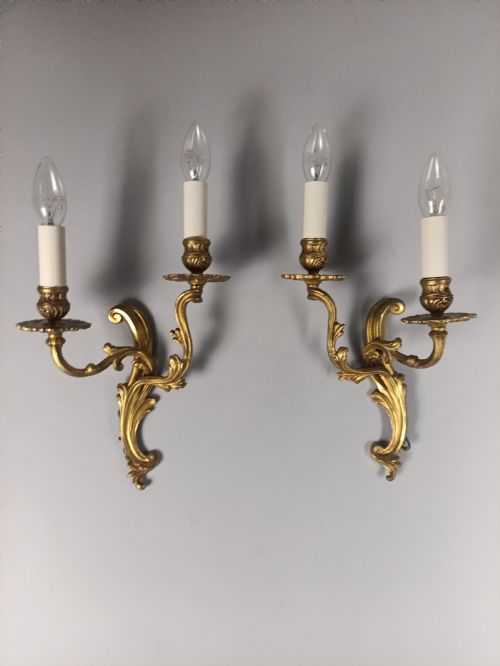
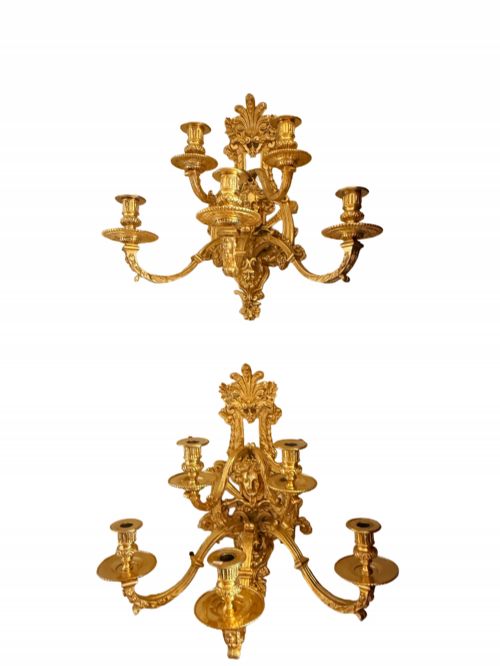
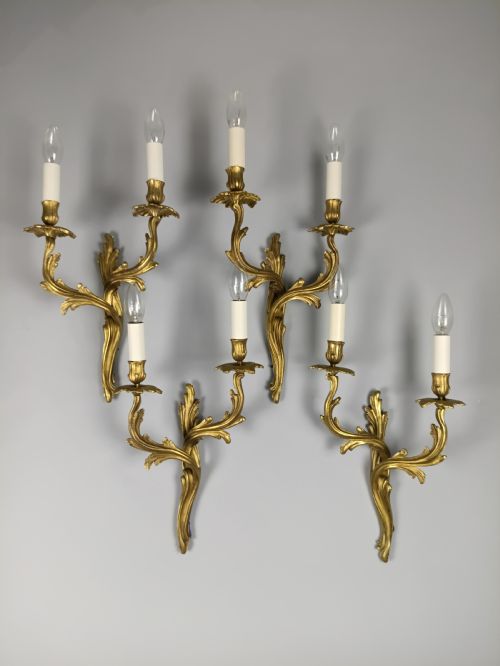
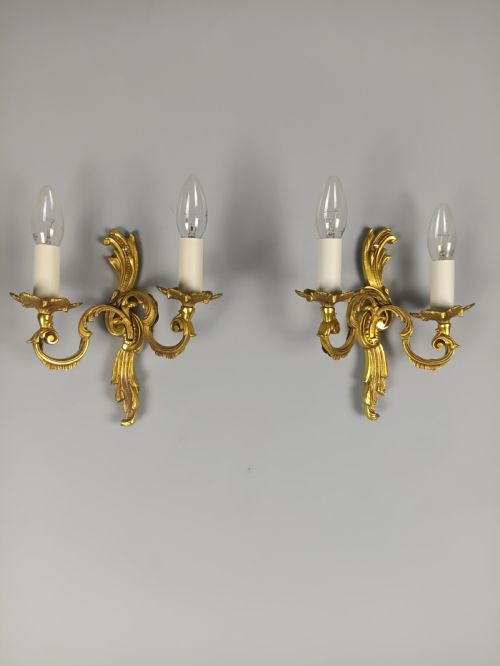
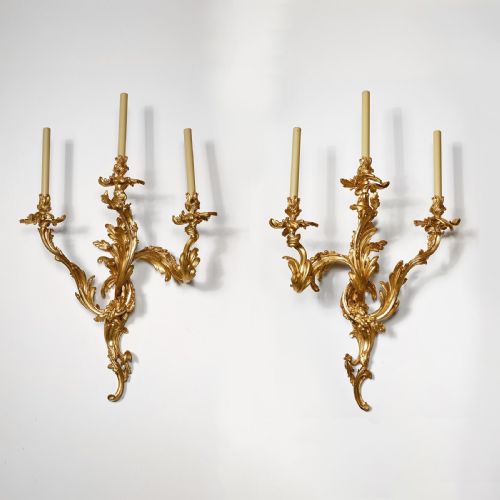
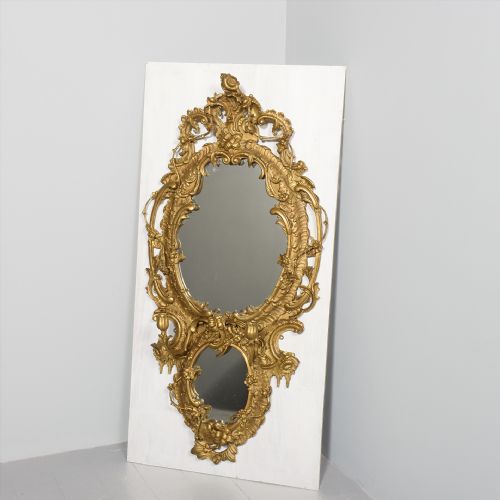
French Rococo and Victorian Rococo Revival styles dominate the selection, bringing scrolled arms and asymmetrical forms. Alongside these, Louis XIV and Louis XVI styles provide symmetrical structure and classical motifs.
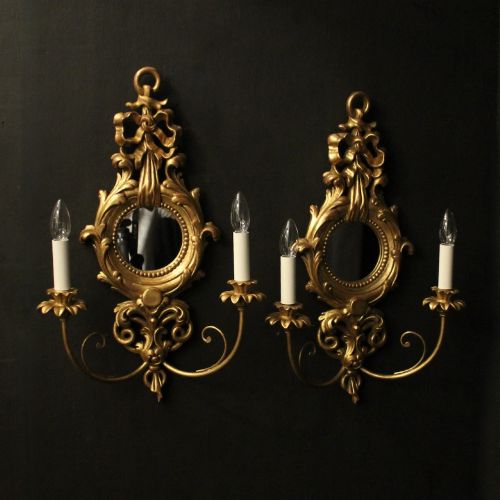
Pairs of twin and triple branch wall lights appear frequently among the listings, often constructed in sets. Mirrors and girandoles also form a substantial part of the available wall lighting and bracket options.
Materials and construction methods
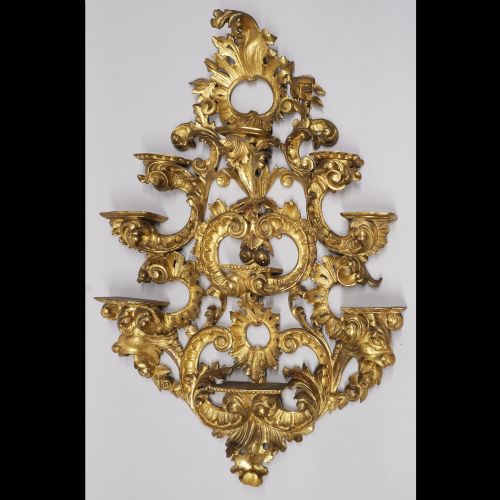
Craftsmen utilised carved wood, brass and bronze as foundational structures for these gilded pieces. Metal components received gold leaf or bronze finishes to create the characteristic metallic sheen.
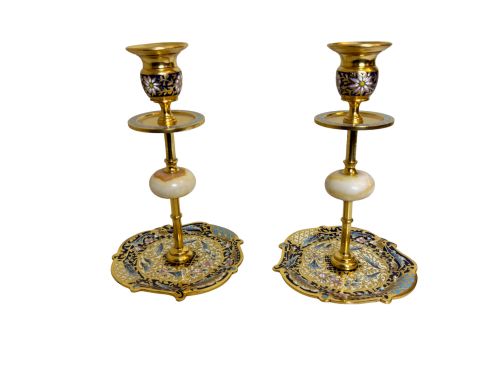
Gesso application over carved wood allowed artisans to achieve sharp relief details before gilding. Champleve enamel and onyx also appear in combination with gilt bronze on nineteenth century examples.
Some wall lights arrive wired and ready to cast light again, proving that old brass definitely knows new tricks.
Assessing quality and execution
Depth and precision in the carved wooden foliage or cast bronze ornamentation distinguish superior examples. Finer pieces demonstrate crisp detail in the scrollwork and balanced proportions across multiple candle branches.
The integration of original glass elements, such as mirrored backplates and crystal drops, alters the visual weight of the fixture. Subtlety in the application of the gilt finish preserves the definition of the underlying material.
The Ornate Gilt Sconces Glossary
- Giltwood
- Wood that has been coated with a thin layer of gold leaf. This technique provides a luminous surface used extensively on eighteenth and nineteenth century frames and wall brackets.
- Girandole
- A branched wall light or sconce that incorporates a mirror. The reflective glass multiplies the illumination cast by the candles.
- Ormolu
- Finely ground high-carat gold mercury-gilded onto a bronze object. This French technique imparts a rich, durable metallic finish to nineteenth century wall lights.
- Rococo
- An ornate artistic style characterised by asymmetric scrollwork, C-curves and naturalistic plant motifs. It heavily influences French and Victorian wall lighting design.
- Champleve
- An enamelling technique where troughs are dug into a metal surface and filled with vitreous enamel. These coloured areas complement the surrounding gilt bronze framework.
Ornate Gilt Sconces: Frequently Asked Questions
How do I hang heavy gilt sconces?
Heavy giltwood and bronze fixtures require secure fastening directly into wall studs or appropriate masonry anchors. The substantial weight of cast metal and carved wood demands professional installation to ensure stability.
Wall brackets and girandoles distribute their load across the backplate mounting points. Checking the structural integrity of the wall before mounting prevents damage to the plaster and the antique fixture.
Were these sconces converted to electricity?
Many wall lights from the nineteenth and twentieth centuries have undergone rewiring to accommodate modern electrical bulbs. This process adapts original candle branches for domestic use while retaining the external metalwork.
Listings often indicate whether fixtures arrive ready to install with updated internal wiring. Rewired examples allow safe integration into contemporary lighting circuits without altering the visible period appearance.
What is the difference between a sconce and a girandole?
A sconce functions primarily as a wall-mounted bracket holding candles or electric lamps. Its design focuses on projecting light outward into the space from the wall surface.
A girandole incorporates a mirror plate directly behind the candle arms. This reflective glass serves to amplify the light and acts as a decorative wall mirror in its own right.
How do I clean gilt surfaces?
Giltwood and ormolu require gentle dusting with a soft brush to remove surface particles. Water and chemical solvents can damage delicate gold leaf and aged patination.
Maintaining these pieces involves keeping them away from direct heat sources and excessive moisture. Professional conservation is recommended for deep cleaning or repairing damaged gilding.