



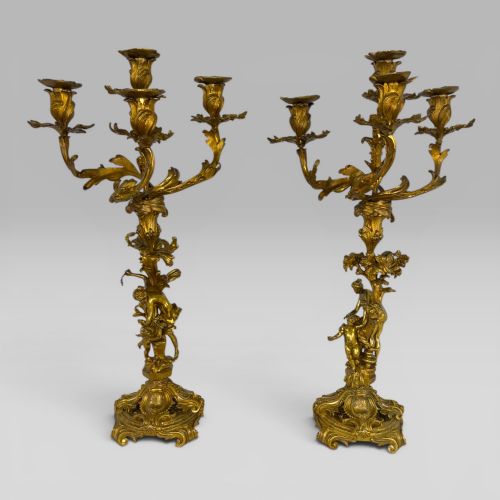


Ornate Gilt Candelabra
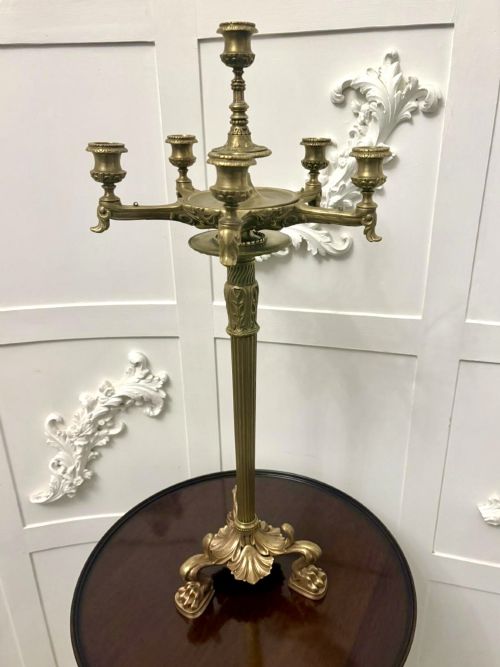
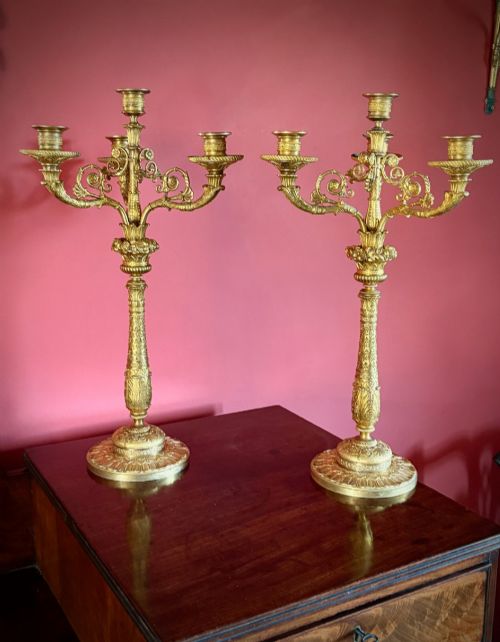
These ornate gilt candelabra bring grand nineteenth-century illumination to a room, offering heavy cast metalwork and intricate French revival styling.
Ornate Gilt Candelabra
When you search for ornate gilt candelabra, you are looking at substantial lighting pieces designed for tables, mantelpieces, and walls during the eighteenth and nineteenth centuries. The examples here lean heavily toward French Rococo and Louis XVI revivals, alongside Victorian interpretations.
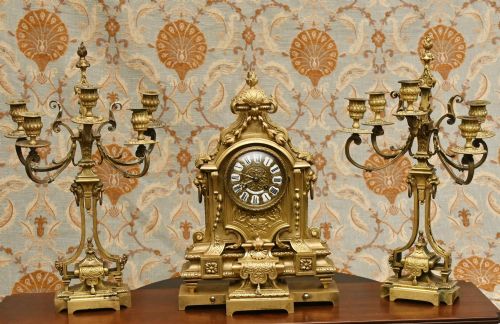
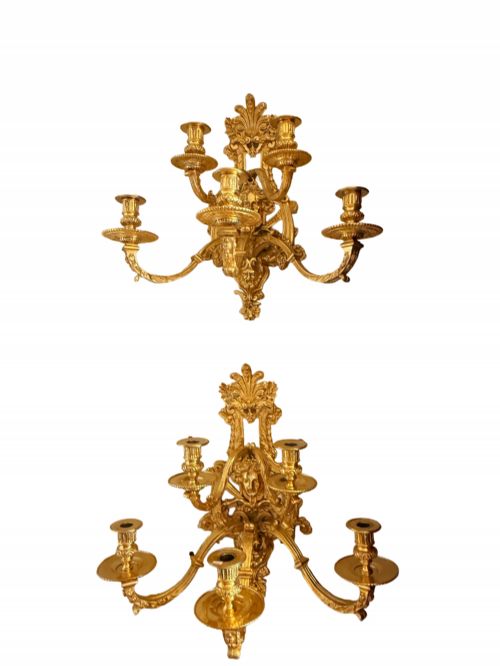
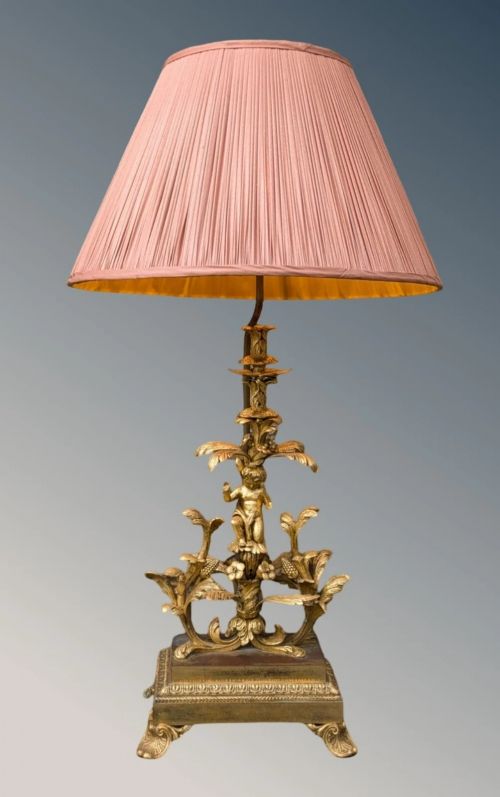
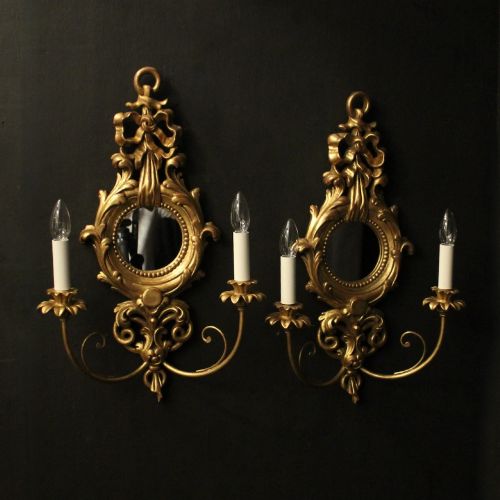
Most pieces survive as balanced pairs, often incorporating multiple arms for several candles or converted to electricity. Alongside standard candelabra stands, the selection includes related clock garniture sets, wall sconces, and figural table lamps.
Origins stretch from French workshops to Victorian Britain and Italy, with dates spanning from the eighteenth century through to the 1930s. The core of the inventory relies on nineteenth-century production using gilded metals combined with contrasting materials.
How they were made
Maker workshops utilised lost-wax casting and sand-casting methods to shape gilt bronze, ormolu, and brass into elaborate scrollwork, figures, and floral motifs. Molten metal was poured into intricate moulds before being chased by hand to sharpen the surface details.
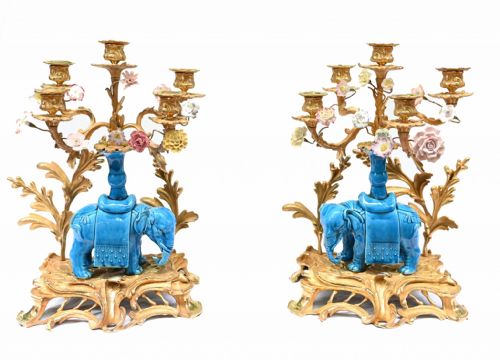
Many items integrate contrasting natural materials into the metal framework, notably white or dark marble, coloured glass, enamel, and porcelain. Ormolu elements required mercury gilding or modern electroplating to achieve a durable golden finish on bronze bases.
Ornate Gilt Candelabra Retail Price Guide 2026
Typical asking prices for ornate gilt candelabra among the pieces listed under this phrase on Sellingantiques today, from the lower quarter to the upper quarter. They describe what is for sale here now, not the wider market.
Listings feature items spanning the eighteenth century through to the 1930s, constructed predominantly from gilt bronze, ormolu, brass, and marble.
What varies in quality
The integrity of the structural assembly and the quality of secondary materials dictate the tier of a piece. Solid marble plinths, heavy bronze weights rather than hollow brass, and well-fitted arm joints separate standard production from exceptional studio work.
Auguste Cain
The Ornate Gilt Candelabra Glossary
- Ormolu
- Gilt bronze created by applying a mercury and gold amalgam to a bronze base and firing it. This technique produced a deep, lasting golden lustre characteristic of eighteenth and nineteenth-century French luxury goods.
- Clock garniture
- A decorative set comprising a mantel clock flanked by matching candelabra or vases. These matched groups were designed to sit harmoniously together on a fireplace mantel.
- Girandole
- A branched wall-mounted light fixture equipped with a reflective backplate or mirrors. The reflective surface was intended to amplify the candlelight within a room.
- Champlevé
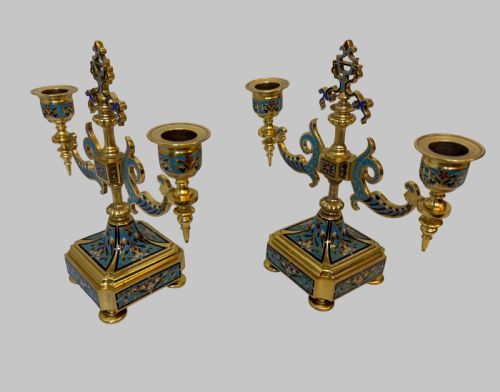
- An enamelling technique where troughs are dug into a metal surface and filled with vitreous enamel powder before firing. It creates colourful decorative patterns across the body of the object.
- Clock garniture
- A matched decorative set consisting of a central clock and side ornaments such as candelabra. They formed a cohesive decorative scheme for formal nineteenth-century interiors.
Ornate Gilt Candelabra: Frequently Asked Questions
What is an ornate gilt candelabra?
These are branched lighting stands made from gilded bronze, brass, or ormolu, designed to hold multiple candles. They were created primarily in the nineteenth century for formal domestic interiors.
Many incorporate decorative figures, crystal drops, or marble bases. They function as both functional light sources and sculptural decorative objects.
How were they used historically?
These pieces sat on dining tables, sideboards, and mantelpieces to illuminate evening rooms before electric lighting became common. They were often paired with matching clocks in a garniture set.
In larger reception rooms, matching pairs helped balance the visual weight of heavy furniture and mirrored walls. The branching arms allowed multiple wax candles to burn simultaneously.
Are these candelabra wired for electricity?
Some pieces retain their original configuration for wax candles, while others have been converted to electric table lamps or wall lights over time. Conversions can often be reversed depending on the specific internal wiring used.
Buyers should examine the listing details to confirm whether a piece retains candle sockets or holds lamp fittings. Professional rewiring is recommended for older conversions.
How do I tell a nineteenth-century piece apart from later revivals?
Nineteenth-century items generally feature heavier cast bronze construction, hand-chased surface details, and authentic patination on the metal. Screws and fixings often show period hand-threading rather than modern machine production.
Later twentieth-century reproductions tend to feel lighter in the hand and may display uniform machine finishing without the crisp hand-tooled depth of earlier workshops.