

Ornate French Wall Sconces
Ornate French wall sconces bring layered illumination and architectural depth to a room through cast metal and gilded surfaces.
Ornate French Wall Sconces
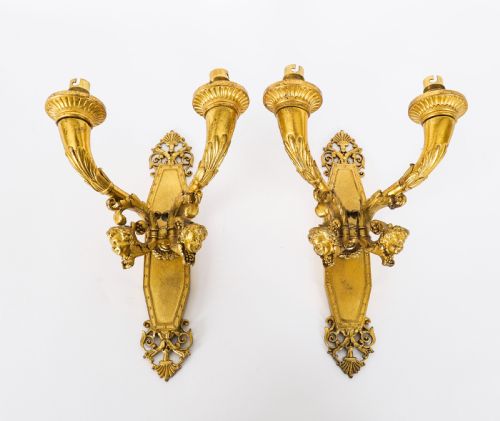
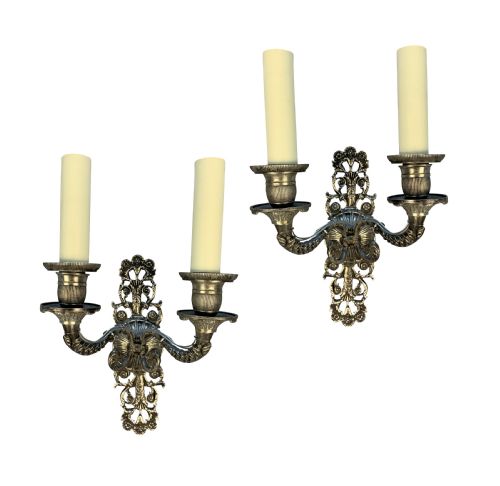
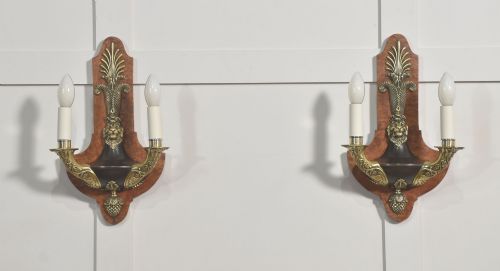
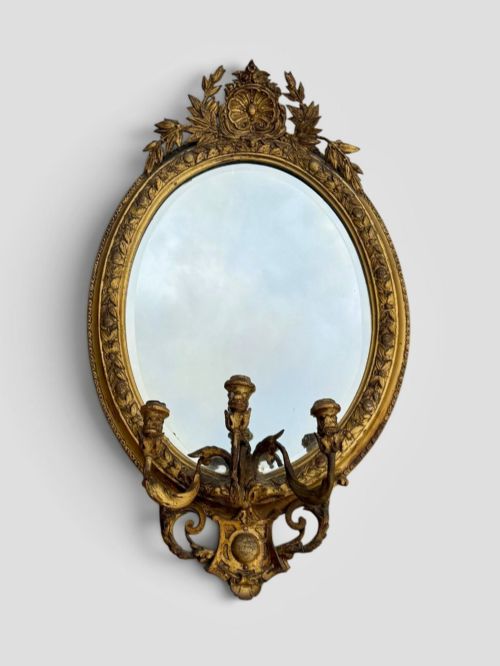
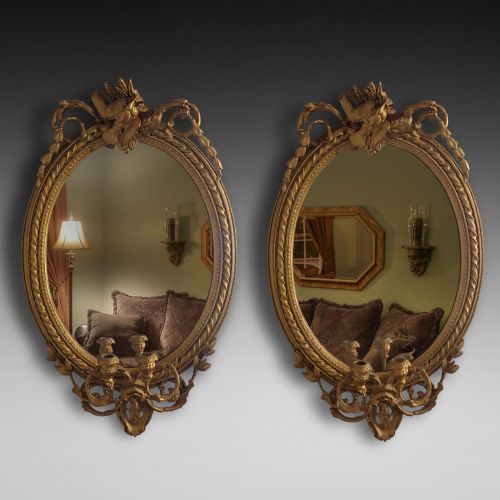
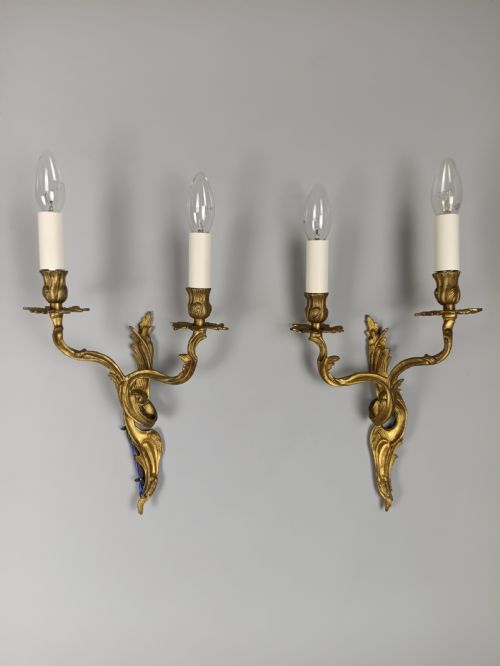
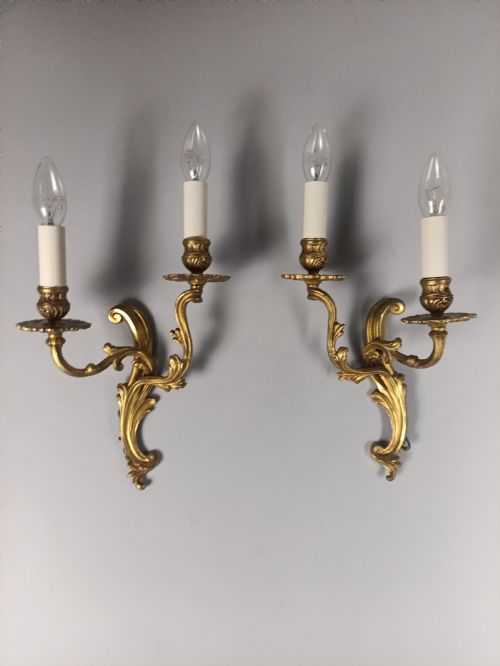
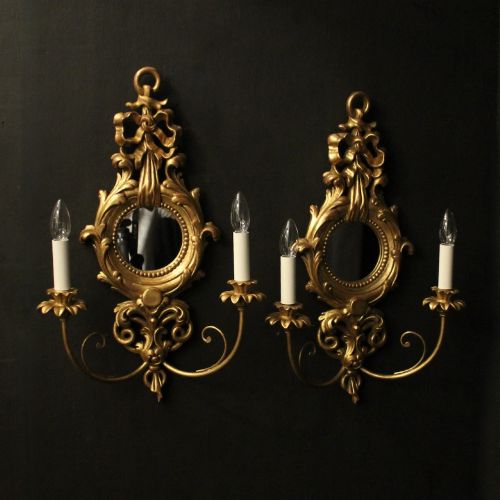
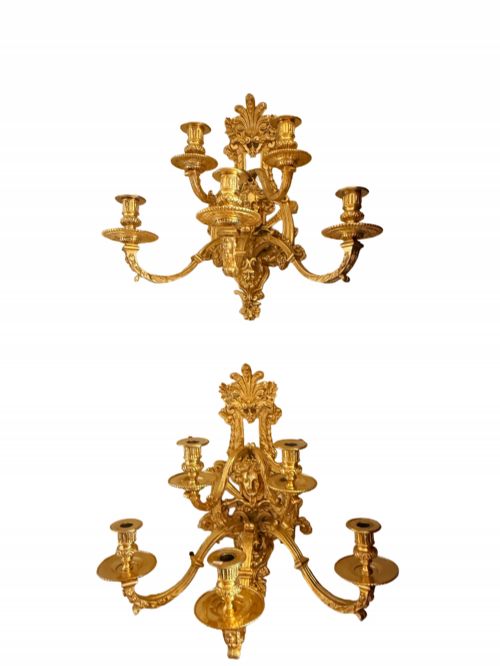
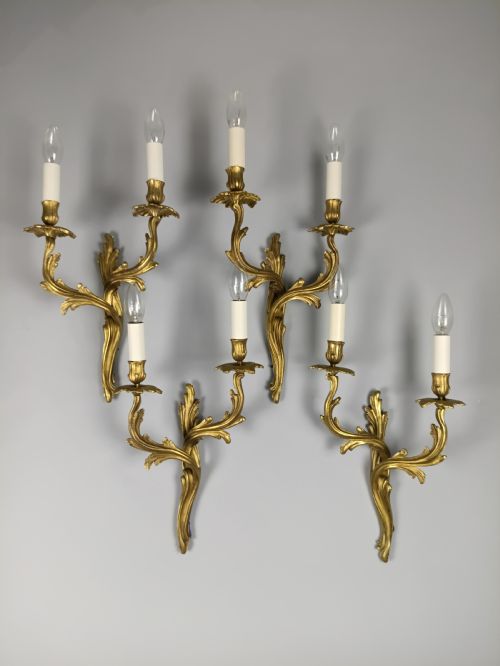
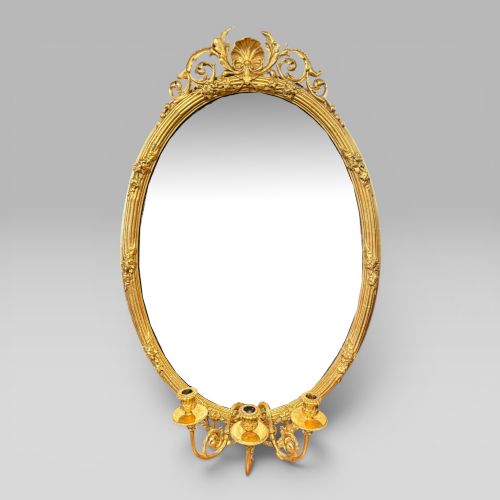
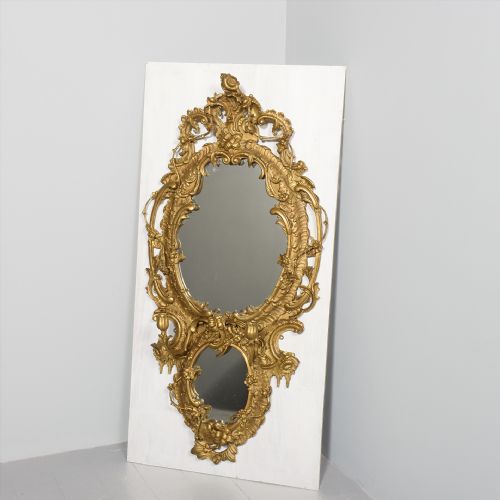
These fixtures serve as decorative wall illumination, taking the form of multi-branch lights, girandole mirrors, and wall brackets. When searching for ornate French wall sconces, buyers encounter designs rooted in nineteenth-century revivals, particularly Rococo and Empire styles.
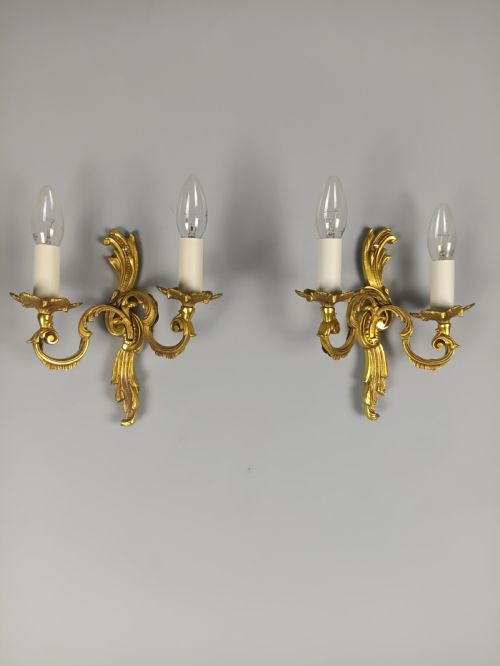
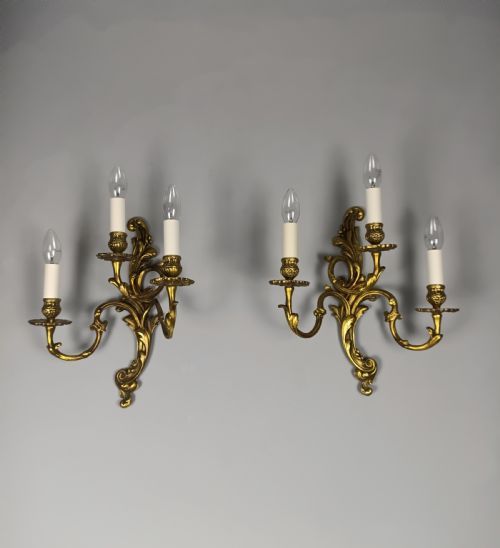
The selection on this page centres on twin-arm and triple-arm configurations alongside mirrored sconces. Pieces originate primarily from the nineteenth and early twentieth centuries, spanning periods from eighteen-hundred to nineteen-thirty.
Most examples function as pairs or matched sets designed to flank architectural focal points like fireplaces or doorways. The predominant visual language relies on asymmetrical scrolls, foliate motifs, and gilded finishes.
How they were made
The primary construction methods involve casting metals such as bronze, brass, and ormolu, often finished with applied gilding. Many examples combine cast metal arms with wooden or gesso backplates, particularly in girandole mirrors.
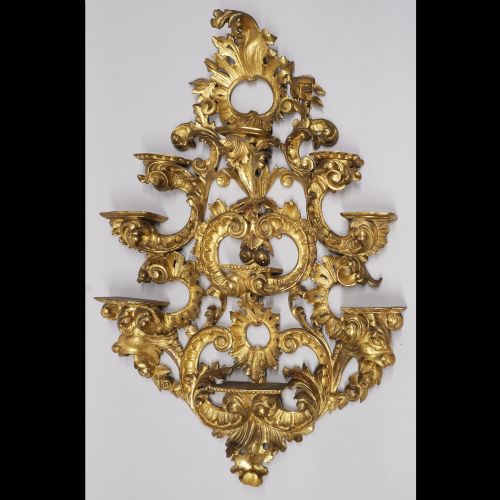
Carved giltwood and gesso provide lightweight alternatives to solid metal for larger wall brackets and mirror frames. Gilding techniques apply thin layers of gold leaf or metallic paint over prepared wooden or plaster surfaces.
Casting allows for complex, high-relief ornamentation characteristic of Rococo and Neoclassical revivals. Structural components are assembled using threaded bolts and screws, permitting disassembly for maintenance and rewiring.
Several girandoles retain their original candle drip pans, proving that past owners enjoyed dining by flickering metal-reflected light long before the arrival of the switch.
What varies in quality
Quality depends heavily on the crispness of the casting and the depth of the chased detail on bronze and brass components. Finer pieces retain sharp botanical motifs and clean lines without the smoothing often seen in secondary sand castings.
The method and preservation of the surface finish dictate the visual impact of a fixture. Hand-applied gilding and well-maintained patination on bronze show richer tonal variations than flat, uniform modern paints.
Substantial mounting plates and heavy gauge metal tubing indicate superior structural integrity in multi-branch sconces. Lighter stamped brass lacks the physical weight and rigidity of cast ormolu and bronze.
The Ornate French Wall Sconces Glossary
- Ormolu
- Gilded bronze produced by applying a mercury and gold amalgam to a bronze base and heating it. This technique creates a durable, deep golden surface characteristic of fine nineteenth-century French metalwork.
- Girandole
- A decorative wall mirror fitted with one or more candle branches attached to the frame. The reflective glass multiplies the light cast by the candles.
- Rococo Revival
- A nineteenth-century design movement mimicking the asymmetrical C-scrolls, shells, and naturalistic plant forms of the eighteenth-century French style. It dominates the ornamentation of these wall lights.
- Appliqué
- A French term used interchangeably with wall sconce to describe a light fixture fixed directly to a vertical surface. These fixtures project outward to illuminate surrounding wall space.
- Gesso
- A plaster-like mixture applied to wood bases to create a smooth surface for carving or gilding. It allows for crisp decorative moulding on mirror frames and brackets.
Ornate French Wall Sconces: Frequently Asked Questions
How do I install antique wall sconces?
Many surviving fixtures arrive rewired with modern cable and mounting brackets ready for professional installation into domestic electrical circuits. Electricians secure the backplate directly to standard wall junction boxes.
Heavier cast bronze or carved wood pieces require reinforced wall anchors to support their weight safely. Proper alignment ensures the twin or triple arms project evenly from the wall surface.
Were these lights originally wired for electricity?
Original nineteenth-century and early twentieth-century fixtures were designed for candles or gas before later conversion to electricity. Candle pans and drip catchers often remain part of the decorative design beneath the lamp holders.
Rewiring replaces older perished cloth or rubber wiring with modern insulated cable that meets contemporary safety standards. This adaptation preserves the exterior metalwork while allowing daily use.
How do I date a pair of wall sconces?
Dating relies on identifying stylistic markers, casting techniques, and material composition associated with specific nineteenth and early twentieth-century periods. For example, Empire style pieces draw on Napoleonic motifs, while Rococo revival designs feature asymmetrical leaf scrolls.
Examining the construction of the backplates, screws, and mounting hardware provides further clues to age. Machine-threaded screws generally point towards later nineteenth or twentieth-century production.
Can I mix different styles of wall lights?
Pairing matching sets within the same room maintains visual balance, particularly when flanking a central mirror or fireplace. Mixing distinct revival styles risks creating a cluttered appearance across adjacent walls.
Matching the metal finish, such as gilded brass or patinated bronze, helps unify different fixtures within a shared architectural space.