


Rococo Wall Candelabra
These rococo wall candelabra bring fluid asymmetric curves and candle-lit warmth to a room, driven by ornate scrolling metalwork and carved wood.
Rococo Wall Candelabra
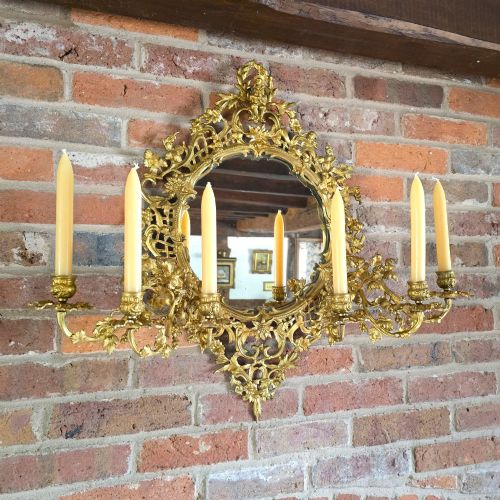
When you search for rococo wall candelabra, you are looking at decorative candle sconces and girandoles designed to mount directly onto vertical surfaces. The forms range from simple twin-arm lights to grand multi-branch wall mirrors fitted with substantial candle holders.
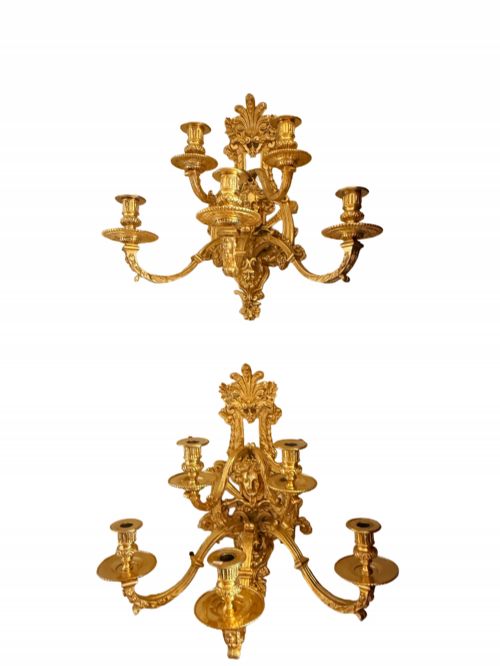
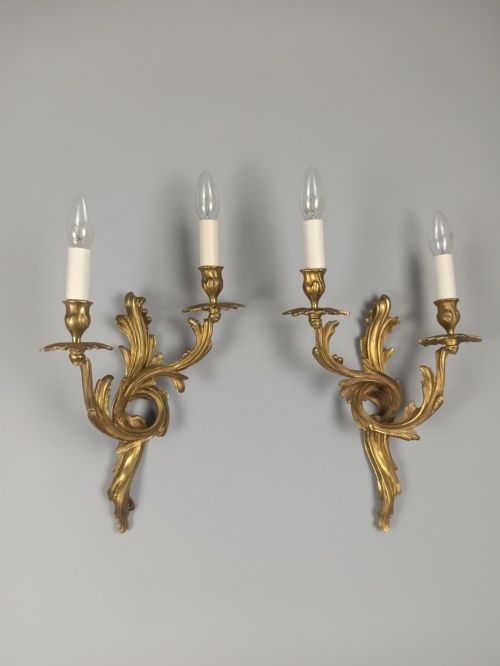
You are most likely to meet French and Italian examples on this page, spanning the eighteenth century through to later revivals in the nineteenth and early twentieth centuries. These pieces typically take the form of paired wall lights featuring elaborate scrollwork, leaf motifs, and candle arms.
The aesthetic is distinctly theatrical, originating in Louis XV designs and later revivals that prioritise asymmetrical movement over rigid symmetry. Makers utilised brass, bronze, ormolu, and carved giltwood to capture this dynamic style.
How they were made
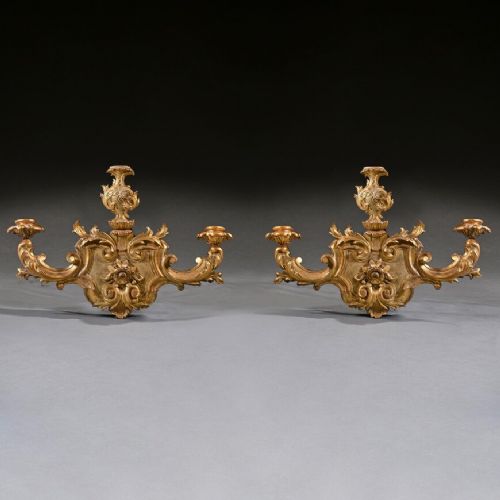
Metals form the core of many pieces, utilising cast bronze, brass, and gilt bronze finished with hand-chiselling and fire gilding or ormolu. Artisans also worked with solid wood, applying layers of gold leaf to carved giltwood surfaces to achieve a luminous finish.
Glass and crystal elements occasionally accompany the metal arms, adding reflective brilliance when illuminated by candles. Construction techniques involve joining multiple cast branches to a central backplate, securing the structural integrity required for supporting heavy metal arms.
Some branch arms are designed to swivel outward like metal folding fans, letting you adjust the spread of the candlelight across the wall.
What varies in quality
The definition and depth of the chasing on metal surfaces separate standard production from superior work. Finer castings exhibit crisp leaf work and sharp asymmetry, whereas lesser examples appear soft and flat.
The richness of the gilding or surface finish dictates visual presence. Deeply burnished gold leaf on carved wood or well-preserved ormolu on bronze creates a warmer, more convincing glow than flat modern paints.
The Rococo Wall Candelabra Glossary
- Ormolu
- Gilt bronze produced by applying a mercury and gold amalgam to a bronze base and heating it. This technique creates a durable, golden surface characteristic of fine French decorative metalwork.
- Girandole
- A branched wall sconce or candleholder incorporating a mirror backplate. The reflective glass multiplies the candlelight within the room.
- Giltwood
- Timber, often lime or pine, that has been carved and coated with thin sheets of gold leaf. It provides a lightweight alternative to solid metal for large wall decorations.
- Sconce
- A wall-mounted lighting fixture designed to hold candles or electric bulbs. These pieces project outward to cast light across architectural surfaces.
- Louis XV style
- A design aesthetic originating in eighteenth-century France defined by organic curves, asymmetrical scrolls, and floral motifs. Later revival periods frequently copied these elements.
Rococo Wall Candelabra: Frequently Asked Questions
Can these antique candelabra be wired for electricity?
Many wall lights of this type are adapted for electrical wiring by running thin flex through the hollow candle tubes or arms. This allows you to integrate period fittings into modern domestic lighting schemes without losing the original decorative appearance.
Any electrical conversion should be carried out by a qualified electrician to ensure the internal wiring meets current safety standards. Retaining the option to use candles preserves the original function of the piece.
How do I clean gilt bronze and ormolu?
Dust these metal surfaces gently using a soft, dry artist brush or a feather duster to remove surface particles. Avoid chemical polishes, abrasive cloths, or water, as these can strip away the delicate gold leaf or thin ormolu layer.
Regular light dusting prevents grime from settling into the deep recesses of the rococo scrollwork. Professional conservation cleaning is recommended if the metal has developed stubborn tarnish or dirt accumulation.
How do I tell an eighteenth-century piece from a later revival?
Eighteenth-century pieces display hand-cut joinery, heavier patination, and casting irregularities consistent with period workshop practices. The chiselling on authentic period metalwork tends to show crisp, individual tool marks rather than uniform machine finishing.
Nineteenth and twentieth-century revivals often utilise standardised threading, cleaner casting seams, and brighter, more uniform gilding. Examining the construction of the backplate and the wear patterns on the fixing points helps reveal the true age of the object.