


Ornate French Side Tables
These ornate French side tables bring together gilded surfaces, carved wood, and marble tops to anchor a room with continental weight.
Ornate French Side Tables
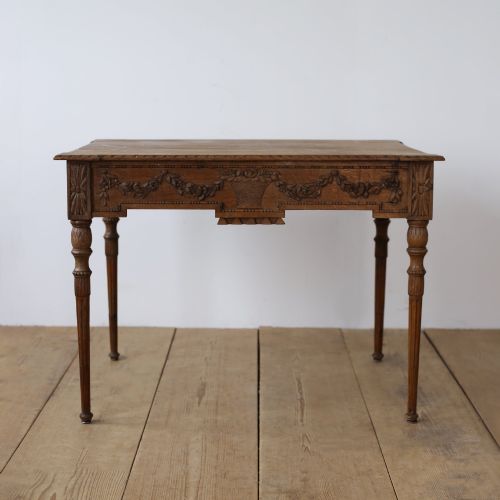
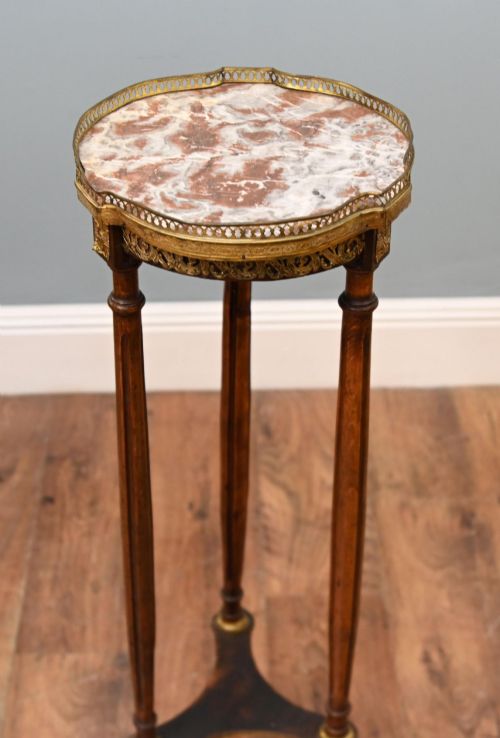
Ornate French side tables cover a broad range of forms, including console tables, centre tables, occasional tables, and pedestal tables designed for display and utility. The selection spans the nineteenth century alongside pieces from the early twentieth century, showing revival movements and chateau aesthetics.
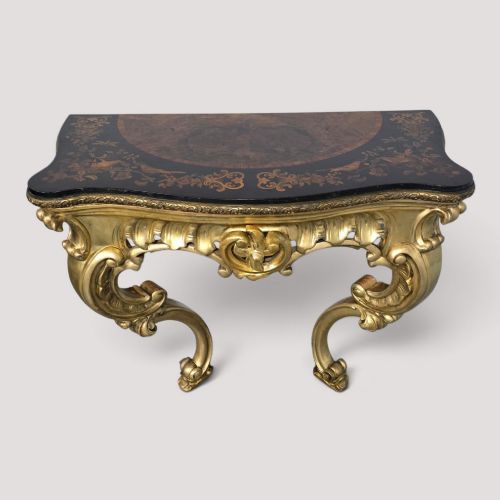
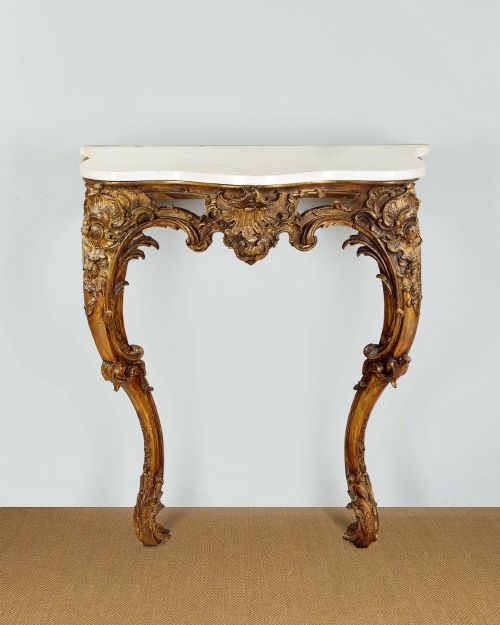
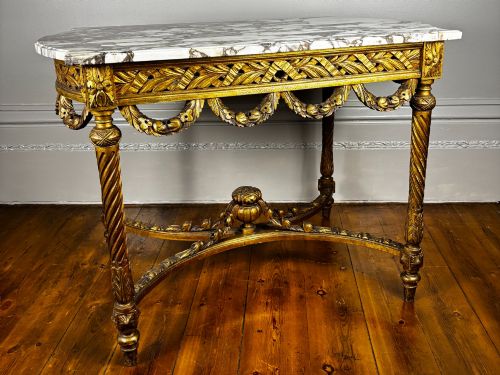
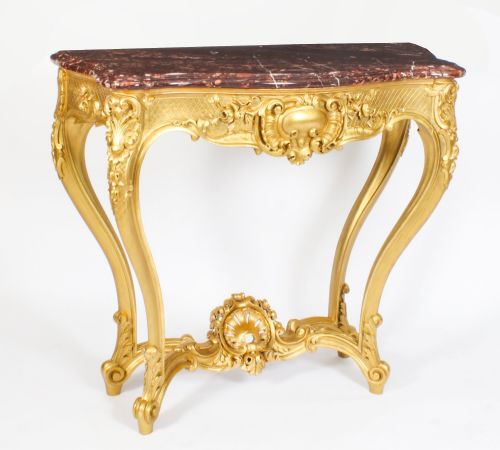
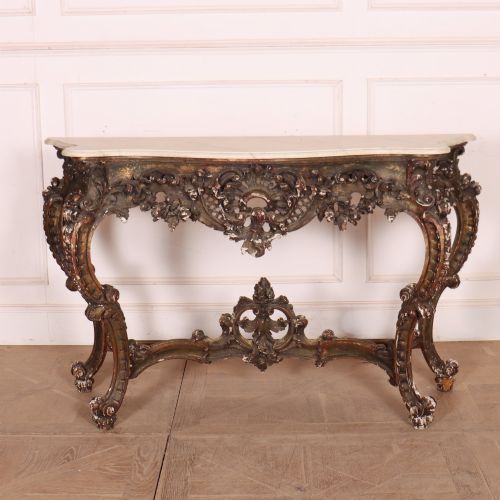
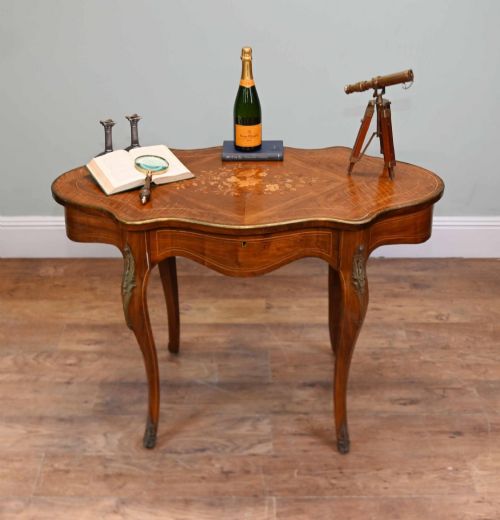
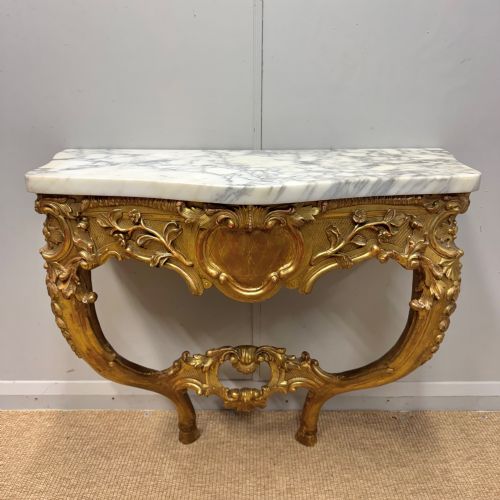
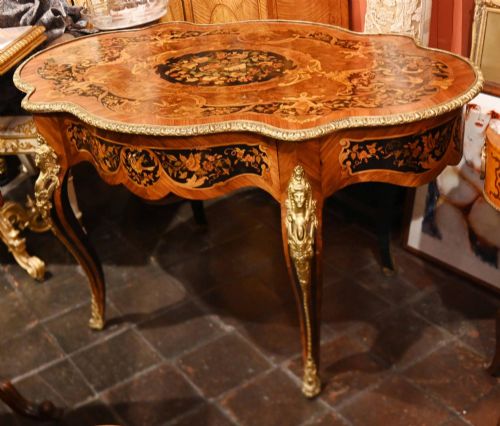
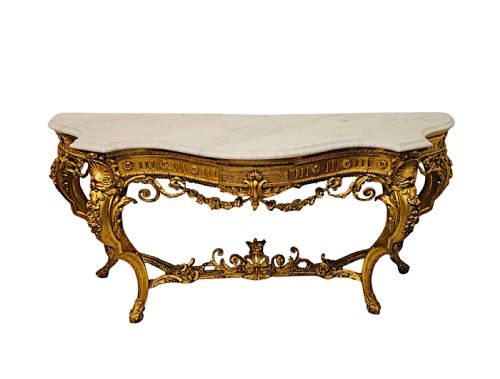
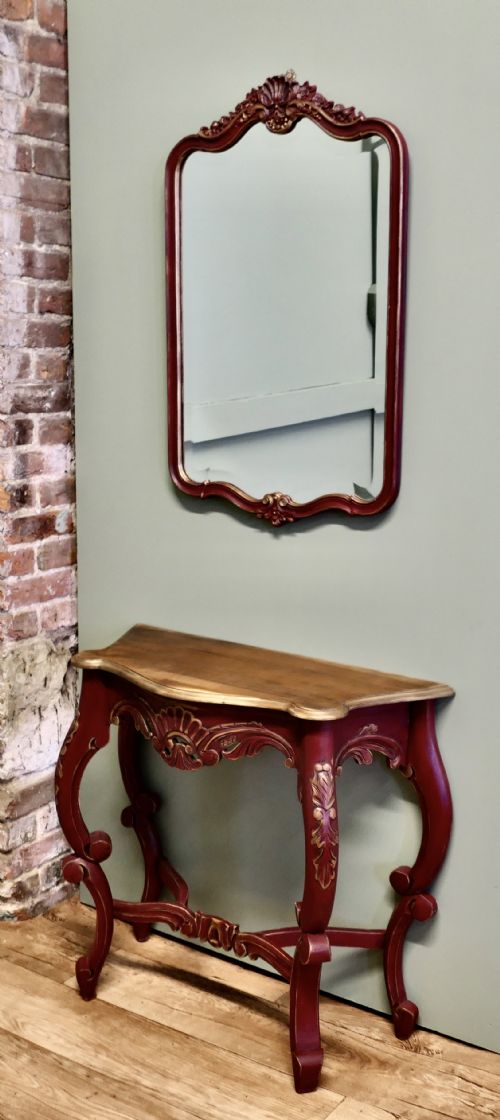
Console tables dominate the grouping, frequently featuring shaped marble tops paired with carved giltwood or painted frames meant to stand against a wall. Smaller occasional tables and centre tables introduce contrasting timbers like walnut, mahogany, and rosewood with marquetry or parquetry inlay.
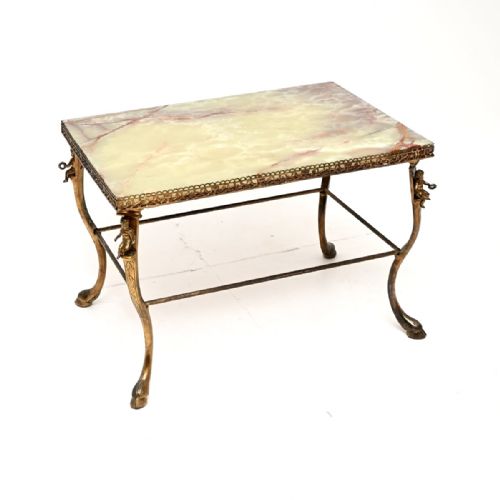
Stylistic influences lean heavily into French Rococo, Louis XV and Louis XVI revivals, and Napoleon III designs, displaying asymmetrical scrollwork, floral carving, and parcel gilt finishes. Occasional pieces include gueridons and jardiniere stands that incorporate brass, gilt bronze, and onyx details.
Construction and Materials
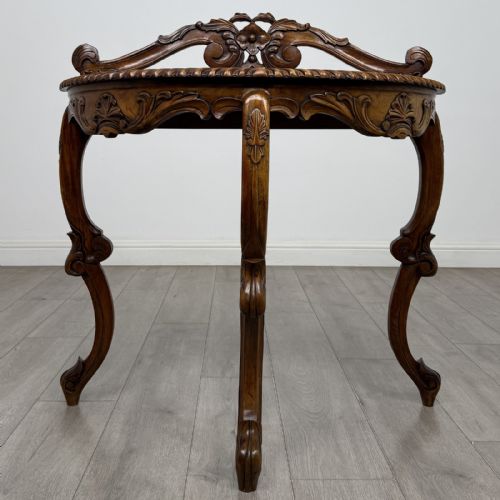
Carved timber frames in walnut, mahogany, and beech form the structural core of these tables, frequently finished with gesso and layered in giltwood or paint. Artisans shaped these woods into serpentine rails and cabriole legs characteristic of revivalist cabinetmaking.
Heavy stone inserts, notably Carrara, rouge, and green marble, sit atop console and centre tables as finished surfaces. Gilt bronze, ormolu, and cast brass mounts accent the corners, aprons, and legs, while parquetry and marquetry introduce geometric or floral wood patterns.
Ornate French Side Tables Retail Price Guide 2026
Typical asking prices for ornate french side tables among the pieces listed under this phrase on Sellingantiques today, from the lower quarter to the upper quarter. They describe what is for sale here now, not the wider market.
Listings incorporate nineteenth-century periods, Victorian eras, and early twentieth-century revivals using marble, giltwood, brass, and walnut.
Evaluating the Pieces
Depth of hand-carving and crispness in the gesso and giltwood separate standard production from finer workshop output, where undercut foliage and balanced asymmetry show deliberate hand execution. Heavy cast bronze and ormolu mounts with defined chiseled details indicate superior metalwork.
The choice and thickness of the marble top influence overall substance, with solid polished stone slabs fitted neatly into rebated wooden frames holding higher visual weight than thin veneers. Timber selection, such as figured walnut or intricate parquetry, signals greater ambition in the original commission.
The Ornate French Side Tables Glossary
- Console table
- A table designed to stand against a wall, frequently secured with brackets or resting on front legs. These pieces carry decorative aprons and marble tops.
- Gueridon
- A small round table supported by a central pillar or multiple legs, originating in seventeenth-century France. They frequently utilise marble tops and gilt mounts.
- Ormolu
- Gilt bronze ornamentation applied to furniture mounts and lamps. The technique involves coating cast bronze with a mercury and gold amalgam.
- Marquetry
- Inlaid wood veneers arranged to form decorative pictures or geometric patterns. Craftsmen apply these veneers to the primary timber surfaces of tables.
- Gesso
- A plaster mix applied to wood frames to create a smooth base for gilding or painting. This material allows deep relief carving before metal leaf is laid down.
Ornate French Side Tables: Frequently Asked Questions
Where should I place a console table?
Console tables sit best against flat walls in hallways, living rooms, or dining spaces where their decorative fronts can command attention. They provide a stable surface for lamps, clocks, or decorative objects without blocking room flow.
Because many examples feature finished backs or rely on wall stability for console formats, positioning them centrally requires checking if the back is fully polished and detailed.
How do I clean marble table tops?
Marble surfaces require simple wiping with a damp cloth and mild, neutral soap to remove dust and daily grime. Avoid acidic cleaners, vinegar, or citrus solutions that etch polished stone.
Applying a specialist stone wax periodically helps protect the polish and guards against liquid absorption on porous marble varieties like rouge or Carrara.
How do I identify Louis XV style?
Louis XV style furniture relies on asymmetrical curves, cabriole legs, and naturalistic C-scroll and floral carvings. Pieces from this design vocabulary avoid straight lines in favour of flowing, organic silhouettes.
Revival pieces from the nineteenth century adopt these exact markers, utilising giltwood and applied bronze mounts to mimic eighteenth-century court luxury.
What is the difference between a centre table and a side table?
Centre tables are finished on all sides to stand free in the middle of a room, functioning as display pieces or games tables. Side tables sit flush against walls or beside seating, prioritizing access from the front.
Centre tables frequently showcase elaborate marquetry, parquetry, or inset marble across the entirety of the top surface.