



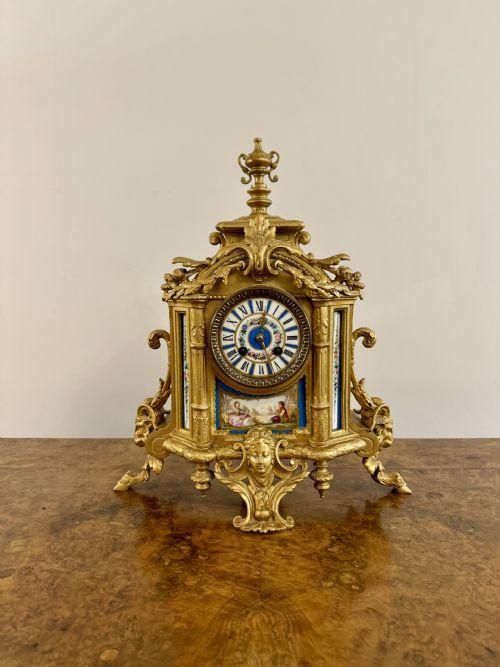


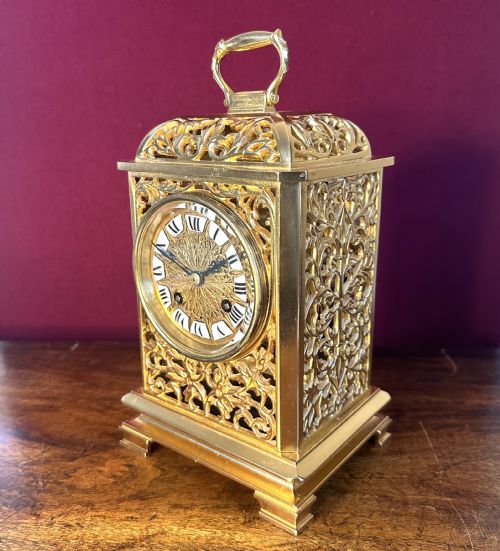

Ornate French Desk Clock
An ornate french desk clock brings lavish nineteenth-century metalwork and intricate dial painting straight to the mantelpiece.
Ornate French Desk Clock
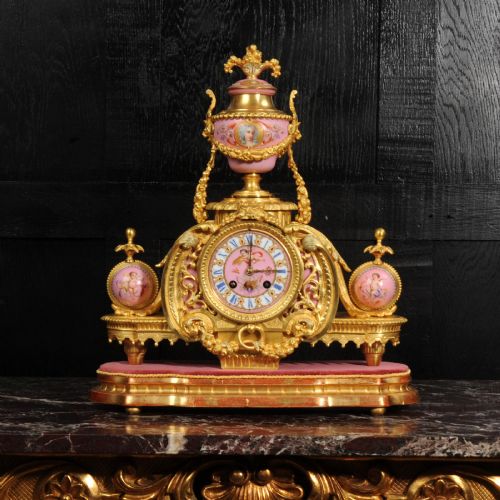
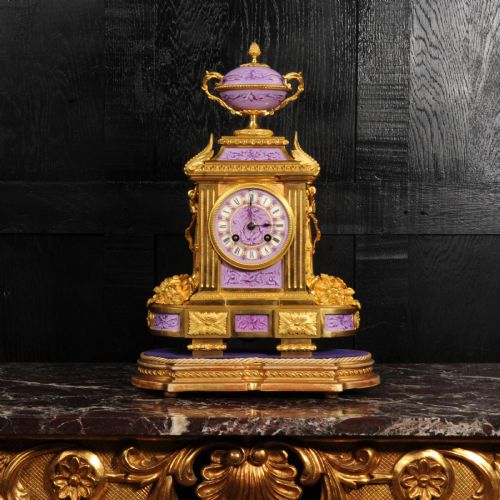
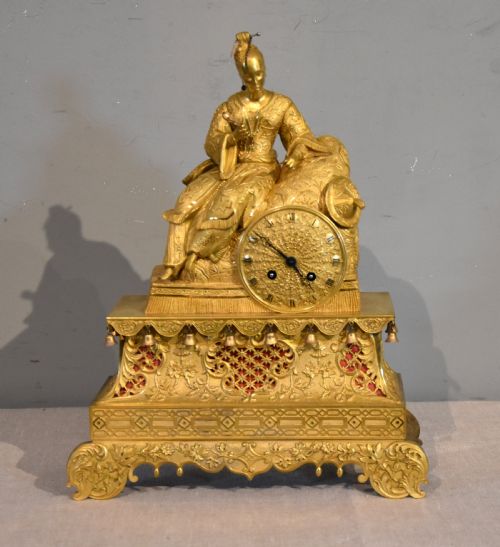
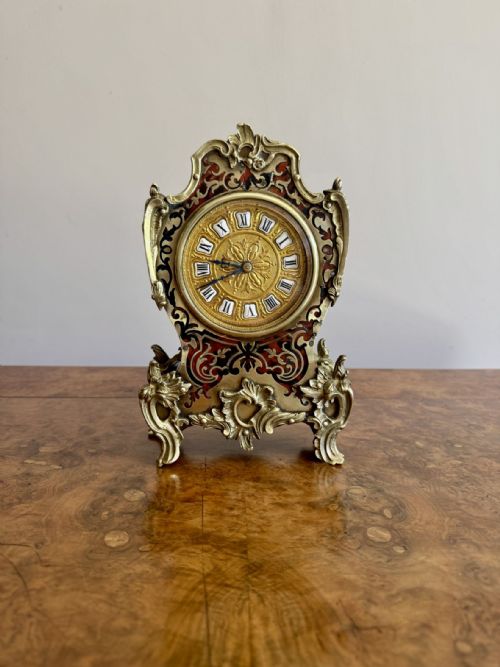
When searching for an ornate french desk clock, collectors encounter an array of mantel clocks, carriage clocks, and desk timepieces spanning the nineteenth century. These objects function primarily as decorative centrepieces, frequently incorporating elaborate dial work and sculpted housings.
The versions most common on this page hail from the Victorian era and the late nineteenth century, reflecting French Rococo Revival and Louis styles. Such pieces typically combine cast metal housings with glass panels or porcelain plaques.
Makers and workshops across France produced these items in various formats, ranging from miniature bedside clocks to large architectural mantel clocks and garniture sets. Each piece demonstrates the period preference for ornate domestic ornamentation.
Materials and construction methods
Foundry workers cast the structural components in brass, bronze, or white metal, subsequently applying heavy fire-gilding to create ormolu finishes. Cases frequently integrate hand-painted porcelain panels or bevelled glass panes that expose the internal escapement.
Enamel specialists produced circular dials featuring individual cartouches for numerals, fired at high temperatures to achieve a glossy surface. Metal engravers added fine surface detailing to brass carriage clock cases and champlevé enamel borders.
Object forms range from miniature bedside timepieces and four-glass crystal regulators to complete clock garniture sets.
Evaluating craftsmanship and detail
The standard of an ornate french desk clock depends heavily upon the crispness of the cast metal ornamentation and the depth of the gilding. Superior examples display sharply defined scrollwork, rococo foliage, and figural elements rather than soft, mass-produced contours.
Dial execution similarly separates standard items from exceptional ones, particularly where hand-painted enamel portraits or delicate floral garlands are involved. The inclusion of signed movements by established makers elevates the horological significance of the piece.
Achille Brocot·Samuel Marti·Henri Jacot
The Ornate French Desk Clock Glossary
- Ormolu
- Gilded bronze or brass produced by applying an amalgam of mercury and gold to a metal base and heating it until the mercury vaporised. This historic technique creates a rich, lasting metallic lustre.
- Champlevé
- An enamelling technique where troughs or cells are hollowed out of a metal surface and filled with vitreous enamel powder before firing. The resulting coloured patterns sit flush with the surrounding metal frame.
- Cartouche
- A distinct painted plaque or compartment on a clock dial, usually in white enamel, carrying an individual Roman numeral. Multiple cartouches are often pinned individually onto the main dial plate.
- Garniture set
- A decorative grouping comprising a central clock flanked by matching side ornaments such as urns or candelabra. These sets were designed to create a symmetrical display across a fireplace mantel.
- Crystal regulator
- A mantel clock constructed with four glass side panels and a glass front door, allowing an unobstructed view of the mechanical movement and compensating pendulum from all angles.
Ornate French Desk Clock: Frequently Asked Questions
How do I wind a French carriage clock?
Most carriage clocks use a double-ended key inserted into winding squares on the underside or back plate of the movement. Turn the key gently until firm resistance indicates the mainspring is fully wound.
Take care not to overwind the mechanism, as this can strain the internal springs. Ensure you support the case securely by its handle when lifting or moving the clock.
What is a crystal regulator clock?
A crystal regulator is a mantel clock enclosed by glass panels on four sides and a glass door. This design showcases the entire mechanical movement and mercury or gridiron pendulum in operation.
Introduced during the late nineteenth century in France, these clocks often feature decorative enamel dials and gilt brass frames.
How do I tell if the dial is enamel?
Enamel dials on nineteenth-century French clocks present a glossy, vitreous surface that feels cool to the touch. Under magnification, you may spot minute fire cracks or slight irregularities around the winding holes.
Cheaper later alternatives often utilise painted metal or paper substitutes which lack the glassy depth and weight of true fired enamel.
Where should I place my mantel clock?
Position your clock on a stable, level surface away from direct sunlight and dampness to protect the delicate gilt finish and wooden or marble bases. A firm mantelpiece or sideboard prevents vibrations that can disrupt the pendulum's beat.
Allow adequate clearance around the case so the bell or gong can resonate clearly when the clock strikes.