



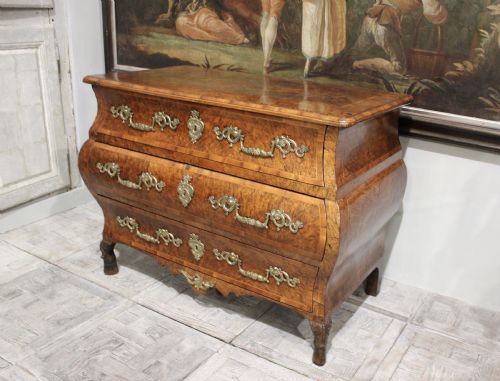


Ornate French Commode
An ornate french commode brings continental elegance to a room, offering sculptural hardware, rich veneers and substantial marble tops.
Ornate French Commode
An ornate french commode is a decorative chest of drawers designed for storage and display, rooted in continental furniture traditions. When you search this phrase, you encounter forms ranging from provincial oak examples to grand revival pieces.
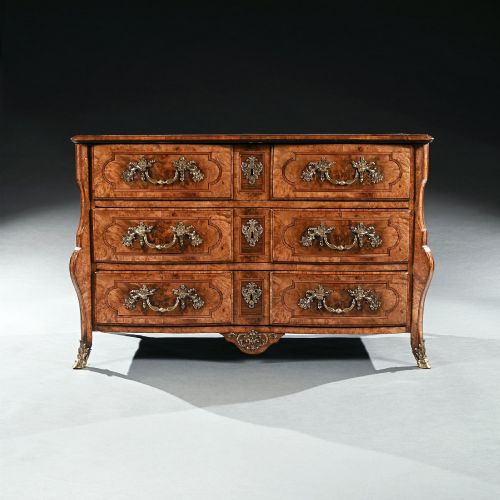
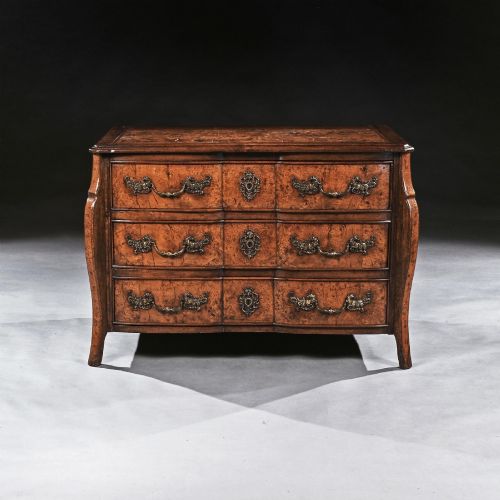
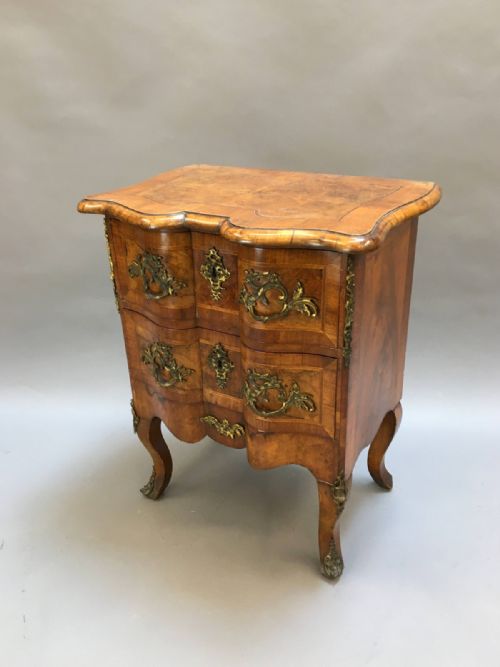
The pieces listed on this page span the eighteenth century up to the twentieth century, capturing both early provincial cabinetmaking and later revival movements. You see serpentine fronts, bombe shapes and commodes a vantaux alongside simpler chest forms.
Origins represented in the evidence include eighteenth century pieces alongside later nineteenth and twentieth century interpretations. These items function as focal points in traditional and eclectic interiors alike.
Materials and construction methods
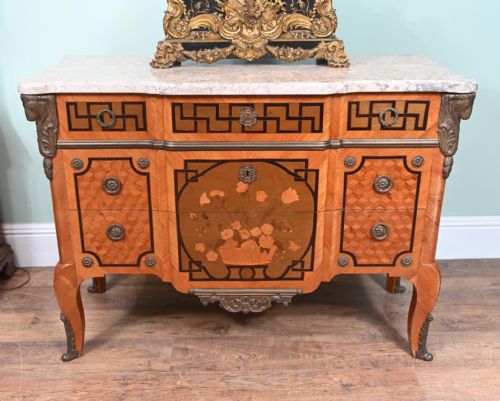
Cabinetmakers constructed these pieces using a foundation of oak, walnut or burr maple, overlaid with decorative veneers such as kingwood and burr walnut. Marquetry inlay frequently decorates the surfaces of revival and eighteenth century examples.
Metal mounts in ormolu and brass provide structural ornamentation, highlighting the contours of drawers, corners and apron rails. Marble tops, often shaped to follow the serpentine or bombe profile of the timber below, complete the construction.
Ornate French Commode Retail Price Guide 2026
Typical asking prices for ornate french commode among the pieces listed under this phrase on Sellingantiques today, from the lower quarter to the upper quarter. They describe what is for sale here now, not the wider market.
Some commodes hide their contents behind grand cabinet doors rather than drawers.
Assessing quality and craftsmanship
Quality rests in the precision of the veneer matching, the crispness of the ormolu mounts and the integrity of the timber carcass. Superior pieces display harmonious grain patterns across drawer fronts and seamless integration of marble tops.
The sophistication of the carving and the execution of marquetry inlay separate standard production from exceptional cabinetmaking. Heavier mounts and thicker marble slabs indicate a higher grade of manufacture across both period originals and later revivals.
Thomas Hache of Grenoble·Gaudreaux
The Ornate French Commode Glossary
- Ormolu
- Gilded bronze mounts applied to furniture for decorative effect. These metal ornaments define the opulent appearance of continental pieces.
- Bombe
- A convex, bulging outward curve to the front and sides of a chest. This swelling silhouette demands advanced skill in veneer work.
- Serpentine
- A furniture front curving inward centrally and outward at the ends. The profile creates dynamic shadow lines across the drawer fronts.
- Marquetry
- Decorative patterns formed by the insertion of pieces of wood into a veneer layer. Artisans use contrasting timbers to create floral or geometric designs.
- Commode A Vantaux
- A cabinet featuring doors enclosing shelves or drawers rather than standard front drawers. This form allows for expansive pictorial marquetry scenes across the front.
Ornate French Commode: Frequently Asked Questions
What is an ornate french commode used for?
These pieces serve primarily as statement storage furniture in living spaces, hallways or bedrooms. Their decorative surfaces also provide space for lamps, mirrors or display objects.
Historically, they functioned as principal storage chests in upper-class continental interiors, combining utility with artistic display.
How do I style an ornate french commode?
Place the piece against a plain wall to let the serpentine shape, marble top and ormolu mounts stand out. Pairing it with minimalist art creates a balanced contrast.
Avoid overcrowding the surface so the wood grain and marquetry remain visible as the main focal point of the room.
How do I tell an 18th century commode from a later revival?
Examine the interior timber construction, hand-cut dovetails and the wear patterns on the drawer runners. Eighteenth-century pieces show specific tool marks and timber shrinkage consistent with age.
Revival pieces from the nineteenth and twentieth centuries often utilise machine-sawn elements and standardised hardware fittings beneath the decorative surface.
What timbers are common in french commodes?
Cabinetmakers relied on walnut, oak and burr elm for structural integrity and provincial designs. Exotic veneers like kingwood and burr maple appear on high-status decorative examples.
These woods were chosen for their ability to take fine finishes and support intricate marquetry inlay or heavy metal mounts.