




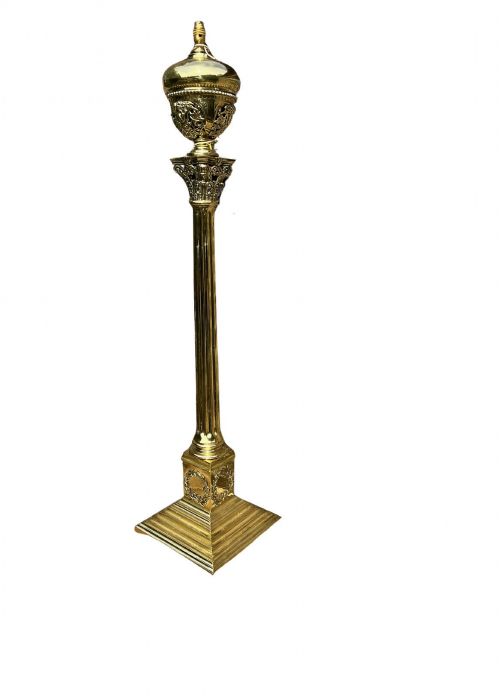


Ornate Floor Light
An ornate floor light brings character and ambient height to a room, drawing the eye upwards with rich period detail.
Ornate Floor Light
When you search for an ornate floor light, you encounter tall stands designed to illuminate a space from standing height, often referred to as standard lamps or torcheres. These pieces range from substantial metal columns to intricately carved wooden posts, spanning periods from the mid-nineteenth century into the early twentieth century.
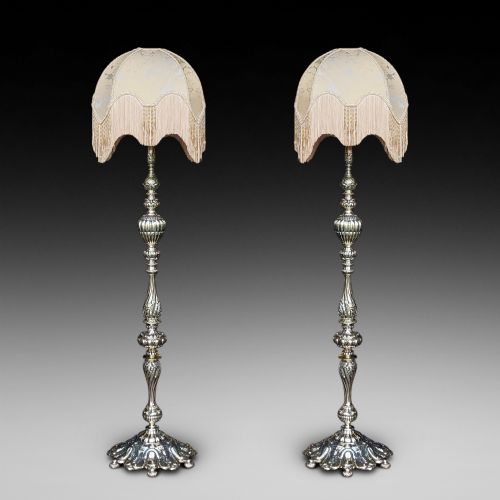
The version you are most likely to meet on this page is a brass standard lamp, frequently featuring Victorian or Edwardian stylistic traits. Many of these combine telescoping adjustments or scroll arms with heavy cast bases, reflecting the domestic lighting innovations of their respective eras.
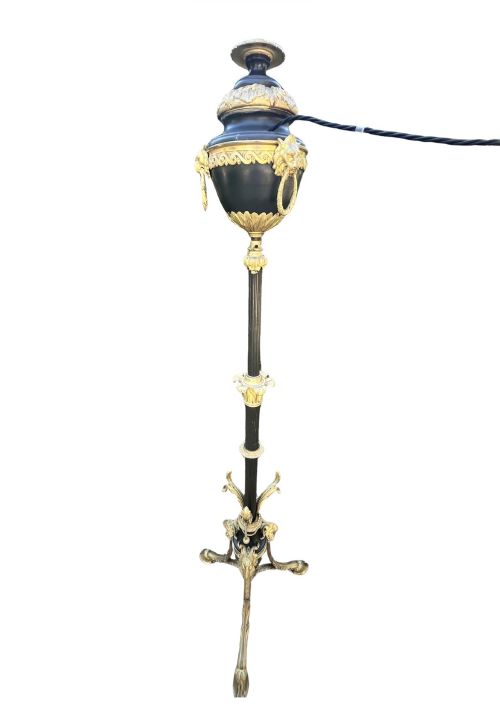
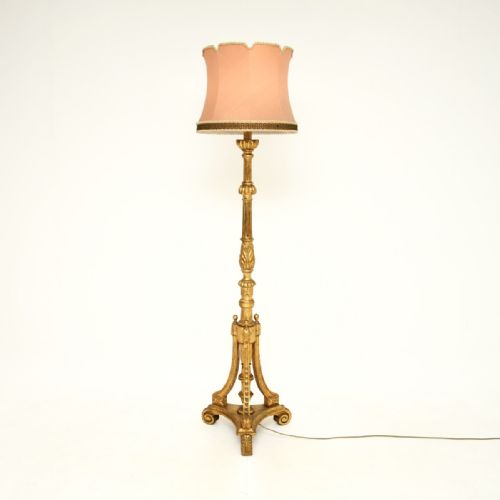
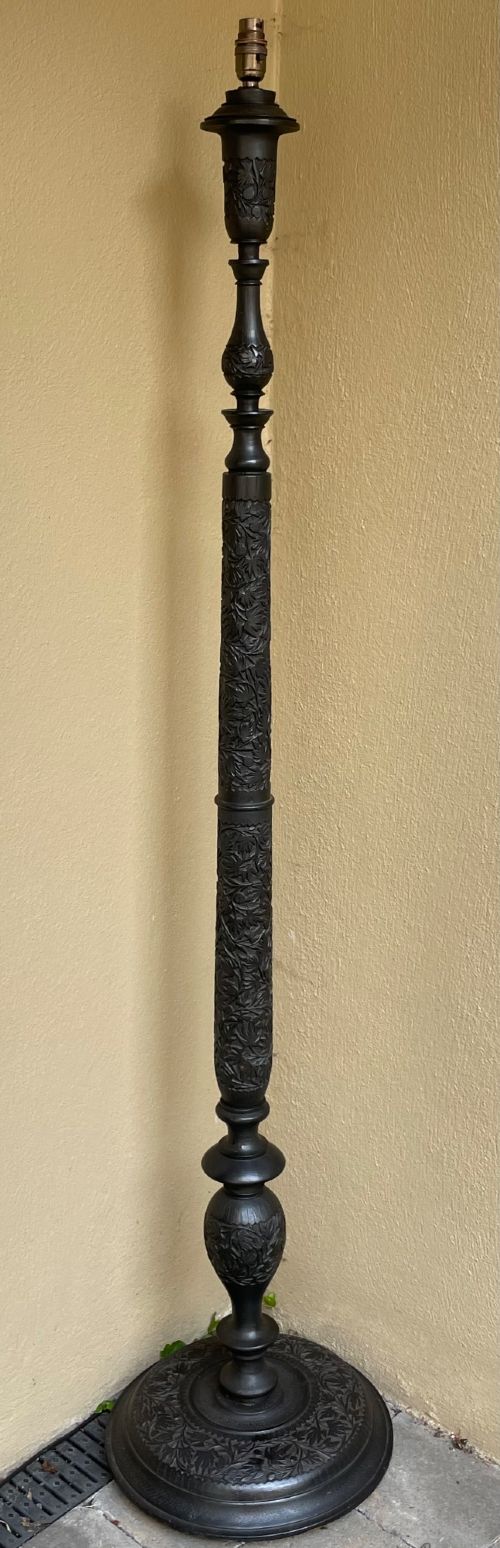
Beyond standard brass designs, the selection includes French Chateau and Italian Baroque style giltwood pieces, alongside distinct regional interpretations such as Anglo-Indian and cairoware examples. Each type offers a specific decorative presence, whether through floral openwork brass or gilded carved timber.
Materials and construction
The construction of these pieces relies heavily on cast and turned brass, often utilised for telescopic columns, Corinthian shafts, and weighted bases that provide stability to the tall structure. Artisans also employed carved wood and giltwood, applying layers of gold leaf or paint over intricately shaped timber to achieve rich decorative surfaces.
Detailing was achieved through specialised metalwork techniques such as openwork casting and ormolu mounts, complemented by carved elements in styles ranging from French Boudoir to Italian Baroque. Fabric elements, including velvet and fringed shades, frequently completed the construction, adding textural contrast to the metallic and wooden frames.
Ornate Floor Light Retail Price Guide 2026
Typical asking prices for ornate floor light among the pieces listed under this phrase on Sellingantiques today, from the lower quarter to the upper quarter. They describe what is for sale here now, not the wider market.
Design influences range from French Chateau and Italian Baroque to Anglo-Indian and Art Nouveau aesthetics.
Judging quality and execution
Quality in these upright lights rests upon the crispness of the casting or the depth of the wood carving. Superior examples exhibit sharply defined foliage, clean architectural fluting on columns, and substantial gauge metal that feels solid and balanced from base to collar.
The sophistication of the period stylistic execution further separates standard production from finer work. Pieces displaying thoughtful proportions, integrated adjustable mechanisms, and refined surface gilding or patination demonstrate a higher level of original craftsmanship.
Messenger
The Ornate Floor Light Glossary
- Torchere
- A tall ornamental stand adapted to hold a light source. This form originates from earlier lighting furniture designed to carry candles or oil vessels.
- Standard lamp
- A freestanding floor lamp used for general illumination. The term is frequently used interchangeably with floor lamp in British antique contexts.
- Giltwood
- Timber that has been coated with a thin layer of gold leaf. It is characteristic of decorative Italian and French period furnishings.
- Cairoware
- Metalwork inlaid with silver or gold, typically originating from Egypt and popular in late nineteenth and early twentieth-century decorative arts.
- Telescopic
- Having sliding sections that allow the height of the shaft to be adjusted. This mechanism is common on extending standard oil lamps converted for electricity.
Ornate Floor Light: Frequently Asked Questions
What is an ornate floor light?
An ornate floor light is a tall freestanding lamp designed to provide ambient illumination while serving as a decorative focal point in a room. These pieces typically date from the Victorian and Edwardian eras.
They combine functional height with decorative elements such as cast brass enrichment, carved giltwood, or detailed metalwork. Many were originally designed for oil and later adapted for modern electric bulbs.
How were these tall lamps used historically?
Historically, these lamps were placed in sitting rooms, libraries, and drawing rooms to provide flexible lighting before overhead fixtures were common. Their height allowed light to spread across a wider seating area.
Many incorporated adjustable mechanisms or oil reservoirs, allowing the user to alter the height or direct the illumination where required for reading or needlework.
How do I live with an antique floor lamp?
Living with an antique floor lamp involves placing it where its height and decorative base can be appreciated without obstructing room traffic. They pair well with traditional seating arrangements and reading corners.
Ensure the heavy base rests firmly on level flooring to maintain stability, and consider pairing the standard with an appropriate period-style fabric shade to diffuse the light softly.
How can I tell the period of a standard lamp?
Dating a standard lamp relies on identifying stylistic markers, materials, and mechanical construction details. Victorian examples often feature heavy cast brass, Corinthian columns, or oil-burning fittings.
Early twentieth-century pieces may show Art Nouveau floral openwork, lighter telescopic adjustments, or distinct regional carved wooden styles like Anglo-Indian or Italian Baroque interpretations.