

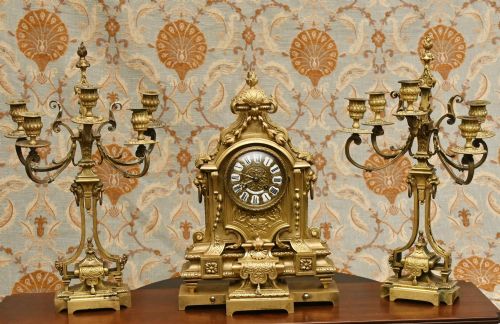
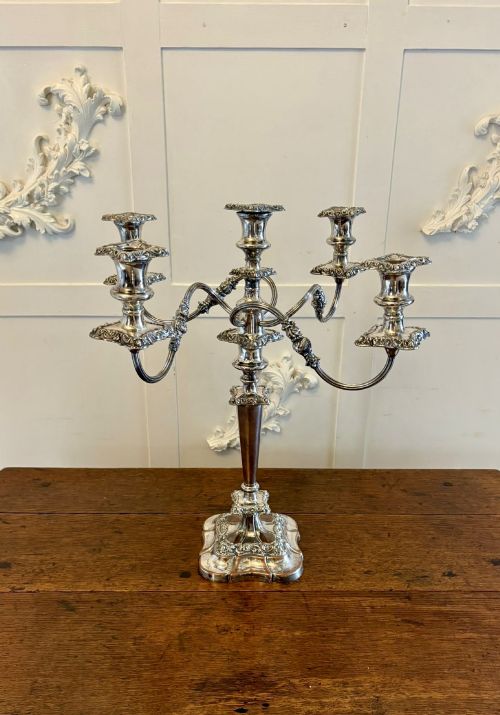
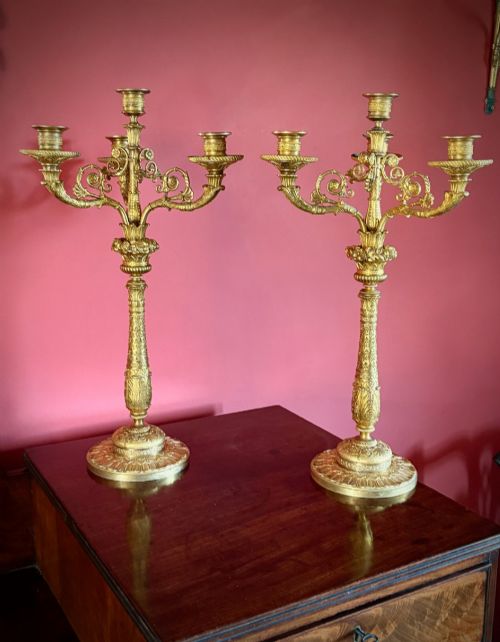
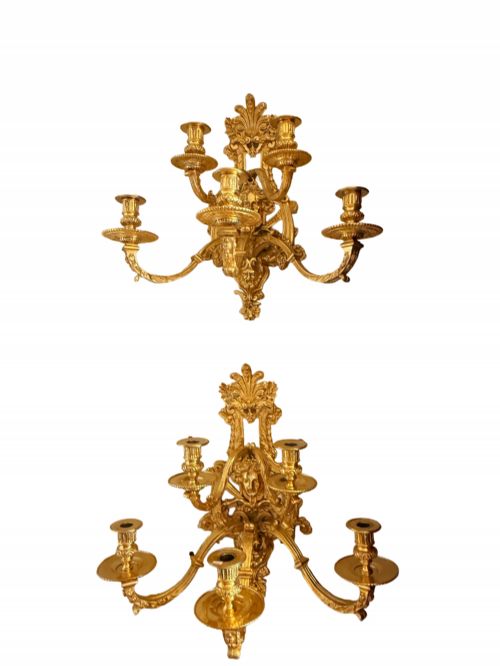
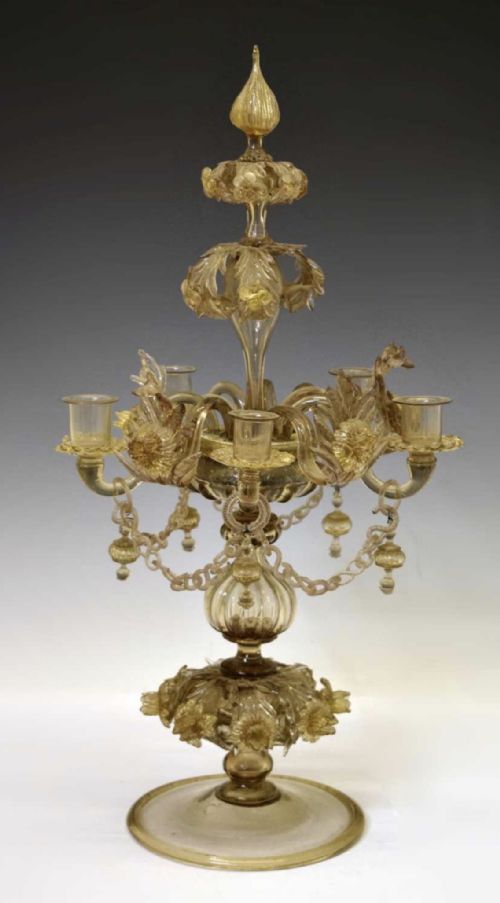

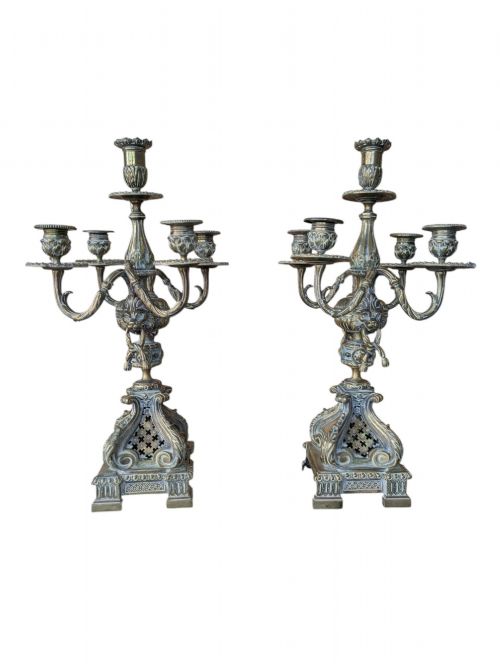


Ornate Five Light Candelabra
These ornate five light candelabra bring undeniable weight and presence to a room, cast in heavy metals and styled for grand interiors.
Ornate Five Light Candelabra
When you search for ornate five light candelabra, you look for multi-branched lighting fixtures designed to hold five candles at once, often configured as pairs or single statement pieces. These objects serve as dramatic focal points for tables, mantelpieces, and sideboards, originating from periods spanning the eighteenth century to the early twentieth century.
The versions you are most likely to meet on this page belong to the Victorian era and the nineteenth century, with strong French influences such as Rococo Revival, Empire, and Louis XIV styles. They take the form of table candelabra, wall sconces, and wall lights, constructed from robust metals and occasionally incorporating glass or marble elements.
How they were made
Foundries created these pieces primarily through metal casting, utilising bronze, brass, or gilt metal poured into intricate moulds to achieve high sculptural relief. Artisans then applied fire-gilding or ormolu techniques to impart a rich golden surface finish, while other pieces received silver plating.
Materials such as marble provided stable, weighty bases for metal candelabra, and Murano glass brought translucent colour to specialised Venetian branches. Craftsmen assembled the components carefully, securing arms and bobeches to central stems with threaded screws or pins.
Ornate Five Light Candelabra Retail Price Guide 2026
Typical asking prices for ornate five light candelabra among the pieces listed under this phrase on Sellingantiques today, from the lower quarter to the upper quarter. They describe what is for sale here now, not the wider market.
The inventory includes both freestanding table candelabra and wall-mounted sconces styled in French Rococo, Empire, and Victorian aesthetics.
What varies in quality
The distinction between ordinary and superior pieces rests on the crispness of the cast ornamentation and the depth of the metal finishing. Finer examples display sharp, hand-chased details in the acanthus leaves and scrollwork, whereas lesser versions rely on softer, unrefined casts directly from the mould.
Material choice and structural integrity also separate the grades, with heavy fire-gilded bronze ormolu sitting at the upper end of the scale above standard brass and silver plate. The weight of the base and the secure alignment of the branches reveal the original maker's investment in time and materials.
The Ornate Five Light Candelabra Glossary
- Ormolu
- A technique of applying finely ground high-carat gold-mercury amalgam to a bronze object, creating a durable and rich golden finish. This method distinguishes high-status French pieces from simpler brass alternatives.
- Bobeche
- A removable collar or drip pan sat beneath the candle nozzle to catch melting wax. Collectors look for matching original bobeches on each branch.
- Candelabra
- A branched candlestick holder designed to support multiple candles simultaneously. They appear as freestanding table objects or wall-mounted sconces.
- Rococo Revival
- A nineteenth-century design style mimicking the flowing asymmetry, C-scrolls, and naturalistic motifs of the eighteenth-century French movement. It dominates many Victorian decorative metalwork pieces.
Ornate Five Light Candelabra: Frequently Asked Questions
How do I clean antique brass or ormolu?
Dust the metal gently with a soft dry brush to remove surface particles without disturbing the underlying finish. Avoid chemical dips or abrasive metal polishes that strip away original gilding or plating.
For stubborn grime, use a slightly damp cloth with mild soap, drying the piece immediately. Preserving the natural patina maintains the historical integrity and visual depth of the metal.
How do I distinguish French styles from Victorian pieces?
French designs from the nineteenth century often follow strict Neoclassical, Empire, or elaborate Rococo lines with highly refined bronze casting and rich ormolu. Victorian British pieces frequently blend these Continental influences with heavier brass construction and silver plating.
Examining the underside, fixing screws, and casting seams often reveals clues about the regional workshop origin. Stylistic restraint points towards earlier neoclassical models, while exuberant curves suggest later revival periods.
Where should I place a five branch candelabra?
These large fixtures demand a sturdy surface such as a heavy sideboard, dining table, or deep mantelpiece where their weight and height balance the room. Wall sconce versions require secure mounting into solid masonry or studwork to support their metal mass.
Position them away from high-traffic walkways where arms might get caught by clothing. They work best as symmetrical pairs flanking a mirror or fireplace.