

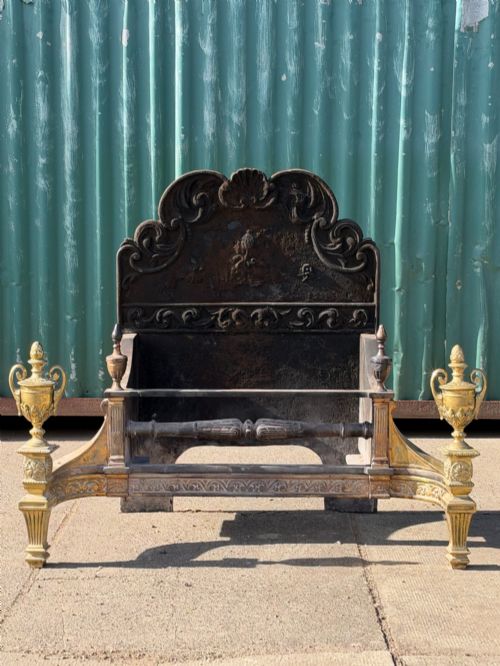
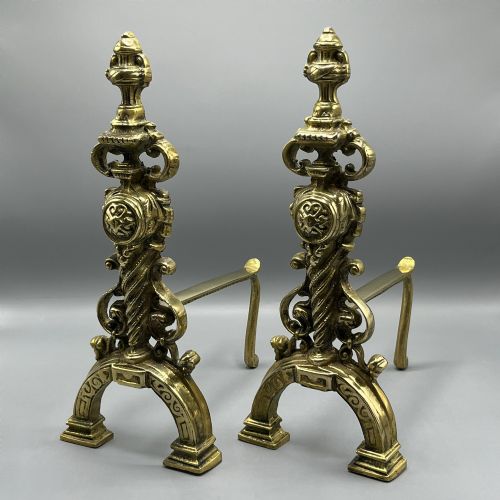
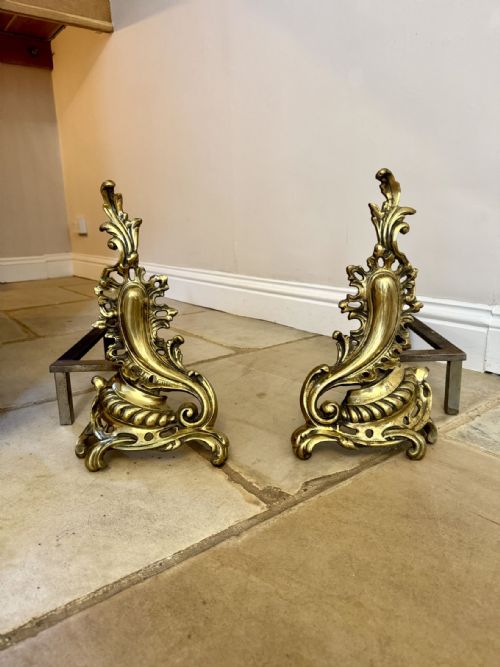
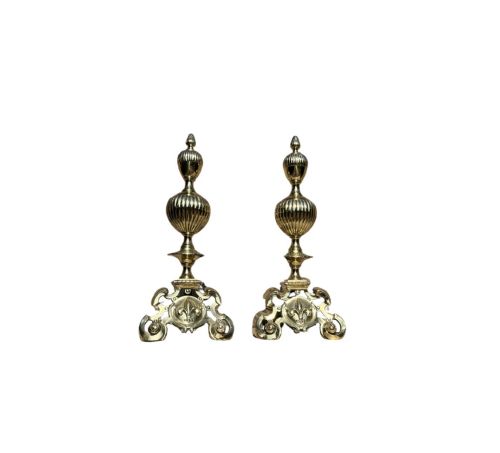
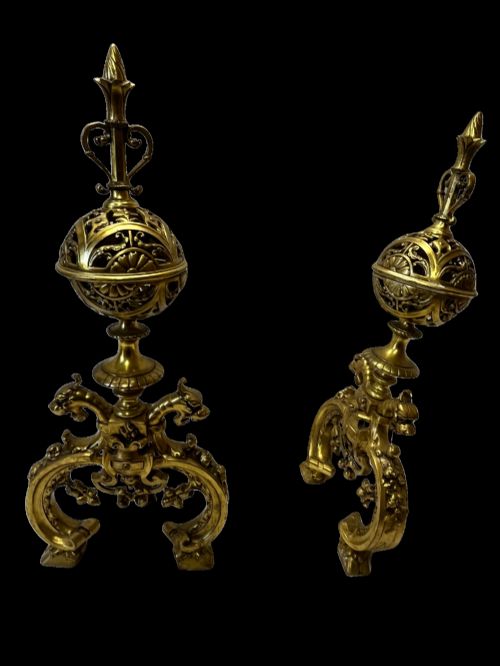
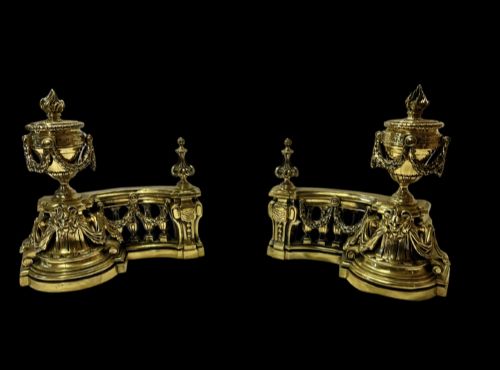


Ornate Fire Dogs
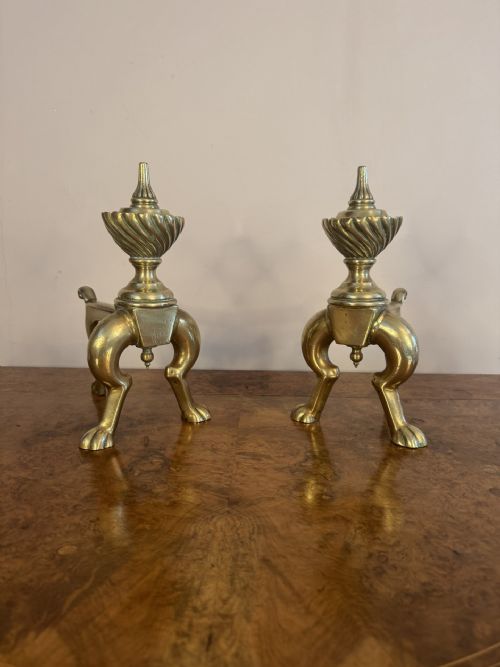
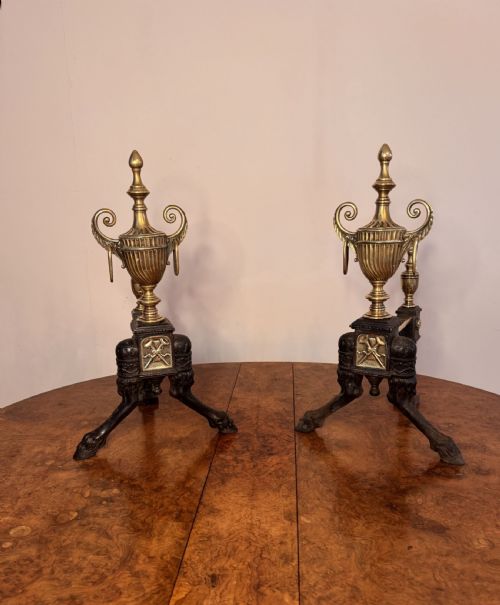
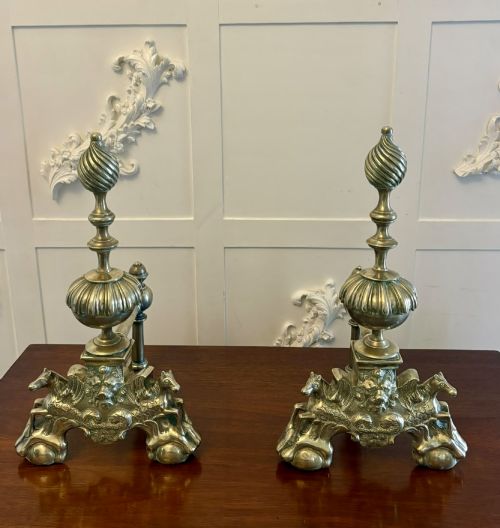
Ornate fire dogs bring sculptural presence to a hearth, offering both decorative flair and practical support for logs.
Ornate Fire Dogs
Ornate fire dogs function as decorative hearth furniture designed to hold logs above the base of a fireplace for better airflow. The selection leans heavily towards Victorian and nineteenth-century examples, encompassing French Rococo and Baroque revival styles.
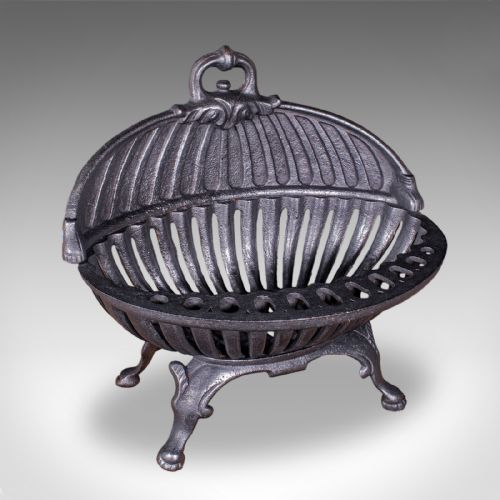
Most entries belong to the broader categories of andirons, chenets, or fire grates rather than standalone items. Brass, cast iron, and gilt bronze dominate the physical forms seen across the collection.
Buyers will encounter substantial pairs originating from English and continental workshops, frequently displaying elaborate scrolling and classical motifs. These objects bridge utility and ornamentation, serving as the visual anchor of a fireplace setting.
How they were made
Foundries utilised casting techniques in brass, iron, and bronze to achieve intricate relief work and heavy structural forms. Molten metal was poured into detailed moulds, allowing artisans to replicate complex botanical and scroll patterns.
Finishing involved hand-chasing the metal surfaces and applying gilt bronze or ormolu layers to selected highlights. Wrought iron elements were often forged separately to provide sturdy horizontal shafts and support bars.
Ornate Fire Dogs Retail Price Guide 2026
Typical asking prices for ornate fire dogs among the pieces listed under this phrase on Sellingantiques today, from the lower quarter to the upper quarter. They describe what is for sale here now, not the wider market.
What varies in quality
Superior pairs display crisp casting definition where every leaf, scroll, and facial feature remains sharp without surface blurring. Lesser examples show softer details from worn or repetitive moulds.
Weight and structural integrity separate robust pieces from lighter castings, with solid brass and heavy bronze demanding greater material investment. The finesse of the chasing work and the depth of the original gilding further divide standard production from exceptional studio output.
James Cartland & Sons
The Ornate Fire Dogs Glossary
- Andirons
- Supports used in a fireplace to hold burning wood logs up off the hearth. They typically consist of an upright decorative front pillar connected to a horizontal bar behind.
- Chenets
- The French term for firedogs or andirons, frequently applied to decorative hearth furniture designed in Rococo or Baroque styles. They often coordinate with matching fenders and fire guards.
- Ormolu
- A technique of applying finely ground high-carat gold-mercury amalgam to a bronze object. This surface treatment yields a rich golden finish characteristic of French decorative arts.
- Rococo
- An ornate artistic style characterised by asymmetrical shellwork, C-scrolls, and plant motifs. It appears widely on nineteenth-century continental fireplace accessories.
- Fire grate
- A metal basket or assembly designed to contain coal or wood within a fireplace opening. Some configurations incorporate integral andirons or decorative dog supports.
Ornate Fire Dogs: Frequently Asked Questions
What is the difference between fire dogs and andirons?
Fire dogs and andirons are essentially the same objects, with the former term used commonly in British contexts and the latter often applied to heavier decorative forms.
Both serve the primary function of elevating logs within an open hearth while presenting a decorative frontispiece to the room.
How do I choose the right size for my fireplace?
Measure the width and depth of your fireplace opening to ensure the horizontal support bars fit comfortably inside without crowding the space. Taller uprights suit larger chimney breasts, while smaller hearths require more restrained proportions.
Account for the clearance needed around the decorative fronts so the detailing remains visible.
Can these fire dogs be used with a working fire?
Solid cast iron and brass pieces are built to withstand hearth heat and support burning logs during regular use. Gilt or ormolu finishes require careful handling to avoid heat damage to the surface coatings.
Many buyers choose to use robust iron supports for active fires and reserve ornate bronze pairs for decorative display.
How do I clean nineteenth-century brass fire dogs?
Dust the metal surfaces regularly with a soft dry cloth to prevent soot and ash accumulation from dulling the finish. Avoid harsh chemical cleaners that can strip original patination or damage applied gilt layers.
Gentle wiping preserves the historic character acquired over decades of hearth placement.