





Ornate Carved Oak Cabinet
An ornate carved oak cabinet brings deep British character to a room through dark timber and sculptural relief work.
Ornate Carved Oak Cabinet
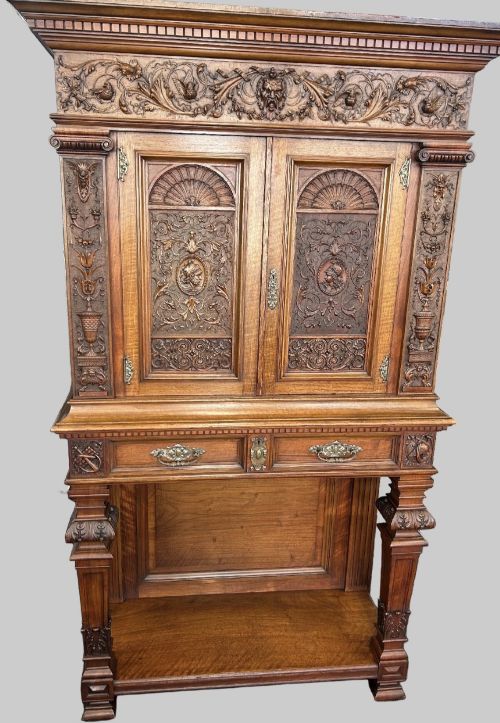
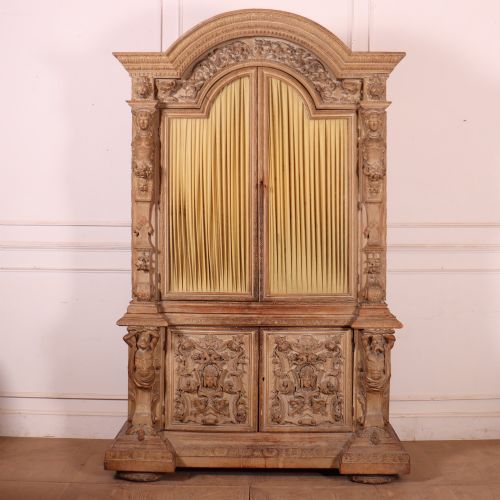
When you search for an ornate carved oak cabinet, you are looking at substantial storage furniture featuring heavy relief carving, panel work, and architectural mouldings. These pieces serve as focal points in dining rooms, libraries, and hallways, combining display space with concealed storage.
The versions you are most likely to meet on this page date from the Victorian era and the late nineteenth century, alongside earlier eighteenth-century examples and later revivals up to nineteen-twenty. They appear in forms ranging from tall bookcases and tabletop cabinets to large sideboards, buffets, and mirror-backed display pieces.
Stylistically, these cabinets draw heavily on historical revivals, including Jacobean, Gothic, and Renaissance motifs. Pieces often incorporate architectural pediments, turned columns, and figural elements such as lion mask carvings.
How they were made
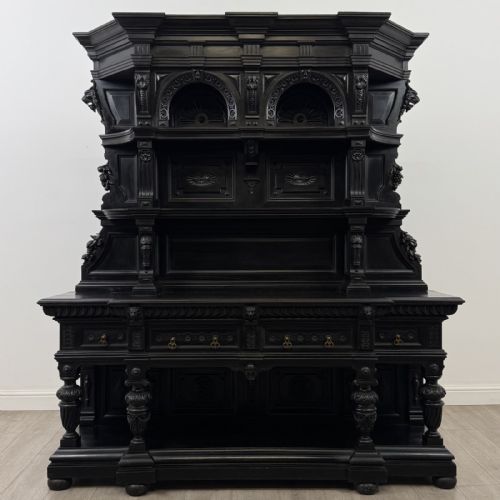
Cabinet makers utilised solid oak and walnut for the primary structural framework and panelling, building substantial carcasses designed to last for centuries. Secondary materials such as brass for hardware, mirrored glass, ebonised hardwood, and fabric linings appear across different forms to add contrast and function.
The defining characteristic of these pieces is hand carving, executed with chisels and gouges to create deep relief panels, friezes, and applied ornamentation. Joinery relied on traditional mortise and tenon construction, housing heavy doors and shelves within sturdy frames.
Ornate Carved Oak Cabinet Retail Price Guide 2026
Typical asking prices for ornate carved oak cabinet among the pieces listed under this phrase on Sellingantiques today, from the lower quarter to the upper quarter. They describe what is for sale here now, not the wider market.
Listings span several eras, recording Victorian, eighteenth-century, and nineteen-twenty pieces alongside revival styles.
What varies in quality
The distinction between standard utility furniture and superior work lies in the depth and sharpness of the hand carving. Crisp undercut foliage, well-modelled figural elements, and balanced proportions set finer examples apart from flat, mechanical stamped decoration.
Construction methods and timber selection also drive differences in quality, with tight-grained quarter-sawn oak and robust internal framing marking out the better workshops. Maker attribution, such as work originating from established firms like Gillows, elevates the standing of a piece.
Gillows
The Ornate Carved Oak Cabinet Glossary
- Renaissance Revival
- A nineteenth-century design style drawing on sixteenth-century classical architecture and ornament. It frequently incorporates symmetrical panels, columns, and heavy sculptural relief.
- Jacobean Revival
- A nineteenth-century style imitating seventeenth-century English furniture. It is characterised by geometric mouldings, strapwork, and dark finished oak.
- Mirror back sideboard
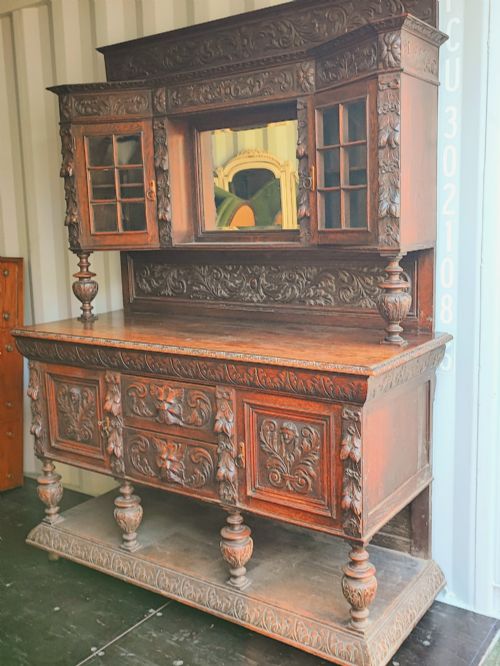
- A large storage buffet featuring an integrated wooden framework holding a mirror above the main surface. This form gained immense popularity during the Victorian period to reflect light in dining spaces.
- Vitrine
- A glass-fronted cabinet designed specifically for the display of porcelain, curiosities, and decorative objects. These often feature glazed side panels alongside front doors.
- Ebonised hardwood
- Timber treated with a chemical stain or pigment to imitate the deep black colour of ebony. Makers used this finish to create stark visual contrast against lighter carved oak elements.
Ornate Carved Oak Cabinet: Frequently Asked Questions
What periods do these cabinets cover?
The pieces span from the eighteenth century through the height of the Victorian period and into the nineteen-twenties.
Most examples reflect nineteenth-century revivals of earlier historical styles rather than authentic early period construction.
How do I distinguish a sideboard from a buffet?
Sideboards usually incorporate enclosed cupboards and drawers arranged along a lower base for formal dining storage.
Buffets often feature tiered surfaces and open display areas designed for serving food and displaying silver.
Where should I place a mirror back cabinet?
These large pieces suit dining rooms or grand hallways where they can anchor a primary wall.
The integrated mirror helps bounce natural light around the room while providing a decorative backdrop.
What is an ebonised finish?
Ebonising is a process where timber is stained to achieve a dense black tone resembling genuine ebony wood.
Victorian makers applied this technique to highlight carved details and create striking two-tone colour schemes.