





Ornate Cane Holder
An ornate cane holder brings heavy Victorian and Edwardian metalwork into the hallway to organise walking sticks and umbrellas.
Ornate Cane Holder
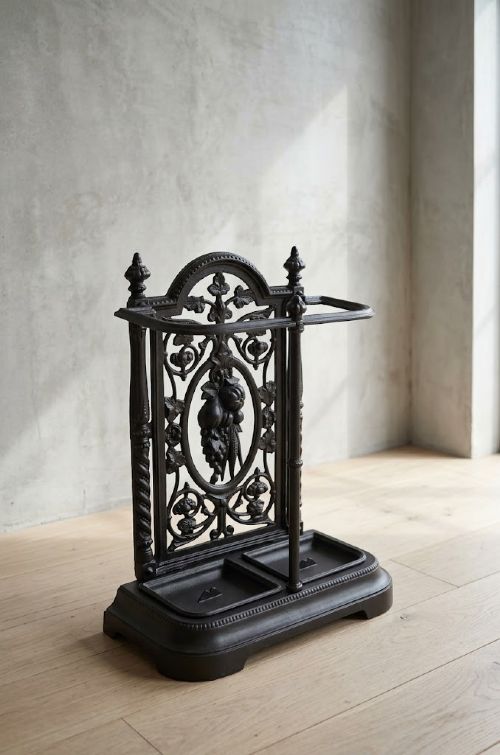
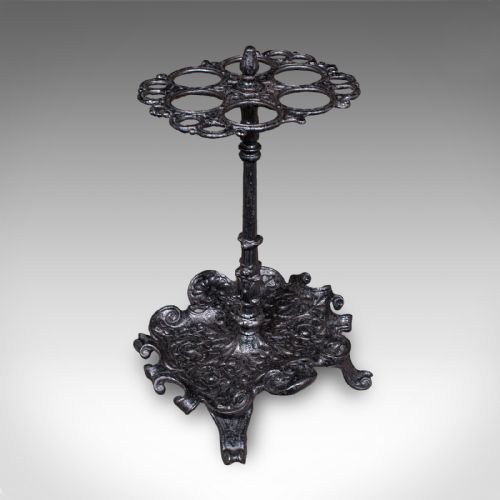
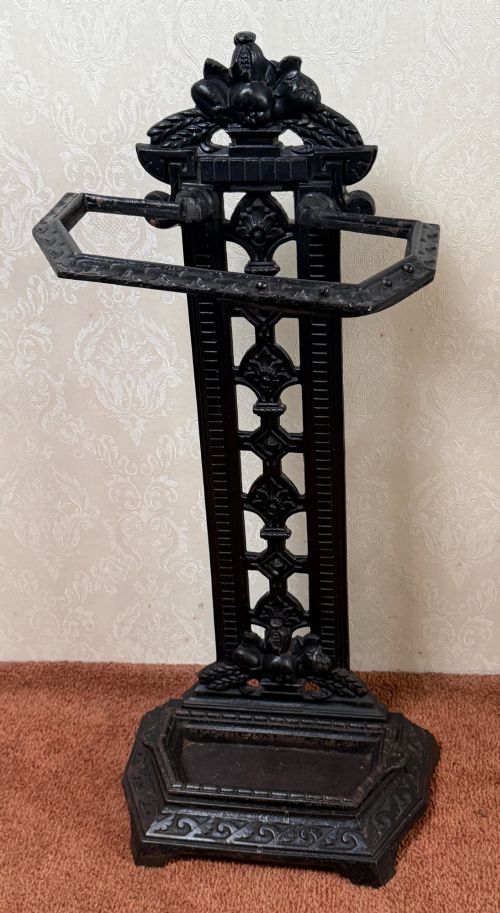
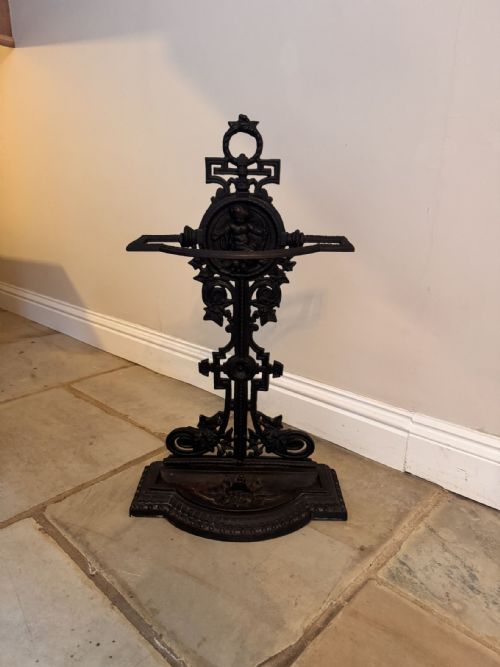
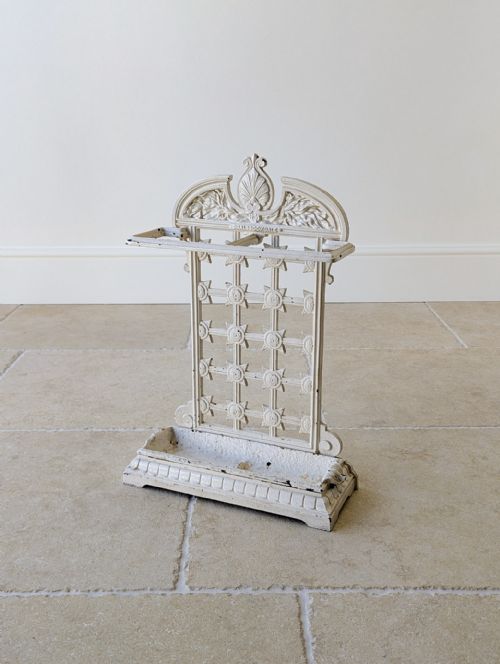
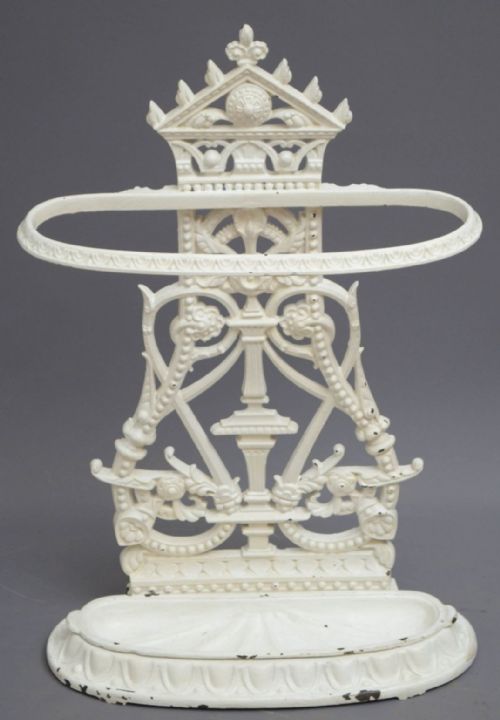
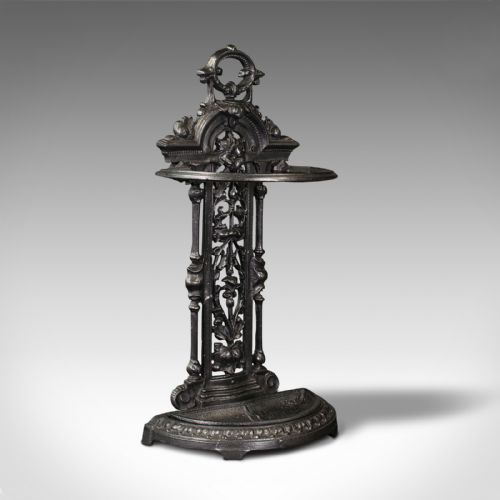
An ornate cane holder stands in a hallway as a heavy piece of utility furniture designed to hold walking sticks and umbrellas upright. The pieces appearing here take the form of umbrella stands, stick stands, and combined stick and umbrella stands.
Most examples belong to the Victorian period, including pieces dated to the 1870s and 1880s, alongside later Edwardian interpretations. Makers in this category utilised cast iron to achieve robust forms suited to heavy daily use in reception halls.
Design influences range from standard Victorian styling to Victorian and Gothic combinations, late Victorian iterations, and pieces executed in a Jacobean taste or after the Coalbrookdale foundry.
How they were made
Foundries produced these stands primarily in cast iron, pouring molten metal into detailed moulds to create intricate openwork patterns and structural stick loops. This heavy material provided the stability necessary to support wet umbrellas and walking sticks without tipping.
Many examples received a painted finish, often rendered in black antique tones, which protected the iron from moisture and gave the metal a uniform decorative appearance.
Ornate Cane Holder Retail Price Guide 2026
Typical asking prices for ornate cane holder among the pieces listed under this phrase on Sellingantiques today, from the lower quarter to the upper quarter. They describe what is for sale here now, not the wider market.
Every wet autumn walk called for a heavy iron guardian in the hall.
What varies in quality
Quality in these cast iron pieces rests on the crispness of the casting detail and the complexity of the openwork design. Stands associated with notable foundries such as Coalbrookdale demonstrate superior definition in their decorative motifs compared to standard workshop output.
Proportion and decorative ambition also divide the range, separating simpler hall utility items from pieces featuring elaborate umbrella loops and distinct stylistic influences like the Jacobean taste.
Coalbrookdale
The Ornate Cane Holder Glossary
- Cast iron
- A strong, hard alloy of iron and carbon poured into moulds to create complex shapes. It forms the heavy structural body of these hall stands.
- Umbrella loop
- An individual metal ring or compartment integrated into the frame to separate and secure umbrella shafts. These loops prevent items from leaning haphazardly.
- Stick stand
- A piece of furniture designed specifically to hold walking sticks and canes upright in an entrance hall. They often share forms with combined umbrella holders.
- Coalbrookdale
- A renowned English ironfoundry famous for producing decorative cast ironwork during the nineteenth century. Marked or attributed pieces carry particular interest for collectors.
Ornate Cane Holder: Frequently Asked Questions
What is an ornate cane holder?
An ornate cane holder is a heavy metal stand placed in a hallway to store walking sticks and umbrellas.
These pieces use cast iron construction to keep umbrellas organised and upright.
How do I date a cast iron stand?
Dating relies on stylistic clues, foundry marks, and period design characteristics seen in Victorian and Edwardian examples.
Earlier Victorian models often feature Gothic or intricate foliate casting, while Edwardian versions show refined decorative restraint.
Where were these stands used?
These items stood in reception halls and entranceways of nineteenth and early twentieth century homes.
Their primary function was to catch rainwater from wet umbrellas and provide a tidy station for walking aids.
Are these stands heavy?
Cast iron construction gives these pieces significant weight to prevent tipping when loaded with multiple heavy sticks.
This robust nature ensured stability on hallway floors.