


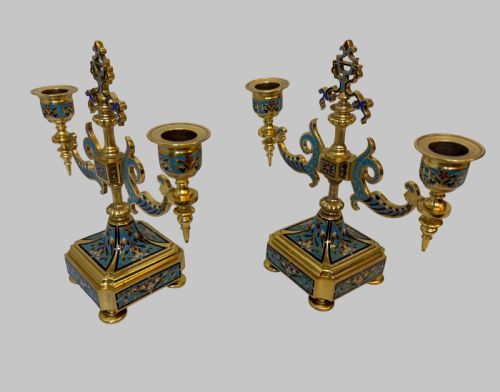


Ornate Candle Stands
Ornate candle stands bring sculptural presence and warm illumination to a room, spanning grand multi-light candelabra and slender pricket sticks.
Ornate Candle Stands
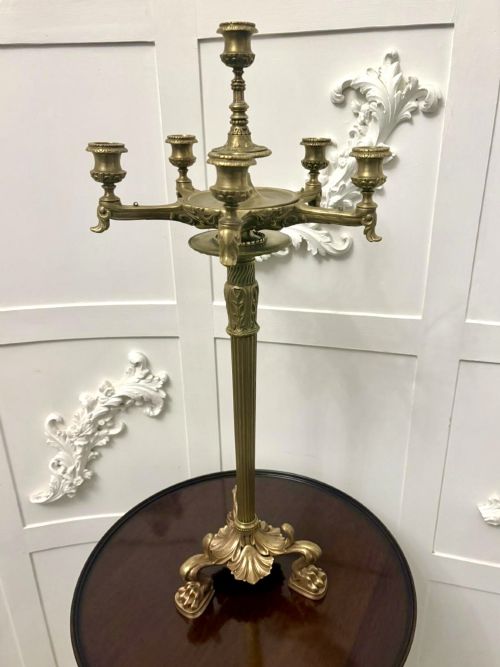
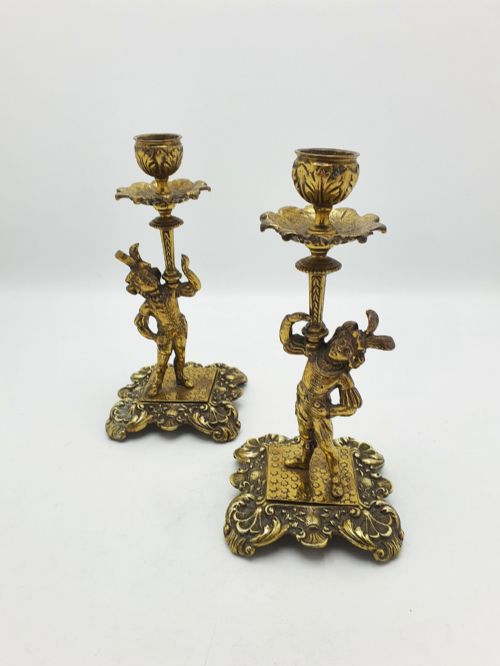
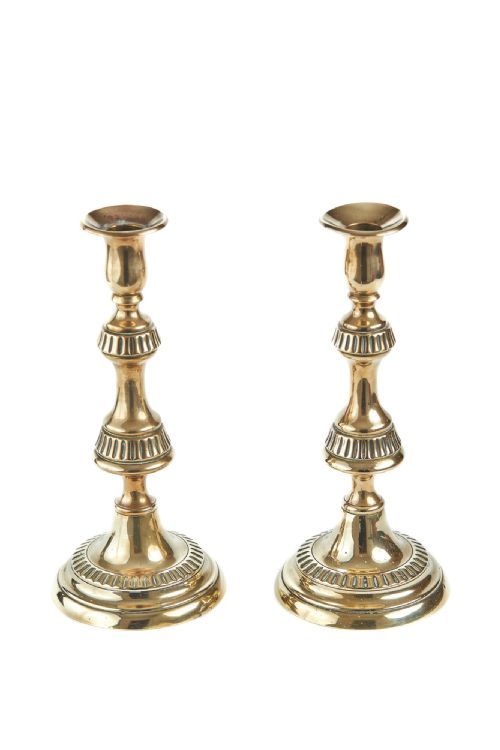
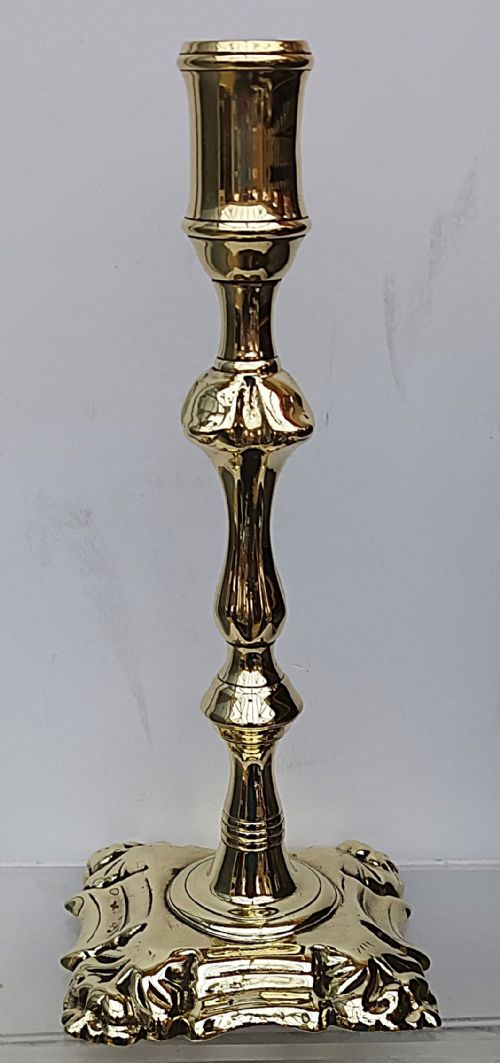
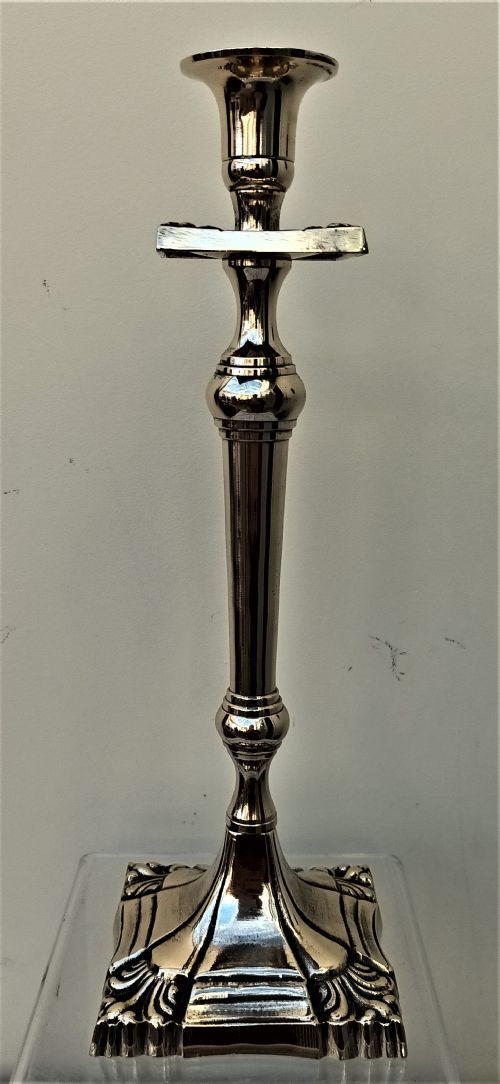
When searching for ornate candle stands, buyers encounter a diverse array of nineteenth-century domestic lighting. These pieces take the form of heavy brass candlesticks, multi-armed candelabra, and tall torchere pedestals designed to elevate light sources within a reception room.
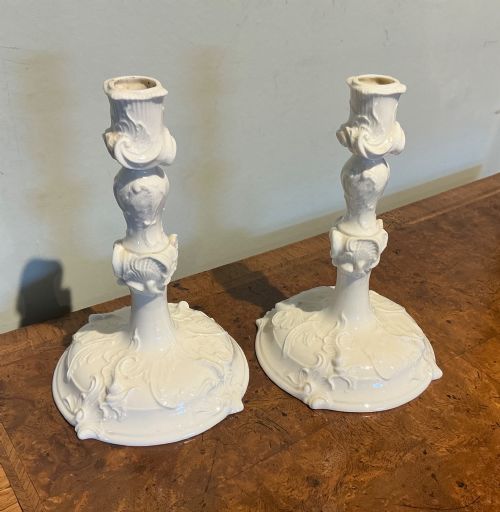
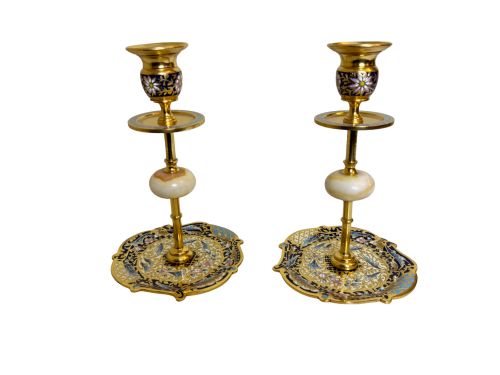
The selections span distinct historical revivals including Rococo, Neoclassical, and Gothic styles. Brass and gilt bronze dominate the offerings, frequently accompanied by marble bases, onyx inserts, or champlevé enamel detailing.
Victorian examples appear most frequently, ranging from simple domestic brass sticks to monumental figural candelabra. Makers from this era drew heavily on earlier Georgian and Regency motifs to satisfy contemporary demand for domestic splendour.
Materials and construction
Metals form the foundation of these objects, utilising cast brass, bronze, and silver plate shaped through traditional foundry methods. Gilt bronze and Ormolu surfaces receive fine chemical or fire gilding to create a durable, luminous finish.
Secondary materials such as carved wood, gesso, and giltwood appear in standard lamps and torcheres, often finished with applied gold leaf. Stone elements like marble and porphyry provide substantial weight and contrasting colour to metal column stems.
Ornate Candle Stands Retail Price Guide 2026
Typical asking prices for ornate candle stands among the pieces listed under this phrase on Sellingantiques today, from the lower quarter to the upper quarter. They describe what is for sale here now, not the wider market.
Listings feature items from the eighteenth, nineteenth, and early twentieth centuries, dominated by brass, bronze, and silver plate.
Distinctions in craftsmanship
Superior examples display crispness in the chased and cast ornamentation, where leaves, cherubs, and scrollwork retain sharp relief. Lower quality items rely on softer, shallower casting that obscures intricate details.
The structural integrity of joints and the stability of weighted bases separate fine production from ordinary manufacture. Heavier gauge metals and properly fitted components ensure the stand remains upright and balanced when fully loaded with candles.
Smith & Sissons & Co·Auguste Cain
The Ornate Candle Stands Glossary
- Candelabra
- A branched candlestick holding multiple candles on separate arms. These large stands typically sit on dining tables or sideboards.
- Ormolu
- Finely ground high-carat gold applied to a bronze base using mercury amalgamation. This technique creates a rich, lasting metallic lustre.
- Champlevé
- An enamelling technique where troughs are dug into a metal surface and filled with vitreous paste before firing. It creates colourful geometric or pictorial patterns.
- Pricket
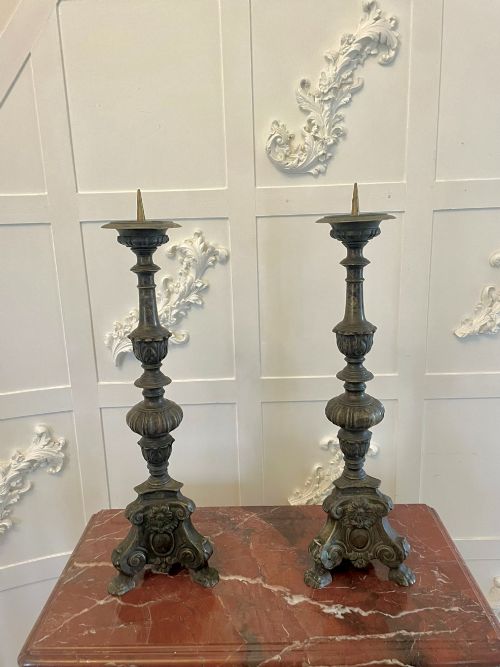
- A sharp metal spike fitted on a candle platform to hold a candle securely in place. This form relates to ecclesiastical and earlier domestic lighting traditions.
- Torchere
- A tall ornamental stand or candlestick designed to support a light source at an elevated level. They often stand on three carved legs or a central column.
Ornate Candle Stands: Frequently Asked Questions
How do I clean antique brass candle stands?
Dust surfaces gently with a soft dry cloth to remove daily accumulation. Avoid abrasive chemical polishes that strip away the aged patina built up over centuries.
For stubborn residue, apply a mild soap solution on a damp cloth, drying immediately afterwards. Preserving the original surface texture maintains the historical character of the piece.
Were these stands used for dining tables?
Multi-armed candelabra and heavy pairs of candlesticks frequently illuminated dining tables during evening meals. Their height ensured light passed safely above the heads of seated guests.
Smaller chambersticks and single sticks moved easily between rooms to light hallways and bedrooms. Each form served a distinct domestic function within the nineteenth-century household.
How do I date a Victorian brass stand?
Examine casting seams, tool marks, and base construction for clues regarding manufacturing date. Mid-nineteenth-century pieces often display heavier cast components and hand-finished detailing.
Compare the decorative style against known revival periods like Rococo or Gothic Revival. Maker marks and registration stamps stamped into the base provide definitive chronological markers.