



Ornate Brown Mirror
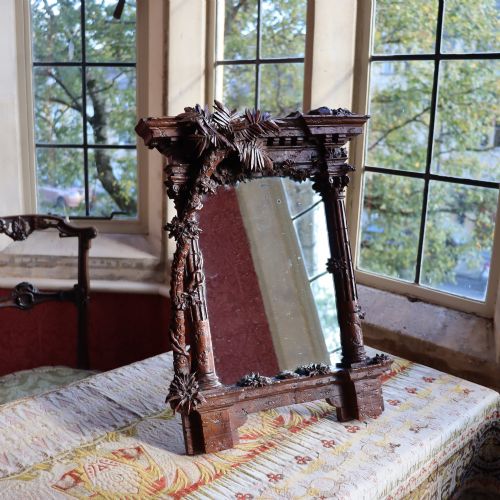
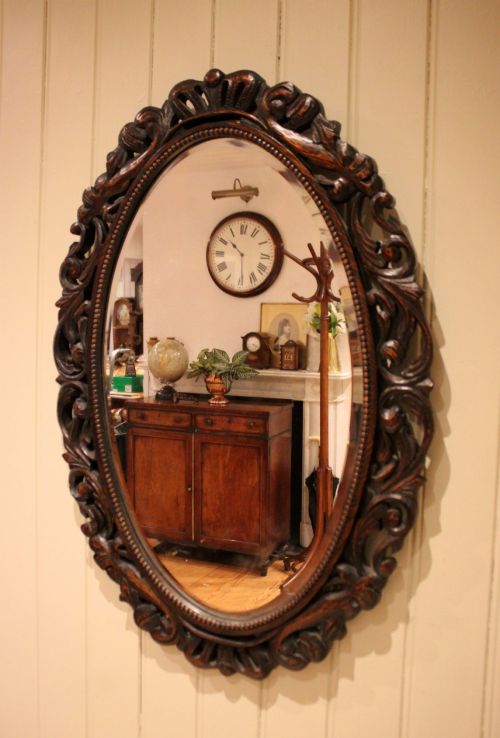
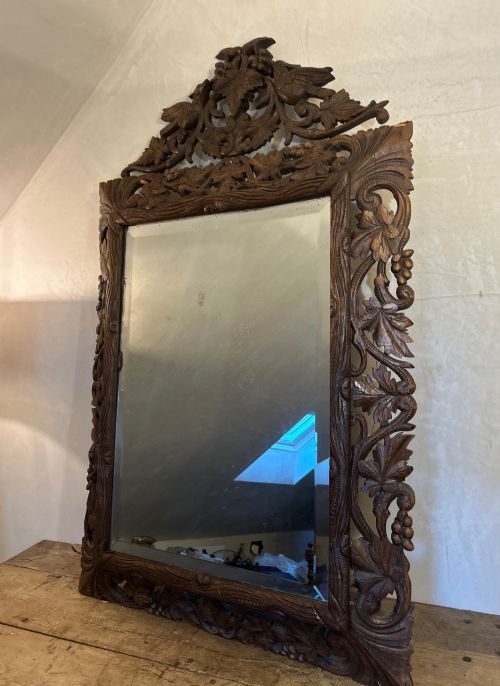
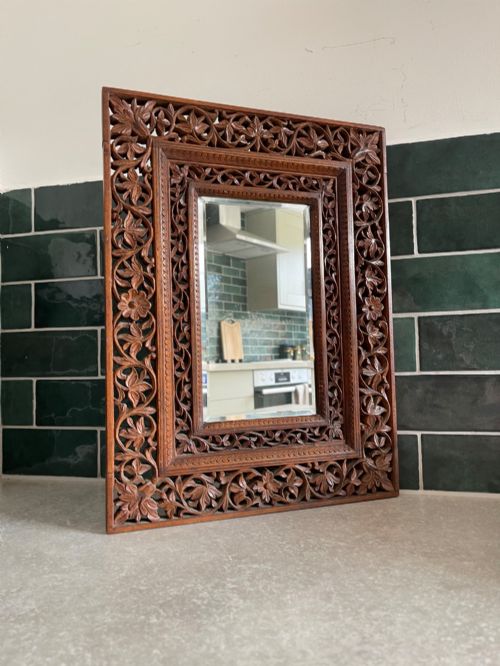
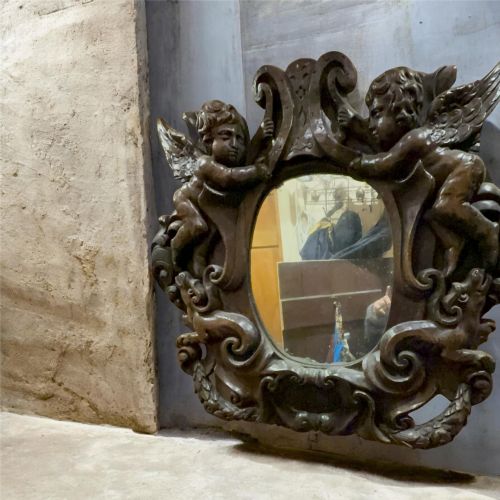
An ornate brown mirror brings warmth and deep tactile character to a room through rich timber and elaborate carving.
Ornate Brown Mirror
The version you are most likely to meet on this page is a nineteenth century wall-hanging piece finished in carved oak or walnut. Such mirrors frequently display heavy decorative elements drawn from Rococo, Renaissance, and Baroque vocabularies, anchoring them firmly within traditional domestic interiors.
How they were made
Frames rely on solid hardwoods like oak, walnut, and mahogany, shaped through manual carving rather than mechanical moulding. Artisans also utilised gesso applied over wooden foundations to build up high-relief decorative flourishes before finishing the surface.
Many examples incorporate bevel-edged glass fitted into rebated wooden backs, secured with traditional fixings. Secondary treatments include parcel-gilt highlights applied directly to carved walnut or mahogany to accentuate the depth of the ornamentation.
Ornate Brown Mirror Retail Price Guide 2026
Typical asking prices for ornate brown mirror among the pieces listed under this phrase on Sellingantiques today, from the lower quarter to the upper quarter. They describe what is for sale here now, not the wider market.
The listings span the eighteenth, nineteenth, and early twentieth centuries, featuring regional European and Anglo-Indian craftsmanship in solid oak, walnut, and mahogany.
What varies in quality
The distinction between standard and superior pieces rests on the depth and crispness of the hand-carved detail across the wooden frame. Superior examples demonstrate confident chisel work where undercut foliage and scrolls retain sharp profiles rather than soft, rounded edges.
Another measure of quality is the integration of the materials, where timber selection shows deliberate grain matching and the silvering of the mirror plate has aged with consistent, atmospheric patination.
Waring & Gillows
The Ornate Brown Mirror Glossary
- Rococo Revival
- A nineteenth century design movement that reinterprets the ornate, asymmetrical curves, C-scrolls, and naturalistic shell motifs of the eighteenth century. This style dominates many elaborately carved wooden mirror frames.
- Parcel-gilt
- A decorative technique where specific portions of a wooden or gessoed surface are partially gilded with gold leaf while leaving the surrounding wood visible. It highlights particular carved details on walnut and mahogany frames.
- Bevel edge
- A glass mirror plate whose outer perimeter is cut and polished at an angled slope to catch the light. This traditional method adds a refined dimensional border to the reflective surface.
Ornate Brown Mirror: Frequently Asked Questions
How do I hang a heavy carved wooden mirror?
Heavy carved frames require secure wall fixings distributed evenly across the primary wooden structure rather than relying solely on hanging wire. Professional mirror plates screwed directly into wall studs provide the necessary support for dense hardwoods.
Ensuring the weight rests squarely on proper masonry anchors or timber studs protects both the historic frame and the surrounding wall from stress fractures over time.
How should I clean an antique wood frame?
Dusting the carved wooden elements with a dry, soft-bristled brush prevents particle buildup within the deep recesses of the ornamentation. Avoid modern liquid polishes, which can leave residues that dull the historic finish.
If cleaning the glass plate, apply window cleaner directly to a cloth rather than spraying near the frame to protect vulnerable wood and gesso edges from moisture damage.
Are these mirrors suitable for bathrooms?
Historic timber frames and silvered glass plates are sensitive to sustained moisture and high humidity found in bathrooms. Constant exposure to steam can cause the gesso to swell and the silver backing of the glass to degrade.
Placing these pieces in hallways, living rooms, or bedrooms ensures the antique materials remain stable and protected from environmental extremes.