


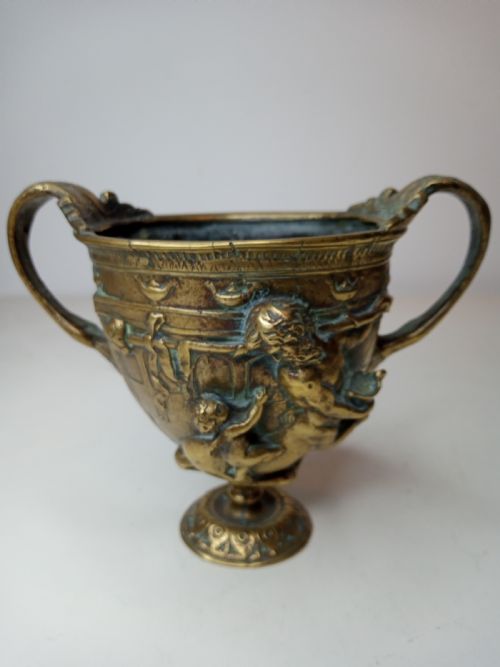


Ornate Brass Vessel
An ornate brass vessel brings tactile weight and historic form to a room, spanning periods from the eighteenth century to the late Victorian era.
Ornate Brass Vessel
An ornate brass vessel encompasses practical household items and decorative objects produced across the nineteenth and eighteenth centuries. These pieces take forms such as jardinieres, hall lanterns, ewers, trophy vases, and tea urns, reflecting diverse domestic uses.
Makers drew on historical styles including Victorian, Louis XVI, French Empire, Neoclassical, Anglo-Indian, French Baroque, French Rococo Revival, and Indo-Persian. The selection frequently includes pairs of pierced vases and ceremonial bowls alongside utilitarian copper samovars.
Origin points range from British workshops to French foundries and Japanese style imitations by Samson. Buyers encountering these works find a mix of cast, chased, and pierced metalwork designed to command visual attention.
Materials and construction
Craftsmen utilised brass, bronze, and gilt bronze, often combining copper with porcelain, enamel, and glass inserts. Metal surfaces were shaped through casting and then hand-finished with chasing and piercing to achieve intricate ornamentation.
Decorative details included figural handles depicting figures like Bacchus and dolphins, alongside applied ormolu mounts. These techniques required precise foundry work to secure components such as handles and bases onto the primary vessel body.
Ornate Brass Vessel Retail Price Guide 2026
Typical asking prices for ornate brass vessel among the pieces listed under this phrase on Sellingantiques today, from the lower quarter to the upper quarter. They describe what is for sale here now, not the wider market.
Some nineteenth-century makers cast ferocious sea creatures into functional handles, ensuring that pouring tea involved wrestling a bronze dolphin.
Assessing quality in metalwork
Quality rests in the crispness of the cast ornamentation and the depth of the hand-chased details across the metal surface. Superior examples maintain sharp relief in figural elements and foliage rather than softened outlines resulting from worn moulds.
The integration of mixed media, such as porcelain panels or applied ormolu mounts, dictates the refinement of the piece. Masterwork production shows precise alignment and secure joining of distinct materials without excess solder visible at the seams.
The Ornate Brass Vessel Glossary
- Jardiniere
- An ornamental stand or large container designed to hold plants or flowers. These items frequently feature pierced brass or gilt bronze construction.
- Ormolu
- Finely ground high-carat gold applied to a bronze or brass object using a mercury amalgamation process. This technique provides a rich, durable golden finish on decorative mounts.
- Samovar
- A heated metal container traditionally used to boil water for tea. Victorian English examples typically utilise copper and brass construction with internal heating pipes.
- Kantharos
- An ancient Greek cup style featuring a deep bowl, a high foot, and two large vertical handles. Nineteenth-century revivals adapted this classical form into brass vessels.
- Ewer
- A large pitcher with a wide spout and elaborate handle designed for pouring liquids. These vessels often incorporate figural cast elements like dolphins or mythological characters.
Ornate Brass Vessel: Frequently Asked Questions
What were these brass vessels used for?
Many of these vessels served functional roles in period households, from heating water in tea urns to grinding spices in mortars and illuminating hallways in lanterns.
Others functioned purely as decorative art, holding plants in jardinieres or displaying sculptural detail on side tables.
How do I clean an antique brass vessel?
Historical metalwork benefits from minimal intervention to preserve the natural oxidation and patina accumulated over centuries. Dusting with a soft, dry cloth prevents particulate build-up without stripping the surface finish.
Avoid abrasive chemical polishes that remove the thin layers of original gilding or soften the chased details on bronze and brass.
How can I tell the period of a brass vessel?
Dating relies on identifying the prevailing design style, such as French Empire, Neoclassical, or Victorian Revival, matched against known manufacturing techniques. Cast construction marks, tool signatures, and material combinations provide further chronological clues.
Comparing the object's form to documented nineteenth and eighteenth-century examples helps narrow the production window.
Where should I place a heavy brass vessel?
Solid brass and bronze pieces require sturdy support furniture due to their substantial weight, particularly larger jardinieres and samovars. Placing them away from direct moisture ensures the metal and any accompanying porcelain or enamel inserts remain stable.
Positioning them in well-lit areas allows the chased details and gilt surfaces to catch natural light effectively.