
Ornate Brass Ceiling Pendant
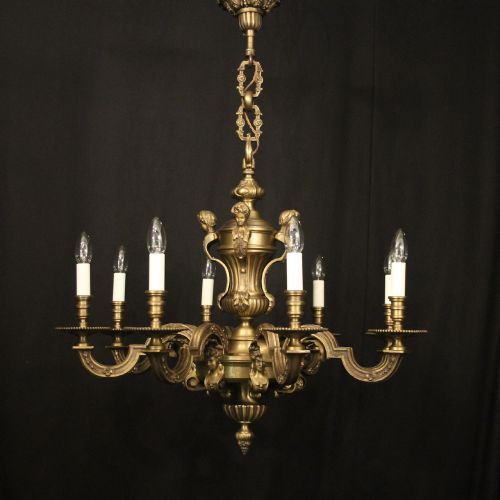
An ornate brass ceiling pendant brings sculptural presence and warm illumination to high-ceilinged rooms through historic metalwork and tiered crystal drops.
Ornate Brass Ceiling Pendant
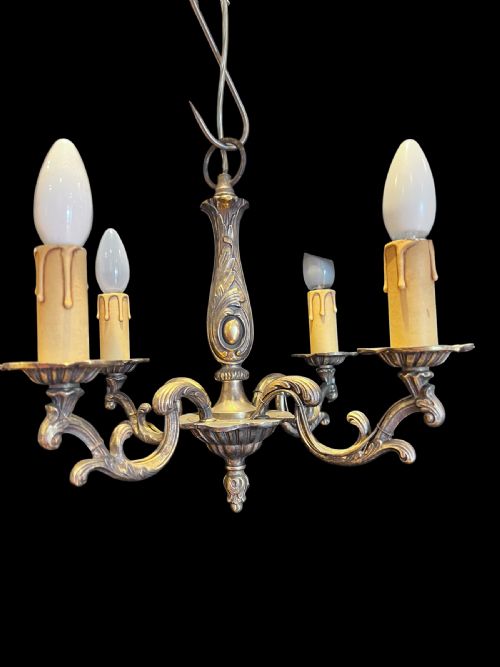
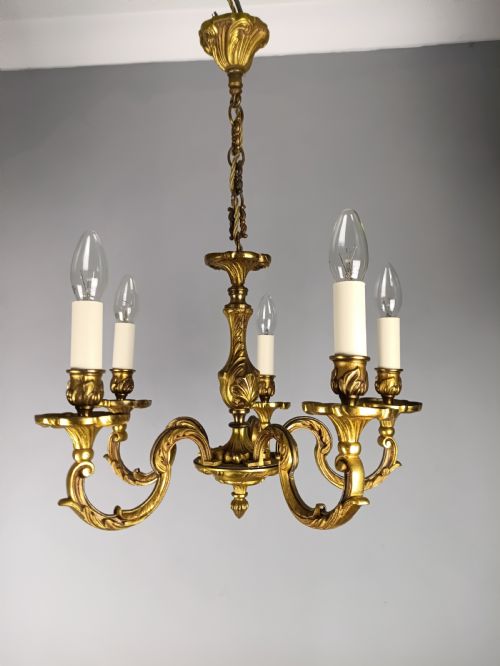
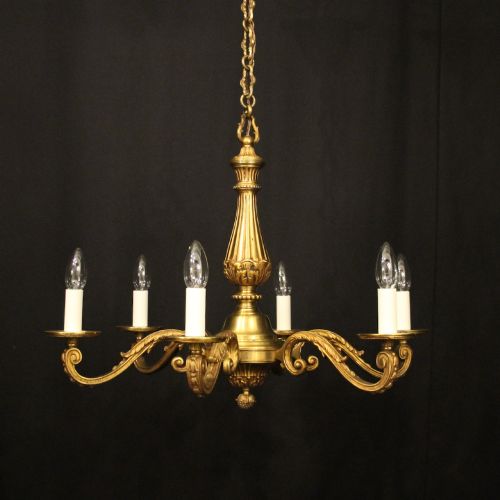
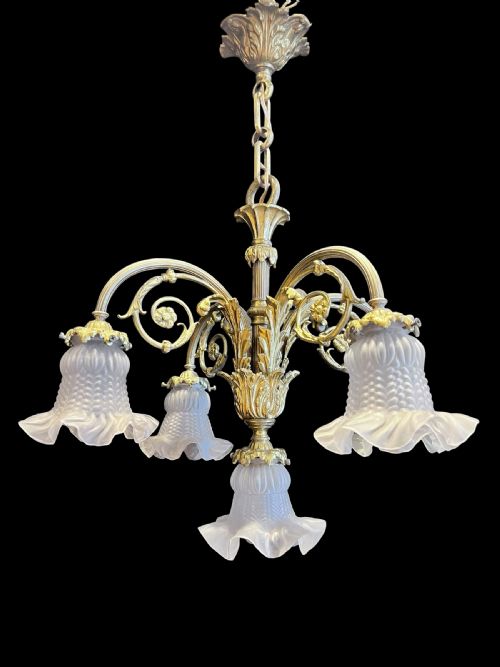
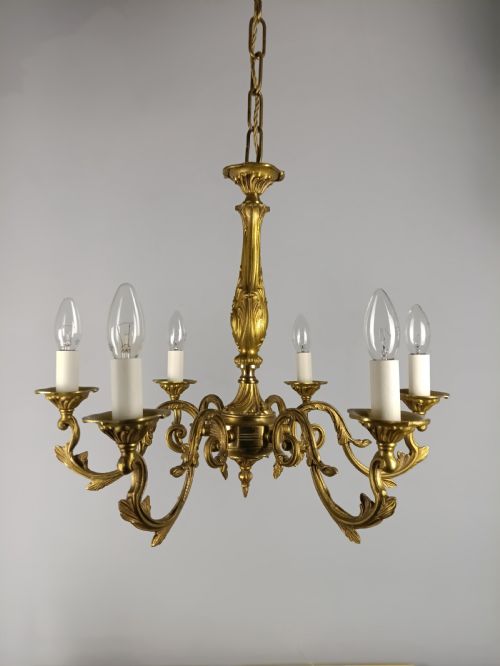
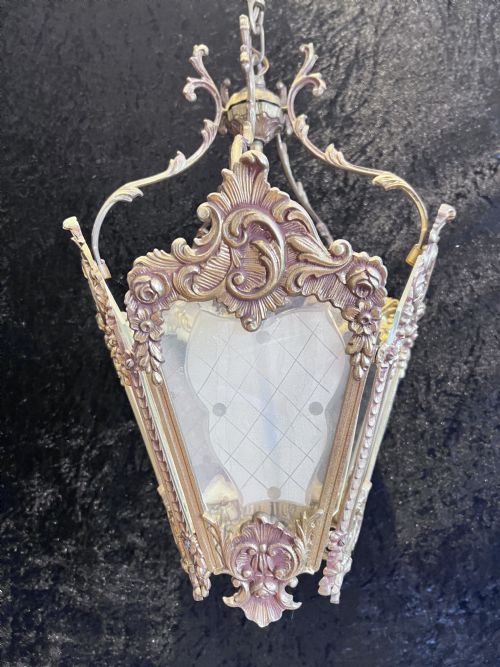
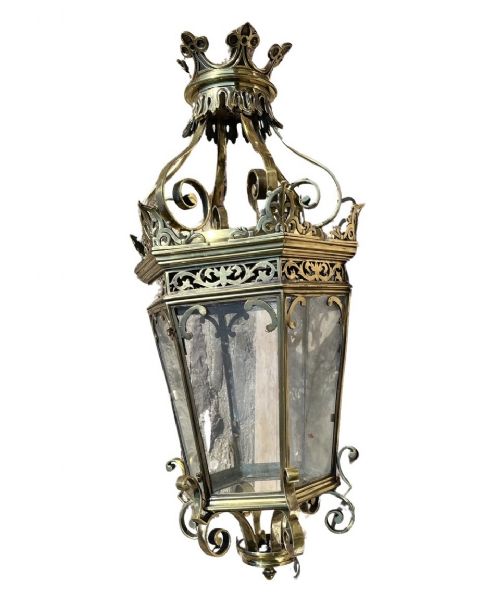
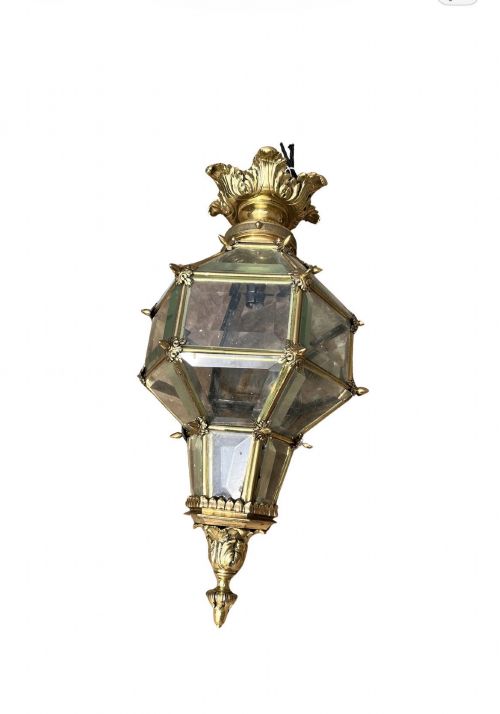
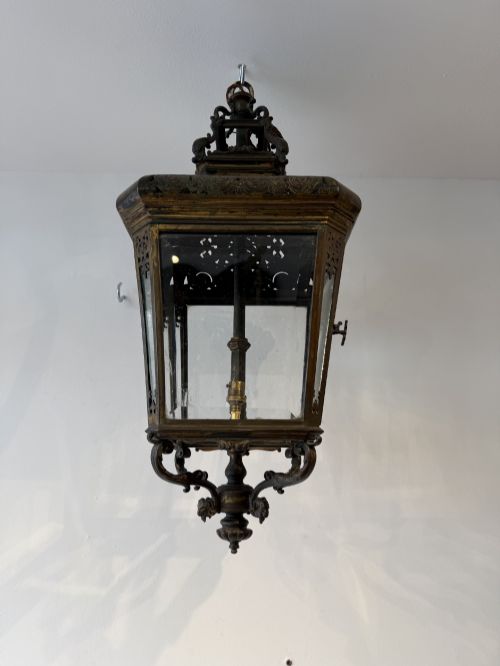
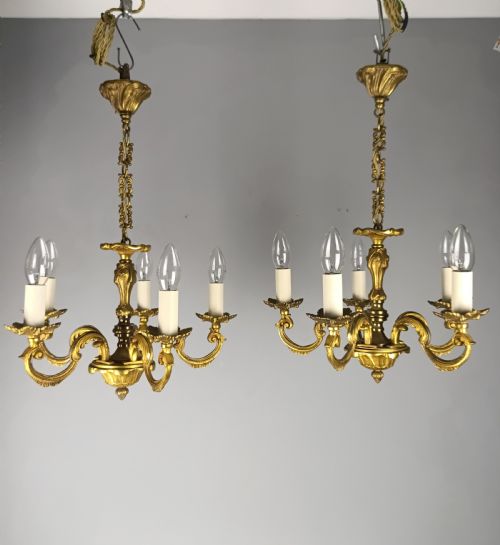
An ornate brass ceiling pendant encompasses multi-arm chandeliers, hall lanterns, and drop light fixtures created in brass, gilt bronze, and ormolu. These pieces trace their origins largely through nineteenth-century and early twentieth-century periods, spanning Victorian, Edwardian, and various revival aesthetics.
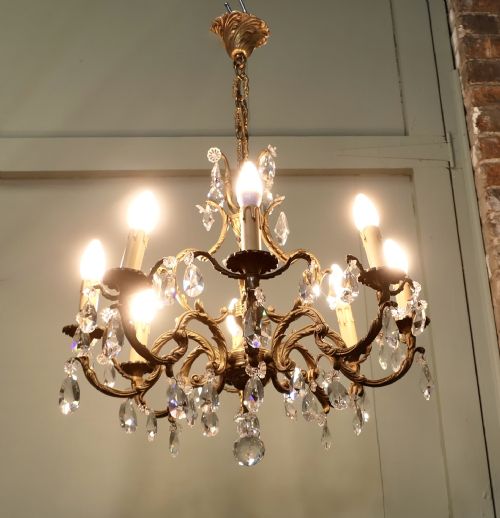
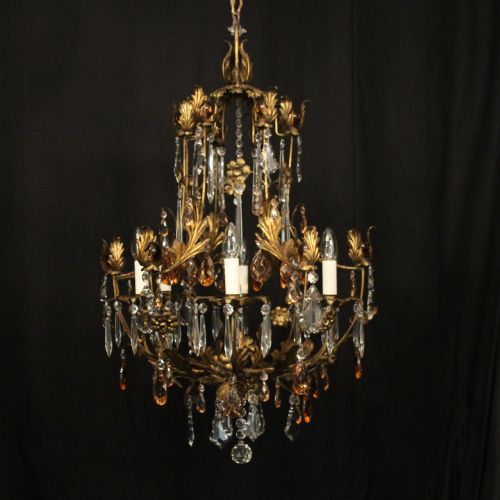
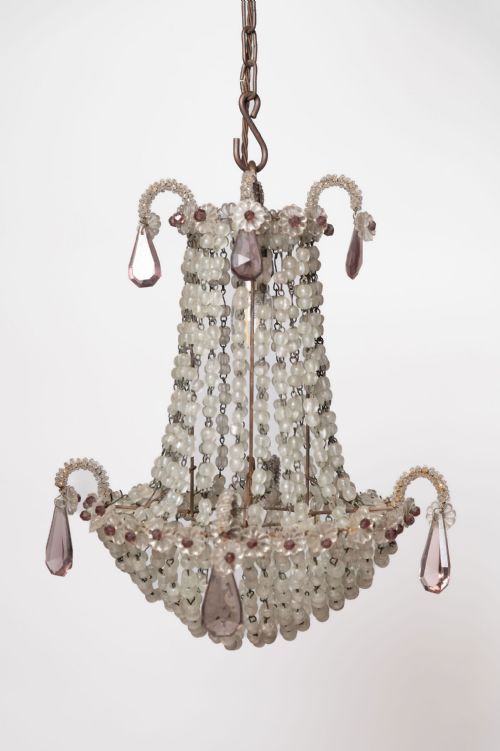
The version most frequently encountered on this page is the French multi-light chandelier, often carrying four to eight branches alongside cast acanthus leaf mounts or crystal lustres. Italian and Bohemian examples also appear, bringing distinct regional interpretations of crystal dressing and gilded framework to the form.
Materials and construction methods
Makers utilised cast bronze, brass, and gilded metals as the structural foundation for these hanging fixtures, often applying mercury gilt or fire gilding to achieve deep lustre. Structural elements were frequently cast in sections, allowing for intricate relief work depicting floral motifs, cherubs, and scrollwork before being assembled mechanically.
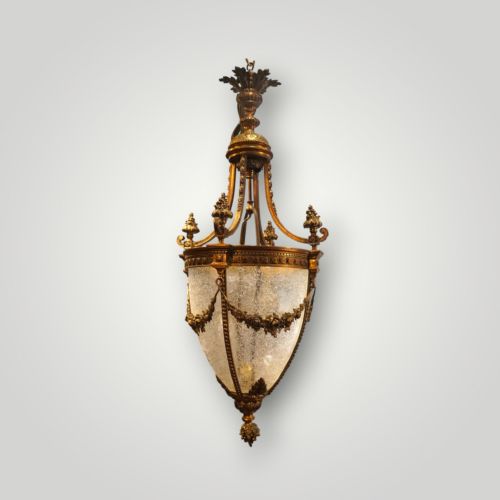
Glass and crystal components, including pendeloques, droplets, and hollowed bobeches, were hand-cut or mould-blown before being wired or pinned to the metal frame using brass pins. Lantern variants incorporated glazed glass panels fitted into hinged doors, protecting internal candles or early electric burners from drafts.
Listings feature brass and gilt bronze lighting spanning the nineteenth century through the 1930s, encompassing French chateau, Gothic revival, and Empire styles.
Assessing quality in historical lighting
The distinction between standard production and superior craftsmanship lies in the crispness of the metal casting and the depth of the chased surface detail. Finer pieces display sharply rendered acanthus leaves and ornament without the softening of edges typically found in secondary recast copies.
Weight and structural integrity also separate the categories, as heavier cast bronze and solid brass frames resist the distortion of arm alignment over decades of suspension. The presence of hand-cut crystal lustres with sharp bevels rather than moulded glass substitutes further elevates the standing of an individual piece.
The Ornate Brass Ceiling Pendant Glossary
- Ormolu
- A gilding technique involving the application of a finely ground mercury and gold amalgam to a bronze object, which is then fired to drive off the mercury. This leaves a durable, rich golden surface characteristic of fine French decorative metalwork.
- Lustre
- A cut glass or crystal pendant suspended from a chandelier to refract light across the room. These drop in various configurations from the bobeche or arms.
- Bobeche
- A small drip pan fitted below the candle nozzle or bulb holder to catch melting wax. In antique pieces, these are frequently edged with crystal prisms or cut glass petal designs.
- Gasolier
- A multi-arm hanging light fixture originally designed and piped for coal gas illumination before being converted to electricity. They are typically heavier and more robust than fixtures built solely for candles.
- Acanthus leaf
- A classical ornamentation motif derived from the foliage of the Mediterranean acanthus plant, heavily cast into bronze and brass mounts during the nineteenth century.
Ornate Brass Ceiling Pendant: Frequently Asked Questions
How do I hang a heavy brass chandelier safely?
Hanging a heavy fixture requires securing a steel joist hanger or heavy-duty pattress directly into the ceiling ceiling joists rather than relying on plaster or lath. The weight of solid bronze and crystal chandeliers demands professional electrical installation to ensure the ceiling box bears the load securely.
Once the mechanical load is supported, the wiring must be checked to comply with modern safety standards, particularly on pieces that retain historic fabric. Adjusting the chain length allows the pendant to hang at the correct proportion to the floor.
Can these antique lights be rewired for modern bulbs?
Most historic chandeliers and lanterns are readily adaptable for modern electrical standards by running contemporary heat-resistant flex through the original central channels. Skilled restorers retain original lampholders where possible by sleeving them with modern internal components.
Rewiring preserves the external aesthetic of the brass or gilt bronze frame while ensuring the fixture meets current safety regulations. It also permits the use of low-energy LED candle bulbs that replicate the warm colour temperature of historic lighting.
How do I clean brass and crystal fixtures?
Cleaning requires removing dust with a soft brush and washing crystal pendants in warm water with mild soap before drying them individually with a lint-free cloth. Harsh chemical polishes should be avoided on antique brass and gilt bronze to prevent stripping the historic patina or delicate fire gilding.
Leaving the metal unpolished allows the natural oxidation and mellow tones developed over centuries to remain intact. Regular gentle dusting prevents grime accumulation in the cast crevices of acanthus mounts and scrollwork.
What distinguishes French chandeliers from Italian ones?
French chandeliers from the nineteenth and early twentieth centuries typically emphasise architectural symmetry, heavy cast bronze mounts, and restrained neoclassical or Rococo revival details. Gilt bronze and refined chased patinations are common hallmarks of Parisian workshops from this era.
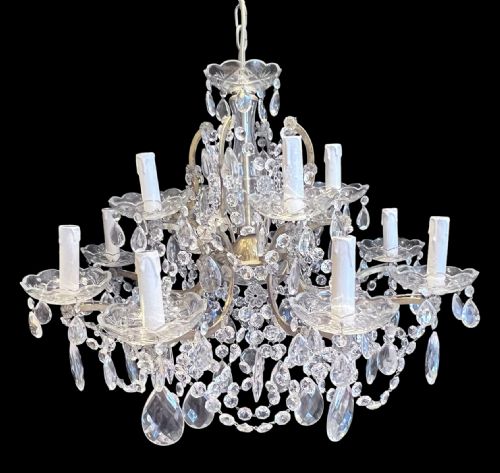
Italian fixtures often lean towards exuberant crystal work, such as Marie Theresa styles, featuring elaborate glass arms and floral coronas. Their aesthetic prioritises light refraction through extensive glass dressing over heavy metal mass.