
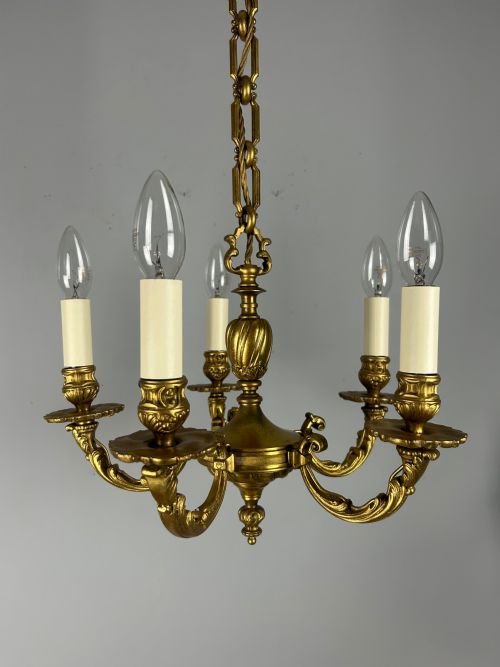
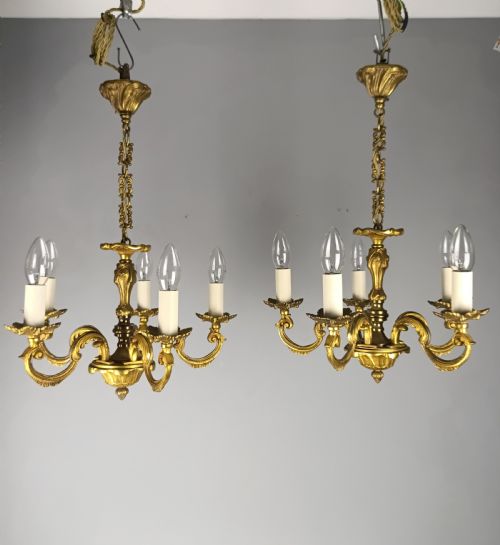
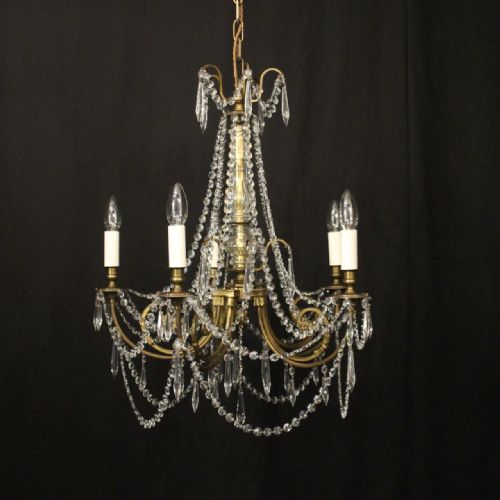


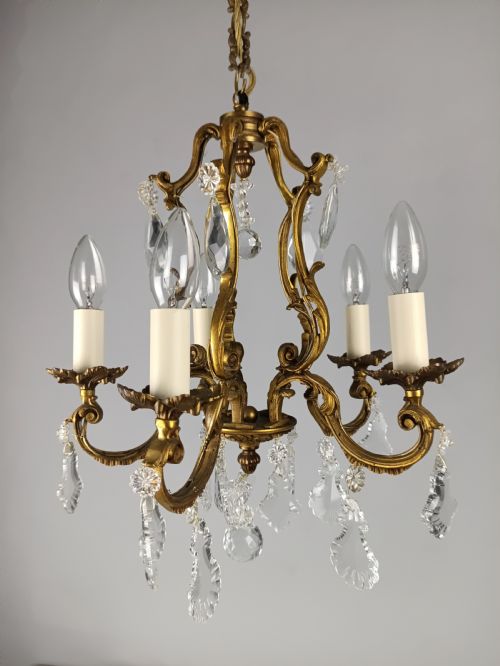


Gold Five Arm Chandelier
A gold five arm chandelier brings warm light and classic proportion to a room, offering the distinct elegance of French and Edwardian metalwork.
Gold Five Arm Chandelier
A gold five arm chandelier represents a specific branch of period lighting, appearing most frequently in French and Edwardian forms dating from the nineteenth and early twentieth centuries. These ceiling lights balance multiple branches to distribute illumination evenly while maintaining a compact scale suited to residential spaces.
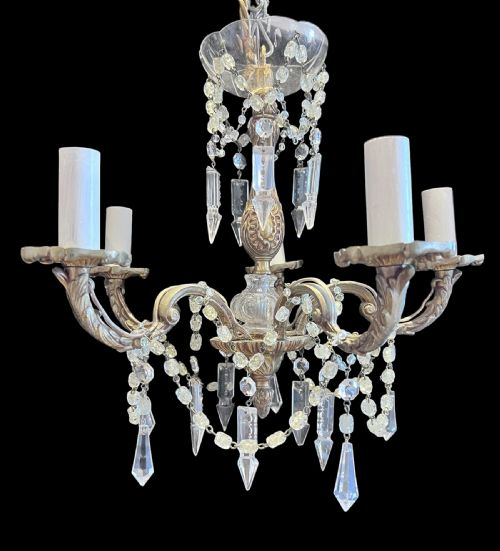
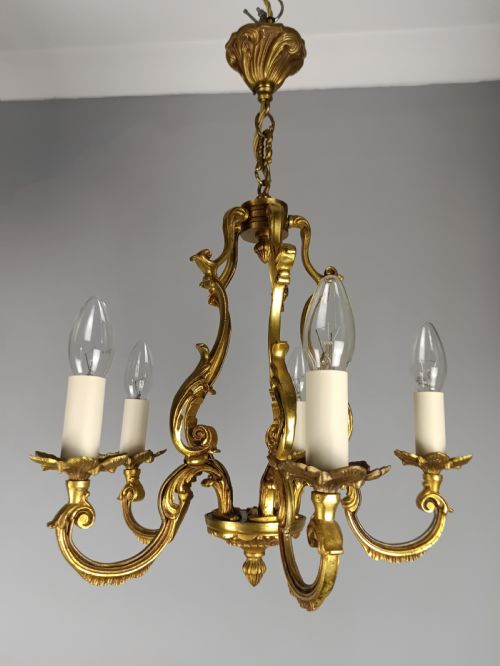
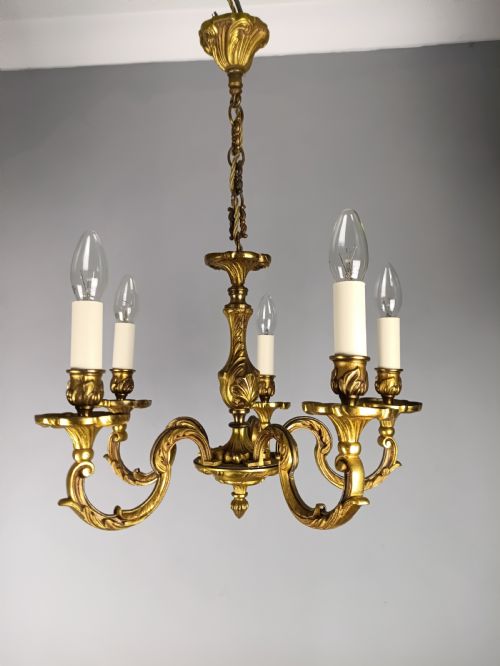
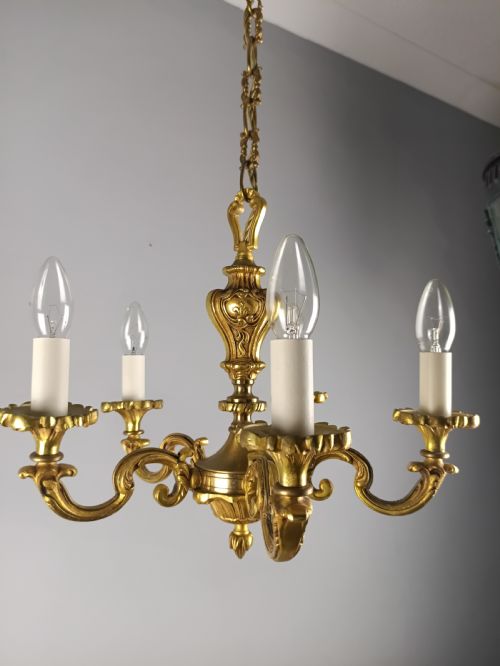
The selections available here span diverse regional interpretations, from Florentine giltwood creations to French birdcage designs and solid brass Edwardian branches. Buyers encounter pieces finished in gilt bronze, gilt brass, and gilded metal, often embellished with crystal drops and swags.
Most examples originate from the 1930s or the 1920s, alongside Edwardian and nineteenth-century periods. These fixtures function as central decorative elements that anchor period interiors with metallic warmth.
Materials and construction methods
Workshops utilised cast and forged metals including brass, bronze, and solid brass as the structural framework for these fixtures. Gilt surfaces were achieved through gilding bronze and brass components, creating a durable golden sheen that catches ambient light.
Glass and crystal elements were integrated into many designs, forming bead swags, pendants, and drip pans that refract illumination across the five branches. Wood also appears in specific regional pieces, such as Florentine giltwood frames carved for five lights.
Materials recorded across the inventory include brass, gilt bronze, crystal, and giltwood.
Evaluating quality and craftsmanship
Quality reveals itself in the crispness of metal casting and the depth of the gilding applied to the bronze or brass structure. Finer pieces exhibit meticulous hand-chasing on metal mounts and sophisticated arm junctions that demonstrate superior artisan skill.
The integration of original crystal components, such as cut drops and formed drip pans, distinguishes higher grade examples from later replacements. Solid construction of the branches and secure wiring channels indicate robust manufacturing standards across different periods.
The Gold Five Arm Chandelier Glossary
- Gilt bronze
- Metal cast in bronze and coated with a layer of gold leaf or applied gold amalgam. This technique provides a rich, enduring metallic surface characteristic of fine French fixtures.
- Birdcage chandelier
- A lighting form featuring an open metal frame resembling a birdcage, often adorned with cascading crystal strands. These structures centralise the arrangement of the five arms.
- Florentine
- A regional Italian style known for carved giltwood details and ornate floral motifs. Such pieces reflect traditional craftsmanship from Florence.
- Drop
- A pendant piece of cut glass or crystal suspended from the chandelier frame to catch and refract light. Drops enhance the overall sparkle of the fixture when illuminated.
- Swag
- A draped chain or string of crystal beads hanging in a curve between points on the chandelier. This decorative element adds movement and classical proportion to the design.
Gold Five Arm Chandelier: Frequently Asked Questions
How do I clean a gilt bronze chandelier?
Dust the metal and crystal gently with a soft, dry brush or microfiber cloth to remove surface particles without disturbing the gilt surface. Avoid harsh chemical cleaners that can strip the gold finish from the bronze or brass components.
For crystal drops, detach them if necessary and wash them in lukewarm water with mild soap, drying them thoroughly before reattachment. Regular, gentle maintenance preserves the antique patina and protects the delicate structure.
Can these fixtures take modern light bulbs?
Many period fixtures accommodate modern candle-style LED bulbs that replicate the shape and warmth of traditional lamps. Ensure the wattage matches the safe operational limits of the internal wiring and lamp holders.
An electrician should inspect the vintage brass or bronze wiring to confirm it meets current safety standards before installation. Rewiring preserves the historical exterior while ensuring safe domestic use.
How do I determine the period of a chandelier?
Examine the construction techniques, screw threads, and metal casting styles used in the frame and branch junctions. Edwardian pieces often show distinct British brasswork characteristics, while 1930s French pieces display specific gilt bronze or brass patination.
Stylistic details like neoclassical swags, Rococo curves, or Art Deco linear elements provide clear indicators of the era of manufacture. Comparing the materials - such as solid brass versus gilded metal - helps narrow down the date.
Are crystal elements original to these pieces?
Original crystal drops and swags match the wear, glass composition, and cut style of the main body of the chandelier. Subtle variations in glass tint and hand-cut facets often indicate period authenticity rather than mass-produced replacements.
Inspect the attachment loops and wire bindings, as period mountings frequently utilise specific twisted wire techniques. Professional dealers can help verify whether the crystals align with the era of the brass or bronze frame.