

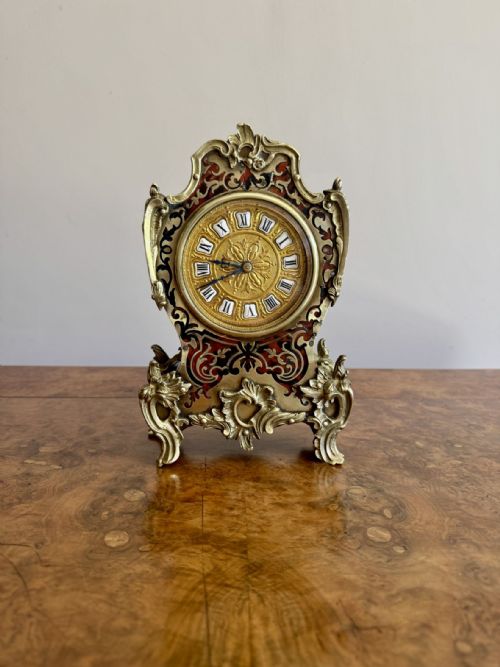


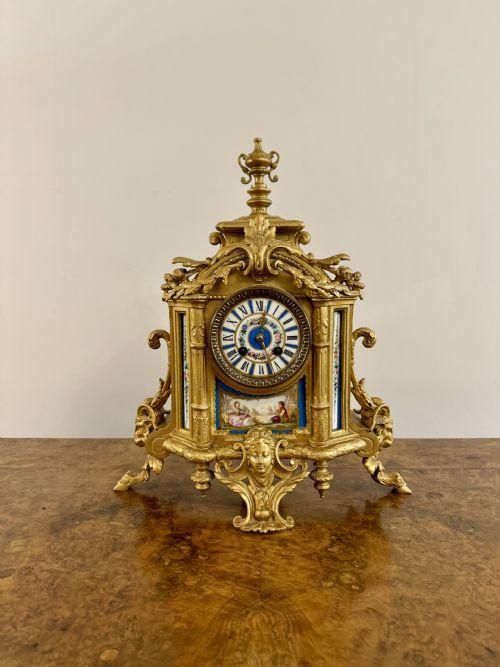


Ornate Table Clock
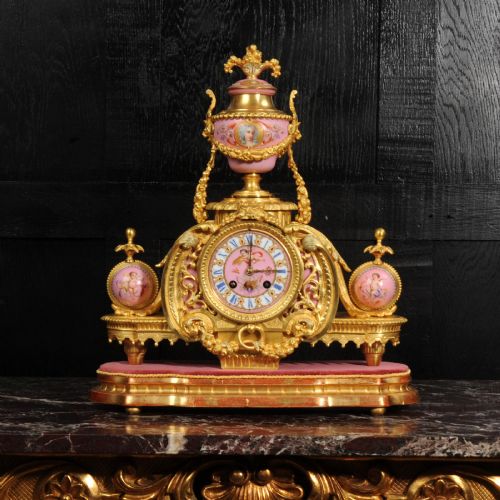
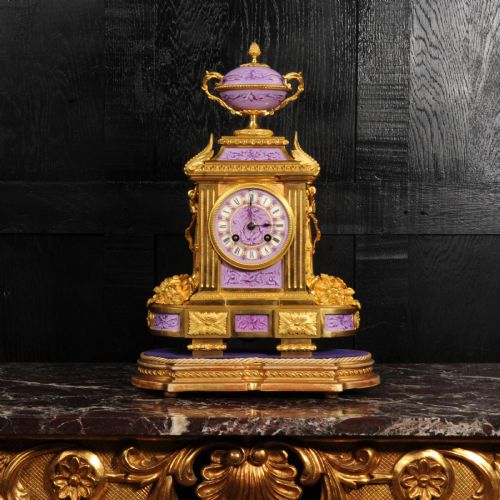
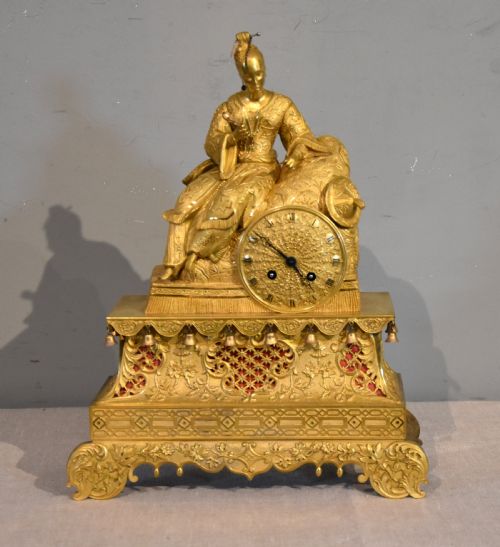
An ornate antique table clock brings French Rococo Revival and Louis XIV style into a room, offering brass, ormolu, and bronze casework with enamel dials.
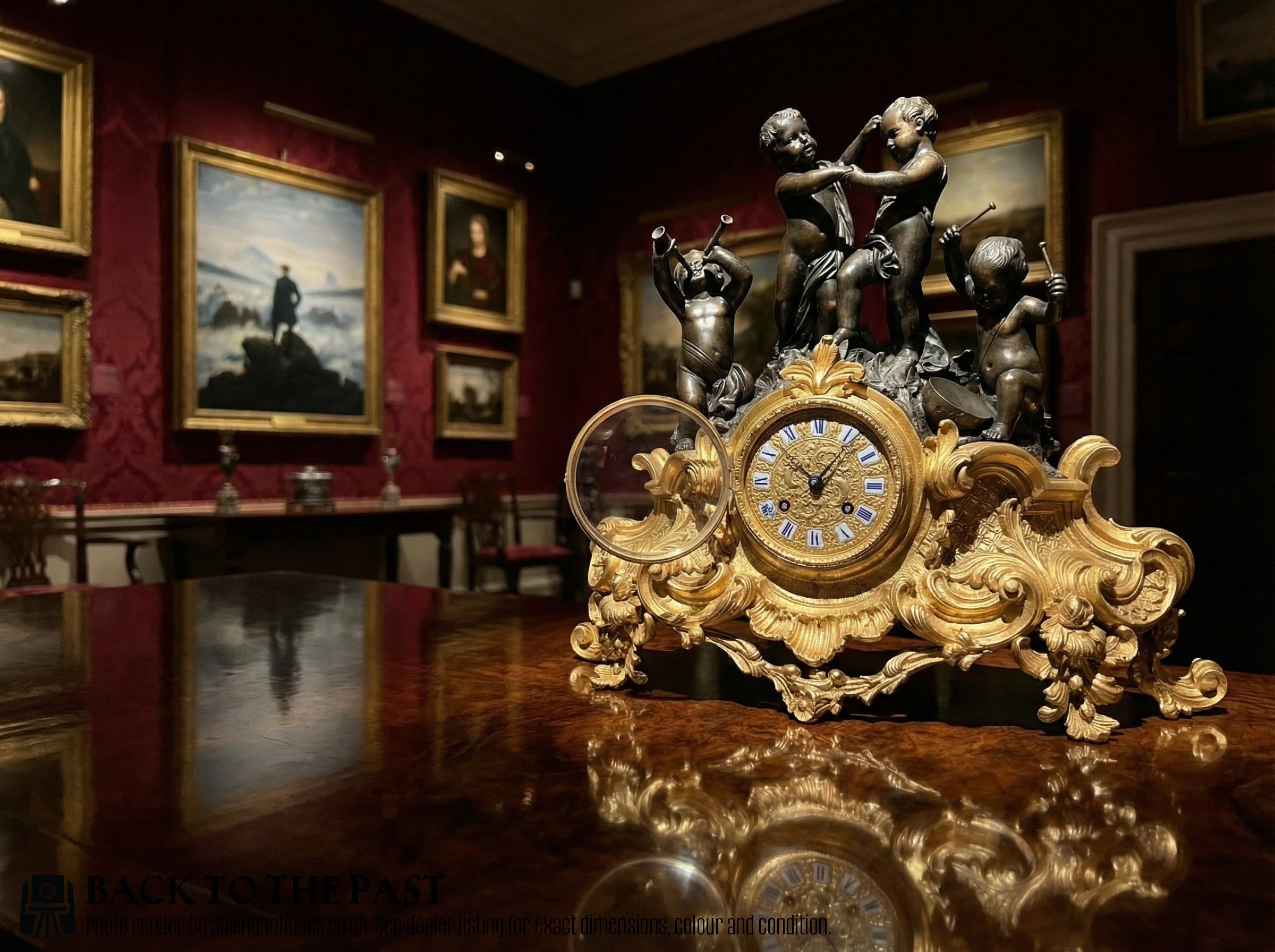
What these pieces are
When you search for an ornate antique table clock, you find nineteenth-century French mantel clocks and mantel clocks originating from the Victorian era. These decorative timepieces generally take the form of mantel clocks housed in elaborate cases.
The versions you are most likely to meet on this page belong to the French Rococo Revival and Louis XIV styles, reflecting the ornamental tastes of the period. They combine clockwork mechanisms with sculptural bronze, ormolu, and tortoiseshell exteriors.
How they were made
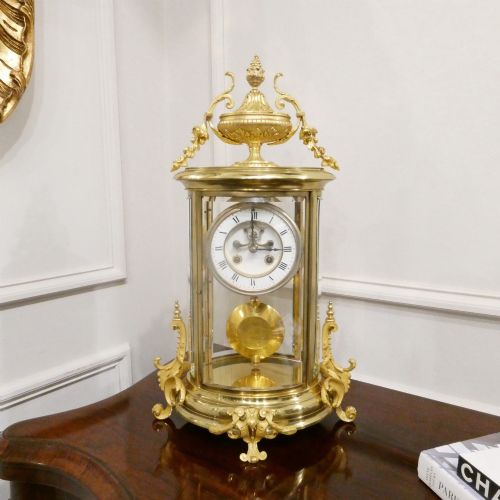
Casework is constructed from brass, ormolu, gilt bronze, and bronze, often paired with glass panels and tortoiseshell veneers in Boulle style. Makers utilised fire-gilding techniques on bronze and ormolu to achieve a bright, durable metallic lustre.
Dials frequently incorporate enamel numerals on separate cartouches or plates set within the ornate metal bezels. The structural elements are cast, chased, and assembled to frame the mechanical movements produced by prominent makers.
Retail Price Guide 2026
Typical UK retail prices for ornate table clock, calculated from the Sellingantiques database of over a million retail prices indexed since 2003. This retail price guide relies exclusively on Sellingantiques data; no external sources or auction records are used, so the figures do not describe the wider market.
Listings feature nineteenth-century French mantel clocks spanning the Victorian era, utilising materials such as ormolu, gilt bronze, brass, enamel, and tortoiseshell.
What varies in quality
The distinction between tiers rests upon the crispness of the bronze casting and the depth of the chasing across the ormolu surfaces. Finer examples display meticulous hand-finishing on floral and scrollwork motifs rather than soft, generalised casting lines.
Samuel Marti
The Ornate Table Clock Glossary
- Ormolu
- Gilded bronze, usually created by applying a mercury-gold amalgam to a bronze base and heating it until the mercury vapours evaporated. This technique produced a rich, golden finish characteristic of nineteenth-century French clocks.
- Boulle
- A style of marquetry utilising brass and tortoiseshell inlay, named after André-Charles Boulle. It appears on French mantel clock cases of the Louis XIV style.
- Rococo Revival
- A nineteenth-century design movement mimicking the asymmetrical C-scrolls, shell motifs, and naturalistic flora of the eighteenth-century Rococo period. This style defines the visual ornamentation of many mantel clocks.
- Cartouche
- A small plaque or tablet, often made of white enamel with black numerals, applied to a clock dial. These individual plates form the chapters for the hour markers.
- Gilt Bronze
- Bronze metal treated with a gold leaf or gold wash layer to impart a bright metallic surface. It provides the heavy, sculptural foundation for ornate clock cases.
Frequently Asked Questions
What is an ornate antique table clock?
An ornate antique table clock is a nineteenth-century French mantel clock featuring decorative metalwork, cast bronze, and enamel dials. These timepieces served as functional household objects and prominent decorative ornaments.
They draw on French Rococo Revival and Louis XIV design traditions, utilising materials like ormolu and tortoiseshell.
How do I identify a Victorian clock?
Victorian clocks from this selection date to the nineteenth century, specifically spanning the decades around eighteen-sixty to eighteen-eighty. They are typically identified by French ormolu, gilt bronze, and brass mantel clock configurations.
The casework often displays stylistic markers of the French Rococo Revival or Louis XIV periods.
What materials are used in these clocks?
These clocks utilise metals such as brass, bronze, gilt bronze, and ormolu for their sculptural cases. Enamel and glass are also incorporated into the dials and visible movement compartments.
Some Boulle style pieces additionally feature tortoiseshell veneer alongside brass inlay.
Where were these clocks made?
The pieces listed originate from France during the nineteenth century. Workshops and makers in France produced these mantel clocks for domestic and international markets.
Their designs reflect the prevailing revival styles of French decorative arts from that era.