





Ornate Cupboards
These ornate antique cupboards bring elaborate carved detail and figured timbers into a room, offering practical storage with distinct historical presence.
Ornate Cupboards
When searching for ornate antique cupboards, buyers encounter a diverse selection of storage furniture ranging from cocktail cabinets and sideboards to display cabinets and table top pieces. These works date across the eighteenth, nineteenth and early twentieth centuries, reflecting revivalist design movements such as Renaissance, Gothic, Queen Anne and Rococo.
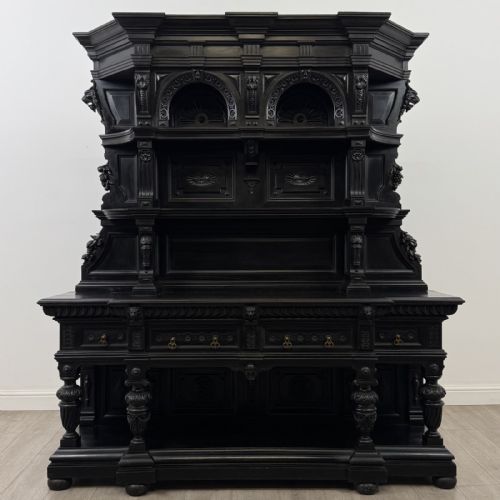
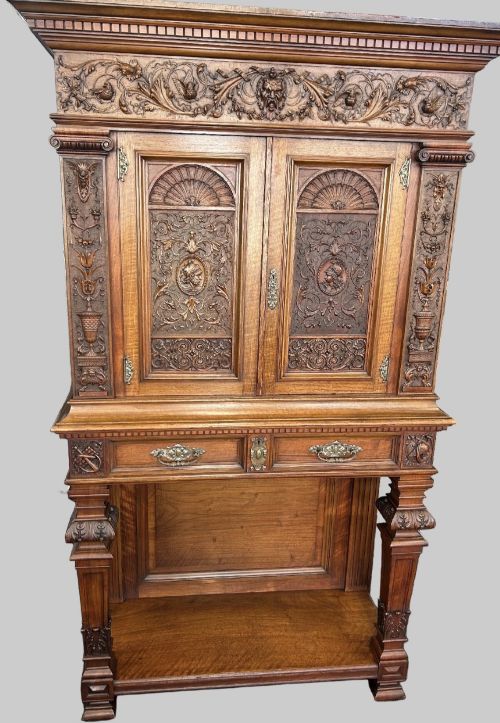
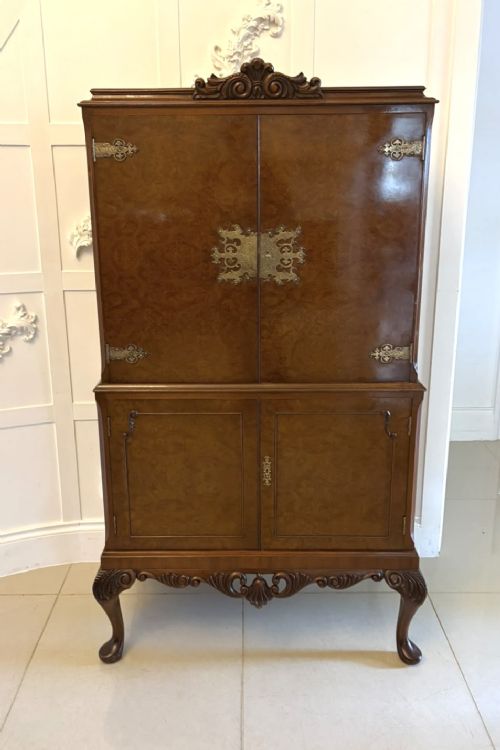
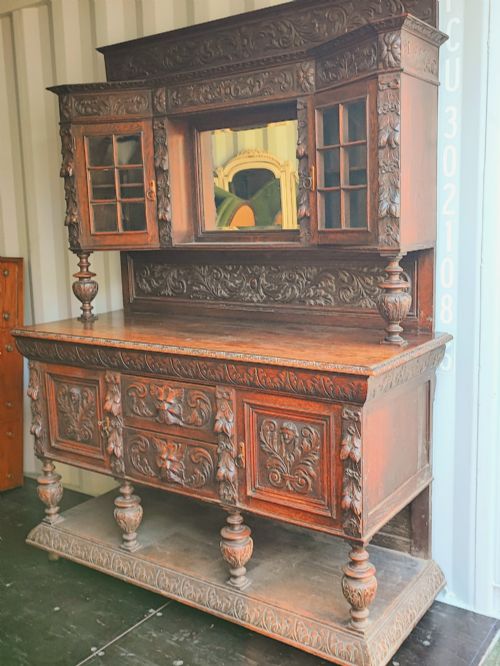
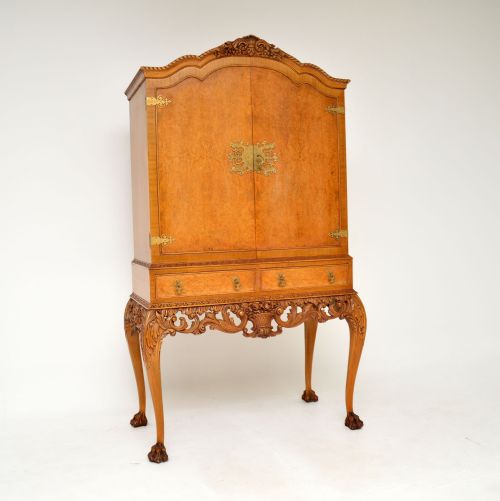
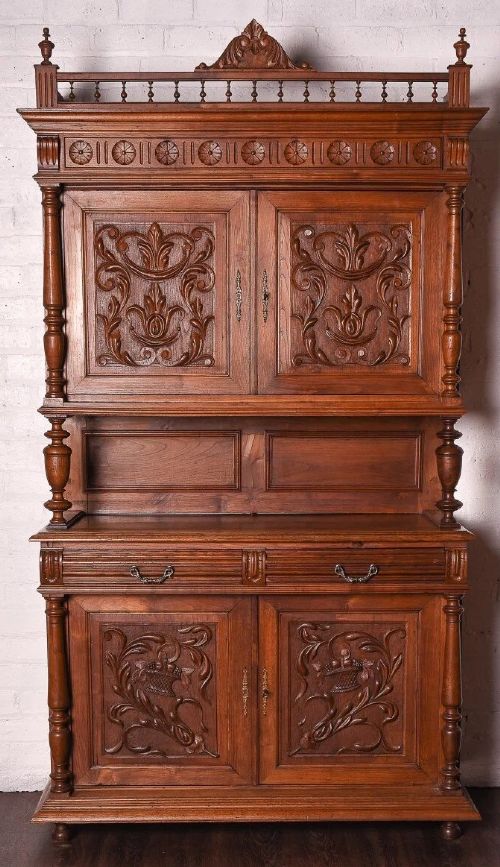
The version most commonly met on this page is the nineteenth century or Victorian carved oak or walnut cabinet, often featuring elaborate panel work, mirrors or decorative mounts. Alongside these sit specialised pieces like burr walnut drinks cabinets from the nineteen-twenties and detailed Continental vitrines.
How they were made
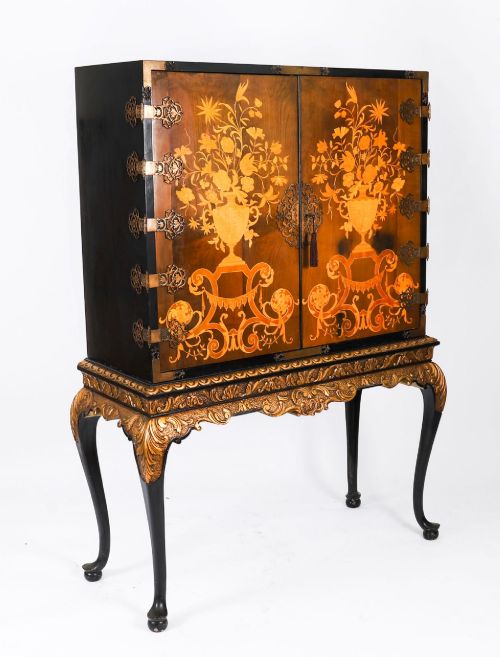
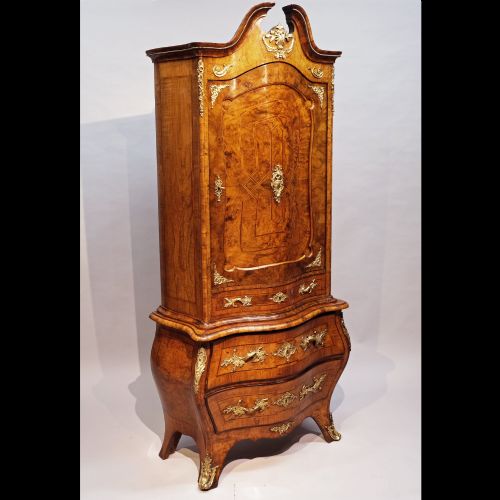
Craftsmen built these pieces using solid timbers such as oak, walnut and mahogany, frequently applying burr walnut, satinwood, tulipwood or tortoise-shell veneers for visual depth. Ebonised wood and black lacquer provided contrasting dark surfaces, while marquetry introduced intricate wood inlay patterns.
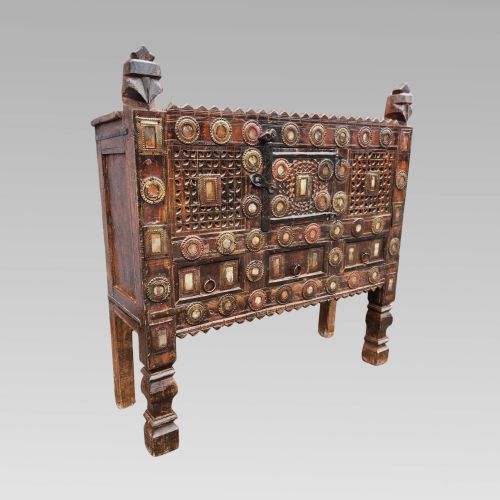
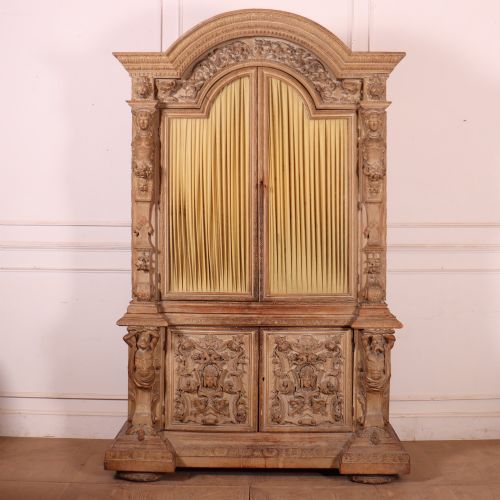
Structural and decorative embellishments relied on brass hardware, iron fittings, ormolu mounts and porcelain plaques. Carvers executed detailed motifs including lion masks, figurative scenes and floral scrollwork by hand, often pairing timber with glass panels for display sections.
Ornate Cupboards Retail Price Guide 2026
Typical asking prices for ornate cupboards among the pieces listed under this phrase on Sellingantiques today, from the lower quarter to the upper quarter. They describe what is for sale here now, not the wider market.
Some nineteenth century carvers spent months rendering fierce lion masks to glare benignly from the drawer fronts of heavy oak sideboards.
What varies in quality
The distinction between standard items and exceptional pieces rests upon the ambition of the design and the execution of the hand-carved detail. Deeply undercut relief carving, sculptural figures and specialist elements like Sèvres porcelain plaques or marquetry inlays elevate a cabinet far beyond simple utilitarian storage.
Material selection and cabinetry construction also determine the standing of a piece, with figured grains like burr walnut and exotic hardwoods commanding greater visual interest. The integration of fine ormolu mounts, mirrored backings and fitted interiors demonstrates the original maker's investment of time and cost.
Gillows·Sigmund Jaray Wien
The Ornate Cupboards Glossary
- Ormolu
- Gilded bronze mounts applied to furniture for decorative accent. This technique was popular in French and Victorian cabinet making to highlight corners and doors.
- Marquetry
- The art of applying pieces of veneer to a structure to form decorative patterns. Craftsmen utilised various coloured woods to create pictorial or geometric designs on cabinet surfaces.
- Vitrine
- A glass-fronted cabinet designed for displaying fine objects or porcelain. These pieces emphasise visibility with glazed doors and sides.
- Buffet
- A sideboard or low storage cabinet traditionally used for food service and display. Victorian examples often incorporate heavy oak construction and extensive carving.
- Ebonised
- Timber treated to resemble ebony, achieving a dense black finish. This technique was frequently utilised during the Victorian era for dramatic contrast.
Ornate Cupboards: Frequently Asked Questions
What is an antique cocktail cabinet?
An antique cocktail cabinet is a specialised drinks storage unit that typically dates from the nineteen-twenties and nineteen-thirties. These pieces feature fitted internal compartments for glassware and bottles.
Craftsmen often finished the exterior in figured burr walnut, black lacquer or marquetry inlay to suit contemporary entertaining spaces.
How do I identify a Victorian sideboard?
A Victorian sideboard usually displays heavy solid timber construction, most commonly in carved oak or mahogany. Many examples include large mirror backs, buffet surfaces and detailed relief carvings featuring motifs like lion masks.
These substantial items served as both functional dining room storage and architectural focal points.
Where were table top cabinets used?
Table top cabinets were compact storage units designed to sit upon larger desks, chests or tables rather than standing directly on the floor. They provided secure storage for small valuables, documents or collections.
Cabinetmakers applied the same decorative carving and fine timbers to these miniature forms as they did to full-sized furniture.
What is a Renaissance Revival cabinet?
A Renaissance Revival cabinet is a nineteenth century piece styled after sixteenth century architectural and artistic motifs. These cabinets exhibit heavy proportions, symmetrical panels and classical figurative carving.
Makers utilised walnut and oak to recreate the grandeur of Italian and French Renaissance furniture for Victorian interiors.