




Ornamental Desk Lamp
An ornamental desk lamp brings weight and character to a study, built from solid metals and carved stone to light a workspace.
Ornamental Desk Lamp
An ornamental desk lamp combines utilitarian purpose with decorative metalwork, often taking the form of a classical column, a converted bronze ewer, or a multi-branch candelabra. These task and ambient lights bring period presence to a workspace through sculptural bases and considered proportions.
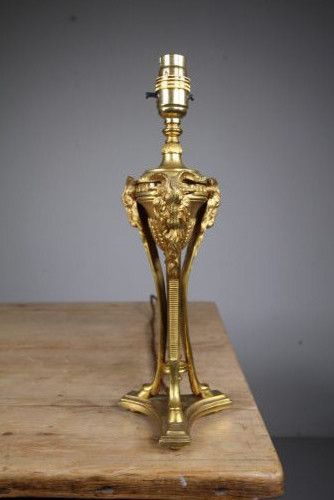
The versions most commonly met on this page date from the nineteenth century through the early twentieth century, spanning Victorian, Edwardian, and Neoclassical tastes. Makers and manufacturers of these periods drew heavily on classical motifs such as rams heads, classical masks, and architectural columns.
Forms range from simple brass standards to patinated bronze notary designs and heavy marble plinths fitted with fabric or silk shades. Each piece reflects the interior lighting requirements and aesthetic preferences of its decade of origin.
How they were made
Construction relies heavily on cast and pressed brass, patinated bronze, and heavy ormolu, often paired with polished marble bases for added stability and contrast. Metalworkers utilised techniques of casting, chasing, and gilt finishing to achieve crisp surface detail on classical mounts and masks.
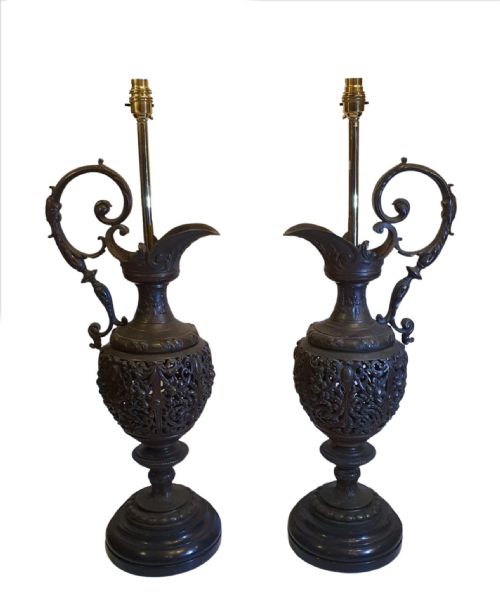
Many older pieces began life as functional items such as ewers or candelabra before being adapted for electrical use during later domestic updates. Silk and fabric shades were subsequently added to diffuse the light cast by the metal standards.
Listings here span the nineteenth century through the 1930s, featuring materials such as bronze, marble, gilt metal, and fabric.
What varies in quality
Quality reveals itself in the sharpness of the casting and the depth of the metal patina, where finely chased classical details and crisp relief work separate finer pieces from simpler commercial production. Heavier base materials like marble and solid bronze provide stability and a tactile substance that lighter pressed brass elements lack.
The integrity of the conversion work and the harmonious proportion between the sculptural base and the overall height dictate the visual success of the lamp. Original surface finishes, whether patinated bronze or fire gilding, retain a richness that heavy cleaning or modern replating tends to diminish.
The Ornamental Desk Lamp Glossary
- Ormolu
- Gilt bronze, where a layer of gold amalgam is applied to a bronze base and fired to achieve a rich metallic finish. This technique was widely used in nineteenth-century decorative metalwork.
- Patination
- The natural or induced ageing of a metal surface over time, altering its colour and texture. A good patination shows depth and history rather than uniform modern coating.
- Neoclassical
- A style inspired by the classical art and architecture of ancient Greece and Rome, prevalent in nineteenth-century lighting design. It employs symmetrical forms, columns, and classical masks.
- Ewer
- A large jug with a wide spout, traditionally used for washing or serving water. Converted examples utilise the sculptural body of the vessel as a lamp base.
Ornamental Desk Lamp: Frequently Asked Questions
Were these always electric lamps?
Many desk and table lamps from the nineteenth century started as candleholders, oil lamps, or decorative vessels like bronze ewers. They were subsequently converted to run on electricity as domestic lighting evolved.
This adaptation process is a normal part of their history and does not detract from the quality of the original base metalwork.
How do I care for brass and bronze?
Maintenance requires only a soft, dry cloth to remove dust from the metal surfaces. Aggressive metal polishes should be avoided because they strip away the historic patination that accumulates over decades.
Marble bases can be wiped gently with a damp cloth and dried immediately to protect the polished stone from moisture marking.
What is a notary desk lamp?
A notary desk lamp is a specialised lighting form designed for focused illumination over documents and paperwork. The Napoleon III example listed here uses a bronze standard suited to professional or library settings.
These pieces prioritise sturdy construction and direct task lighting while maintaining decorative elegance through period-appropriate metal mounts.