
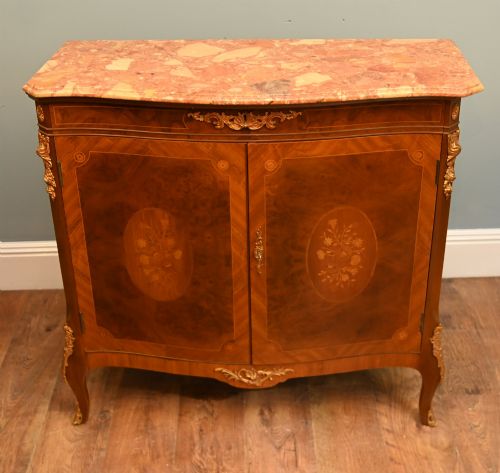
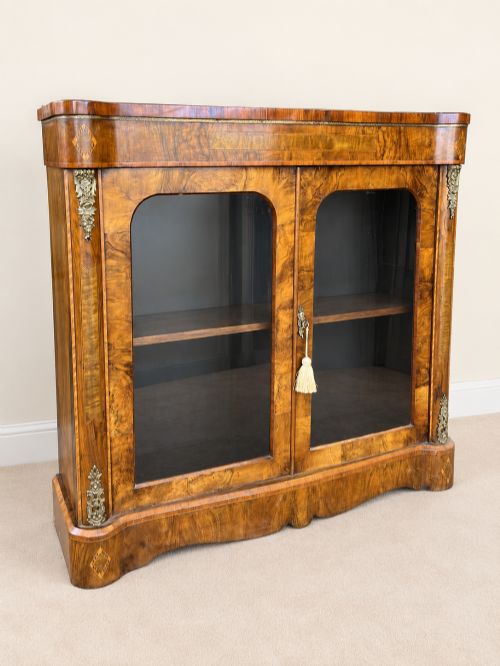
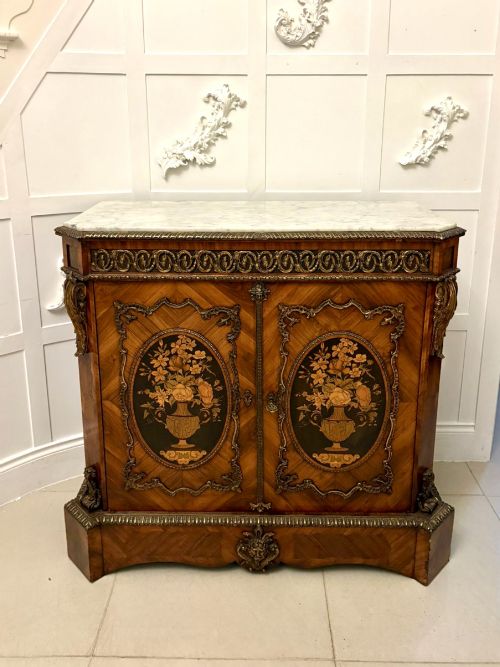
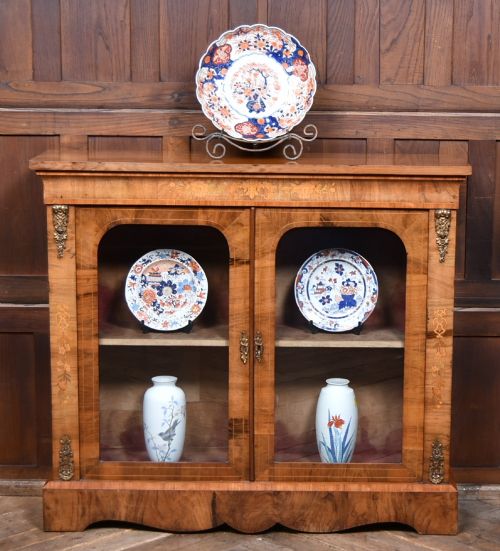
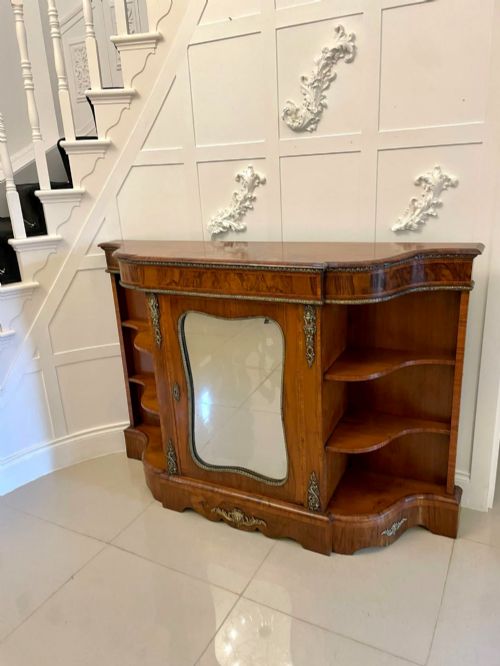
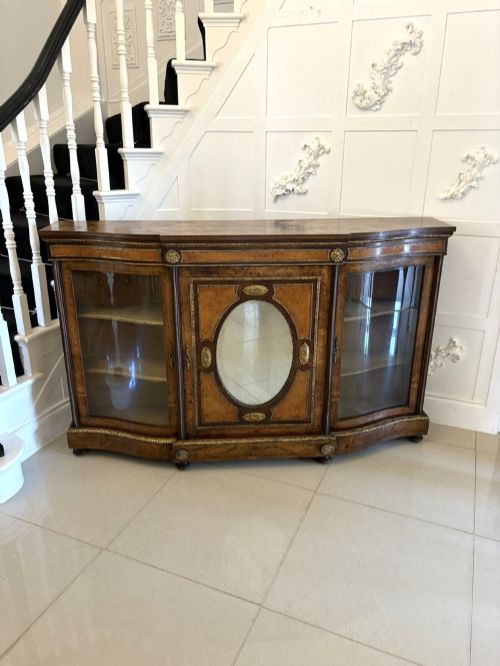
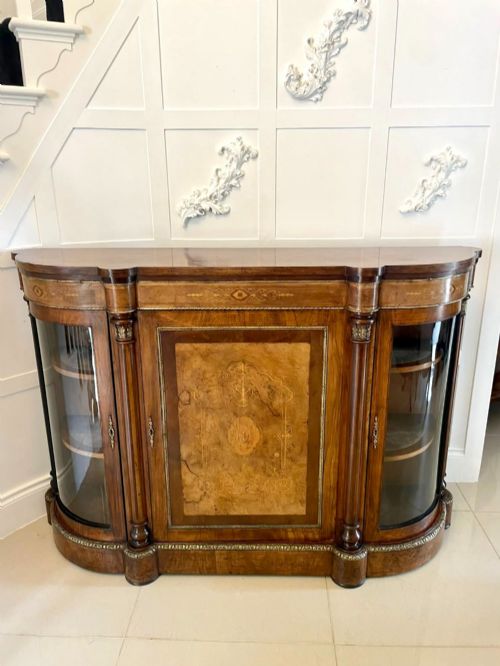
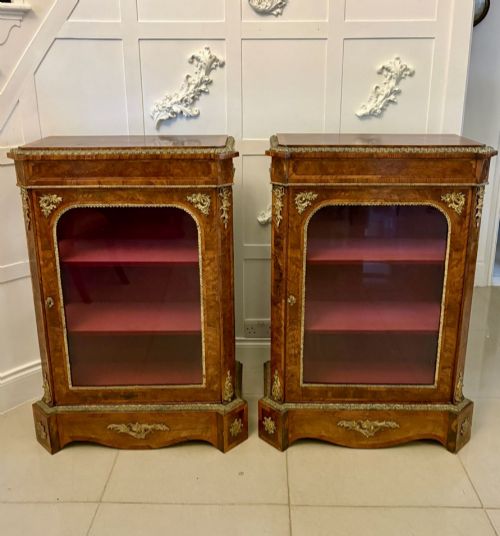


Ormolu Walnut Credenza
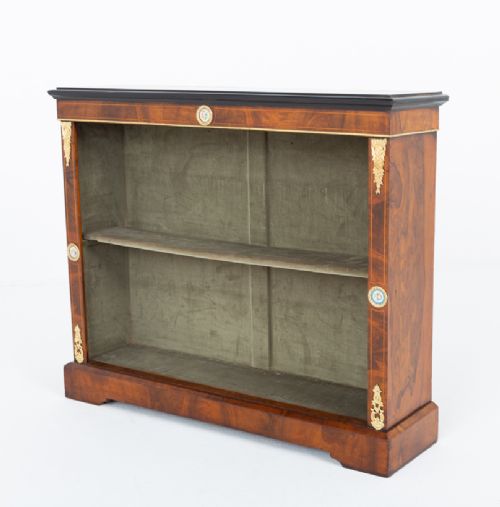
When you search for an ormolu walnut credenza, you are looking at nineteenth-century low display cabinets combining figured timbers with gilt-bronze mounts.
Ormolu Walnut Credenza
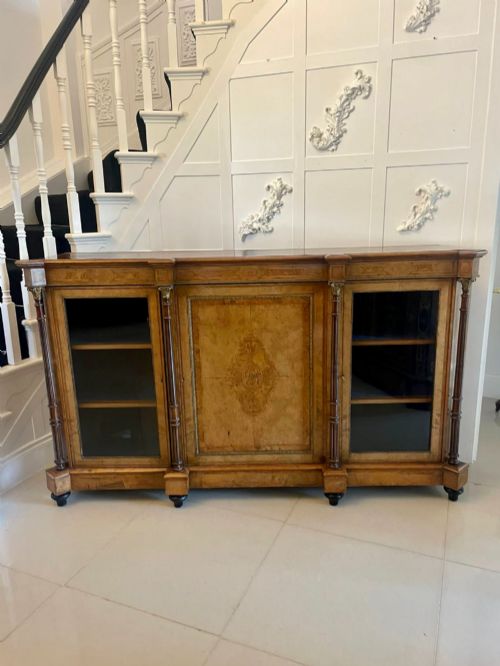
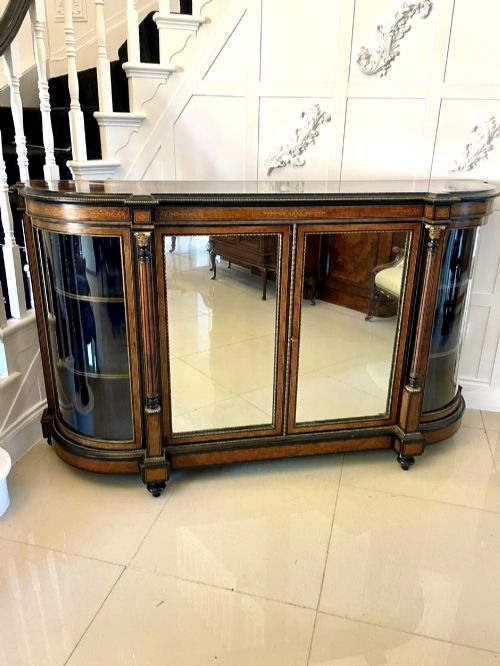
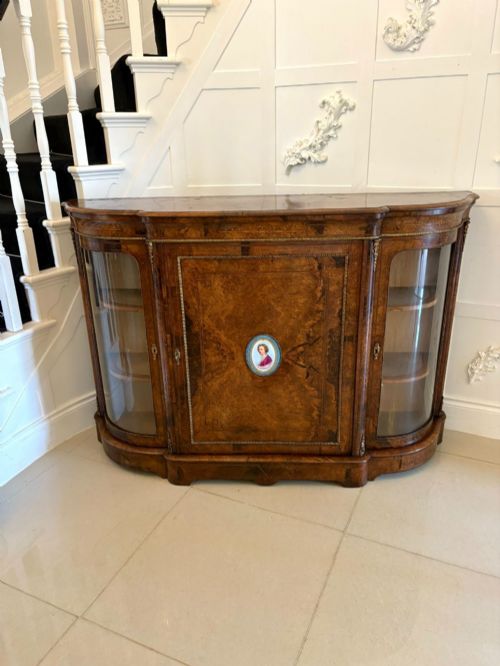
An ormolu walnut credenza is a low nineteenth-century cabinet designed primarily for display and formal reception rooms. The form typically incorporates a central cupboard flanked by curved glass doors or matching side cabinets.
Most examples found on this page date from the Victorian period, specifically around eighteen-sixty, though earlier nineteenth-century variants also appear. They often feature serpentine fronts, bow ends, or breakfront configurations.
Makers utilised these grand low cabinets to showcase fine woodgrains and decorative metalwork against drawing room walls. They serve today as commanding sideboards or display units in traditional interiors.
How They Were Made
Cabinet makers built these pieces using solid pine or oak carcases applied with rich veneers of burr walnut, featuring intricate floral marquetry and contrasting stringing lines. Gilt-bronze ormolu mounts were then cast, chased, and fixed to frame the doors and highlight structural corners.
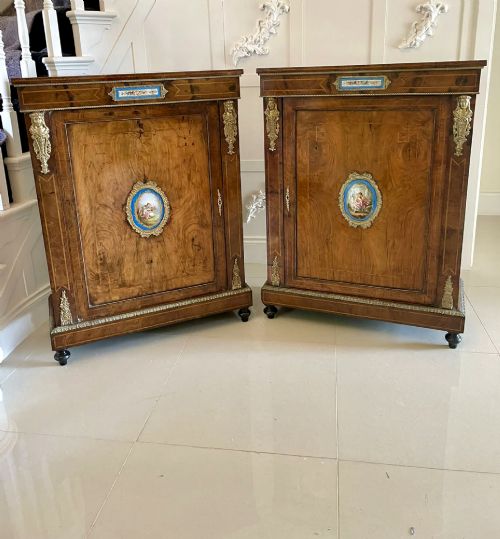
Glazed side compartments often contained velvet-lined shelving, whilst porcelain plaques and mirrored backing panels frequently integrated into the elevations. Cabinetmakers combined these diverse luxury materials to achieve the opulent aesthetic favoured in the Victorian era.
Listings feature Victorian burr walnut credenzas adorned with porcelain plaques, glass doors, and intricate floral marquetry.
What Varies in Quality
Quality in these cabinets is determined by the selection of the timber veneer and the precision of the marquetry inlay. Highly figured burr walnut with symmetrical grain patterns distinguishes superior examples from plainer stock.
The crispness and weight of the ormolu mounts also set pieces apart. Heavier, finely chased gilt-bronze fittings indicate workshop standards significantly higher than thin, mass-produced brass alternatives.
Gillows·Maison Gagneau
The Ormolu Walnut Credenza Glossary
- Ormolu
- Gilt-bronze mounts applied as decorative highlights to furniture. This technique involves fusing gold to a copper and zinc alloy.
- Burr Walnut
- Timber taken from walnut tree growths, producing highly figured, swirling grain patterns. It was extensively utilised by nineteenth-century cabinetmakers for luxury veneering.
- Marquetry
- Inlaid wood designs forming pictorial or floral patterns. Craftsmen fitted different coloured veneers into a prepared ground.
- Credenza
- A low dining or reception room cabinet for display and storage. Nineteenth-century versions typically included glass-fronted side sections.
- Pier Cabinet
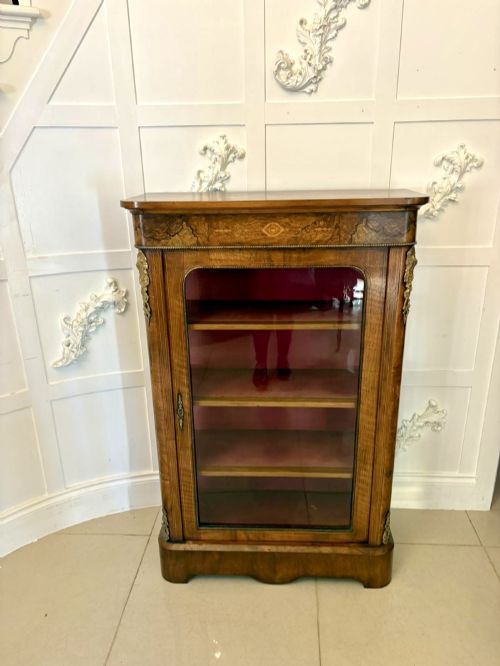
- A narrow display cabinet built to stand against the wall space between windows. These pieces often matched larger credenzas in a suite.
Ormolu Walnut Credenza: Frequently Asked Questions
Where were credenzas placed?
These low cabinets traditionally stood against the main drawing room wall, often between windows or beneath large mirrors. Their low profile ensured they did not obstruct natural light while providing a formal surface for ornaments.
Today, they function well in dining rooms or living spaces as decorative sideboards that display porcelain, books, or glassware behind glass doors.
How do I care for burr walnut?
Burr walnut veneer requires stable indoor humidity and protection from direct sunlight to prevent timber shrinkage and fading. Regular dusting with a dry, soft cloth maintains the polished finish without chemical buildup.
Avoid placing damp items directly onto the wooden top, as nineteenth-century French polish is sensitive to moisture and alcohol.
Are porcelain plaques original?
Many Victorian cabinets incorporate hand-painted ceramic plaques set directly into the wooden frame or ormolu mounts. These plaques were usually fired in European kilns and added an extra layer of colour and prestige to the design.
Examining the rear of the panel often reveals factory marks or kiln numbers consistent with nineteenth-century production standards.