
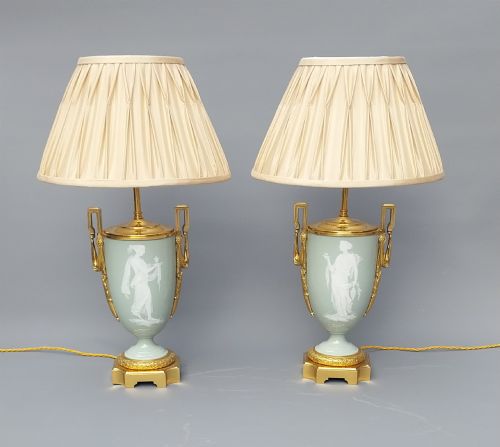
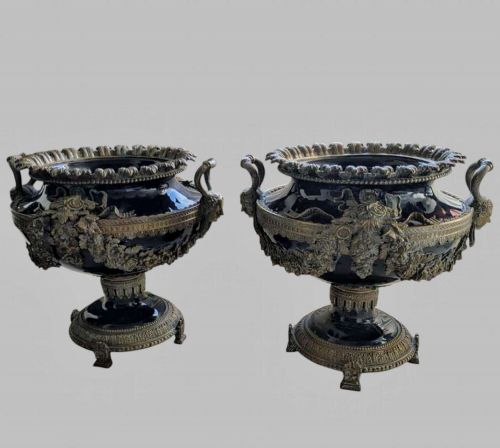
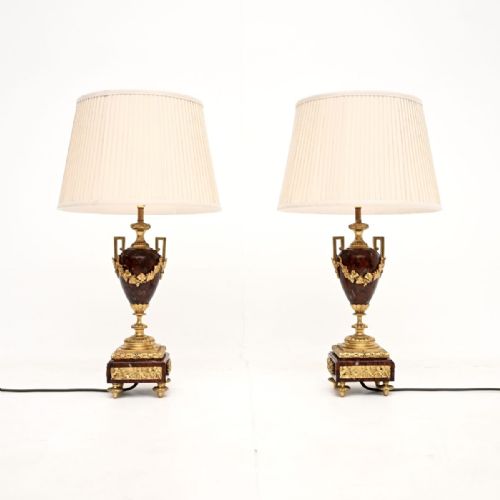
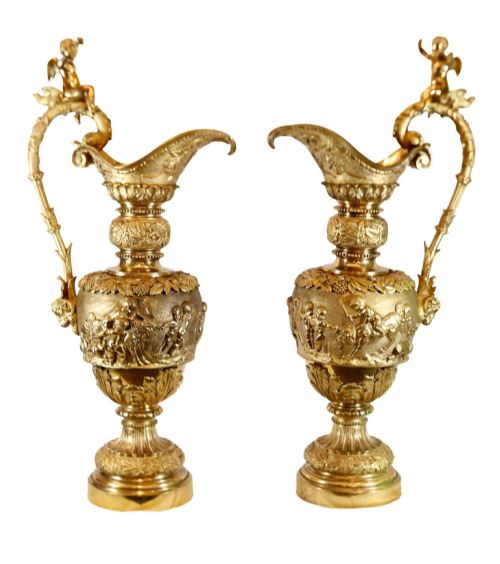
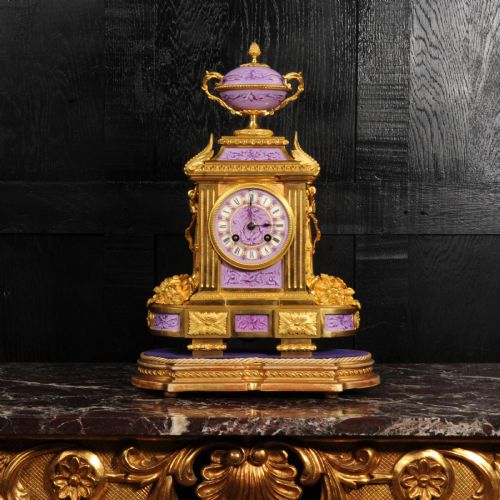
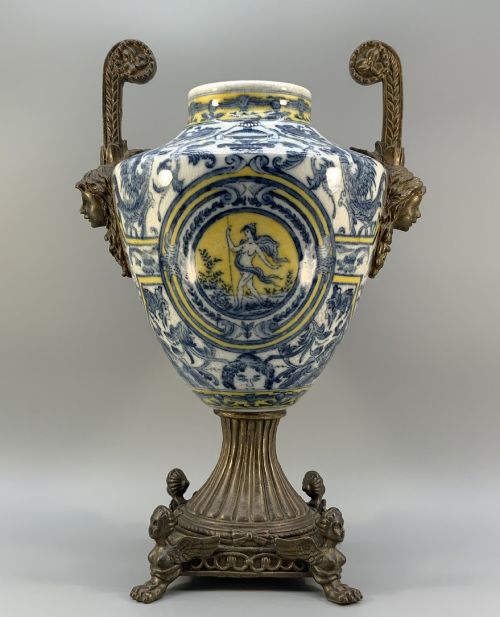
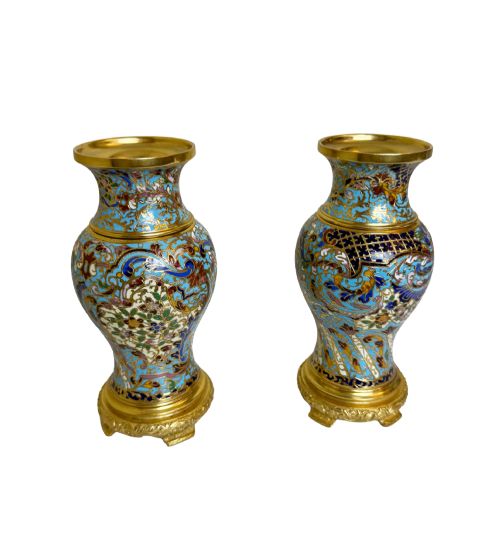
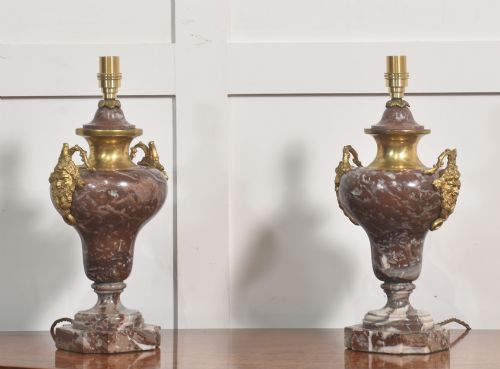
Ormolu Urns
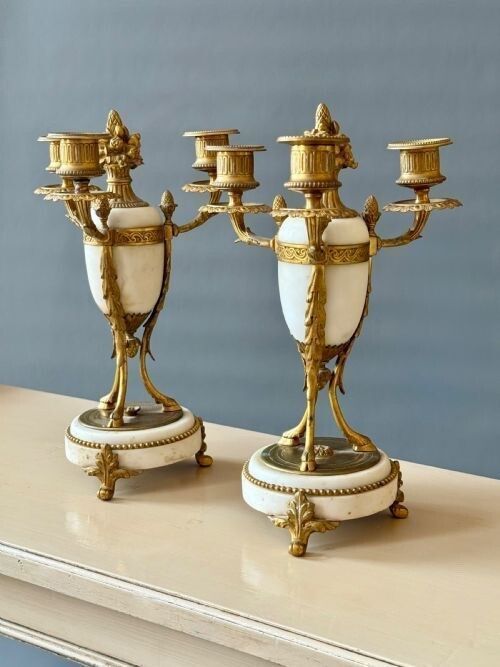
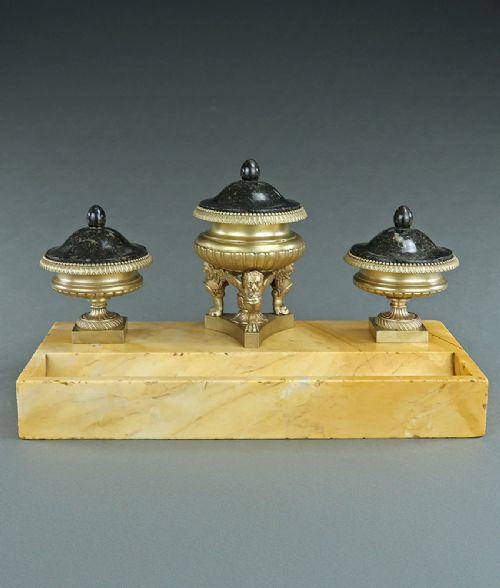
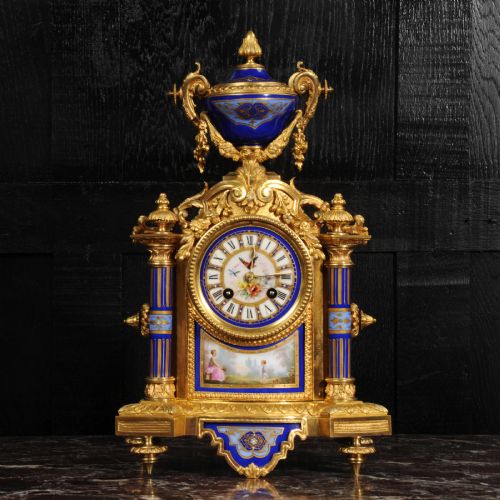
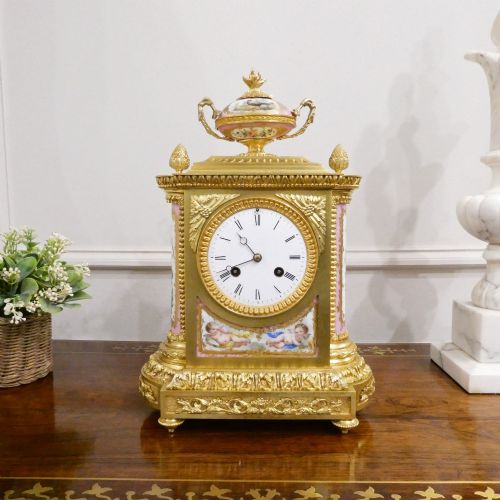
When you search for ormolu urns, you encounter decorative vessels cast in gilt bronze and combined with marble, porcelain, and enamel.
Ormolu Urns
Ormolu urns encompass decorative vessels, lamps, and cassolettes produced primarily during the 19th century in French and English workshops. These objects combine cast metallic mounts with bodies formed from porcelain, marble, or glazed ceramic.
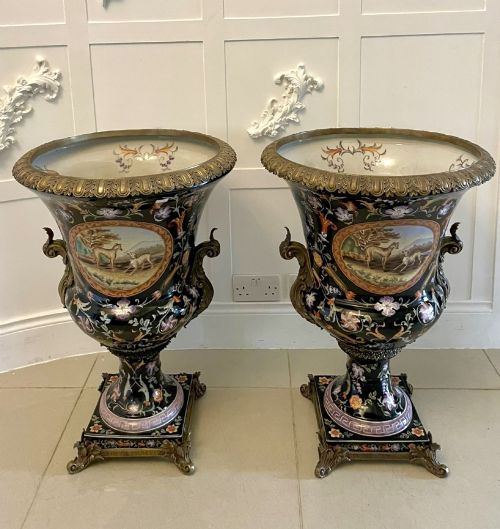
The prevalent examples on this page date from the Victorian era and the late 19th century, frequently reflecting Neoclassical, Louis XVI, and French Empire design vocabularies. Buyers encounter pairs designed as mantel ornaments, table lamps, and architectural garnitures.
The forms draw heavily on classical antiquity, Grand Tour souvenirs, and Renaissance revival aesthetics, translating archaeological motifs into domestic decorative art.
How they were made
The manufacture relies on the union of cast copper alloys finished with mercury gilding or modern electroplating to create the characteristic golden ormolu surface. Founders joined these metallic mounts to turned marble plinths, onyx bases, or hand-painted ceramic bodies.
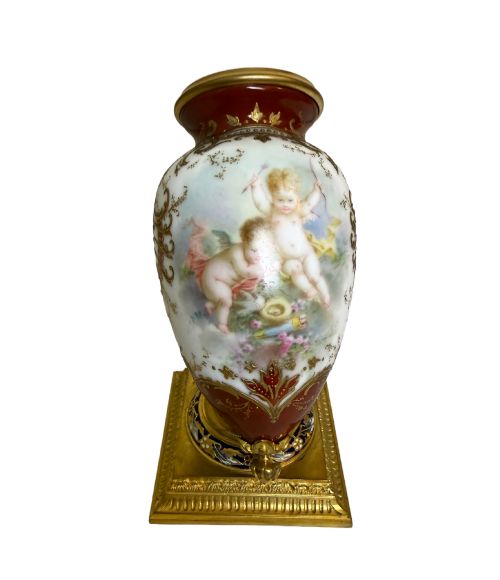
Porcelain elements frequently originated from Sevres or utilised champleve enamel panels set directly into the bronze framework. Artisans assembled the components with hidden threaded rods and screws, allowing for structural stability across complex mixed-media forms.
Listings feature materials spanning gilt bronze, Sevres porcelain, Sienna marble, and champleve enamel across 19th-century French and English designs.
What varies in quality
The integration of materials dictates the standing of an object, separating standard commercial production from ambitious workshop pieces. Harmonious proportions between the stone or ceramic body and the surrounding ormolu mounts indicate superior design intent.
Japy Freres·Jean-Baptiste Delettrez·Achille Brocot·Casier·Thomas Hope
The Ormolu Urns Glossary
- Ormolu
- A gilded bronze surface treatment derived from the French term for ground gold. It provides a bright metallic sheen to decorative mounts on furniture and urns.
- Cassolette
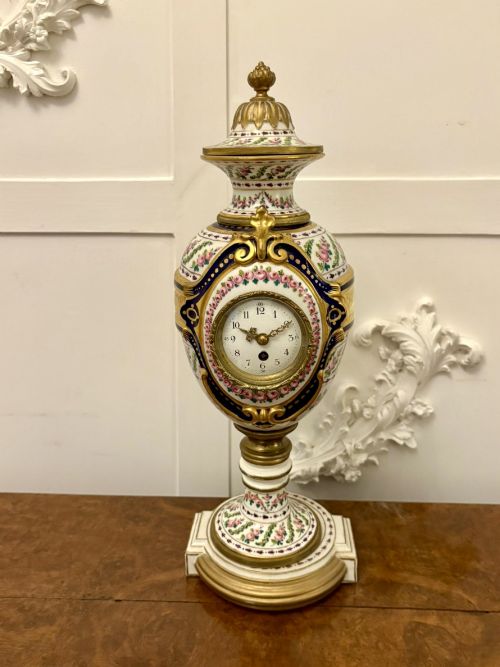
- A decorative vessel featuring a reversible lid that transforms the object from an urn into a candleholder or burner. These items appear frequently in 19th-century French garnitures.
- Champleve
- An enamelling technique where troughs are gouged into a metal surface and filled with vitreous paste before firing. This adds polychrome colour to the bronze mounts.
- Garniture
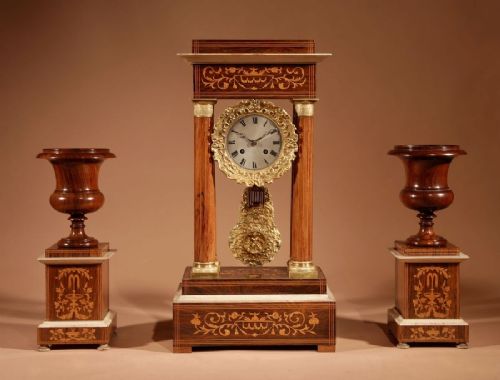
- A coordinated set of three or more decorative objects, typically comprising a central clock or large urn flanked by matching vases or candelabras.
- Grand Tour
- The traditional journey undertaken by wealthy Europeans to study classical antiquities, inspiring the production of reduced bronze and marble replicas.
Ormolu Urns: Frequently Asked Questions
What are ormolu urns made of?
These decorative objects combine a cast copper alloy base with a bright gold-coloured finish known as ormolu. Makers frequently paired this metal with white marble, rouge marble, onyx, and hand-painted porcelain bodies.
Additional elements include champleve enamel panels and hand-blown glass inserts. Each component was cast and turned separately before being joined with internal threaded hardware.
How were ormolu urns used originally?
In 19th-century interiors, these vessels served as ornamental focal points on mantelpieces, often arranged as part of a garniture set flanking a matching clock. Some examples functioned specifically as cassolettes with reversible lids designed to hold candles.
Over time, many of these urns and vases were adapted into table lamps with electrical wiring threaded through the original mounts. They remained status symbols reflecting classical taste and travel.
How do I clean ormolu surfaces safely?
Maintenance requires dry dusting with a soft natural bristle brush to remove particles from the chased recesses of the metal. Avoid abrasive polishes, chemical dips, and modern metal cleaners that strip away the original surface.
Water and harsh detergents damage both the gilt layer and underlying marble or ceramic components. Gentle handling preserves the delicate patina built up over centuries.
How can I tell a 19th-century piece apart?
Nineteenth-century items often exhibit manufacturing clues such as hexagonal nuts, machine-cut threads, and standardised interior fixings hidden beneath the base. Stylistic cues draw heavily on Louis XVI revival, Empire, and Neoclassical design revivals.
Examining the underside reveals the transition from hand-finished components to industrial foundry practices of the Victorian period. Maker stamps or foundry marks on the bronze or clock movements provide definitive origin clues.