



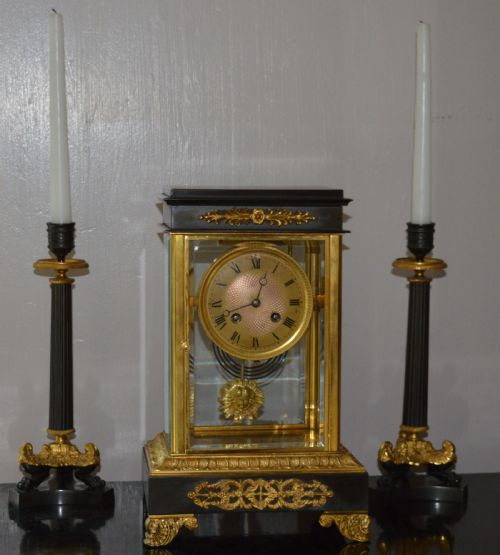


Ormolu Table Garniture
These ormolu table garniture sets bring nineteenth-century French elegance to a mantelpiece, pairing a striking clock with matched candelabra.
Ormolu Table Garniture
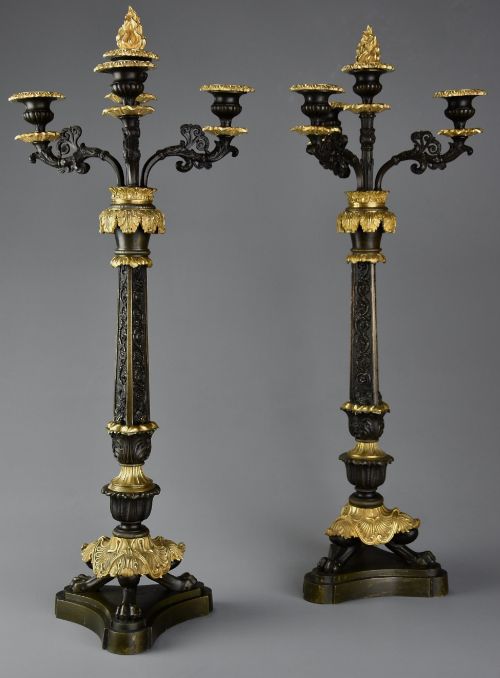
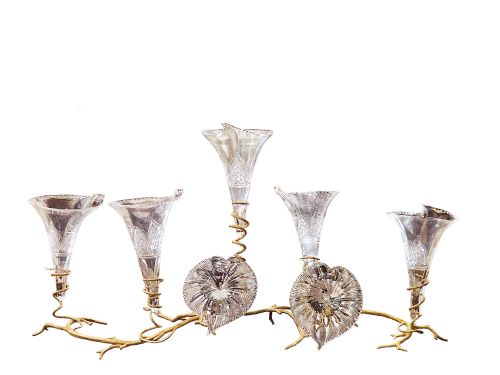
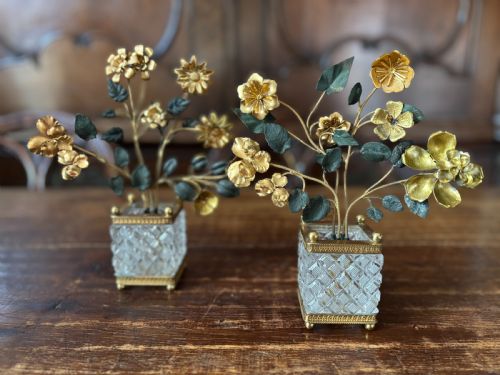
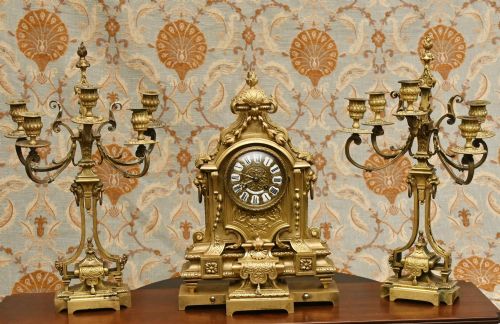
When you search for an ormolu table garniture, you are looking at matched decorative groupings designed for nineteenth-century interiors, most commonly comprising a central mantel clock accompanied by a pair of candelabra or urns. The pieces you are most likely to meet on this page hail from the Victorian era and the nineteenth century, reflecting French tastes in periods such as the Regency, Second Empire, and Napoleon III.
Makers often drew upon historical motifs, producing items styled after Louis XVI Revival, French Empire Revival, and French Rococo Revival designs. These sets served as the visual anchor for a room, combining timekeeping with elaborate sculptural presence.
What varies in quality
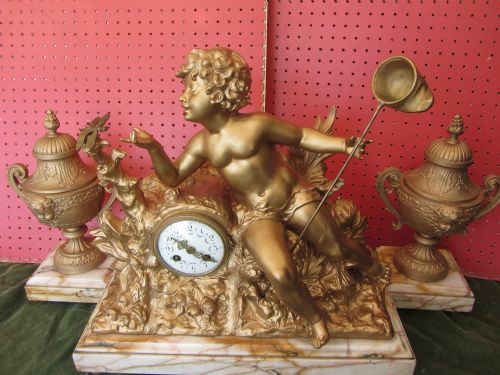
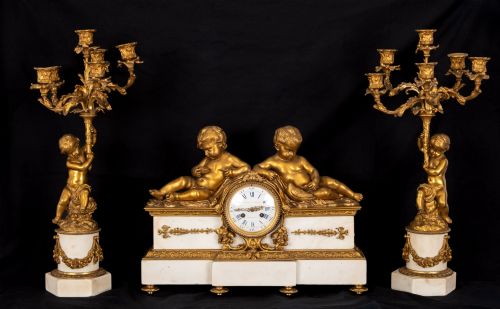
The distinction between standard examples and the finest pieces lies in the crispness of the metal chasing and the depth of the gilding on the ormolu. Superior sets display finely articulated figures, such as cherubs or cupids, alongside high-grade marble bases and uncompromised enamel dials.
The integration of the movement with the case, as well as the harmony between the central clock and its flanking candelabra, determines the overall sophistication of the grouping.
Ormolu Table Garniture Retail Price Guide 2026
Typical asking prices for ormolu table garniture among the pieces listed under this phrase on Sellingantiques today, from the lower quarter to the upper quarter. They describe what is for sale here now, not the wider market.
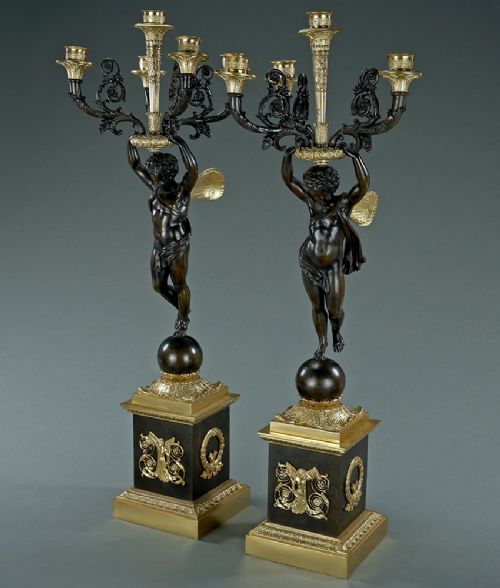
Listings feature nineteenth-century French pieces spanning the Regency, Victorian, and Napoleon III periods, utilising ormolu, marble, enamel, and bronze.
A.D Mougin·Deniere Paris
The Ormolu Table Garniture Glossary
- Ormolu
- Gilded bronze produced by applying a mercury and gold amalgam to a bronze base and heating it. This historic technique creates a warm, enduring golden finish characteristic of French decorative arts.
- Clock garniture
- A matched set consisting of a central clock flanked by two corresponding decorative objects, such as candelabra, urns, or candlesticks. They were designed to sit harmoniously together on a mantelpiece.
- Champlevé enamel
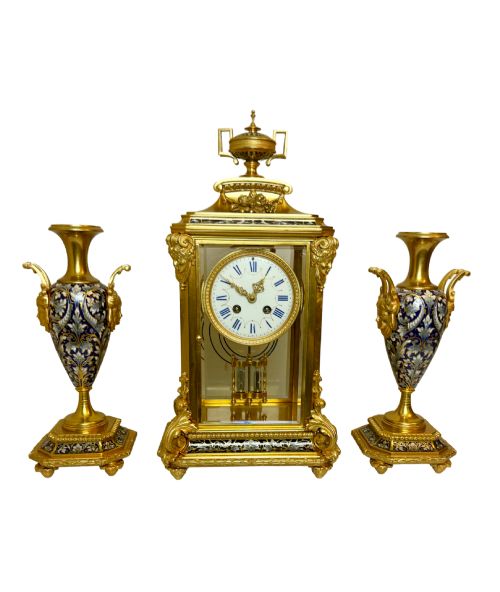
- An enamelling technique where troughs or cells are hollowed out into the surface of a metal object and filled with vitreous enamel paste before firing. The resulting surface shows rich patterns of coloured glass fused to the metal.
- French Rococo Revival
- A nineteenth-century decorative style marked by asymmetry, exuberant scrolling foliage, and organic motifs like shells and C-scrolls. It draws upon the earlier French court styles of Louis XV.
Ormolu Table Garniture: Frequently Asked Questions
What is an ormolu table garniture?
An ormolu table garniture is a coordinated set of decorative mantel objects, typically featuring a central clock accompanied by matching candelabra or urns.
These ensembles were created primarily in nineteenth-century France to provide a unified decorative scheme for formal rooms.
How were these clock sets used?
These sets were displayed prominently on mantelpieces above fireplaces, serving both a practical timekeeping function and a decorative purpose.
The flanking candelabra provided balance and symmetry to the central clock while reflecting candlelight during evening gatherings.
How do I identify a revival style?
Revival styles are identified by the historical motifs and architectural cues borrowed from earlier French periods, such as the classical restraint of Louis XVI or the flowing asymmetry of Rococo.
Examining the specific ornament on the bronze and marble components usually reveals which historical era inspired the maker.
What materials are typical for these pieces?
The primary materials include gilded bronze and ormolu, frequently paired with white marble bases and enamel clock faces.
Many examples also incorporate champleve enamel, glass panels, and porcelain details to add colour and texture to the composition.