

Ormolu Parquetry Bureau
An ormolu parquetry bureau combines geometric wood veneers with cast gilt metal mounts, forming sophisticated writing furniture.
Ormolu Parquetry Bureau
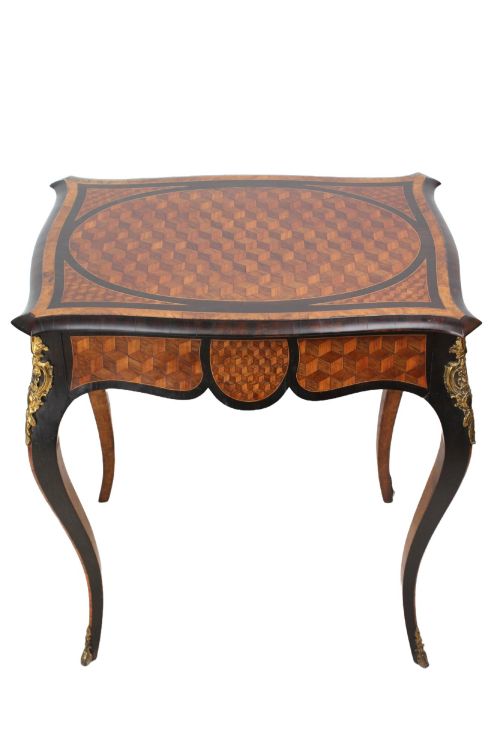
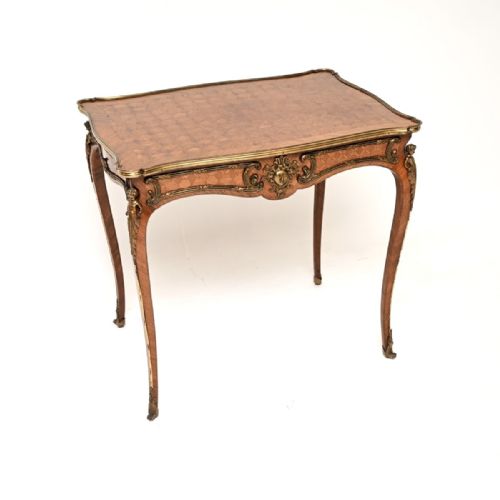
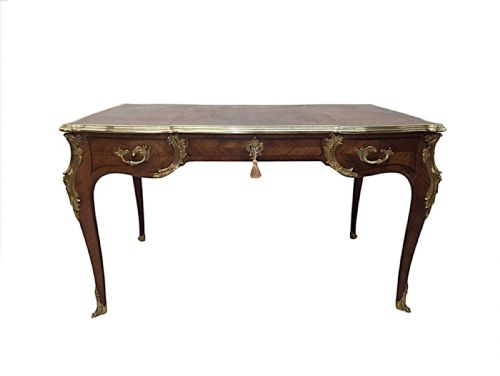
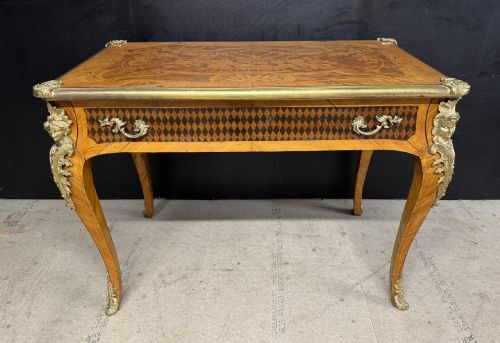
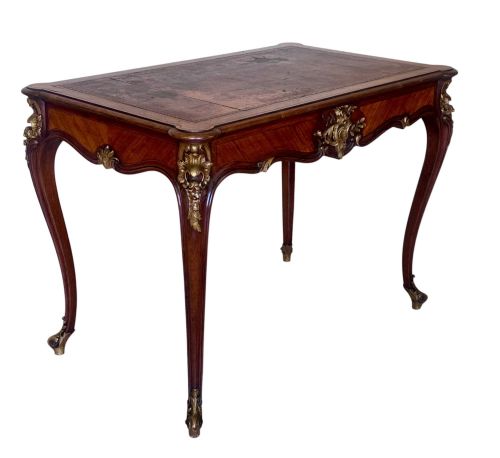
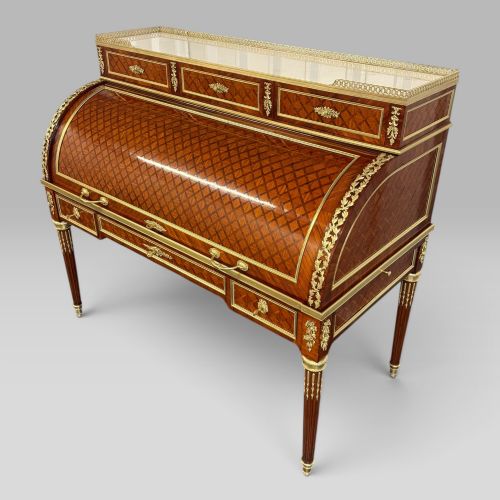
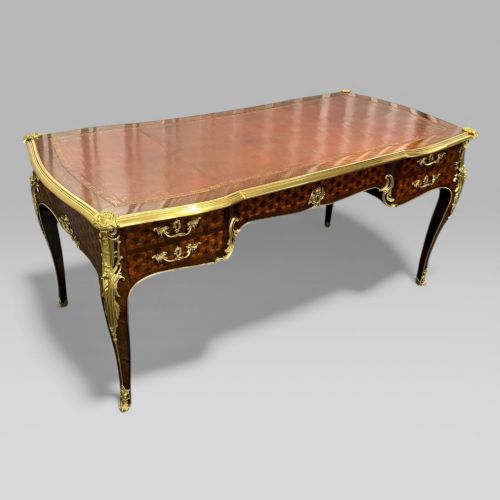
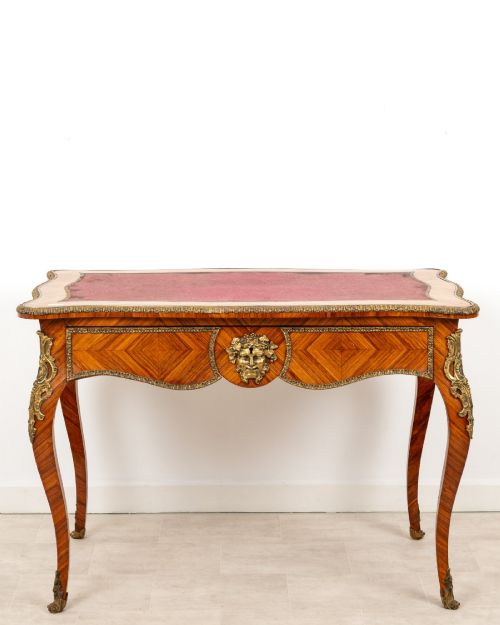
When searching for an ormolu parquetry bureau, a buyer encounters sophisticated writing furniture originating largely from nineteenth century French ateliers and revival periods. These pieces take various forms, including bureau plat writing tables, cylinder desks, and secretary cabinets designed for private chambers.
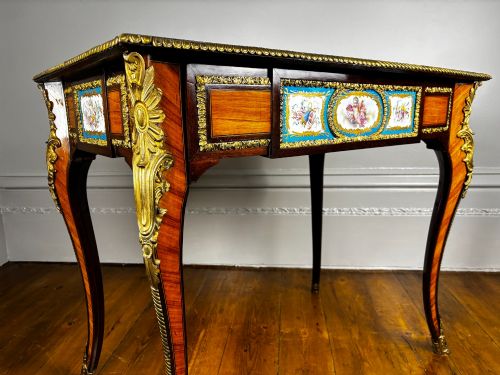
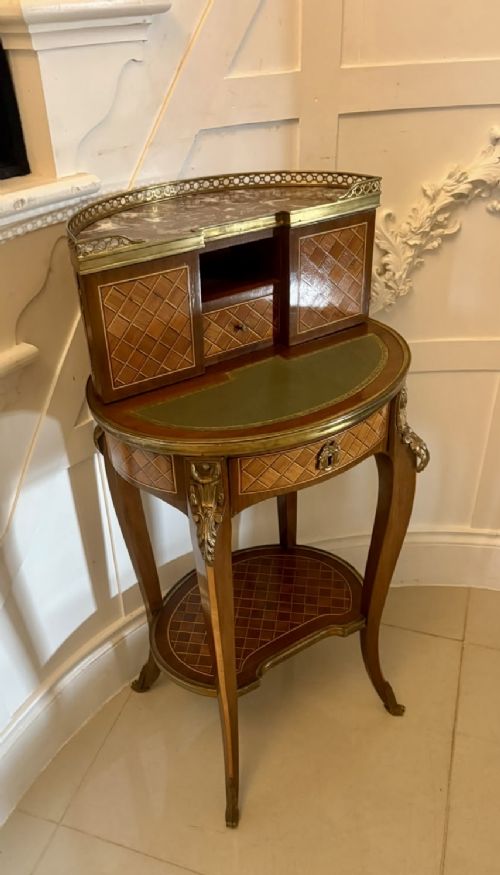
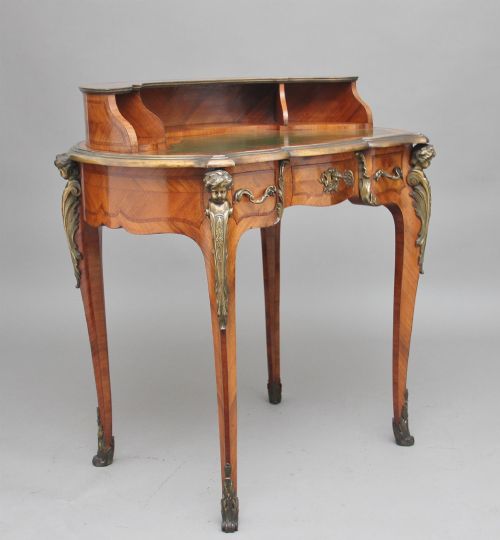
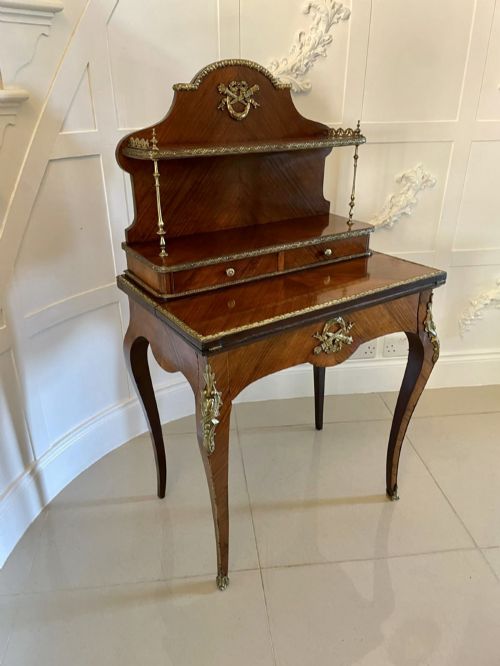
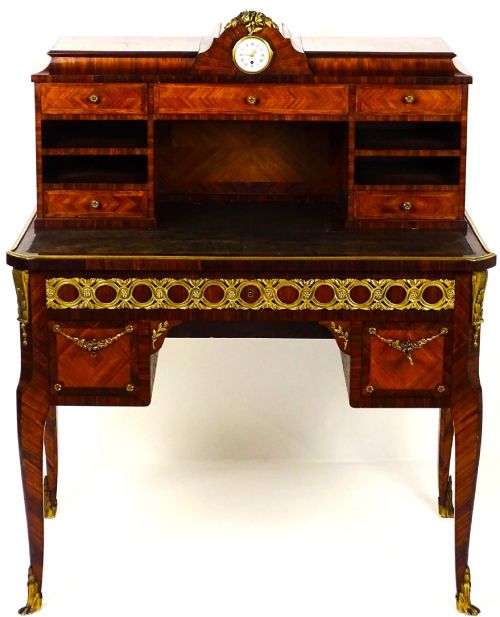
The predominant styles visible on this page follow Louis XV and Louis XVI revivals, displaying curved cabriole legs or straight neoclassical lines. Kingwood, rosewood, and tulipwood form the geometric parquet surfaces, accented consistently by cast ormolu and gilt bronze mounts.
Most examples date from the nineteenth century, reflecting Victorian and Napoleon III periods of craftsmanship. They serve as functional writing desks while acting as decorative focal points within traditional interiors.
Materials and construction methods
Cabinetmakers utilised dense hardwoods such as kingwood, rosewood, and mahogany as substrates for intricate parquetry veneers arranged in geometric or diagonal tile patterns. These wooden veneers required meticulous hand-cutting and fitting to create seamless visual rhythms across tabletops and fall fronts.
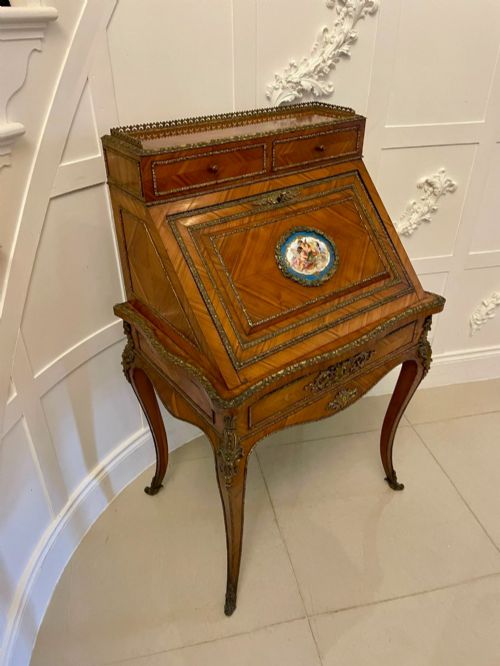
Gilt bronze and ormolu mounts were cast, chased, and fire-gilded before being meticulously fitted to the corners, apron mounts, and sabots of each desk. Additional materials like leather writing inserts, marble tops, and Sevres porcelain plaques were integrated to elevate the visual richness of the cabinets.
Ormolu Parquetry Bureau Retail Price Guide 2026
Typical asking prices for ormolu parquetry bureau among the pieces listed under this phrase on Sellingantiques today, from the lower quarter to the upper quarter. They describe what is for sale here now, not the wider market.
Listings feature nineteenth century writing furniture constructed from kingwood, rosewood, and tulipwood with gilt bronze ormolu mounts.
Distinctions in craftsmanship and execution
The distinction between standard production and masterwork execution lies in the sharpness of the ormolu chasing and the precision of the parquetry alignment. Superior pieces exhibit deeply detailed bronze casting where individual leaves and scrolls retain crisp definition rather than soft, rounded edges.
Structural integrity and choice of secondary timbers also dictate standard. Higher quality items employ thick, stable veneer cuts that resist shrinkage, alongside robust internal drawer construction and signed cabinetmaker stamps from renowned Parisian workshops.
JAS Shoolbred·CH Jeanselme Co·François Linke·Blake
The Ormolu Parquetry Bureau Glossary
- Ormolu
- Gilt bronze mounts applied to furniture edges and corners. The technique involves coating bronze with a mercury and gold amalgam before heating.
- Parquetry
- Geometric wood mosaic patterns formed by fitted veneer pieces. It creates contrasting tiled designs across desk surfaces.
- Bureau Plat
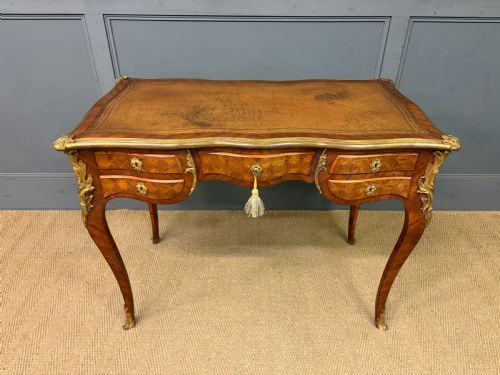
- A freestanding double-sided writing table with drawers in the frieze. This form gained popularity during the Louis XV period.
- Secrétaire Abattant
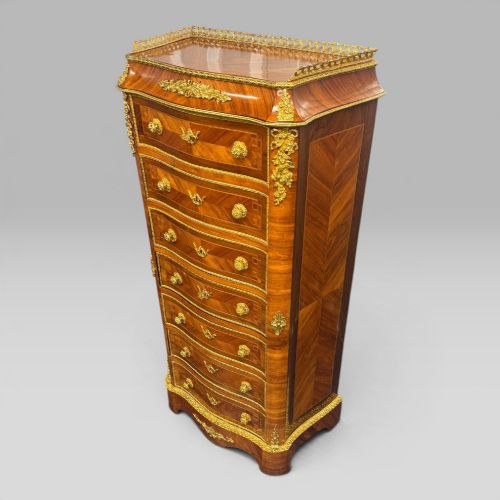
- A tall writing cabinet featuring a drop-front fall leaf that conceals inner compartments. They frequently incorporate marble tops.
- Bonheur Du Jour
- A light lady's writing desk featuring a small cabinet or set of shelves upon the upper writing surface.
Ormolu Parquetry Bureau: Frequently Asked Questions
How do I use a bureau plat?
A bureau plat functions as a freestanding centre desk intended to sit away from walls. Its finished reverse allows placement anywhere within a room.
Drawer spaces accommodate modern writing implements while preserving the traditional aesthetic of the nineteenth century writing surface.
Where did these desks originate?
The majority of these pieces originate from French workshops adhering to Louis XV and Louis XVI revival styles. London cabinetmakers also produced similar designs.
Continental makers utilised exotic woods imported through European trade ports during the Victorian and Napoleon III eras.
Can I place a marble top desk in a study?
Marble top secretary desks add classical weight and durable writing surfaces to private studies or libraries. Their stone slabs provide a stable base for daily use.
Ensure the supporting wooden frame remains level and protected from excessive weight shifts.
How do I distinguish Louis XV from Louis XVI style?
Louis XV pieces rely on asymmetrical curves, cabriole legs, and flowing rococo bronze mounts. They emphasise organic fluidity across every surface.
Louis XVI furniture introduces strict symmetry, straight fluted legs, and neoclassical geometric parquetry patterns inspired by ancient architectural motifs.