

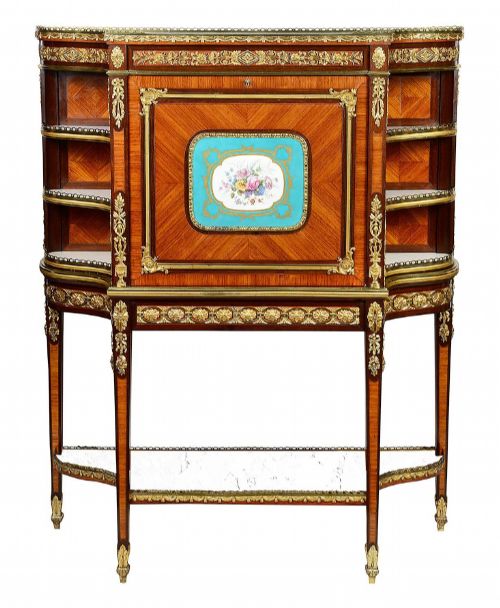


Ormolu Mounted Secretaire Cabinet
An ormolu mounted secretaire cabinet brings together fine cabinet timbers and gilded cast bronze mounts to create a striking workspace for the home.
Ormolu Mounted Secretaire Cabinet
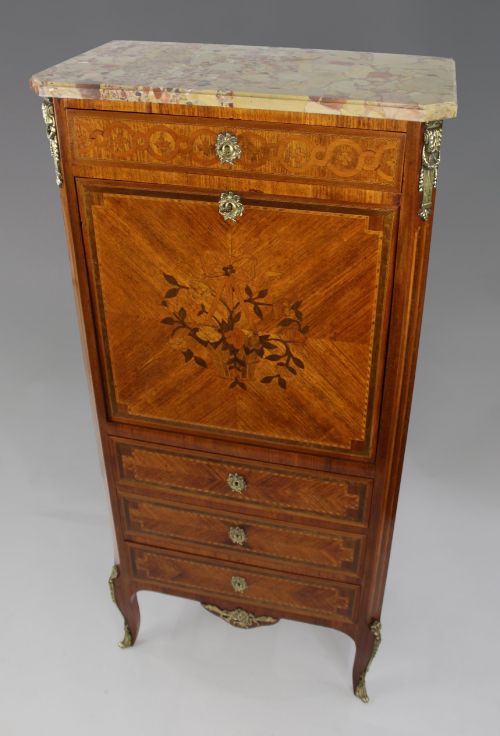
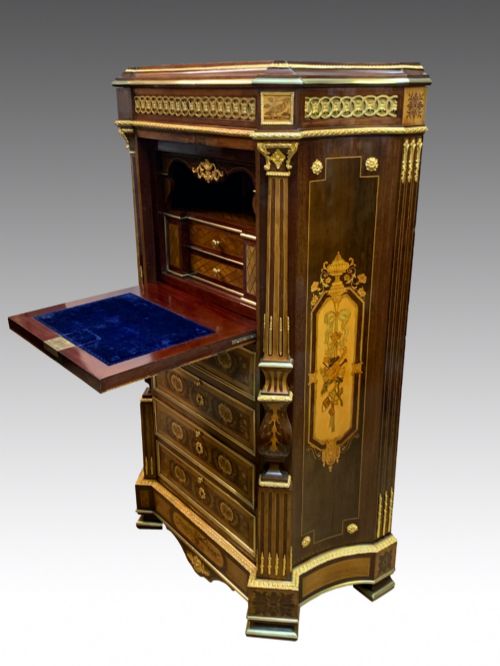
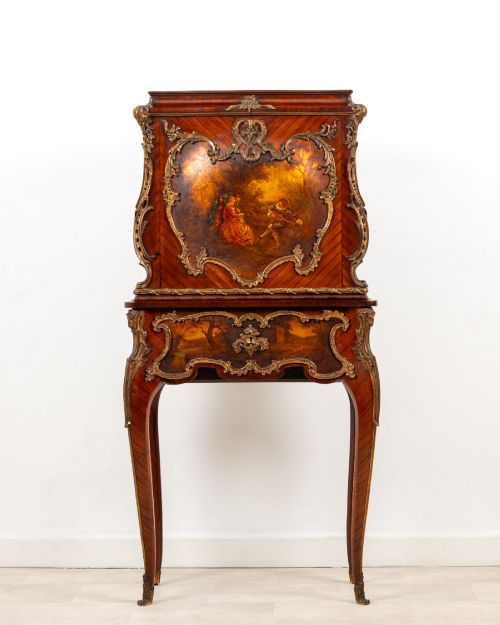
An ormolu mounted secretaire cabinet is a sophisticated form of writing furniture designed with a drop-front desk surface or concealed writing drawer, paired with decorative metal mounts. These pieces range from upright escritoires and semaniers to elaborate bureau cabinets intended for formal reception rooms.
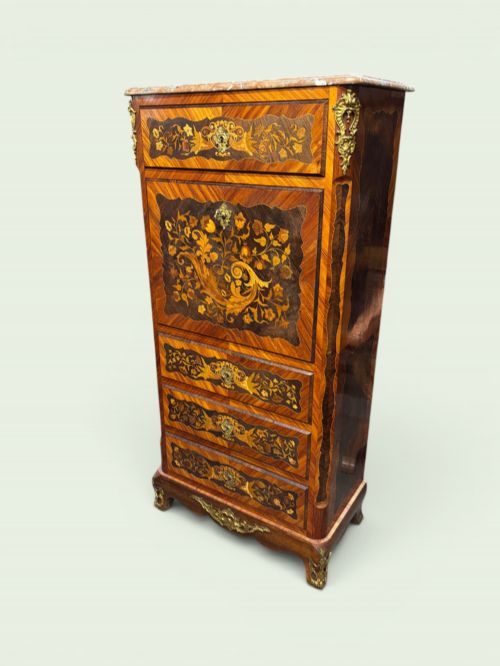
The pieces on this page are predominantly nineteenth-century French examples, drawing heavily on Louis XV and Louis XVI revival styles. Buyers will frequently encounter woods such as kingwood, walnut, and mahogany, often enhanced by intricate marquetry or parquetry.
Originating primarily from continental workshops and Victorian makers adopting French modes, these cabinets combine practical storage with decorative presence. They serve as both functional desks and focal points within a room.
Materials and construction
Cabinetmakers constructed the carcass using solid timbers such as mahogany or walnut, subsequently applying decorativeveneers of kingwood, rosewood, or tulipwood. Marquetry panels incorporate various fruitwoods arranged in floral or geometric patterns across the drop-front and drawer faces.
Gilt bronze or ormolu mounts are cast, chased, and secured to the corners, apron, and key escutcheons to accentuate the architectural lines of the furniture. Many examples are completed with shaped marble slabs fitted to the top surface.
Secret drawers hidden behind faux book spines or sliding panels reward those willing to investigate the inner workings of an antique writing cabinet.
Assessing quality
Quality rests significantly on the crispness of the ormolu casting and the precision of the timber parquetry. Superior examples exhibit finely chased bronze mounts that sit flush against the timber, alongside tightly fitted interior drawers and pigeonholes.
The choice of underlying cabinet woods and the complexity of the veneer work further distinguish finer items. Original marble tops and well-preserved internal leather writing surfaces contribute to the integrity of the piece.
Maison Krieger·Blake·Millet
The Ormolu Mounted Secretaire Cabinet Glossary
- Ormolu
- Gilded bronze applied as decorative mounts to furniture. The technique involves coating cast bronze with a mercury and gold amalgam before heating.
- Secrétaire à abattant
- An upright writing cabinet featuring a hinged drop-front panel that conceals a fitted interior of small drawers and compartments.
- Marquetry
- The art of applying pieces of veneer to a structure to form decorative patterns and pictures. Craftsmen utilise contrasting timbers and fruitwoods.
- Parquetry
- Geometric wood mosaic work used for flooring or furniture veneers. It typically creates repeating diagonal or cube patterns across flat surfaces.
- Kingwood
- A dense, richly figured tropical timber prized in fine cabinetmaking. It is often employed in contrasting bands alongside rosewood and mahogany.
Ormolu Mounted Secretaire Cabinet: Frequently Asked Questions
What is a secretaire à abattant?
A secretaire à abattant is an upright cabinet featuring a vertical drop-front flap that lowers to serve as a writing desk. Inside, it reveals a collection of small compartments and drawers for correspondence.
This form allowed owners to conceal their writing materials behind a formal facade when not in use, keeping reception spaces neat.
How do I care for ormolu mounts?
Ormolu mounts require gentle dusting with a soft, dry cloth to prevent the accumulation of grime in the recessed chased details. Avoid abrasive cleaners or metal polishes that can strip the original fire-gilt finish.
Maintaining a stable room temperature protects the underlying timber and prevents the adhesive or fixings of the bronze mounts from loosening.
What is the difference between marquetry and parquetry?
Marquetry involves cutting and assembling various coloured veneers to create pictorial scenes, floral arrangements, or organic scrolls. It relies on fluid, curved lines across the cabinet face.
Parquetry uses geometric shapes such as cubes, diamonds, or squares to form repeating abstract patterns, often serving as a border or central field.
Where were these cabinets placed?
These cabinets typically stood in principal reception rooms, drawing rooms, or private studies where guests and family gathered. Their decorative ormolu mounts and polished wood veneers ensured they functioned as display pieces as much as writing desks.
They coordinate well with period seating and sit comfortably against wood-panelled or papered walls.