



Ormolu Mounted Plinth
These ormolu mounted plinth designs lift your display pieces into the light with classical weight and gilded bronze.
Ormolu Mounted Plinth
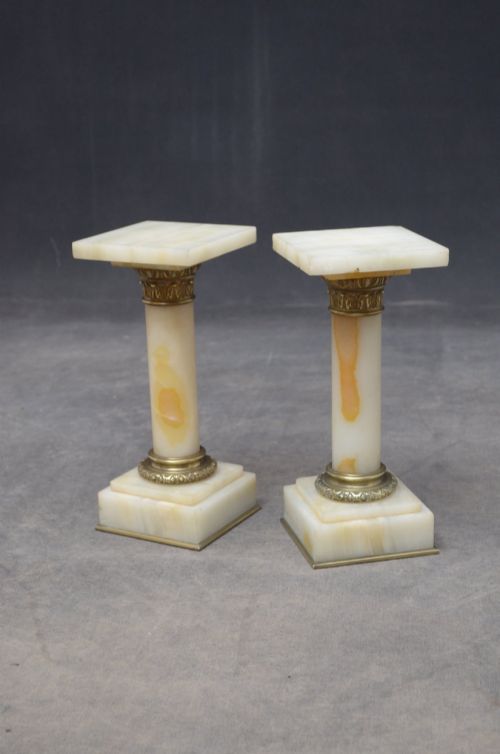
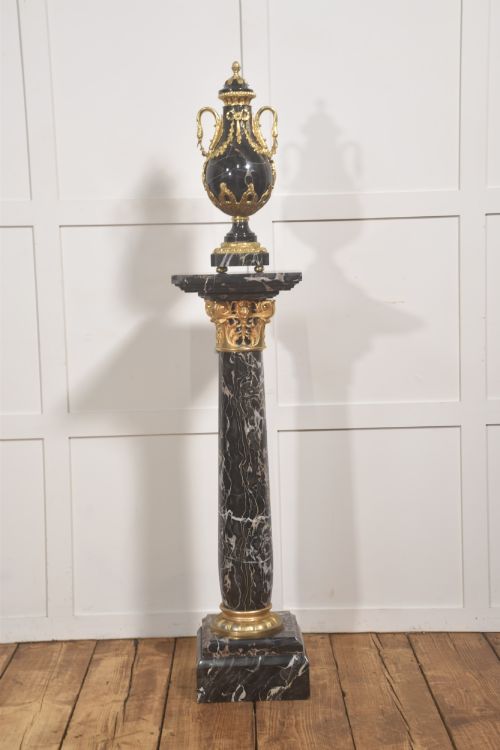
An ormolu mounted plinth is a solid column or stand designed to elevate busts, urns, and heavy display objects within a room. When you search for an ormolu mounted plinth, you are looking at substantial architectural supports that combine stone or wood bodies with cast and gilded bronze metalwork.
The versions you are most likely to meet on this page belong to the nineteenth century, drawing heavily on neoclassical, Louis XVI, and French Rococo design vocabularies. These pieces range from rotating white marble stands to tall onyx columns finished with decorative metal collars.
Makers shaped these supports to anchor grand interiors, utilising turned shafts and stepped bases. They serve both as structural furniture and as decorative statements in their own right.
How they were made
Craftsmen built the main shafts of these plinths from dense natural materials like marble, onyx, and occasionally satinwood, walnut, or mahogany. These stones and timbers were turned or carved into columns, pedestals, and stands to provide a heavy, stable centre of gravity.
Metal ornament was cast in bronze or other gilt metals to create mounts, collars, and borders in French styles. Gilding processes applied a gold layer to the bronze elements, adding bright metallic contrast to the dark or veined surfaces of the stone bodies.
Ormolu Mounted Plinth Retail Price Guide 2026
Typical asking prices for ormolu mounted plinth among the pieces listed under this phrase on Sellingantiques today, from the lower quarter to the upper quarter. They describe what is for sale here now, not the wider market.
Some nineteenth-century makers installed rotating mechanisms inside marble plinths so a heavy urn could spin to show its best carved side.
What varies in quality
The distinction between standard supports and finer examples lies in the crispness of the bronze casting and the depth of the stone figuring. Better pieces display sharply chased detail in the ormolu mounts and select flawless slabs of marble or translucent onyx.
Construction methods also separate ordinary items from exceptional ones, particularly where rotating mechanisms, heavy turned woodwork, and tightly fitted metal collars meet the main body. Superior proportions and weight distribution ensure the plinth balances heavy urns securely.
The Ormolu Mounted Plinth Glossary
- Ormolu
- Gilt bronze ornamentation applied to furniture and decorative objects. The technique involves coating cast bronze in a gold amalgam and heating it.
- Plinth
- A heavy rectangular or square base supporting a column, statue, or pedestal. It anchors the vertical weight of the piece to the floor.
- Column
- A vertical pillar of circular section supporting an architectural load or display object. In these pieces, it forms the main shaft above the base.
- Pedestal
- An upright support for a bust, statue, or vase. It elevates the display item to eye level.
- Neoclassical
- A style reviving classical Roman and Greek forms during the eighteenth and nineteenth centuries. It relies on symmetry, columns, and restrained ornamentation.
Ormolu Mounted Plinth: Frequently Asked Questions
What goes on an ormolu mounted plinth?
These tall stands are built to hold heavy decorative items such as marble busts, bronze figures, or large ornamental urns. Placing a substantial object on top helps anchor the vertical height of the piece.
They also support decorative candelabra and glass vessels, elevating them above standard furniture height to catch the light in a room.
How do I date an ormolu mounted plinth?
Dating relies on examining the combination of materials, timber species, and stylistic revival periods like Louis XVI or French Rococo. Nineteenth-century examples often use specific regional turning techniques and distinct stone types.
Looking closely at the fastenings, screw types, and the method of securing the metal mounts to the stone provides further clues to the period of manufacture.
Are these pedestals strong enough for heavy items?
Most of these pieces are constructed from solid marble, onyx, or dense hardwoods designed precisely to bear significant weight. Their wide bases and heavy stone shafts give them a low centre of gravity.
Even so, checking the stability of the joints and any rotating top mechanism ensures the stand can safely manage a heavy bronze or marble sculpture.
How do I clean marble and ormolu?
Stone sections like marble and onyx respond best to dusting with a soft, dry cloth and gentle cleaning with mild, pH-neutral soap when necessary. Avoid harsh chemical cleaners that can etch the polished surface.
Ormolu mounts require delicate dusting without abrasive polishes to protect the thin layer of gold gilding on the bronze beneath.