


Ormolu Mounted Etagere Table
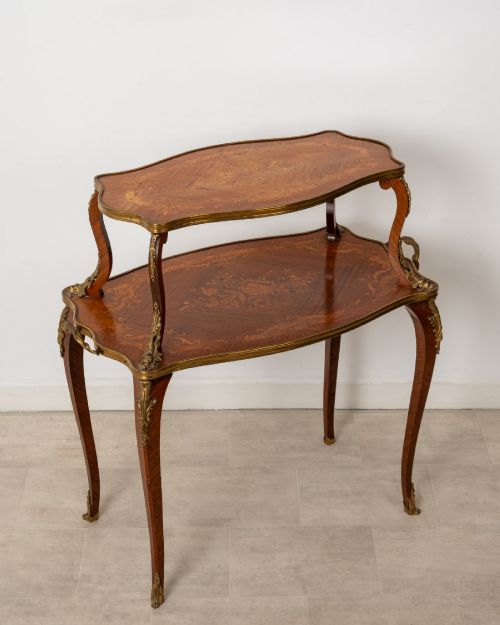
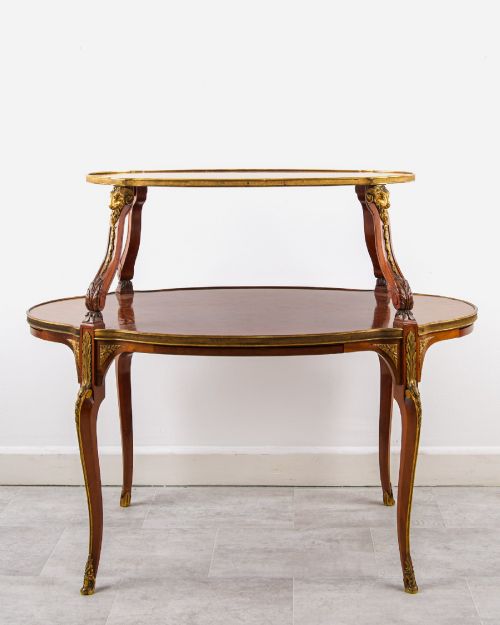
An ormolu mounted etagere table combines tiered display surfaces with gilt metal mounts to bring elegance and utility to a room.
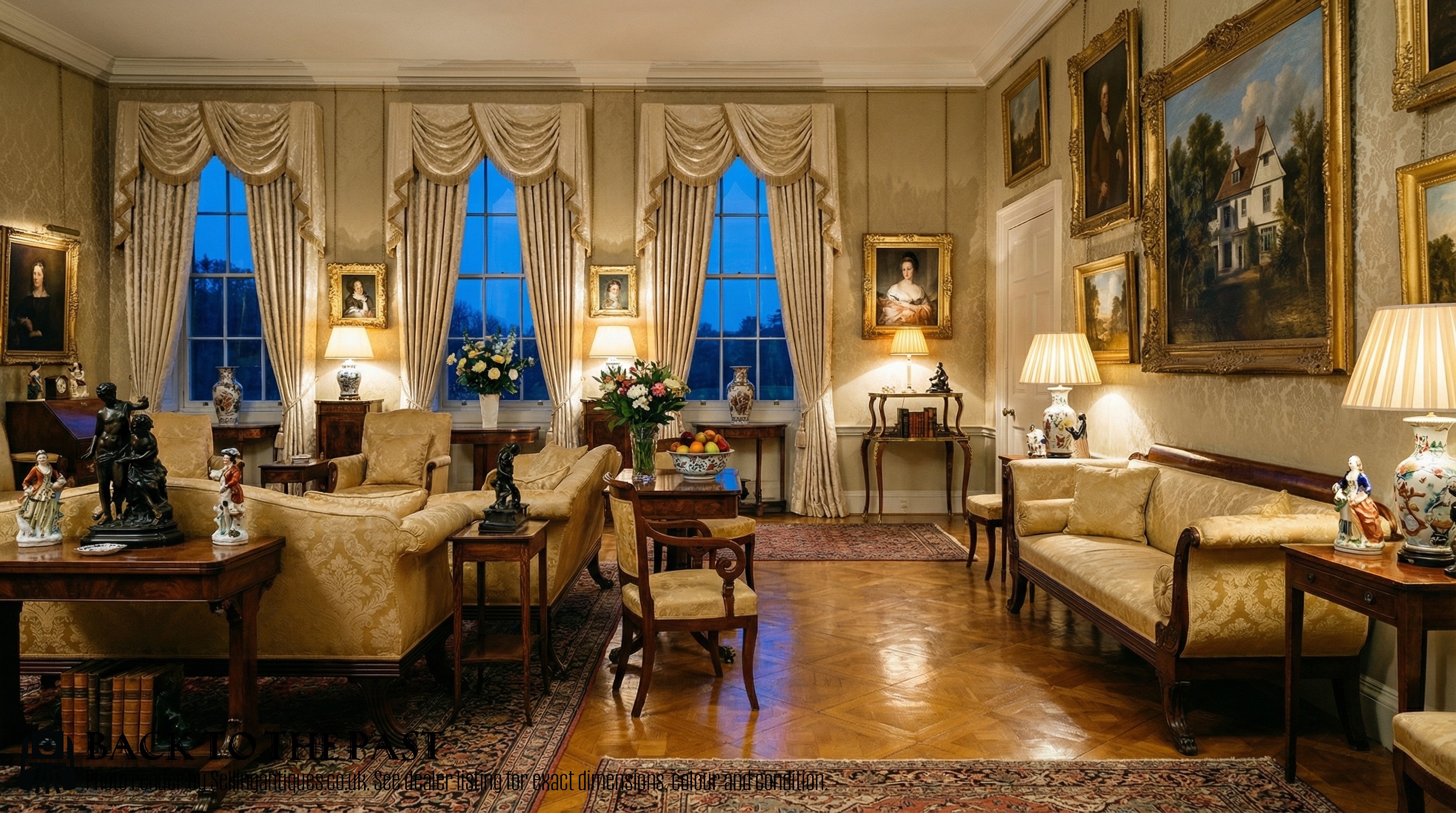
Ormolu Mounted Etagere Table
An ormolu mounted etagere table is a tiered occasional piece designed for display and small items, appearing most frequently in French Louis XV style and Napoleon III taste. These tables emerge primarily across the nineteenth century and into the early twentieth century, spanning periods from Victorian to Edwardian production.
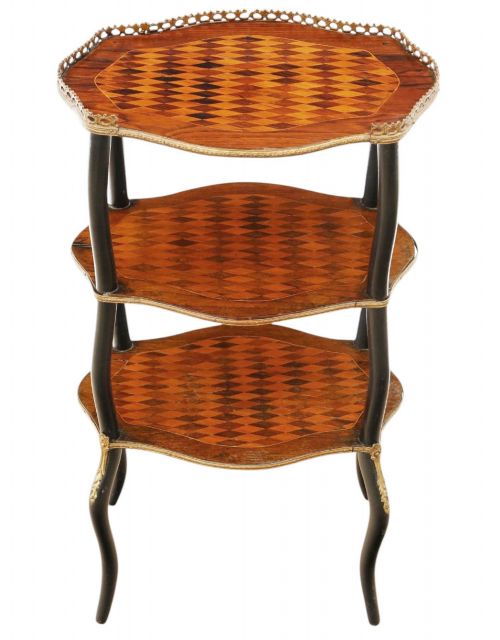
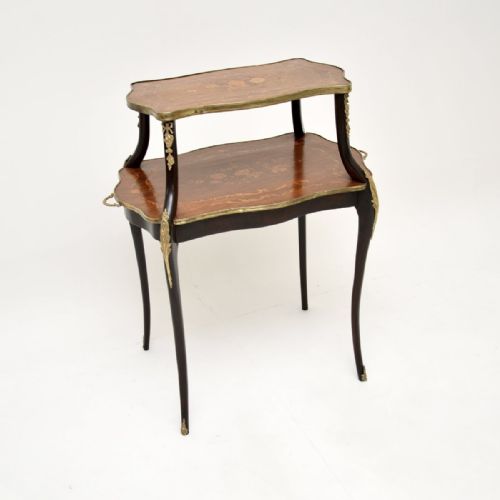
The form relies on multiple tiers supported by slender legs, functioning as side tables, centre tables, or display shelves. Walnut, mahogany, kingwood, and ebonised wood provide the primary structures for these tiered surfaces.
Makers such as Edwards and Roberts contribute to this tradition, producing refined iterations with inlaid decoration. Pieces commonly incorporate marquetry or parquetry inlay across their tiers to create decorative surface patterns.
Materials and Construction
Cabinetmakers build the core frames from hardwoods including mahogany, walnut, and kingwood, often applying intricate marquetry or parquetry inlay to the surfaces. Veneers of exotic timbers are cut and fitted by hand to form floral or geometric patterns across the tiers.
Ormolu mounts, cast in brass or bronze and subsequently gilded, edge the shelves, adorn the legs, and protect the corners. These metal fittings are secured with small pins or screws to accent the contours of the wooden structure.
Common decorative techniques include marquetry inlay, parquetry, ebonised wood finishes, and cast bronze or brass ormolu mounts.
Judging Quality
Quality rests in the precision of the cabinetwork and the crispness of the gilt metal mounts. Finer examples display meticulously fitted marquetry veneers with genuine depth of tone, whilst simpler pieces rely on basic timber grains.
The weight and detail of the ormolu mounts separate standard production from superior work. Well-chased bronze mounts show sharp botanical or rococo detailing rather than soft, cast surfaces.
Edwards and Roberts
The Ormolu Mounted Etagere Table Glossary
- Ormolu
- Gilded bronze or brass mounts applied to furniture for decoration and edge protection. This technique involves coating a base metal with gold.
- Marquetry
- Decorative veneer work using thin pieces of wood and other materials to form pictorial patterns. Artisans arrange these pieces onto the carcase timber.
- Parquetry
- Geometric wood inlay forming repetitive patterns such as cubes or stripes across a surface. This technique contrasts with the flowing designs of marquetry.
- Galleried
- A raised metal or wooden rim around the edge of a shelf or table top. This feature prevents items from sliding off the surface.
Ormolu Mounted Etagere Table: Frequently Asked Questions
What is an ormolu mounted etagere table?
An ormolu mounted etagere table is a tiered wooden stand featuring gilt bronze or brass mounts. These pieces combine multiple display surfaces with decorative metalwork.
Cabinetmakers designed them for domestic display, utilising timbers like kingwood, mahogany, and walnut with inlaid marquetry decoration.
How were these tables used originally?
Original domestic use involved displaying porcelain, small ornaments, or serving tea in drawing rooms. The multiple tiers provided distinct surfaces for presentation.
Their lightweight construction allowed servants to move them easily about reception rooms as social habits demanded.
Where do these tables originate?
The surviving examples originate predominantly from nineteenth-century French workshops, spanning Louis XV revival and Napoleon III styles. English makers also produced similar pieces influenced by French taste.
Production continued into the Edwardian period, maintaining traditional veneering and mounting methods.
How do I care for wood and ormolu?
Maintain the wood with gentle dusting and occasional applications of appropriate wax polish. Avoid placing them in direct sunlight to protect the timber veneers.
Clean the ormolu mounts with a dry, soft cloth, avoiding abrasive metal cleaners that strip the original gilding.
How are different periods identified?
Period identification relies on timber choices, mounting styles, and construction techniques. Earlier nineteenth-century examples often feature heavier mahogany or walnut carcases with hand-chased mounts.
Later Victorian and Edwardian pieces frequently adopt lighter kingwood veneers and machine-finished ormolu details.