
Ormolu Mounted Commode Cabinet
An ormolu mounted commode cabinet brings French decorative brilliance into a room through rich wood veneers and gilt bronze details.
Ormolu Mounted Commode Cabinet
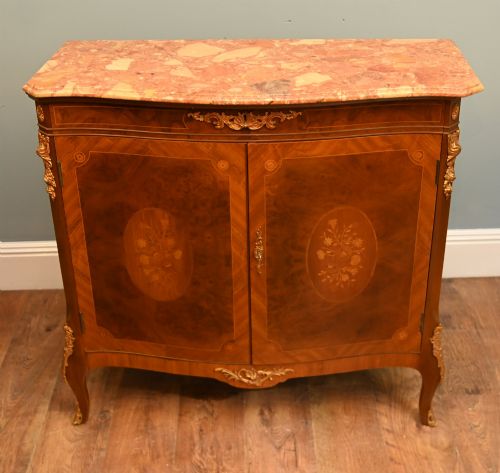
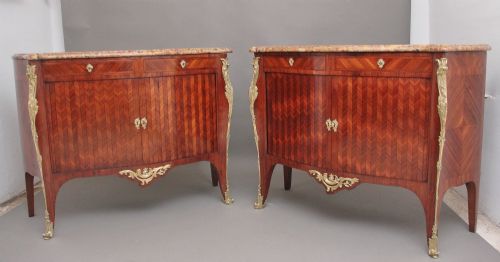
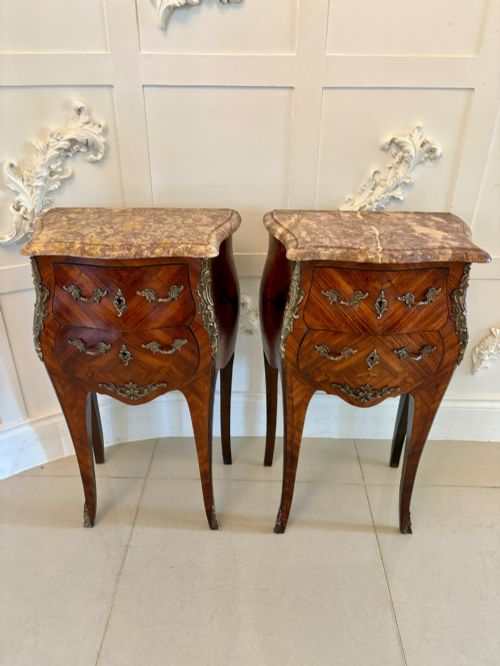
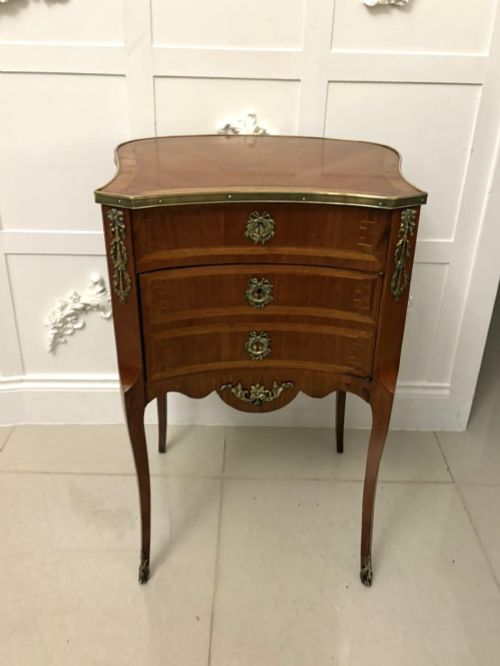
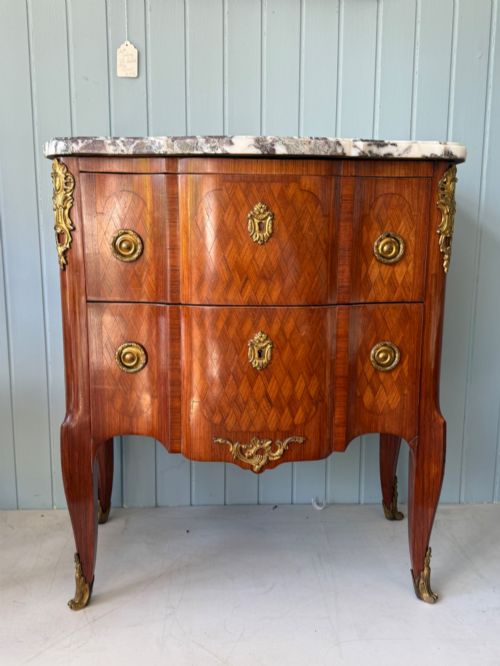
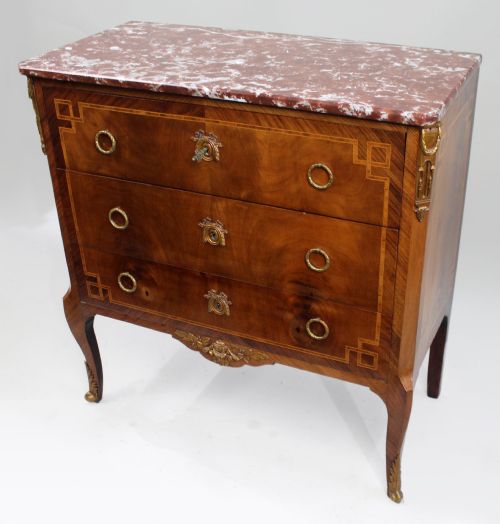
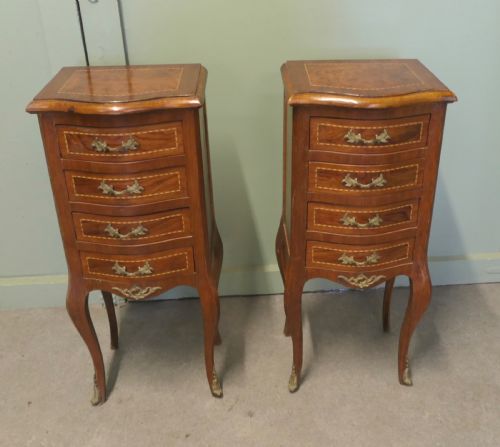
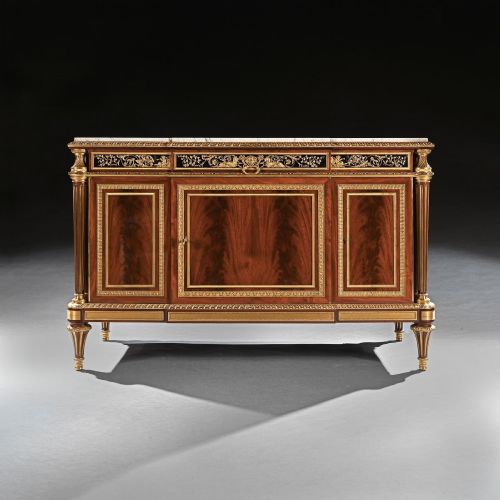
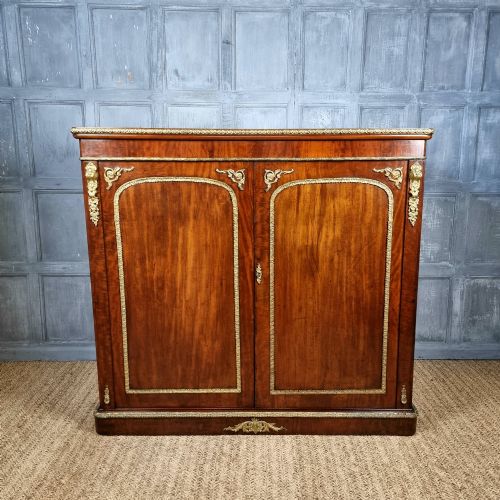
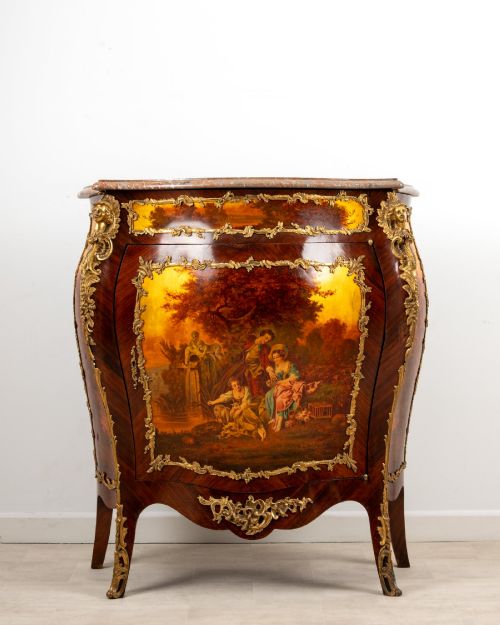
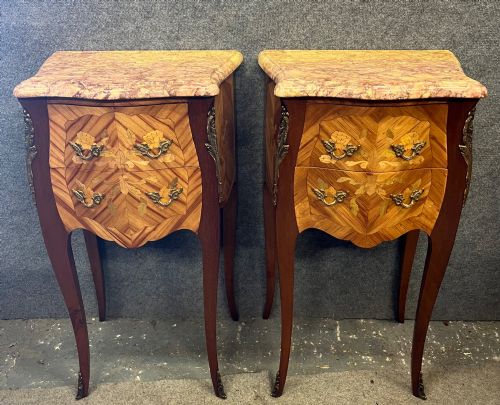
An ormolu mounted commode cabinet is fundamentally a storage piece defined by decorative metal mounts, most frequently encountered in French revival forms spanning the eighteenth to the early twentieth century. These pieces encompass serpentine chests of drawers, demi lune cabinets, and smaller bedside lockers designed with substantial presence.
The aesthetic leans heavily on the Louis XV and Louis XVI styles, where proportions range from grand nineteenth-century reception pieces down to compact twentieth-century bedside tables. Workshops working across the nineteenth century produced both faithful copies and imaginative revivals of these classical forms.
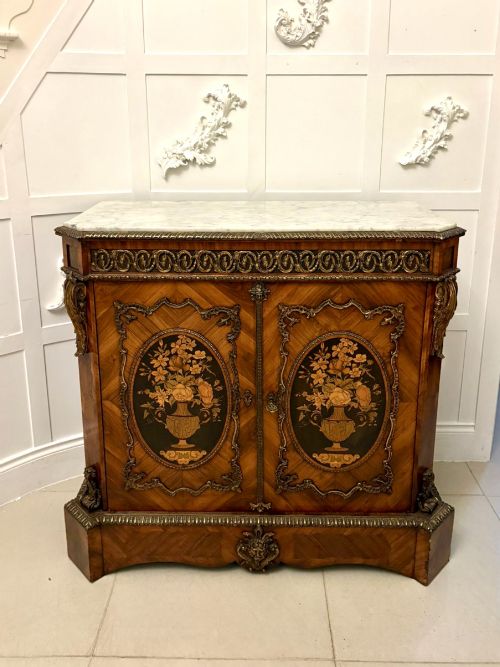
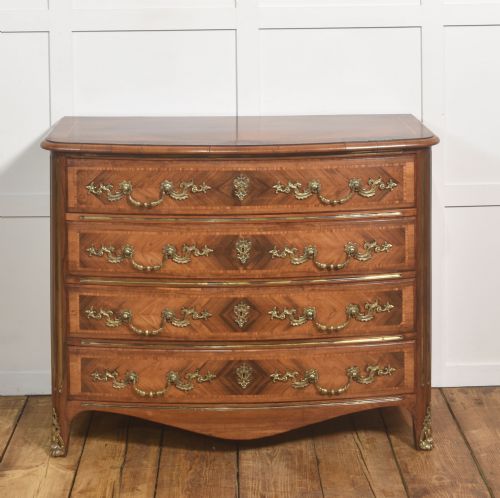
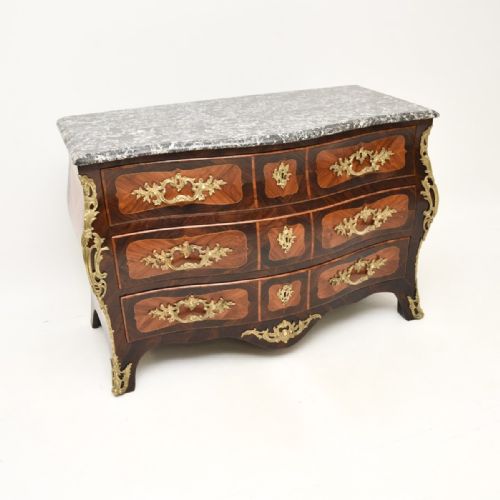
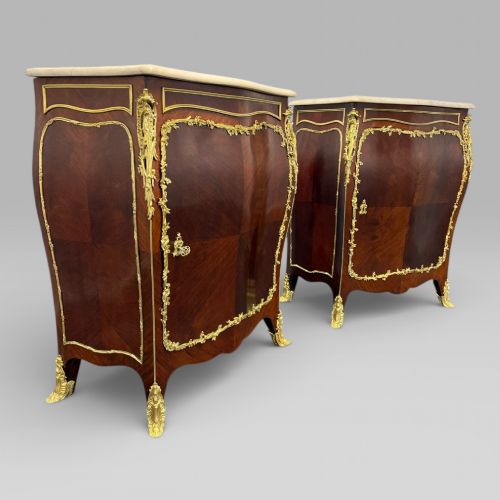
Makers utilised various silhouettes, from straight-fronted sideboards to bombé shapes that curve outward on the front and sides. Marble tops in white, rouge, and other shades cap many of these pieces, adding weight and a cool tactile contrast to the polished wood below.
Materials and Construction
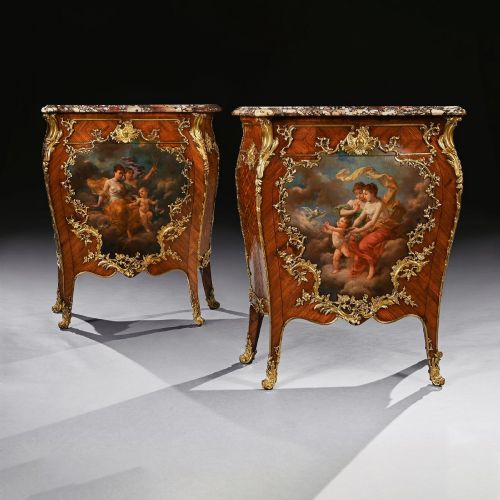
Cabinet makers built these pieces using dense timber carcases overlaid with decorative veneers including kingwood, walnut, rosewood, mahogany, and intricate marquetry or parquetry patterns. Vernis Martin painted panels also appear, decorated with delicate figurative or pastoral scenes framed by the timber structure.
Gilt bronze or ormolu mounts are cast, chased, and applied to corners, handles, and aprons to highlight the structural lines of the commode. Marble slabs, shaped to fit the exact contours of the top surface, rest directly on the timber frame.
Listings feature eighteenth, nineteenth, and twentieth century pieces utilising kingwood, walnut, mahogany, marble, and gilt bronze.
Assessing Craftsmanship
Quality reveals itself in the crispness of the bronze chasing and the precision with which the ormolu mounts follow the contours of the timber. Finely cast mounts show sharp detail and secure fixing without unsightly gaps against the wood.
The underlying timber work dictates structural integrity, observed in the tightness of veneer joints, the fluidity of marquetry patterns, and the smooth operation of drawers and doors. Heavier marble slabs with precise edge profiles indicate higher tier production.
Jacques Bircklé·Henry Dasson·Gillows·E. Kahn·Sormani·Maison Millet
The Ormolu Mounted Commode Cabinet Glossary
- Ormolu
- Gilt bronze mounts applied as decorative ornaments to furniture. This technique involves gilding a bronze base with gold amalgam.
- Marquetry
- Decorative veneer patterns formed by fitting together small pieces of different coloured wood. Craftsmen use this technique to create floral or geometric designs across drawer fronts and tops.
- Bombé
- A bulging, outward-curving shape characteristic of certain French cabinet forms. This swollen profile requires advanced carpentry to ensure stability and smooth drawer movement.
- Demi Lune
- A half-moon shape used for tables and cabinets designed to stand flat against a wall. The curved front softens room layouts while providing surface space.
Ormolu Mounted Commode Cabinet: Frequently Asked Questions
Where should an ormolu mounted commode cabinet go?
These pieces suit reception rooms, bedrooms, or hallways where their decorative fronts and marble tops can catch the light. They function effectively as statement sideboards or as substantial bedside chests.
Ensure the chosen wall space accommodates the specific silhouette, whether a curved bombé shape or a flat demi lune profile.
How do I care for the marble top?
Wipe marble surfaces with a soft, damp cloth and avoid acidic cleaners that can etch the polish. Use coasters beneath glasses to prevent moisture rings from forming on the stone.
Periodic gentle dusting keeps the surface clear without risking the surrounding timber veneers or metal mounts.
What is the difference between Louis XV and Louis XVI styles?
Louis XV pieces embrace asymmetric curves, rococo scrolls, and flowing serpentine lines. The mounts often feature organic leaf and shell motifs.
Louis XVI furniture shifts toward neoclassical symmetry, straight lines, and geometric precision. Mounts in this style typically display swags, urns, and classical architectural details.
How should I clean the ormolu mounts?
Dust the gilt bronze gently with a dry, soft bristle brush to remove particles from the recessed chased details. Avoid harsh metal polishes that can strip the original gilding.
Professional conservation is recommended if the bronze requires deeper cleaning or stabilisation.