
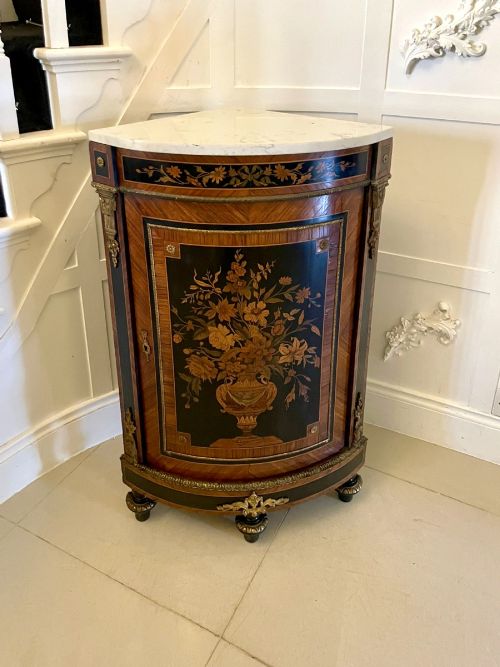
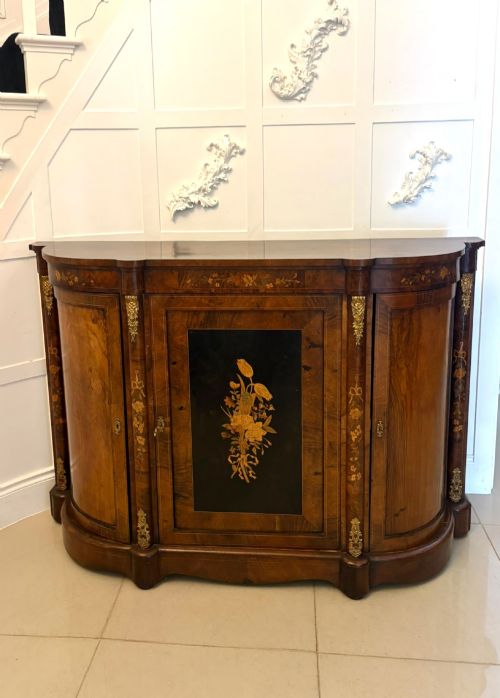
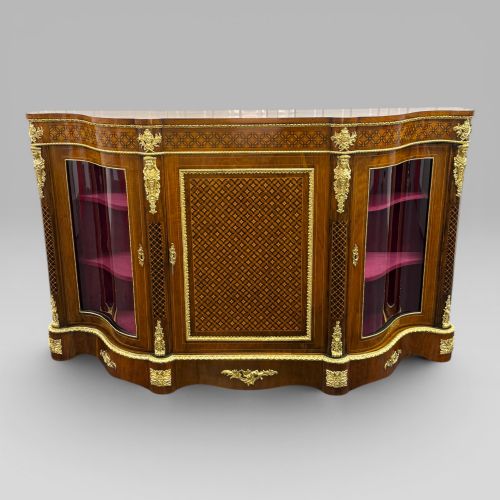
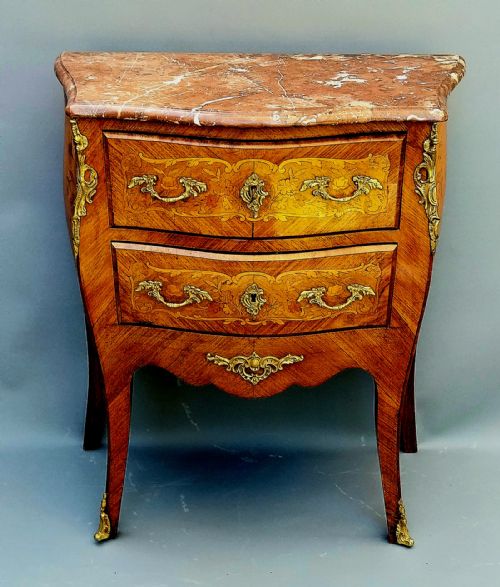
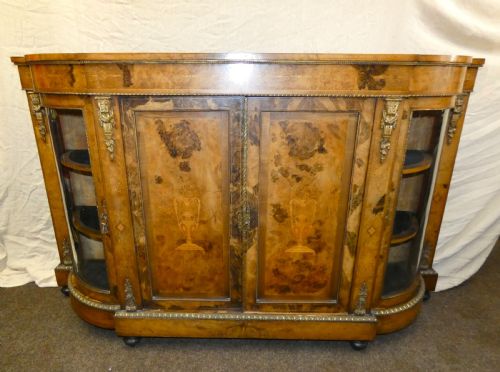


Curved French Storage Cabinet
A curved french storage cabinet brings sculptural elegance to a room, offering refined timber work and marble tops suited for display.
Curved French Storage Cabinet
A curved french storage cabinet encompasses pieces designed for domestic utility and display across the nineteenth and early twentieth centuries. Buyers inspecting this selection encounter commodes, credenzas, corner cabinets, and chests of drawers rooted in Victorian and French Louis styles.
The most frequent examples appearing here are walnut and burr walnut credenzas alongside marble-topped commodes and bombes. These items combine sweeping serpentine or demi-lune curves with fitted storage compartments suited for contemporary interiors.
Materials and Construction
Cabinet makers utilised walnut, burr walnut, and ebonised timbers as the primary foundation for these pieces. Surfaces frequently display intricate marquetry and boxwood inlay set into the grain.
Constructors integrated heavy marble tops and cast ormolu and brass mounts to accentuate the curved silhouettes. Glass elements appear on select display doors, completing the composite construction.
Makers hid secrets in plain sight, fashioning curved drawers that required exact geometric matching to close properly.
Evaluating Distinction
Distinction in these cabinets rests on the intricacy of the marquetry and the precision of the timber matching across curved surfaces. Finer examples display meticulous floral patterns and seamless veneer application over complex bombé or serpentine shapes.
The weight and finish of the marble tops, alongside the crispness of cast ormolu and brass mounts, separate standard production from superior workshops. Integration of hardware and the harmony of proportion dictate the standing of a piece.
Maison Gagneau·Mercier Freres
The Curved French Storage Cabinet Glossary
- Marquetry
- Decorative veneer work forming intricate patterns or pictures using various woods. Craftsmen assemble thin slices of timber to create elaborate floral designs across cabinet doors and drawer fronts.
- Ormolu
- Gilt bronze mounts applied to furniture for ornamentation. This gilded metal detailing accents corners, feet, and friezes.
- Bombe
- An outwardly swelling, convex shape characteristic of advanced cabinet making. This curved profile requires exceptional skill in veneer shaping.
- Demi-lune
- A half-moon shape used for table and cabinet footprints. This semicurve allows furniture to sit flush against walls while projecting softly into a room.
- Credenza
- A buffet or sideboard cabinet traditionally used for storing and displaying objects. These storage pieces often feature central glass doors flanked by curved side compartments.
Curved French Storage Cabinet: Frequently Asked Questions
What is a curved french storage cabinet?
These pieces are nineteenth and early twentieth-century decorative storage items featuring rounded or serpentine wooden profiles. They include commodes, credenzas, and corner cabinets originating from French and Victorian design traditions.
Such furniture combines practical enclosed shelving or drawer space with ornate surface decoration like marble tops and marquetry inlay.
How were these cabinets used?
Original owners utilised these cabinets in principal rooms to store fine tableware, linens, or personal belongings while displaying decorative objects on top. The flat marble or timber surfaces served as functional ledges for lamps and ornaments.
In modern spaces, they function as statement storage units in living rooms, hallways, or dining areas.
How do I identify a Louis style piece?
Louis XV and XVI styles display distinct decorative vocabularies, with the former favouring asymmetrical curves and rich floral marquetry. Louis XVI examples typically introduce straighter structural lines alongside neoclassical ormolu mounts.
Makers frequently adapted these historical French motifs during the Victorian era and early twentieth century.
How do I care for marble and walnut?
Walnut benefits from occasional polishing with appropriate wax to maintain the timber's natural lustre and prevent the grain from drying. Marble tops require gentle cleaning with non-acidic solutions to protect the polished stone surface from etching.
Keeping these materials away from direct heat sources preserves the integrity of the wood and the joinery.