


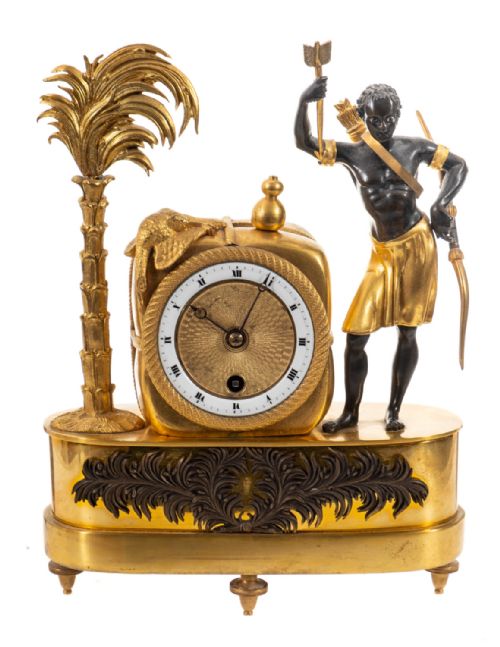


Ormolu Figural Timepiece
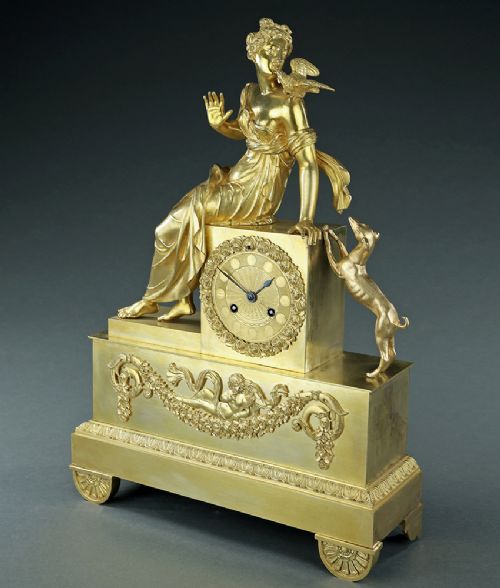
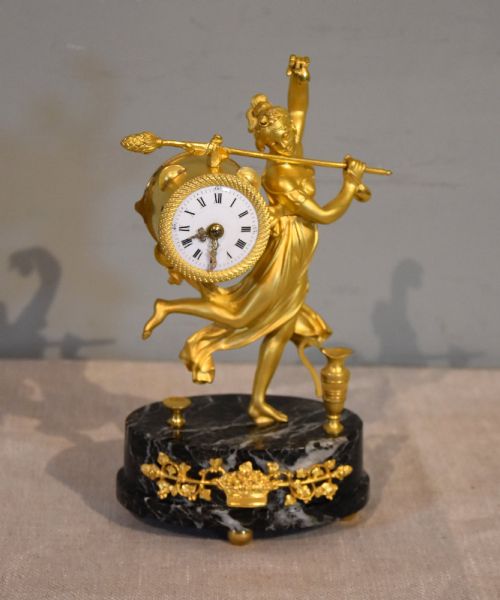
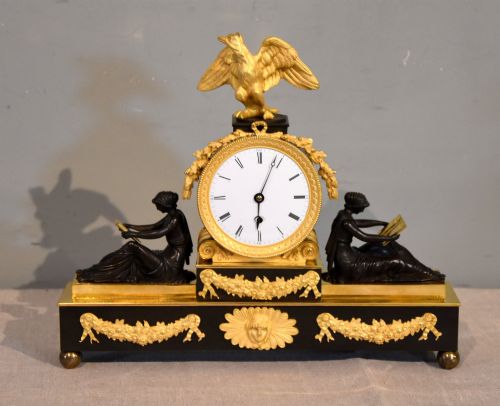
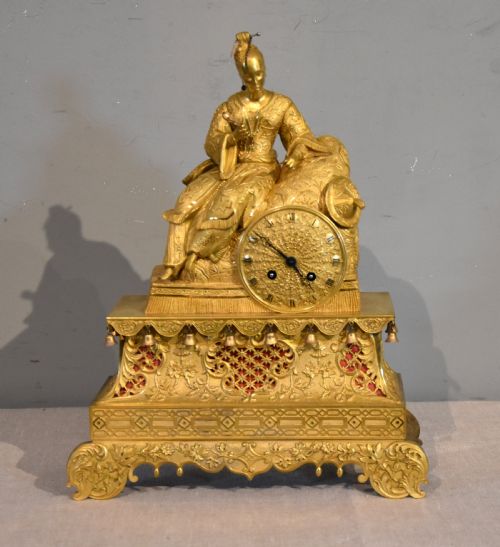
An ormolu figural timepiece brings together sculptural bronze figures and precision movement, capturing mythological, romantic and classical subjects.
Ormolu Figural Timepiece
An ormolu figural timepiece serves as both a functional clock and a sculptural centrepiece for the interior. These pieces combine cast metal figures with dial movements, often housed on marble or bronze plinths.
The versions most frequently met on this page date from the nineteenth century and the Regency period, largely originating from French workshops or English makers. They display styles ranging from French Empire and Rococo Revival to Chinoiserie and the Turkish taste.
Subjects commonly feature cherubs, animals such as lions and goats, and allegorical figures representing love, fidelity, or exploration. Formats include mantel clocks and smaller table timepieces driven by fusee or anchor movements.
Materials and construction methods
The primary materials recorded are gilt bronze, ormolu, and patinated bronze, frequently mounted on green marble or standard brass bases. Ormolu relies on an amalgam of mercury and gold applied to a bronze base, creating a distinct golden surface when fired.
Movements often incorporate enamel dials, sometimes hand-painted, protected beneath glass bezels. Structural elements include cast figural components paired with mechanical gear trains, such as single chain fusee mechanisms and bell-striking systems.
Listings feature periods spanning from Regency and French Empire to the late nineteenth century, utilising materials including marble, patinated bronze, and gilt metal.
Distinctions in standard and execution
The refinement of the cast bronze figures separates standard work from superior examples, with finer pieces showing deeply chased details in hair, drapery, and foliage. The crispness of the original fire-gilding also dictates the visual depth of the ormolu surface.
Quality rests equally in the integration of the movement with the case, where maker-signed mechanisms from established horologists maintain tighter tolerances and superior timekeeping reliability. The choice of base material, such as solid green marble rather than plain metal plinths, elevates the piece.
Deniere Et Fils·Victor Paillard·John Bennett Cheapside London·Baetens London·Henry Berkeley Square London·Japy Freres
The Ormolu Figural Timepiece Glossary
- Ormolu
- A gilded bronze surface created by applying a mercury-gold amalgam to cast bronze and firing it. This historic technique produces a durable, luminous golden finish characteristic of antique French and English metalwork.
- Fusee
- A conical pulley used in clock movements to maintain even driving power as the mainspring unwinds. This mechanism ensures consistent timekeeping accuracy across the duration of the wind.
- Regency
- A British design period spanning the early nineteenth century defined by classical restraint and decorative motifs drawn from Greek, Roman, and Egyptian sources. Pieces from this era often feature crisp gilt bronze mounts and robust mechanical movements.
- Enamel dial
- A clock face made by fusing powdered glass to a metal substrate at high temperatures. These dials provide a smooth, glossy white surface for painted numerals and minute markers.
- Silk suspension
- A horological method where the pendulum hangs from a fine loop of silk thread rather than a metal spring. This delicate system appears in nineteenth-century French timepieces.
Ormolu Figural Timepiece: Frequently Asked Questions
How do I wind an antique timepiece?
Use the designated key on the enamel dial to turn the winding arbor gently until resistance is felt. Avoid over-winding to protect the internal mainspring.
Ensure you do not force the hands backward past the hour, particularly on delicate silk suspension movements.
Where should I place a heavy marble clock?
Position the piece on a sturdy, level surface such as a mantelpiece or heavy sideboard that can support the combined weight of bronze and stone. Stability is essential for the pendulum to beat evenly.
Keep the clock away from direct sunlight and damp walls to preserve the gilt surface and enamel dial.
What is the difference between a clock and a timepiece?
A timepiece indicates the hours and minutes without including a striking mechanism for the hours. Clocks feature an additional gear train and a bell or gong to sound the time.
Both formats utilise similar escapements and decorative ormolu housings.
How do I identify French Empire style?
French Empire pieces rely on strict symmetry, military motifs, and classical figures drawn from antiquity. They often feature dark patinated bronze contrasted against bright ormolu mounts.
Marble bases and architectural forms frequently support allegorical figures like explorers or mythological subjects.