
Ormolu Brass Wall Appliques
When you search for ormolu brass wall appliques, you encounter lighting fixtures that bring decorative illumination and period character to interiors.
Ormolu Brass Wall Appliques
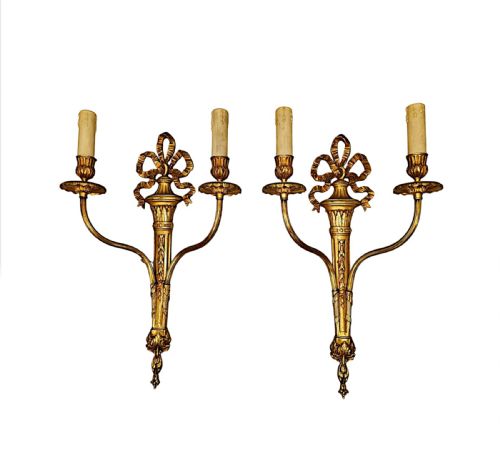
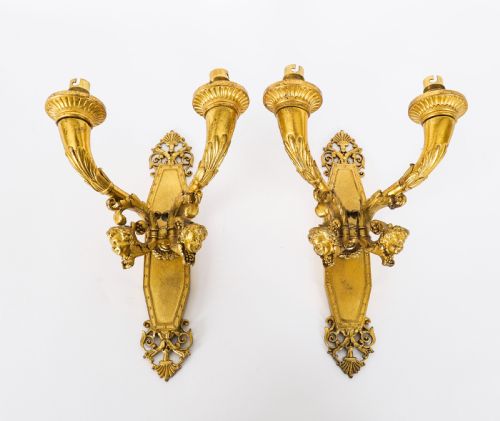
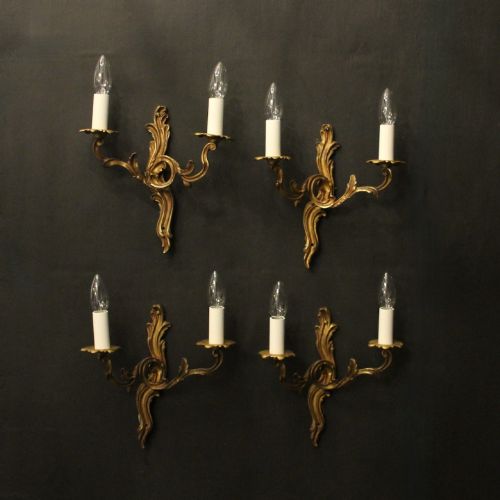
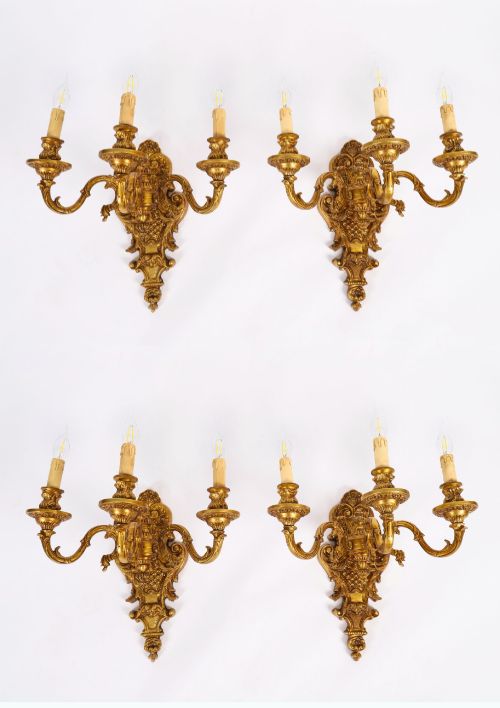
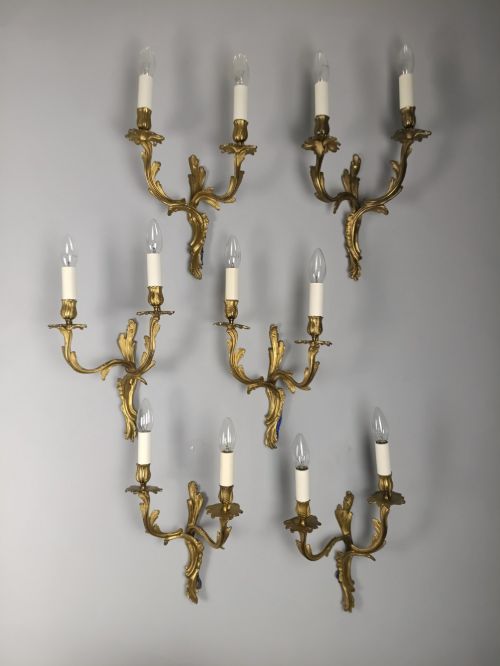
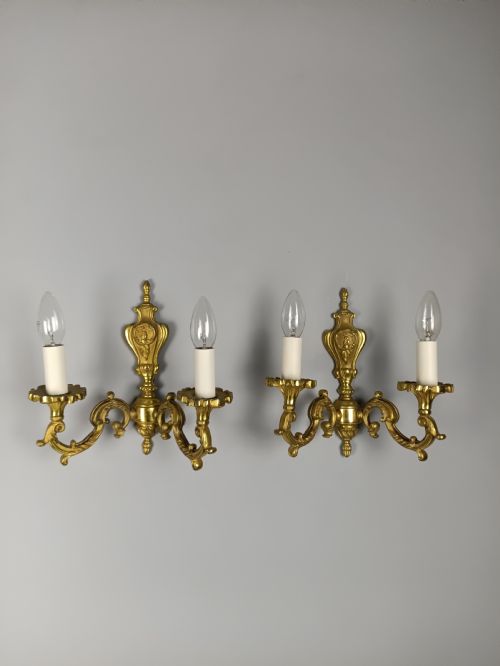
When searching for ormolu brass wall appliques, buyers look at decorative wall lighting fixtures originating from the nineteenth and early twentieth centuries. These pieces function as both illumination sources and ornamental wall art, frequently appearing in pairs or larger sets.
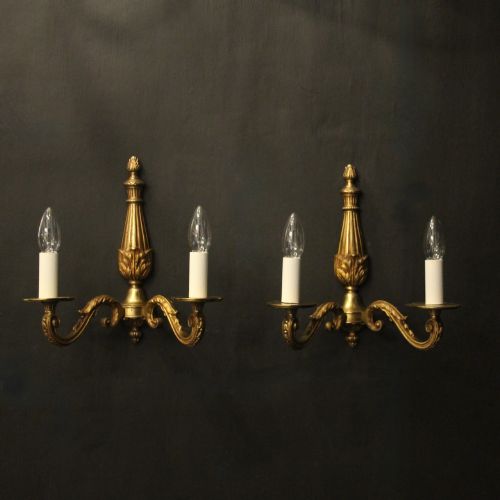
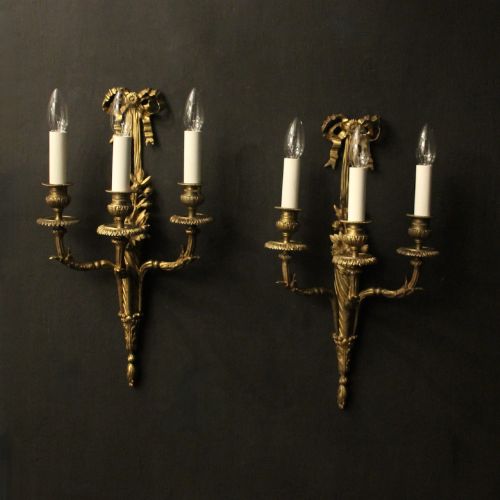
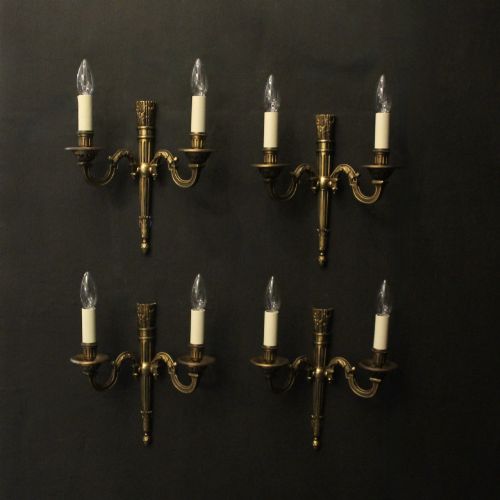
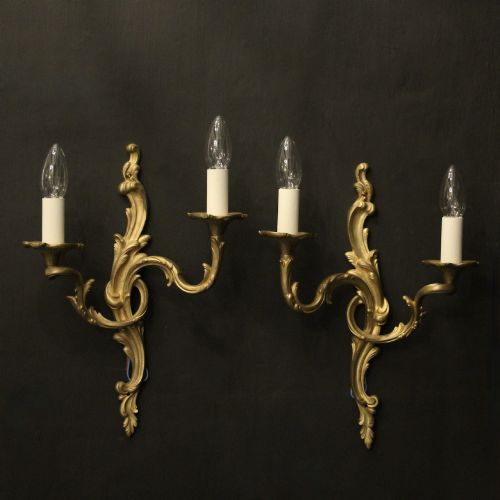
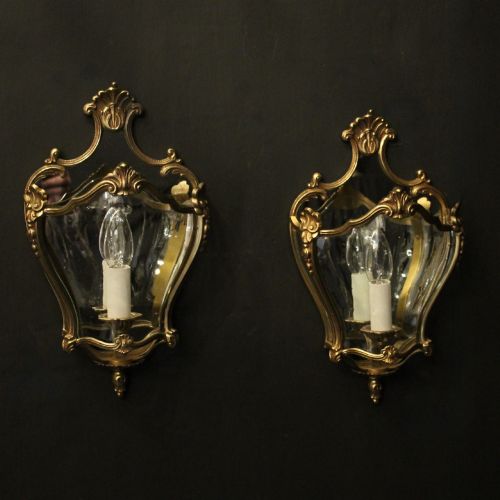
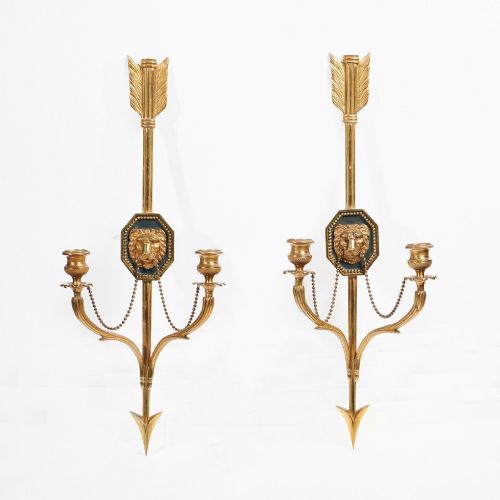
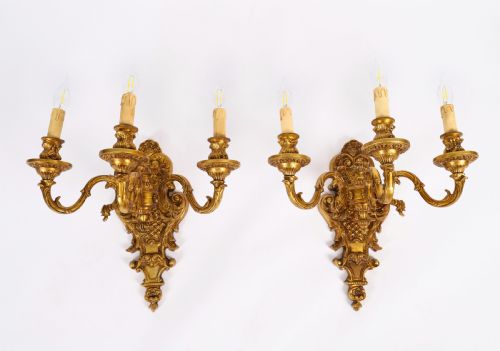
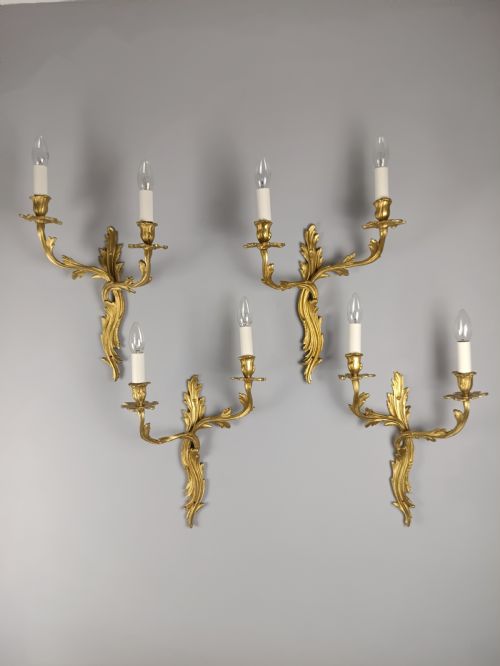
The selection on this page is dominated by French designs spanning the 1800s, Regency period, and the decades up to 1930. Common configurations include twin-arm and triple-arm wall lights, alongside specialised forms such as half lanterns and flaming torch sconces.
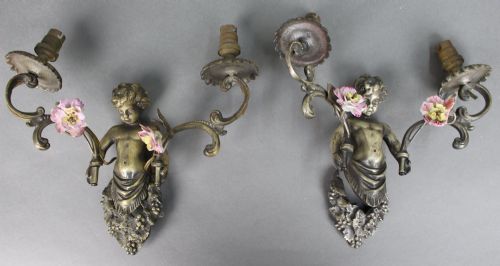
Stylistic influences heavily lean towards French Rococo, Louis XIV, Louis XVI, and Empire aesthetics. Many examples incorporate figurative elements like cherubs or specific motifs including ram's head masks and porcelain flowers.
Materials and construction
Makers utilised metals such as brass, bronze, and gilt metal as the structural foundation for these lighting fixtures. The application of gold gilding created the distinctive ormolu and gilded bronze surfaces seen across the pieces.
Casting techniques allowed artisans to shape intricate scrolls, foliage, and figural details characteristic of Rococo and Neoclassical revival styles. Additional components like glass and porcelain were integrated into specific designs to enhance the visual texture.
Listings feature items dated across the nineteenth century, Regency era, and the decades leading up to 1930.
Assessing quality in wall appliques
The finish of the gilding also dictates the tier of the piece, with heavier and more durable applications retaining their warmth and lustre over time. Heavier metal gauge usage provides structural rigidity to larger triple-arm and multi-light sets.
Poix Blin
The Ormolu Brass Wall Appliques Glossary
- Ormolu
- A method of applying finely ground high-carat gold to a bronze or brass object. This technique yields a rich golden finish characteristic of decorative metalwork from the eighteenth and nineteenth centuries.
- Applique
- A wall-mounted light fitting designed to hold candles or electric bulbs. These fixtures project outward from the wall surface to distribute illumination.
- Sconce
- An architectural wall bracket used for lighting. The term is frequently used interchangeably with wall lights.
- Chasing
- The hand-tooling of metal surfaces after casting to sharpen details and create texture. Skilled chasing separates superior decorative mounts from mass-produced castings.
Ormolu Brass Wall Appliques: Frequently Asked Questions
What periods do these wall appliques come from?
The available lighting fixtures originate primarily from the nineteenth century through to the 1930s. Pieces span specific eras including the Regency period, the late 1800s, and early twentieth-century revivals.
Stylistic revivals during these decades frequently drew inspiration from earlier French court aesthetics, particularly the Louis styles and the Empire period.
How many arms do these wall lights usually have?
Configurations range from single-arm brackets to twin-arm and triple-arm variations. Larger sets often feature three or four branches per fixture to provide substantial illumination.
Specialised forms like half lanterns and flaming torch designs also appear within the selection.
What materials are used in their construction?
The primary structural materials consist of bronze, brass, and mixed metals. Surface treatments involve gilding to produce ormolu and gilded bronze finishes.
Secondary materials such as glass and porcelain elements occasionally accompany the metalwork on specific decorative sconces.
Where were these wall lights made?
The vast majority of the listed appliques originate from France, reflecting popular continental design movements. Italian workshops also contributed similar Neoclassical and Empire style wall fixtures during the nineteenth century.